

 English
 Español
 عربى

The 15-foot Even Airflow Industrial BLDC Ceiling Fan utilizes a high-efficiency BLDC motor and carefully designed blades. This ceiling fan operates with extremely low noise levels, making it suitable ...
Content
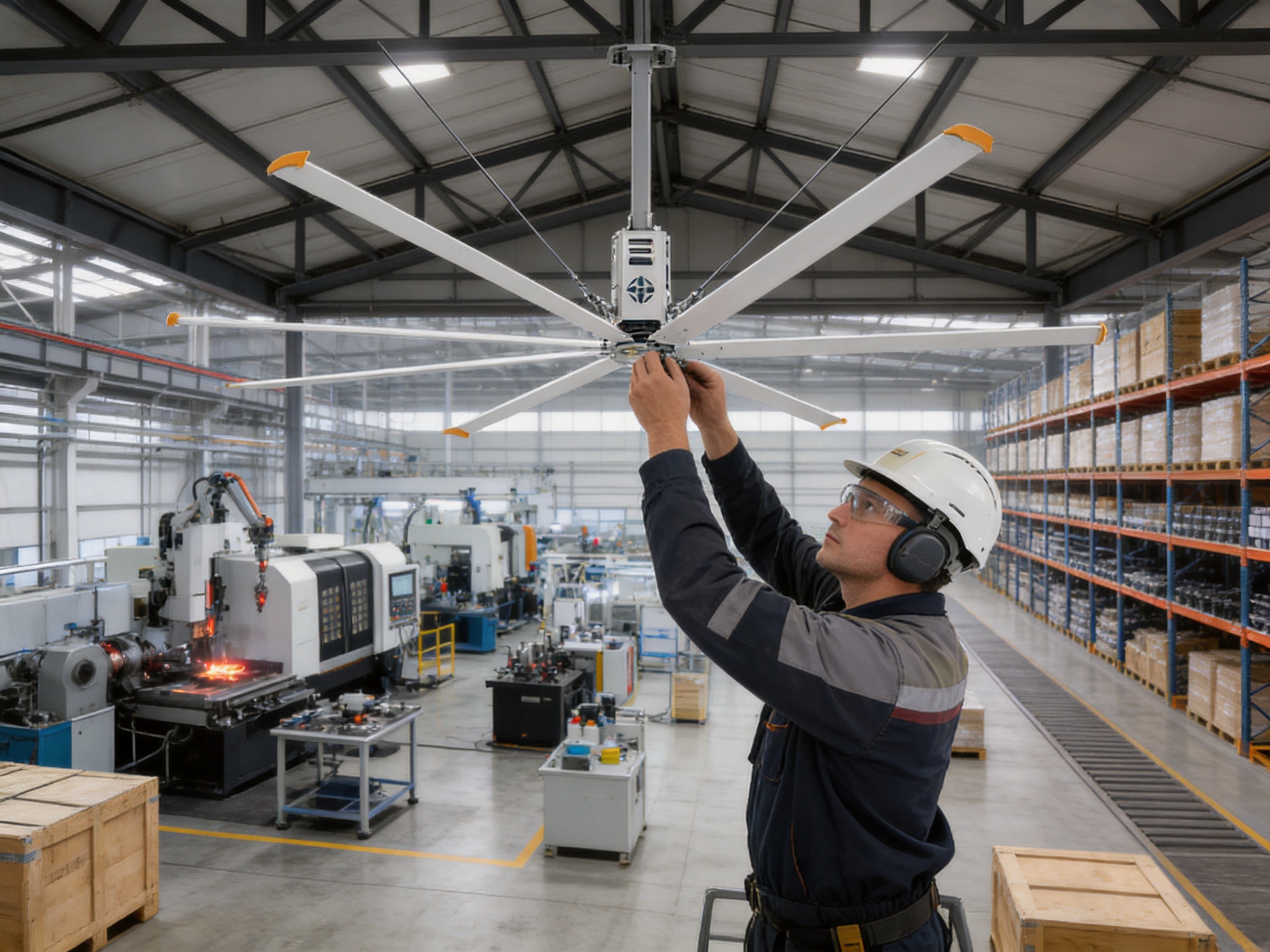
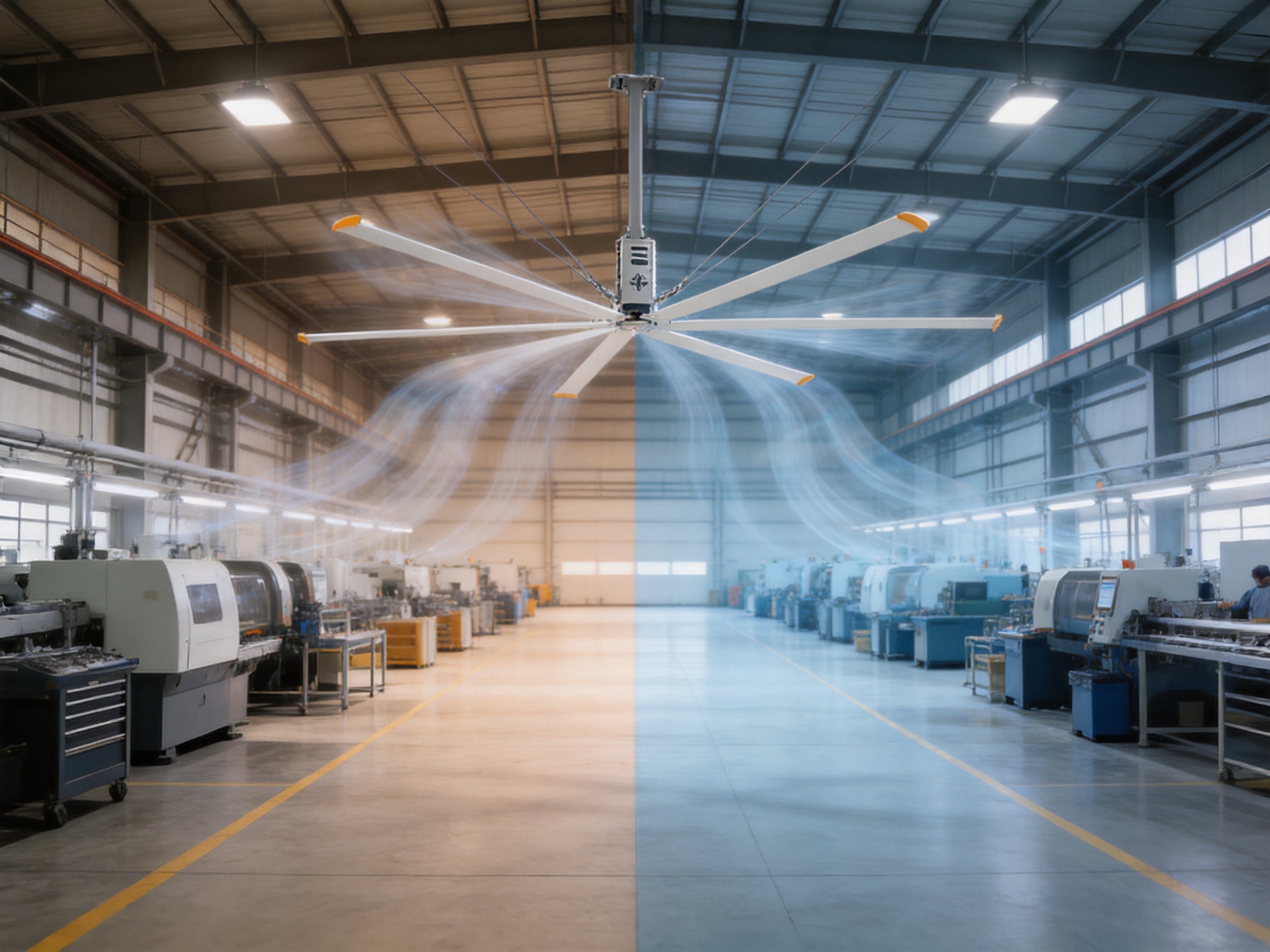
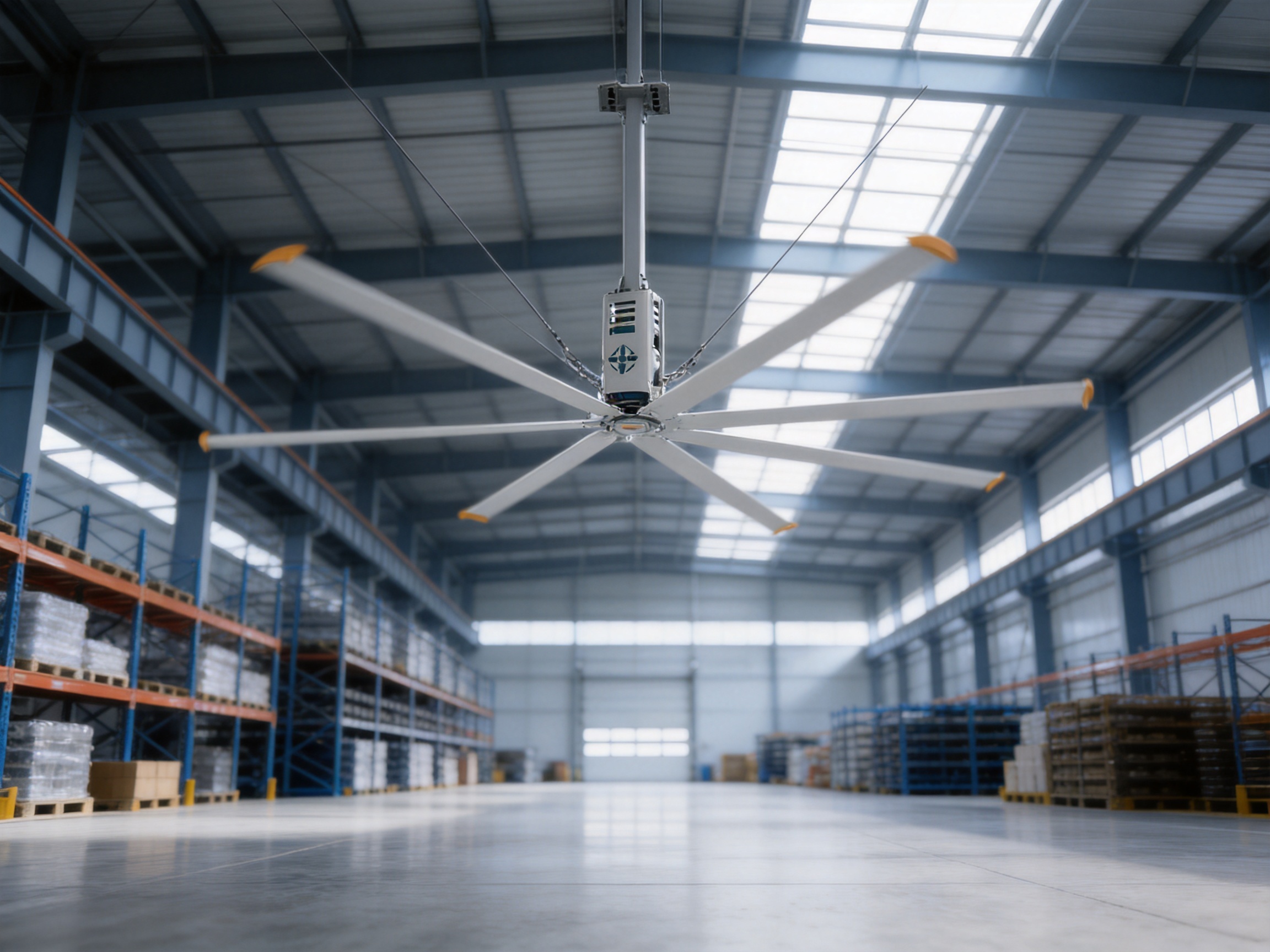
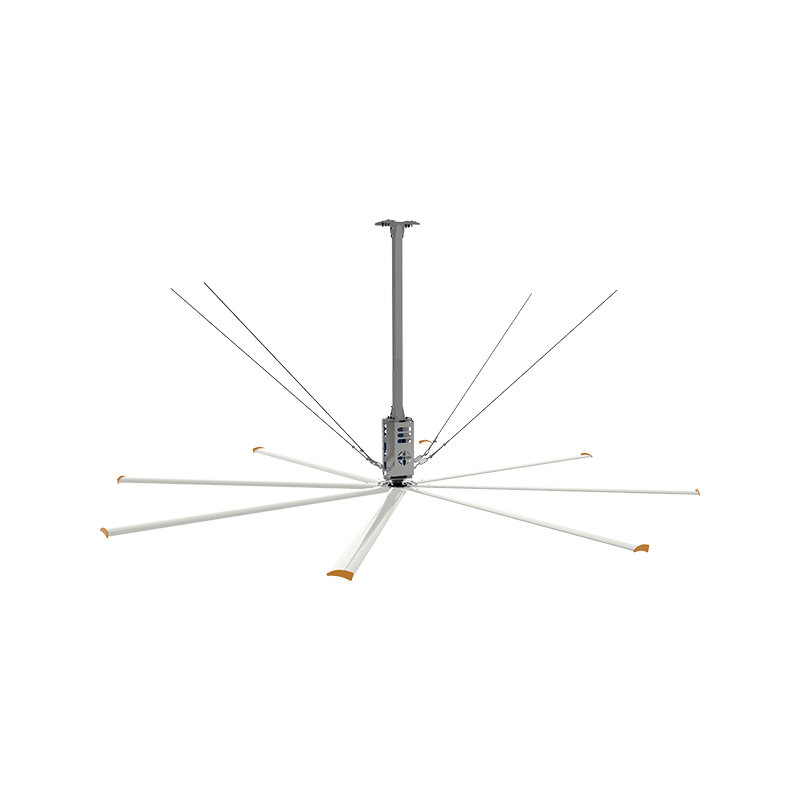
16-foot reversible giant HVLS ceiling fan
Large buildings require a different approach to air movement than ordinary offices, homes, or small retail rooms. In a warehouse, manufacturing plant, gymnasium, agricultural barn, exhibition hall, or indoor sports arena, air can become stagnant even when conventional fans are operating. High ceilings, extensive floor areas, heat-producing equipment, stored goods, and large numbers of occupants all contribute to uneven temperatures and poor ventilation. A high-volume, low-speed ceiling fan is designed to address these challenges by moving a substantial quantity of air across a broad area with controlled energy consumption.
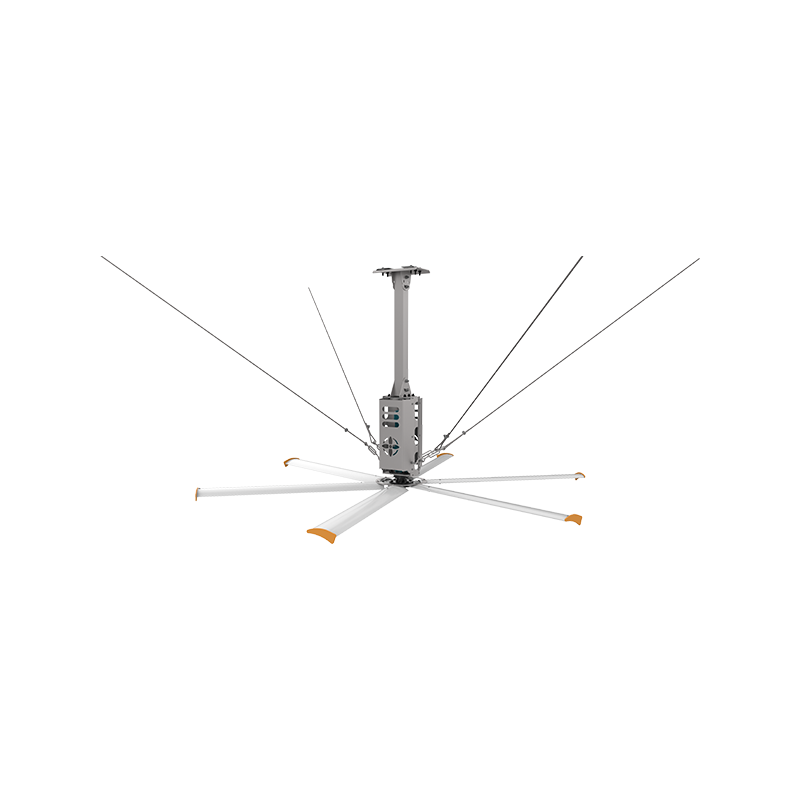
The 16-foot reversible giant HVLS ceiling fan is an industrial air-circulation solution developed for large indoor spaces. With a fan diameter of 4.9 meters, six aluminum-alloy blades, a Nord motor, variable-speed operation from 0 to 64 revolutions per minute, and a stated coverage area of up to 650 square meters, this fan is engineered to create a broad and comfortable air movement pattern. Its reversible function allows the same unit to support summer cooling and winter destratification, making it useful throughout the year rather than only during hot weather.
The product combines large-scale airflow, low-speed operation, reversible rotation, multiple electrical configurations, and industrial construction. These features help it compete with standard ceiling fans, smaller circulation fans, and less adaptable industrial ventilation equipment. The design also benefits from the manufacturing capabilities of Shanghai Aipu Fans Co., Ltd., a company with a dedicated production base, automated machinery, machining resources, welding facilities, and product testing capabilities.
Air movement in a large facility is influenced by building height, internal layout, equipment placement, doors, windows, people, lighting, and heating or cooling systems. A conventional fan may produce a strong local breeze but fail to move air throughout the entire building. Several small fans can improve localized circulation, but they may require more installation points, more wiring, more maintenance, and more coordination.
HVLS fans approach the problem by using a large rotor turning at a relatively low speed. The broad blade span moves a substantial volume of air downward and outward. As the air reaches the floor, it spreads horizontally before rising again at the perimeter of the room. This circulation pattern can help reduce stagnant zones and distribute air more evenly across occupied areas.
For facilities with high ceilings, the vertical movement of air is especially important. Warm air naturally rises and can accumulate near the roof, while the occupied zone below may remain cooler or less comfortable. During summer, forward rotation directs air downward and creates a cooling sensation across the floor. During winter, reverse rotation encourages air mixing and brings warmer air from the upper part of the building back into the occupied zone without creating an unnecessarily strong draft.
This operating principle gives the fan a role in both comfort management and energy management. It does not replace a properly designed heating, ventilation, and air-conditioning system, but it can help that system operate more effectively by improving air distribution. In many facilities, better air mixing can reduce hot and cold spots, improve worker comfort, and support more consistent temperature conditions.
The 16-foot reversible giant HVLS ceiling fan is configured for large industrial and commercial spaces. Its main product specifications include a 4.9-meter, or 16-foot, diameter; six blades; a 1.1-kilowatt Nord motor; support for 220V, 380V, and 415V electrical environments; a 50Hz or 60Hz frequency option; and a maximum speed of approximately 64 RPM. The product information also identifies a coverage area of up to 650 square meters, although the actual effective coverage will depend on ceiling height, building shape, obstructions, climate, and the desired air-speed level.
The fan is designed for controlled operation rather than high-speed turbulence. A large rotor enables the unit to move air over a wide area while maintaining a relatively low rotational speed. This makes the airflow more suitable for occupied workspaces, retail environments, training areas, and public venues where a harsh, concentrated blast of air would be undesirable.
The reversible function is one of the most important design features. In forward mode, the blades circulate air toward the floor to promote cooling and air movement during warm conditions. In reverse mode, the fan helps redistribute warm air that has collected near the ceiling. This seasonal flexibility allows a single fan to support different indoor climate objectives throughout the year.
Specification |
Product Configuration |
Product type |
Reversible giant HVLS ceiling fan |
Fan diameter |
4.9 meters / 16 feet |
Blade quantity |
6 pieces |
Blade material |
Aluminum alloy |
Motor brand |
Nord |
Rated power listed for this configuration |
1.1 kW |
Voltage options |
220V, 380V, and 415V; input range also listed as 200–240V / 380–480V |
Frequency |
50Hz / 60Hz |
Speed range |
0–64 RPM |
Maximum stated coverage area |
Up to 650 square meters |
Product weight |
Approximately 100 kilograms |
Warranty |
3 years |
Packaging |
Wooden cases |
The primary advantage of a 16-foot HVLS fan is its ability to move air across a wide area from a single ceiling-mounted position. The six blades extend across a 4.9-meter diameter, creating a large air-moving surface. Compared with a small high-speed fan, the larger rotor can influence a greater portion of the room while operating at a much lower rotational speed.
This broad air movement is valuable in spaces where multiple zones must be served. In a warehouse, one fan can help circulate air between storage aisles and open work areas. In a gymnasium, a large airflow pattern can reduce stagnant conditions near the court or training floor. In a manufacturing plant, improved circulation can help spread conditioned air around workstations, machinery, and production lines.
The stated air volume for the related product range reaches up to 8,600 cubic meters per minute for the 16-foot configuration identified in the technical table. Actual airflow performance depends on the selected operating mode, installation conditions, blade design, building geometry, and control settings. Even so, the large-diameter architecture provides an important advantage over equipment that produces only a narrow, localized stream.
Broad circulation can also reduce the number of independent fans required in a large room. Fewer units may mean fewer mounting points, fewer electrical connections, a simpler control strategy, and lower inspection requirements. The correct quantity and layout must always be determined through a site assessment, but the high-volume design provides flexibility for facilities seeking an efficient air-movement system.
Many industrial fans are designed mainly for summer cooling. The reversible 16-foot model offers a wider range of applications because it can support both cooling and destratification. This makes the product more useful in regions with substantial seasonal changes or in buildings that use heating during part of the year.
During warm weather, forward rotation pushes air downward and across the occupied zone. The moving air increases the evaporation of moisture from the skin, creating a cooling sensation even when the actual room temperature has not changed significantly. This can make workers, customers, athletes, and visitors feel more comfortable in a large open space.
The cooling effect is particularly useful in warehouses, workshops, sports facilities, and production areas where doors may be opened frequently or where full air conditioning would be expensive. By improving perceived comfort, the fan may allow a facility to use mechanical cooling more selectively. It can also help distribute cooled air from existing HVAC equipment across areas that otherwise receive insufficient circulation.
During winter, warm air often collects near the ceiling because heated air is less dense than cooler air. In a tall building, the temperature difference between the ceiling and the occupied zone can become considerable. Reverse operation gently promotes mixing and returns accumulated warm air toward the lower part of the room.
The objective is not to create a strong downward draft. Instead, the fan operates at a controlled speed to reduce temperature stratification. Better mixing can help heating systems work more efficiently and may reduce the need to raise thermostat settings simply to compensate for cold conditions at floor level. This function can be especially valuable in warehouses, workshops, barns, and high-bay production facilities.
The product is equipped with a Nord motor, a motor brand recognized for industrial transmission and drive applications. The supplied configuration identifies a 1.1-kilowatt motor, while the wider technical table includes several models with different power ratings. The motor selection is intended to provide a balance between operating efficiency, dependable torque, and low-noise performance.
A reliable motor is essential for an HVLS fan because the unit may operate for extended periods in demanding environments. Industrial facilities often require long daily operating hours, and a motor must be able to handle repeated starts, variable-speed control, and changes in operating direction. A properly selected motor and drive system can support smooth acceleration, stable operation, and controlled reversal.
Motor efficiency also affects the total cost of ownership. The power rating alone does not determine operating cost; actual energy consumption depends on operating speed, duty cycle, control settings, electrical conditions, and maintenance. However, a motor designed for efficient variable-speed operation can help the fan deliver the required air movement without continuously running at maximum output.
Low noise is another important consideration. A large fan installed above workers or visitors should provide useful air movement without becoming a distracting source of sound. The motor, blade balance, structural design, and installation quality all influence acoustic performance. The product description emphasizes a low-noise operating design, which supports use in commercial, public, and industrial spaces where communication and concentration are important.
The six blades are made from aluminum alloy. This material offers a useful combination of low weight, structural strength, corrosion resistance, and manufacturing flexibility. Lower blade weight reduces the mechanical load on the motor and support structure, while aluminum’s corrosion resistance is beneficial in facilities where humidity, dust, or changing temperatures are present.
Blade geometry is essential to HVLS performance. Each blade must maintain its designed pitch and shape so that it can generate stable airflow at a low rotational speed. Consistent blade production and accurate assembly help reduce imbalance, vibration, and unnecessary mechanical stress. The large diameter of the fan makes precision particularly important because even small variations can become more noticeable at the blade tips.
Aluminum alloy also supports long-term serviceability. When properly finished and maintained, the blades can remain suitable for demanding indoor environments. Facility managers should still inspect the blades, fasteners, surface condition, and mounting connections regularly. Any sign of deformation, corrosion, looseness, or impact damage should be addressed before the fan is returned to normal operation.
The fan is specified for a speed range from 0 to 64 RPM. Variable-speed operation gives facility operators greater control than a simple on-off fan. The unit can be adjusted according to temperature, occupancy, activity level, season, and the airflow requirements of a particular area.
At a lower speed, the fan may provide gentle circulation for offices, retail spaces, exhibition areas, or lightly occupied zones. A higher setting can be selected when stronger air movement is required in a warehouse, workshop, sports facility, or manufacturing environment. Fine adjustment also helps operators avoid running the fan harder than necessary.
Variable-speed control can support energy-conscious operation. Instead of operating continuously at maximum speed, the fan can respond to actual conditions. For example, a facility may use a higher setting during the hottest part of the day and a lower setting during the morning or evening. In winter, reverse operation can be set to a moderate speed to mix air without creating discomfort at floor level.
Control strategies may be integrated into a facility’s operating procedures or building-management system, depending on the final electrical configuration and site requirements. Before installation, the purchaser should confirm the available voltage, frequency, control method, protection requirements, and compatibility with the local electrical system.
The fan supports multiple voltage specifications, including 220V, 380V, and 415V. The technical information also lists an input range of 200–240V and 380–480V. This flexibility helps the product serve customers in different countries and regions, where electrical standards may vary.
Electrical compatibility is an important consideration for export projects and multinational facilities. A fan selected for the wrong voltage or frequency can experience poor performance, excessive heating, control faults, or premature failure. Providing options for different supply environments simplifies project planning and allows the manufacturer to configure equipment according to the destination market.
Customers should provide complete electrical information before ordering. This includes nominal voltage, phase arrangement, frequency, available protection devices, control-panel requirements, and any local certification or installation standards. The final product configuration should be confirmed with the manufacturer and the project’s qualified electrical contractor.
Electrical installation must be carried out by authorized professionals. The fan should be protected by suitable circuit protection and grounding, and the installation should comply with applicable safety codes. Operators should never attempt to modify the motor, controller, wiring, or reversal system without appropriate technical authorization.
Conventional industrial fans remain useful in many applications, but they normally produce a more concentrated airflow pattern. A wall-mounted fan may be effective near a workstation, while a portable pedestal fan can be moved from one location to another. These products are practical for localized ventilation, but they may not provide consistent air movement across a large, high-ceilinged room.
A 16-foot HVLS fan is designed for a different purpose. It is mounted overhead and covers a broad area from a fixed position. Instead of generating a narrow, high-speed stream, it creates a large volume of lower-speed airflow. This makes it suitable for whole-zone circulation rather than individual spot cooling.
Compared with installing many small fans, an HVLS solution can simplify the overall layout. The number of units required will depend on the building and the desired coverage, but large-diameter fans can reduce visual clutter, floor obstructions, and the need for multiple portable devices. A ceiling-mounted design also preserves floor space for storage, machinery, vehicles, products, and pedestrian movement.
Compared with a small ceiling fan, the 16-foot model has a much greater air-moving diameter and is intended for industrial-scale rooms. Compared with high-speed fans, it can provide a more even and less aggressive airflow pattern. Compared with heating or cooling equipment alone, it improves distribution so that conditioned air can reach more of the occupied zone.
Equipment Type |
Typical Airflow Pattern |
Best-Suited Use |
Potential Limitation |
16-foot HVLS ceiling fan |
Broad, low-speed, large-area circulation |
Warehouses, factories, sports halls, barns, exhibition spaces |
Requires suitable ceiling structure and professional installation |
Wall-mounted industrial fan |
Directional and localized |
Workstations, loading areas, workshops |
Limited reach and possible dead zones |
Pedestal fan |
Portable directional airflow |
Temporary cooling and flexible spot ventilation |
Occupies floor space and requires repositioning |
Small ceiling fan |
Localized circulation under a compact rotor |
Offices, small stores, residential or light-commercial rooms |
Insufficient coverage for very large high-bay areas |
Air-conditioning system without circulation fans |
Conditioned air distribution according to duct layout |
Temperature and humidity control |
May leave stratified or poorly mixed areas |
Warehouses often contain high racks, large open aisles, loading doors, forklifts, packaging stations, and frequently changing inventories. These conditions can create uneven temperature zones. During summer, heat may build up beneath the roof, while during winter, heated air may remain above the storage area.
The 16-foot reversible HVLS fan can help move air through open warehouse zones without occupying valuable floor space. Forward operation can provide air movement for workers during hot periods. Reverse operation can mix warm air downward during heating season. Better circulation may also reduce stagnant areas around storage zones, although fan placement must be planned to avoid disturbing lightweight packaging, dust, or sensitive products.
Warehouse operators should consider rack height, aisle direction, sprinkler locations, lighting, overhead cranes, loading doors, and pedestrian routes before installation. Fans must be positioned so that the blade sweep and downward airflow do not interfere with equipment or safety systems. A professional site survey is recommended for determining the number of fans and their spacing.
Manufacturing facilities may include heat-generating machinery, welding areas, assembly lines, inspection stations, and variable occupancy. Workers may remain in fixed positions for long periods, making thermal comfort and air movement important operational considerations.
An HVLS fan can support general air circulation around production areas and help distribute conditioned air. It may also reduce the sensation of stagnant air in sections of the plant that are distant from walls, doors, or mechanical ventilation outlets. In facilities with process heat, the fan can improve mixing, but it should be used as part of a complete ventilation strategy rather than as a substitute for source capture or exhaust systems.
Manufacturing operators should evaluate the type of process, the presence of fumes or combustible dust, the temperature of the environment, and the need for specialized equipment certifications. The standard product configuration is intended for suitable indoor applications, and additional requirements should be discussed before purchase if the fan will operate in a hazardous or unusually corrosive environment.
Gymnasiums and indoor sports arenas often have high ceilings and large unobstructed floor areas. Physical activity increases body heat, while spectators and lighting systems can further influence indoor comfort. A large ceiling fan can help circulate air without creating floor-level obstacles.
During warm events, forward rotation can create a comfortable breeze across the playing or training area. The low-speed design is generally more suitable than a concentrated high-speed fan because it can reduce stagnant conditions without causing an excessively disruptive blast. Operators can adjust the speed according to the sport, the number of occupants, and the position of seating or equipment.
Installation planning is particularly important in sports facilities. The fan must be positioned at a safe height and clear of suspended equipment, scoreboards, lighting, nets, and structural elements. Airflow should also be evaluated so that it does not adversely affect activities involving lightweight balls, shuttlecocks, paper materials, or other airborne objects.
Agricultural barns require careful air management because livestock, crops, feed, bedding, and equipment can all be affected by temperature and humidity. Large spaces may experience hot spots, condensation, and poor air movement, particularly when natural ventilation is limited.
The reversible fan can help create a more even airflow pattern in suitable agricultural buildings. Forward operation may improve air movement during warm weather, while reverse operation can assist with mixing during colder periods. In livestock environments, airflow must be managed carefully to avoid excessive drafts directly across animals, especially young or vulnerable animals.
Operators should select fan locations according to barn layout, animal density, ventilation openings, dust levels, cleaning procedures, and environmental control requirements. The fan should not be treated as a replacement for dedicated fresh-air intake, exhaust ventilation, or humidity management. Instead, it can serve as a circulation component within a broader agricultural ventilation plan.
Retail stores and exhibition halls often prioritize comfort, appearance, quiet operation, and unobstructed floor space. A ceiling-mounted HVLS fan can support air movement without taking up selling or display areas. It can be particularly useful in large stores, furniture halls, wholesale outlets, trade-show venues, and event spaces.
In these environments, low-noise operation is valuable because customers need to communicate and staff need to work without persistent mechanical distraction. Variable-speed control allows the operator to choose a gentle setting when the space is lightly occupied and a stronger setting during crowded events or warm weather.
Exhibition halls may also benefit from more even temperature and humidity distribution. The fan can help reduce stagnant pockets around displays and open floor areas. However, sensitive exhibits, hanging objects, paper products, fabrics, and lightweight displays require an airflow assessment before the system is commissioned.
Automotive repair shops often have large doors, high ceilings, vehicle bays, tools, lifts, and heat-producing equipment. The fan can help circulate air through the working zone while preserving floor space for vehicles and mechanics. Its use should be coordinated with exhaust extraction systems that remove vehicle fumes or process contaminants at the source.
Food processing facilities may use large fans to support general air circulation and reduce areas of stagnant humidity. Because hygiene, contamination control, temperature, and cleaning procedures are critical, the final equipment selection must match the facility’s sanitation requirements. Fan surfaces, mounting arrangements, and maintenance access should be considered during project design.
The fan may also be useful in other commercial and industrial locations, including distribution centers, repair depots, logistics buildings, indoor event venues, and large service facilities. In every application, the product’s value depends on correct sizing, safe installation, appropriate control, and regular maintenance.
Shanghai Aipu Fans Co., Ltd. was established in Shanghai, China, in 2006 and specializes in industrial-grade ceiling fans and air-movement solutions. The company operates an approximately 8,000-square-meter production base and serves industrial customers in domestic and international markets.
The manufacturing base includes high-precision automated machinery, a machining center, a cutting center, a welding center, and a testing center. These resources support multiple stages of production, from material preparation and component machining to structural fabrication, assembly, and performance verification.
Automated and high-precision equipment can improve repeatability across production batches. This is especially important for large-diameter fans, where blade consistency, hub alignment, frame accuracy, and fastener positioning can influence balance and vibration. A controlled manufacturing process helps reduce variation between units and supports stable quality for OEM and ODM projects.
The machining center can contribute to accurate production of mechanical components, mounting parts, hubs, and connection elements. The cutting center supports consistent preparation of metal materials, while the welding center helps produce strong and repeatable structural assemblies. The testing center provides an opportunity to verify operating performance before products are shipped to customers.
Quality control is not limited to the final inspection. A strong industrial manufacturing process evaluates materials, dimensions, assembly quality, electrical connections, surface condition, mechanical movement, and operational behavior throughout production. This approach helps identify potential issues earlier and supports reliable delivery for large projects.
The company provides OEM and ODM support, allowing customers to request product configurations or branding arrangements suited to specific markets and applications. Customization may involve voltage, frequency, controls, color, packaging, documentation, blade configuration, mounting accessories, or other project requirements, subject to technical review.
OEM support is valuable for distributors, industrial equipment suppliers, engineering contractors, and brands seeking a dependable manufacturing partner. ODM support is useful for customers who require a product solution adapted to a particular building type, operating environment, or sales channel.
Customization should begin with a clear technical specification. Customers should provide building dimensions, ceiling height, electrical conditions, environmental characteristics, desired operating modes, control requirements, installation limitations, and target coverage. This information helps the manufacturer determine whether the standard 16-foot configuration is appropriate or whether another model in the product range would provide a better result.
The supplied technical information includes a broader family of HVLS fan models, ranging from 14 feet to 28 feet in diameter. These models vary in blade count, power, maximum speed, and air volume. The 16-foot model is therefore one option within a larger product platform rather than an isolated product.
The model range allows projects to select equipment according to building dimensions, ceiling height, required airflow, obstructions, and desired coverage. Larger fans may be suitable for broad open spaces, while smaller units may be more appropriate for rooms with lower ceilings, structural divisions, or heavier obstruction density.
Model |
Diameter |
Blade Options |
Listed Power |
Maximum Speed |
Listed Air Volume |
AWF86 |
28 feet / 8.6 meters |
6 |
2.2 kW |
48 RPM |
15,800 m³/min |
AWF80 |
26 feet / 8.0 meters |
6 |
2.2 kW |
50 RPM |
15,200 m³/min |
AWF73 |
24 feet / 7.3 meters |
5 / 6 / 8 |
1.5 kW |
50 RPM |
14,600 m³/min |
AWF61 |
20 feet / 6.1 meters |
5 / 6 / 8 |
1.5 kW |
58 RPM |
12,000 m³/min |
AWF55 |
18 feet / 5.5 meters |
5 / 6 / 8 |
1.5 kW |
62 RPM |
9,400 m³/min |
AWF49 |
16 feet / 4.9 meters |
5 / 6 / 8 |
1.5 kW |
64 RPM |
8,600 m³/min |
AWF42 |
14 feet / 4.2 meters |
5 / 6 / 8 |
1.5 kW |
70 RPM |
4,600 m³/min |
The product-specific information identifies the featured configuration as a six-blade, 4.9-meter fan with a 1.1-kilowatt Nord motor. The model-range table lists the AWF49 family entry with a 1.5-kilowatt power value and several blade options. Because project configurations may vary, buyers should confirm the exact motor rating, blade quantity, controller, voltage, and performance data stated on the quotation and final technical drawing before placing an order.
Safe installation begins with a structural review. A 16-foot fan is a substantial piece of equipment, and the mounting structure must support the static weight, operating loads, starting forces, and any dynamic effects associated with rotation. The supplied product information lists an approximate weight of 100 kilograms, but the complete installed load may also include mounting brackets, extension components, safety cables, and electrical accessories.
The ceiling structure should be inspected by a qualified professional. Installation must account for beams, roof trusses, concrete slabs, suspended ceilings, lighting systems, sprinkler lines, cranes, ducts, and other overhead equipment. The fan should not be attached to a non-structural ceiling surface or an unverified support point.
Clearance is equally important. The blade path must remain free of obstructions, and the fan should be positioned at a safe height above people, machinery, stored goods, and vehicles. The exact clearance requirements depend on local codes, building conditions, and the final installation design.
Electrical work should be performed by qualified personnel. The motor, controller, protective devices, grounding system, and emergency shutoff should be installed according to the applicable regulations. After installation, the unit should be inspected for blade balance, fastener tightness, structural stability, direction of rotation, speed control, and abnormal noise or vibration.
Regular maintenance helps preserve performance and extend service life. Inspection intervals should be based on operating hours, environmental conditions, dust levels, humidity, and the manufacturer’s recommendations. Facilities with heavy dust, corrosive air, or extended daily operation may require more frequent inspection.
Maintenance personnel should examine blade surfaces, fasteners, safety cables, mounting structures, motor connections, controller components, and visible wiring. Any unusual noise, vibration, oscillation, speed fluctuation, or delayed starting should be investigated promptly. The fan should be isolated from the power supply before service work begins.
Blade cleanliness can affect airflow and balance. Dust and material accumulation should be removed using procedures appropriate for the blade finish and the facility’s hygiene requirements. Cleaning methods must not bend the blades or damage electrical components.
The three-year warranty stated for the product provides additional support for customers planning long-term use. Warranty conditions may depend on correct installation, authorized operation, maintenance, and compliance with the manufacturer’s technical requirements. Buyers should review the warranty documentation and retain installation and service records.
The energy value of an HVLS fan comes from its ability to move air across a large area using a relatively low-speed, variable-speed design. The product does not cool air in the same way as a refrigeration-based air-conditioning system. Instead, it improves air movement and can enhance the perceived comfort of people in the occupied zone.
In warm conditions, air movement can make a room feel more comfortable by increasing evaporation from the skin. In cold conditions, reverse rotation can reduce stratification and help make better use of heated air. When combined with an existing HVAC system, the fan may help distribute conditioned air more evenly and reduce temperature differences within the building.
Energy performance should be evaluated using actual operating conditions rather than relying only on nominal motor power. Important factors include operating hours, selected speed, number of fans, local energy prices, indoor temperature, heating and cooling loads, and control practices. A properly designed system uses the fan only when it provides a meaningful comfort or circulation benefit.
The 16-foot reversible giant HVLS ceiling fan has several advantages over conventional alternatives. Its large diameter allows it to influence a broad floor area. Its low-speed design is intended to provide steady, comfortable circulation rather than a narrow and aggressive blast. Its reversible operation supports both summer cooling and winter air mixing. Its variable-speed range allows the operator to adjust airflow according to real conditions.
The use of aluminum-alloy blades helps reduce weight while supporting industrial durability. The Nord motor provides a recognized drive solution, while multiple voltage and frequency options support deployment in different markets. OEM and ODM services add flexibility for customers with specific engineering, branding, or distribution requirements.
The manufacturer’s production resources are another important competitive factor. An 8,000-square-meter production base, automated machinery, machining center, cutting center, welding center, and testing center provide the foundation for controlled manufacturing. This combination is valuable to project customers who need consistent products, technical cooperation, reliable packaging, and repeat orders.
Wooden-case packaging is suitable for protecting large industrial equipment during storage and transportation, particularly for international shipments. Proper packaging helps reduce the risk of damage to blades, motors, frames, and accessories before the product reaches the installation site.
Before purchasing, the customer should collect the building’s length, width, ceiling height, floor area, structural conditions, indoor temperature range, intended occupancy, and operating schedule. The location of HVAC equipment, skylights, doors, cranes, lights, sprinklers, racks, and production machinery should also be documented.
The desired result must be clearly defined. Some facilities primarily need summer comfort, while others need winter destratification, general ventilation support, humidity distribution, or improved airflow around workstations. The appropriate fan quantity and layout will depend on these objectives.
Electrical information should include voltage, frequency, phase, and control preferences. Environmental information should cover dust, moisture, corrosive substances, cleaning methods, and any potential exposure to chemicals or combustible materials.
Customers should also confirm the final technical configuration in writing. This includes diameter, blade count, motor power, motor brand, RPM range, air volume, coverage estimate, control system, packaging, warranty, and installation accessories. Confirming these details is particularly important when a product family includes multiple power ratings and blade configurations.
The featured fan has a diameter of 4.9 meters, equivalent to approximately 16 feet. This large rotor is designed for broad air circulation in high-ceilinged industrial and commercial spaces.
The product-specific configuration identifies six aluminum-alloy blades. Other models in the broader product family may be available with different blade quantities, so the final blade configuration should be confirmed in the purchase specification.
The featured configuration is equipped with a 1.1-kilowatt Nord motor. The wider model table includes different power ratings, including a listed 1.5-kilowatt value for the AWF49 family entry. Buyers should confirm the exact motor rating for the selected configuration before ordering.
Yes. The fan is designed for reversible operation. Forward rotation is intended to circulate air downward for warm-weather comfort, while reverse rotation helps mix warm air accumulated near the ceiling during colder conditions.
The product information lists a speed range from 0 to 64 RPM for the featured configuration. The actual operating speed should be selected according to the building, season, occupancy, and desired airflow level.
The listed options include 220V, 380V, and 415V. The technical information also identifies input ranges of 200–240V and 380–480V. Electrical details should be confirmed for the destination market and the final motor-controller package.
The stated coverage area for the featured fan is up to approximately 650 square meters. Actual coverage depends on ceiling height, building geometry, obstructions, desired air speed, indoor conditions, and the overall ventilation design. A site assessment is recommended before finalizing the quantity of fans.
Typical applications include warehouses, manufacturing plants, gymnasiums, indoor sports arenas, agricultural barns, retail spaces, exhibition halls, automotive repair shops, food processing facilities, and other large industrial or commercial buildings.
No. The fan circulates air and improves perceived comfort, but it does not provide refrigeration-based cooling or dedicated fresh-air ventilation. It can complement air-conditioning, heating, exhaust, and fresh-air systems by helping distribute air more evenly.
Yes. The fan should be installed by qualified professionals who can verify the structural support, clearances, electrical connections, safety systems, and operating condition. Improper installation can create safety risks and reduce performance.
The product is listed as being packaged in wooden cases. This packaging approach is intended to help protect the large fan components during handling, storage, and transportation.
The listed warranty is three years. Warranty coverage is subject to the manufacturer’s terms, including proper installation, operation, maintenance, and compliance with the relevant technical requirements.
Yes. OEM and ODM support is available. Customers can discuss electrical specifications, controls, appearance, packaging, documentation, and project-specific requirements with the manufacturer’s technical and sales teams.
The 16-foot reversible giant HVLS ceiling fan is designed to solve the air-circulation challenges found in large, high-ceilinged spaces. Its 4.9-meter diameter, six aluminum-alloy blades, variable-speed operation, reversible rotation, and industrial motor configuration provide a practical combination of broad airflow and operational flexibility.
Forward rotation helps create a cooling breeze during warm conditions, while reverse operation helps reduce winter temperature stratification. The fan can support warehouses, factories, sports facilities, barns, exhibition halls, retail spaces, repair shops, and other large indoor environments. Its value is greatest when it is correctly sized and integrated with the building’s existing heating, cooling, and ventilation systems.
Behind the product is a manufacturing operation with automated machinery, machining, cutting, welding, assembly, and testing capabilities. Shanghai Aipu Fans Co., Ltd. has specialized in industrial ceiling fans since 2006 and offers OEM and ODM support for customers requiring customized solutions. The company’s production resources and industrial focus provide a strong foundation for consistent product quality and project-oriented service.
For purchasers, the most important next step is to confirm the building conditions and final technical configuration. Voltage, motor power, blade quantity, coverage expectations, installation height, structural support, control method, and environmental requirements should all be reviewed before purchase. With appropriate planning and professional installation, this reversible HVLS fan can become a durable component of an efficient large-space air-management strategy.
1. Product technical information for the 16-foot reversible giant HVLS ceiling fan, including dimensions, motor configuration, voltage options, speed range, blade material, applications, warranty, and packaging.
2. HVLS fan model-range data covering AWF86, AWF80, AWF73, AWF61, AWF55, AWF49, and AWF42 configurations.
3. Industrial ventilation design principles for high-volume, low-speed air circulation in large buildings.
4. General engineering practices for ceiling-mounted fan installation, structural support, electrical protection, and preventive maintenance.
5. Manufacturer information concerning industrial fan production, automated machinery, machining, cutting, welding, testing, OEM services, and ODM services.
6. General principles of thermal comfort, air movement, temperature stratification, and seasonal air circulation in high-ceilinged facilities.
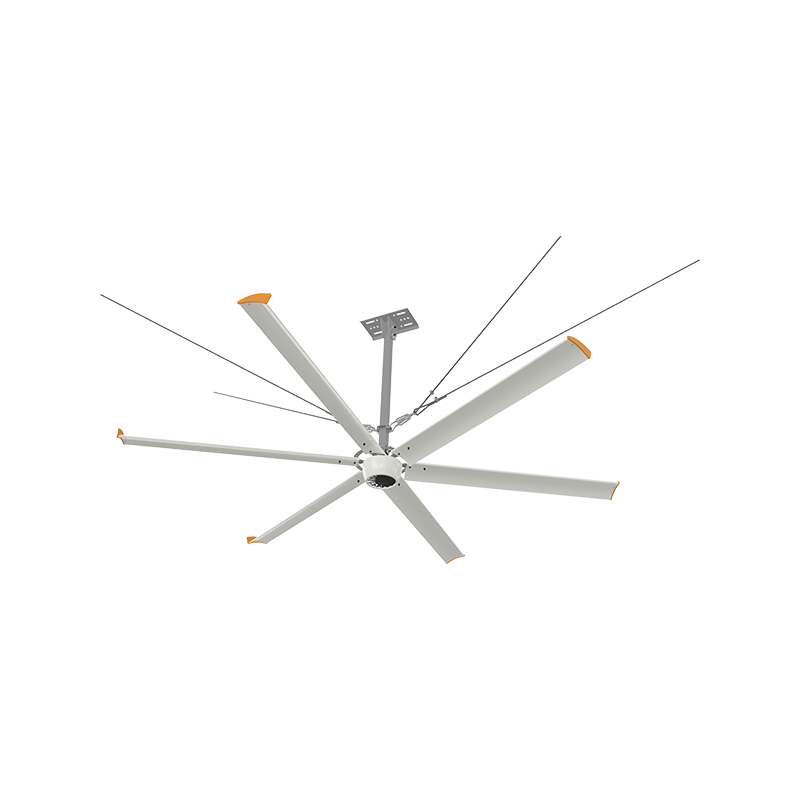
The 15-foot Even Airflow Industrial BLDC Ceiling Fan utilizes a high-efficiency BLDC motor and carefully designed blades. This ceiling fan operates with extremely low noise levels, making it suitable ...
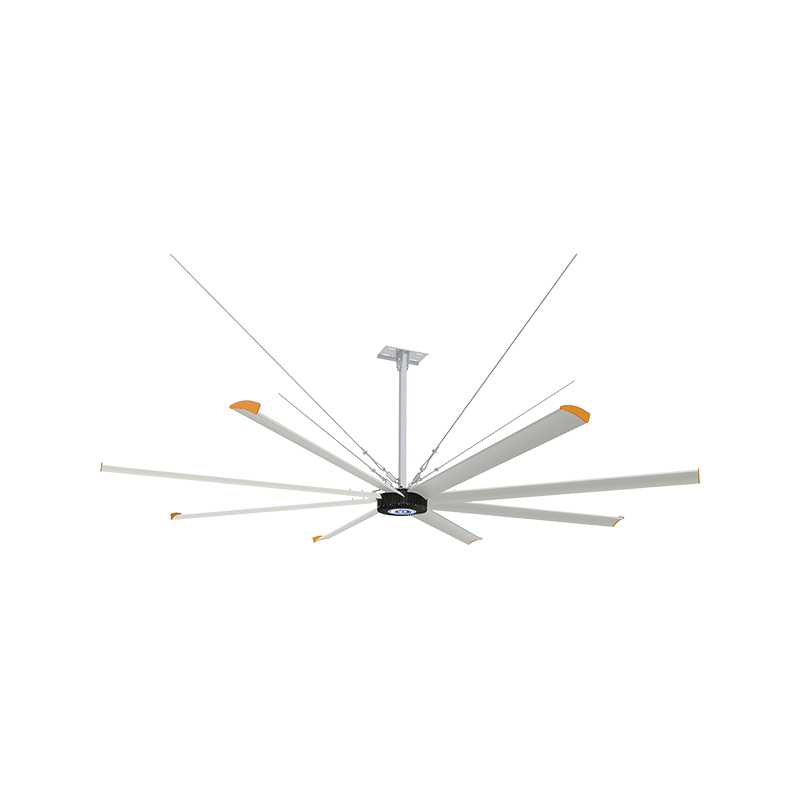
The 8-foot HVLS Large Industrial BLDC Ceiling Fan is equipped with a 0.3KW brushless DC motor, offering higher energy efficiency and lower noise levels. The lower power consumption design helps users ...
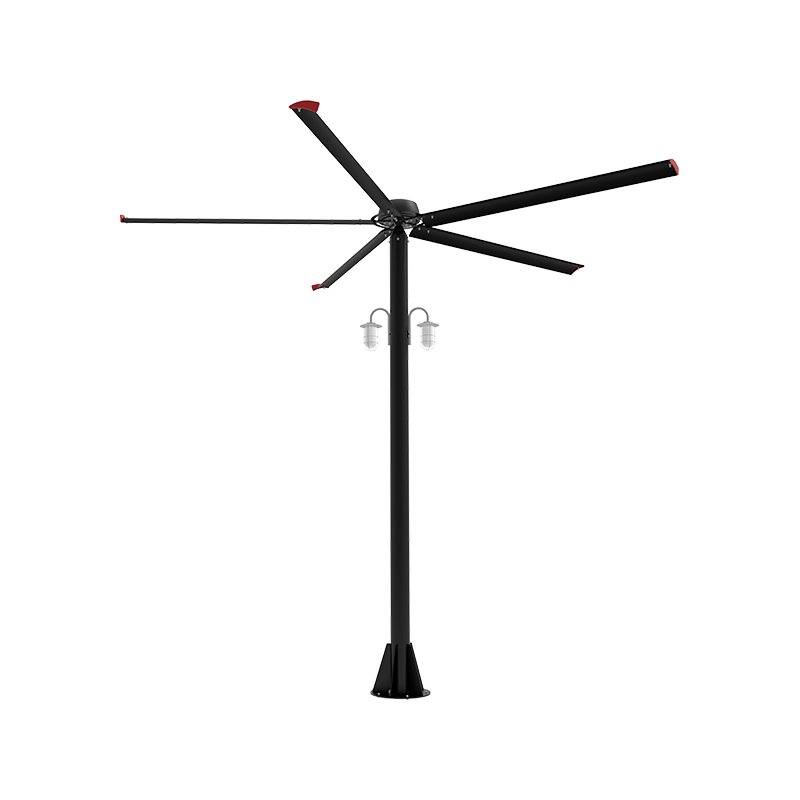
The large vertical HVLS floor-standing ventilation fan offers a variety of color options, allowing users to choose the most suitable color based on different environments and decoration needs. This c...
The 16-foot reversible giant HVLS ceiling fan is equipped with a 1.1KW motor from the Nord brand, supporting multiple voltage specifications including 220V, 380V, and 415V, making it adaptable to diff...
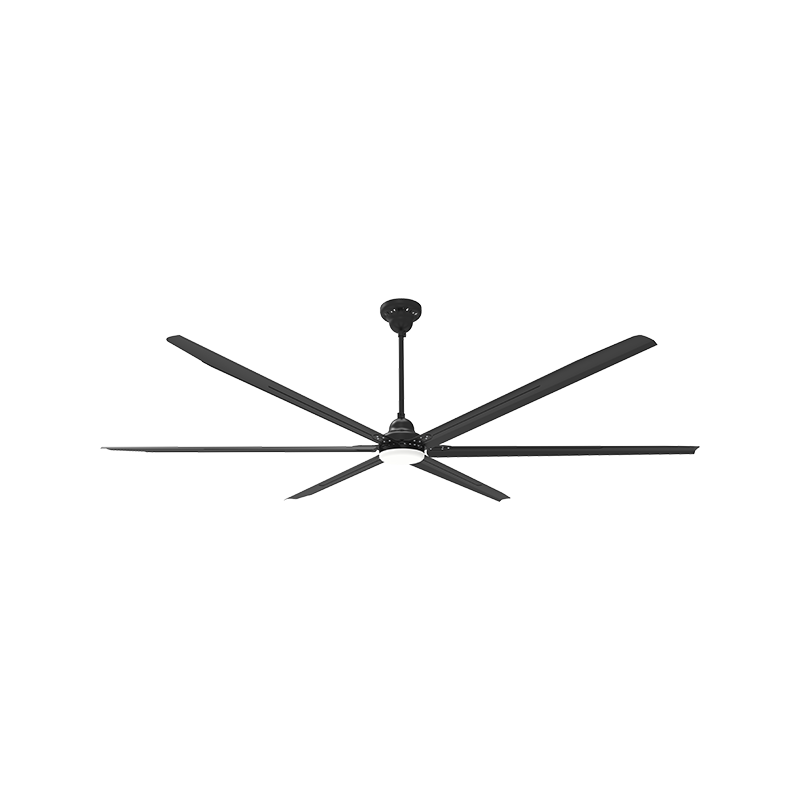
1. Core Technology: High Volume, Low SpeedNatural Breezes: Unlike the “harsh” wind from small fans, HVLS fans use massive blades rotating at low speeds to create a large-scale, three-dimensional breez...
The 7-foot HVLS ceiling fan for small workshops is a high-efficiency ventilation device designed specifically for industrial workshops, warehouses, and small production lines. It features high-qualit...
A 6,800 m² factory floor used to be ventilated by roughly 300 small wall and pedestal fans. Six large ceiling fans now cover the same area, and in the manufacturer's own comparison that change cuts m...
READ MORESpecifying industrial air movement The HVLS Ceiling Fan Isn’t a Big Ceiling Fan. Sizing, motor selection, and mounting height have to work together before a large industrial space can feel genuinely...
READ MORECommercial HVLS Fans: The Quiet Engineering Behind Large-Space Airflow A practical guide to selecting high-volume, low-speed ceiling fans for warehouses, factories, and commercial halls — with the ef...
READ MORELarge-space air movement Big Commercial Fans: How to Size, Mount and Power Them One 24 ft ceiling fan can replace forty pedestal units, but only when span, mounting height and motor match the buildin...
READ MORE Custom Large Industrial Fans Manufacturers