

 English
 Español
 عربى

The 8-foot HVLS Large Industrial BLDC Ceiling Fan is equipped with a 0.3KW brushless DC motor, offering higher energy efficiency and lower noise levels. The lower power consumption design helps users ...
Content
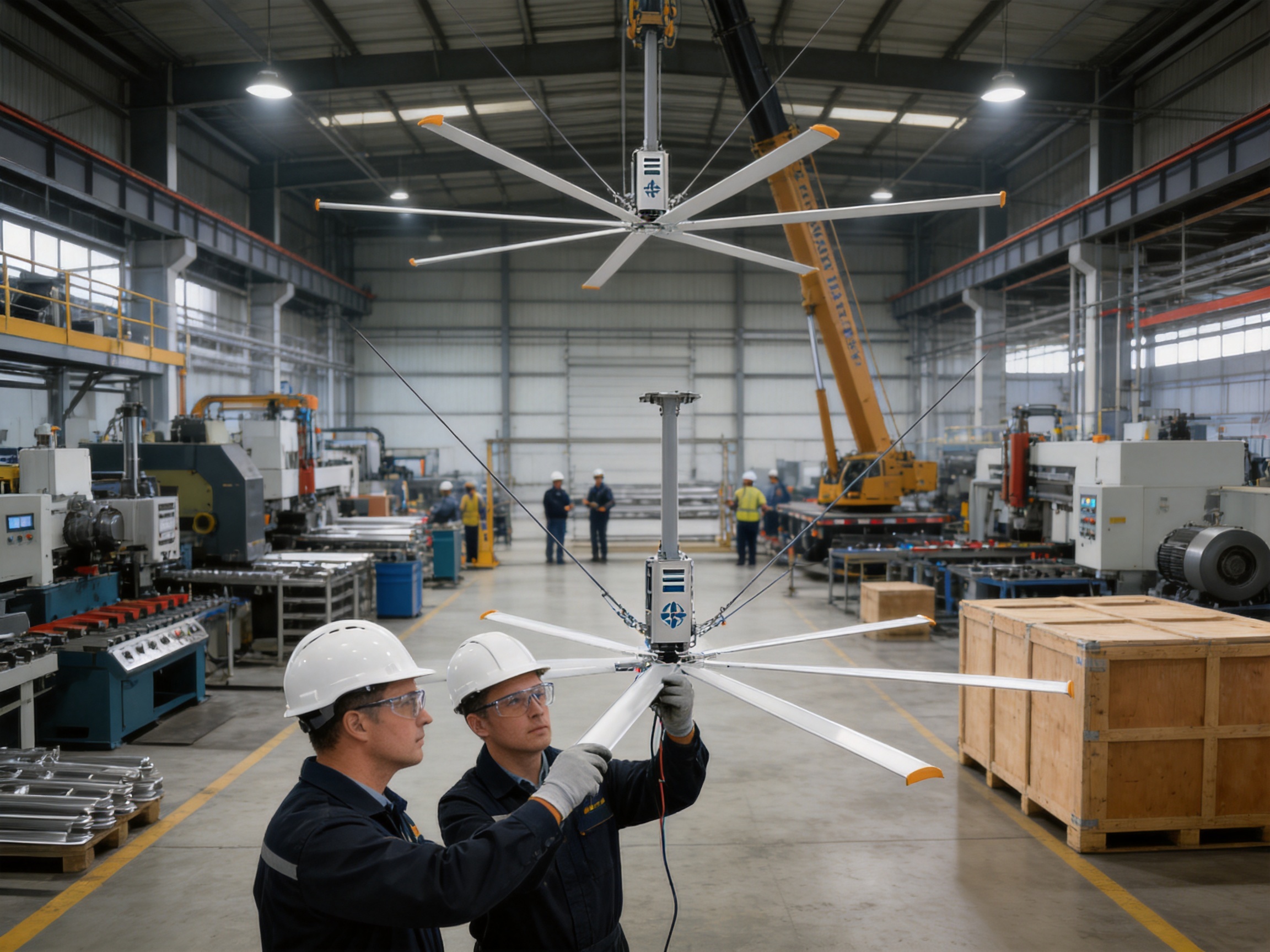
Large industrial buildings often experience uneven temperatures, stagnant air, excessive humidity, and uncomfortable working conditions. Warehouses, manufacturing plants, exhibition halls, sports facilities, agricultural barns, automotive workshops, and commercial spaces all require effective air movement to maintain a healthier and more productive indoor environment. Traditional small fans may create strong airflow only in limited areas, while conventional air-conditioning systems can be expensive to install and operate across a large floor area. A high-volume, low-speed ceiling fan offers a practical alternative by moving a substantial quantity of air over a wide coverage area with efficient energy use.
The 11-foot large industrial giant ceiling fan is designed for this purpose. With a fan diameter of approximately 3.3 meters, a wide-span aluminum alloy blade system, adjustable speed control, and a powerful industrial motor, it delivers broad and consistent air circulation across large indoor spaces. The design is intended to improve comfort, support ventilation, reduce stagnant air, and help facilities manage operating costs.
Manufactured by Shanghai Aipu Fans Co., Ltd., this industrial ceiling fan is part of a product range developed for demanding commercial and industrial environments. The company combines advanced production equipment, specialized motor and fan manufacturing experience, quality-control procedures, and OEM and ODM capabilities to supply customized air-movement solutions for customers worldwide.
Unlike a standard residential ceiling fan, the 11-foot industrial model is engineered for large spaces where airflow distribution, durability, operating stability, and service life are essential. Its large blades move air across a broad horizontal area, while its low-speed operating principle supports comfortable circulation without creating the excessively concentrated draft associated with high-speed portable fans.
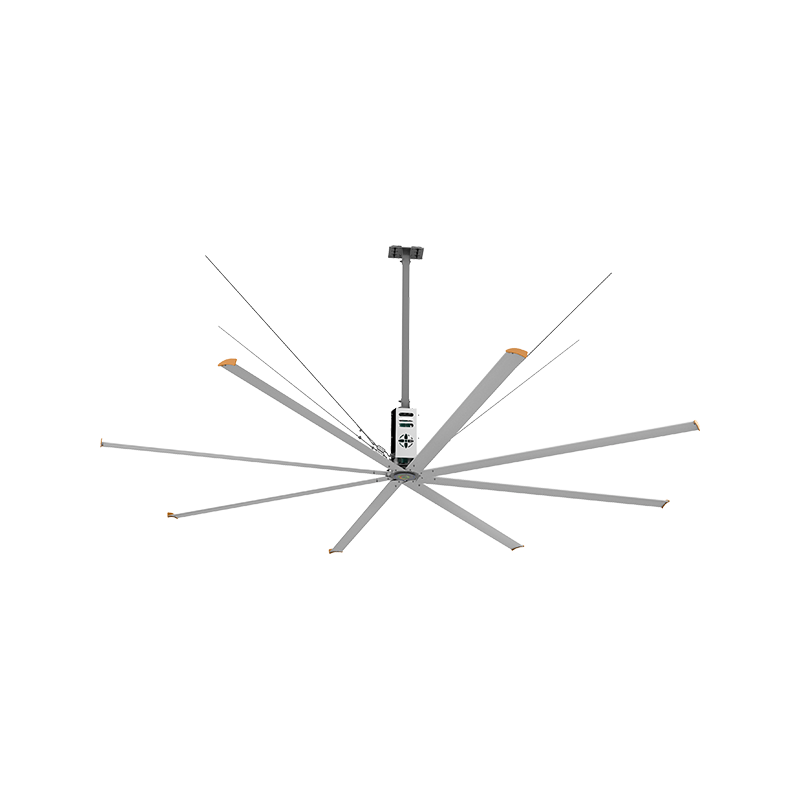
11-foot large industrial giant ceiling fan
The 11-foot large industrial giant ceiling fan is a high-efficiency air circulation device for spaces that need reliable and uniform airflow. Its primary function is not simply to create a strong breeze directly beneath the fan. Instead, the large-diameter blade assembly moves a substantial volume of air downward and outward, creating a circulation pattern that helps distribute air throughout a wider area.
The fan uses aluminum alloy blades, a material selected for its combination of low weight, corrosion resistance, structural strength, and suitability for long-term industrial operation. Lightweight blades reduce the load placed on the motor and support stable rotation. Aluminum alloy also helps the blade assembly maintain its shape and performance under repeated operation in warehouses, workshops, sports facilities, and other demanding environments.
The product supports a variable operating range from 0 to 86 revolutions per minute, according to the configuration and control system. This wide adjustment range allows operators to select gentle airflow for routine ventilation or stronger airflow when a facility needs faster air movement. Adjustable speed is especially valuable in buildings where occupancy, temperature, humidity, production activity, and seasonal conditions change throughout the day.
The specified 11-foot version has a fan diameter of approximately 3.3 meters and a stated coverage area of up to 250 square meters, depending on building height, layout, obstructions, ambient conditions, and installation position. Actual airflow performance may vary according to the selected model, blade configuration, motor specification, and facility requirements. For this reason, professional selection and installation guidance are recommended before purchase.
| Specification | Product information |
|---|---|
| Product type | Large industrial HVLS ceiling fan |
| Nominal diameter | 3.3 meters / 11 feet |
| Blade material | Aluminum alloy |
| Blade quantity | 6 pieces for the listed configuration |
| Speed range | 0–86 RPM, depending on operating configuration |
| Coverage area | Up to approximately 250 square meters, subject to site conditions |
| Available voltage options | 220V, 380V, and 415V; other input configurations may be available |
| Frequency | 50 Hz / 60 Hz |
| Motor brand | Nord motor configuration |
| Weight | Approximately 78 kilograms |
| Warranty | Three years |
| Packaging | Wooden cases |
| Customization | OEM and ODM support |
The technical information above describes the principal 11-foot configuration. The wider product range includes several diameter options, blade arrangements, power ratings, and maximum speeds. Depending on the installation project, customers may select a model based on ceiling height, facility area, required air volume, voltage, application, and local electrical standards.
HVLS means high volume, low speed. The operating principle is based on using a large-diameter fan to move a considerable quantity of air at a relatively low rotational speed. Because the blades cover a wide area, the fan can generate broad airflow without requiring the extremely high blade speed used by smaller portable or wall-mounted fans.
During operation, the blades push air downward. When the air reaches the floor, it spreads outward across the surface and gradually moves upward along the surrounding walls or open spaces. This creates a circulation loop that can reduce temperature differences between the upper and lower portions of a building. In winter, the same circulation pattern can help bring warmer air from the upper area back toward the occupied zone, supporting more balanced temperature distribution.
In summer, the movement of air across the skin improves perceived comfort through evaporative cooling. The fan does not necessarily lower the actual room temperature in the same way as an air-conditioning system. Instead, it helps occupants feel cooler by increasing air movement around the body and reducing the sensation of stagnant air. This can allow facilities to adjust air-conditioning settings while maintaining a comfortable working environment.
The large diameter is an important advantage. A small fan may produce high air velocity close to the blades but have limited influence several meters away. The 11-foot model is designed to distribute airflow across a much larger area. This makes it suitable for buildings where several workstations, storage aisles, production areas, or spectator zones need simultaneous air movement.
Variable speed control allows operators to match airflow to actual demand. At low speed, the fan can provide gentle circulation for long periods without creating an uncomfortable draft. At higher speed, it can help remove stagnant air more quickly or increase perceived cooling during hot weather and periods of high activity.
This flexibility also supports energy-conscious operation. A facility does not need to operate the fan at maximum speed when moderate air movement is sufficient. Operators can use lower settings during mild weather, during low-occupancy periods, or when the building already has adequate ventilation. The result is a more adaptable ventilation strategy than a simple fixed-speed fan.
The most significant advantage of an 11-foot industrial ceiling fan is its ability to distribute air across a wide area. Traditional wall-mounted or pedestal fans generally produce directional airflow from one point. Their effectiveness may decrease rapidly with distance, and multiple units may be required to cover a large building.
A large ceiling fan is installed above the occupied or operational zone and uses its wide blade span to influence a large section of the floor. This can reduce the number of individual fans required for a project and help eliminate areas with weak airflow. In facilities with high ceilings, a correctly selected HVLS fan can provide more uniform circulation than several small fans placed at different locations.
Small high-speed fans can create a narrow, forceful stream of air. Although this may be useful for spot cooling, it may not be ideal for long-term use across an entire facility. Strong localized airflow can disturb lightweight materials, paperwork, dust, or production processes.
The 11-foot model uses a large blade span to move air at a lower speed. Its airflow is broader and more evenly distributed. This characteristic is beneficial in warehouses, manufacturing areas, retail spaces, and public venues where people may remain in the same area for extended periods.
Industrial ventilation and cooling can represent a significant part of facility operating costs. An HVLS ceiling fan can support energy management by improving air distribution and reducing the need for excessive mechanical cooling in suitable conditions. In air-conditioned buildings, more uniform circulation can help reduce hot and cold zones, allowing the cooling system to operate more effectively.
Energy performance depends on many factors, including the motor, control system, operating schedule, building insulation, outdoor temperature, occupancy, and existing HVAC equipment. The fan should therefore be evaluated as part of a complete ventilation and cooling strategy rather than as an isolated energy-saving device. Even so, the ability to move a large quantity of air with a single ceiling-mounted unit makes the product attractive for facilities seeking practical airflow improvement.
Floor-mounted fans occupy valuable working space and may create obstacles around equipment, storage racks, walkways, or production lines. Power cables can also create trip hazards if they are not properly managed. A ceiling-mounted fan keeps the operating area open and leaves floor space available for inventory, machinery, vehicles, customers, or employees.
The overhead installation also reduces the likelihood of accidental contact with the fan assembly. This is particularly useful in warehouses and manufacturing sites where forklifts, carts, lifting equipment, and moving goods are present.
Heat stress and poor air circulation can affect concentration, physical comfort, and productivity. In workshops, warehouses, agricultural buildings, and sports facilities, improved airflow can help create a more pleasant environment. By reducing stagnant areas and supporting consistent air movement, the fan may contribute to better working conditions and improved user experience.
Comfort improvements are especially valuable in buildings where doors are frequently opened, heat-producing machinery is operating, or natural ventilation is insufficient. The fan can work together with exhaust systems, louvers, windows, air-conditioning equipment, and other ventilation devices to create a more balanced indoor environment.
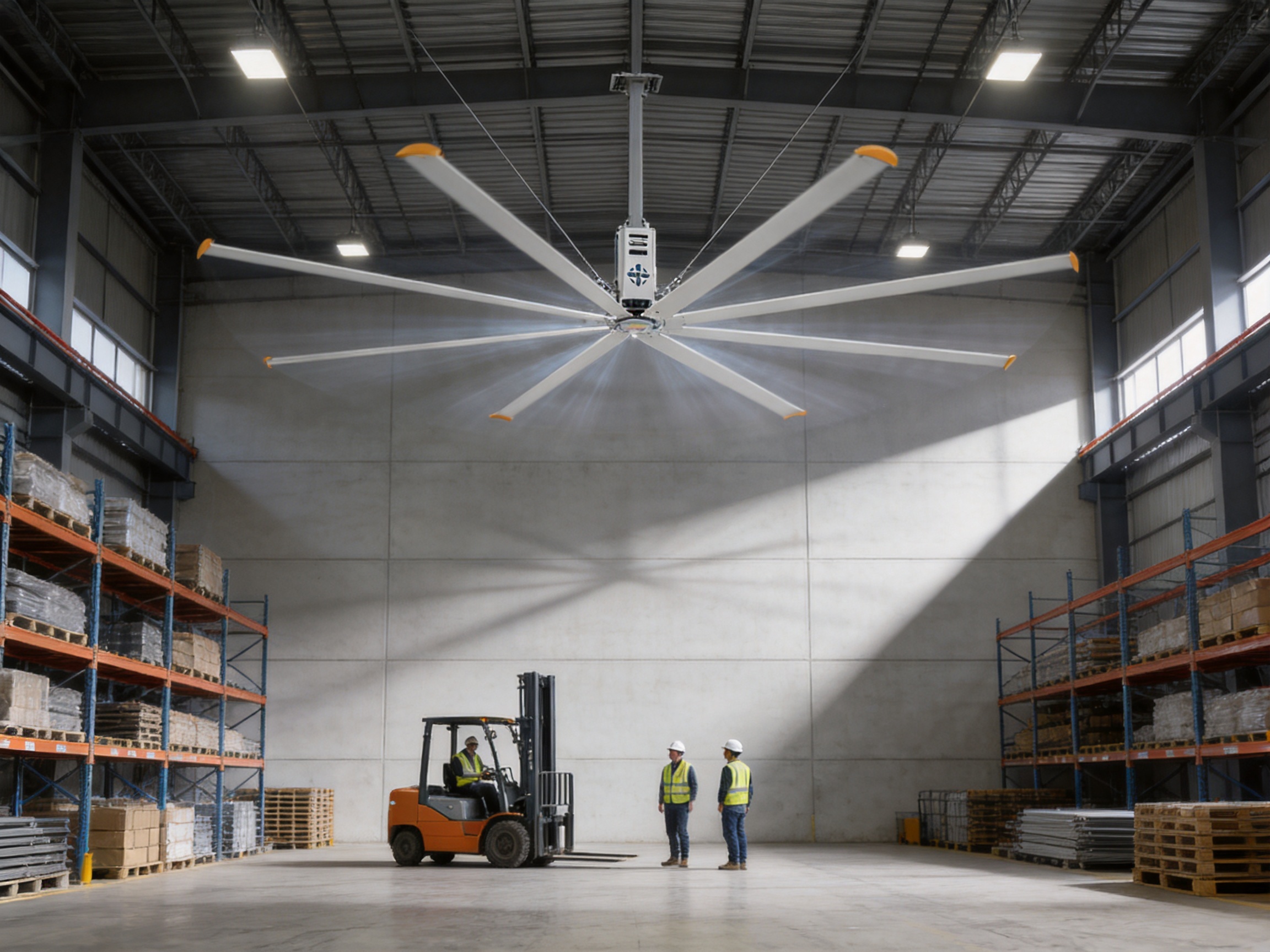
Warehouses often have high ceilings, large floor areas, and aisles that can restrict natural air movement. Heat may accumulate in upper areas, while occupied working zones remain uncomfortable. An 11-foot HVLS fan can promote vertical and horizontal air circulation, helping distribute air across storage and packing areas.
Improved circulation can also help reduce localized humidity and prevent the feeling of stale air in enclosed sections. The fan does not replace all warehouse ventilation requirements, but it can complement doors, exhaust fans, and fresh-air systems. Its ceiling-mounted design preserves floor space for racking, forklifts, pallets, and loading operations.
Manufacturing processes may generate heat, fumes, or uneven temperature zones. An industrial ceiling fan can help move air around workstations and improve general circulation. In facilities with multiple production lines, one or more large fans may be positioned according to the building layout to reduce stagnant areas.
Fan selection should take account of machinery height, cranes, lighting, sprinklers, ductwork, and other overhead equipment. Proper clearance is essential for safe operation and effective airflow. The manufacturer can support customers in reviewing site conditions and selecting an appropriate configuration.
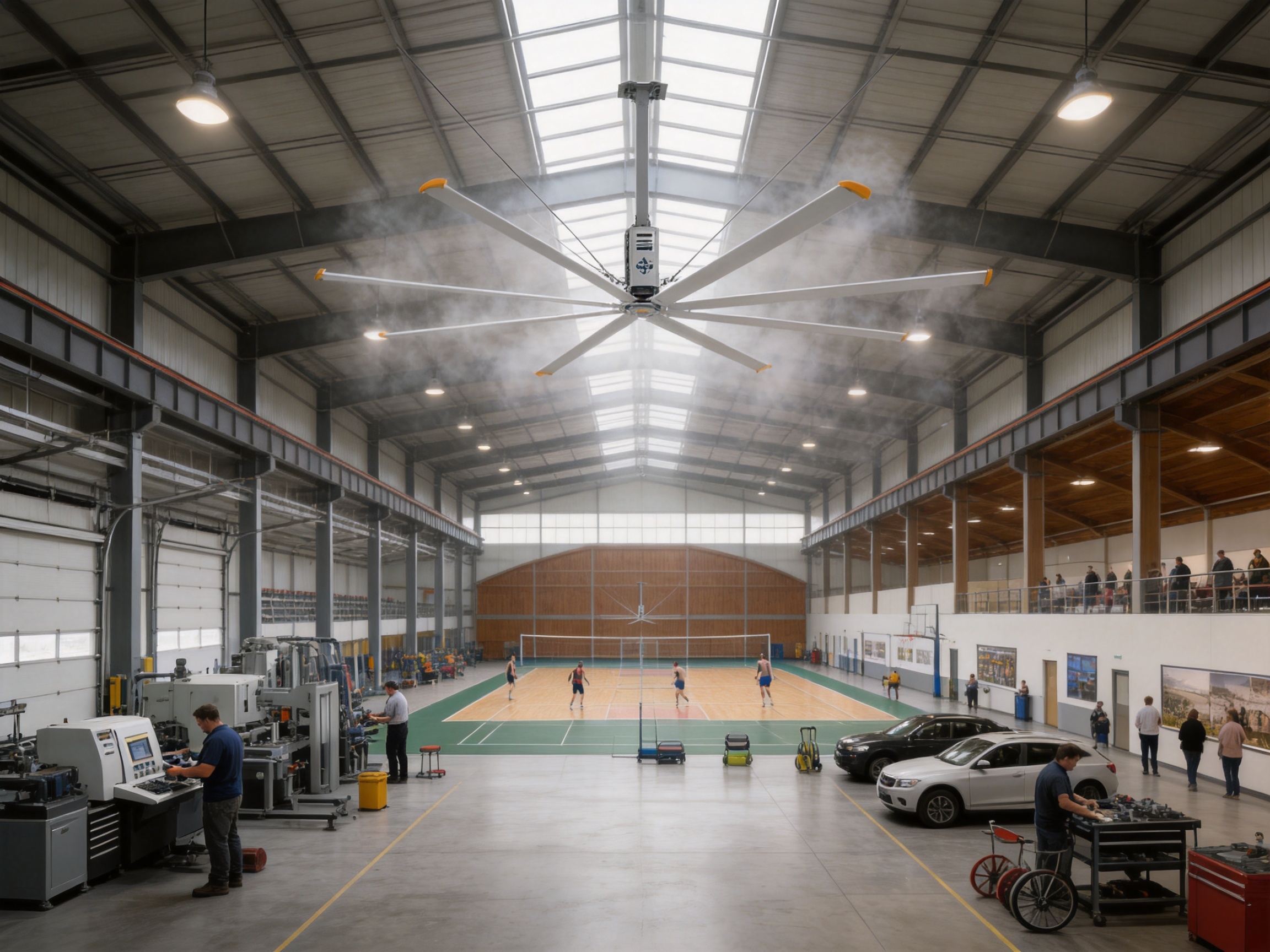
Sports facilities require comfortable air movement for athletes, coaches, staff, and spectators. Exercise increases body heat, and crowded events can cause indoor spaces to feel warm and humid. The 11-foot fan can provide broad circulation without taking up floor space or interfering with sports activities.
Its adjustable speed range allows the facility to select a moderate airflow during regular training and increase circulation during crowded events or warmer conditions. The fan may also help distribute conditioned air more evenly when used with an existing HVAC system.
Exhibition halls, shopping areas, and commercial venues often combine large open floor plans with variable occupancy. Airflow requirements may change considerably between setup periods, normal operation, and busy events. An adjustable HVLS ceiling fan gives facility managers more control over indoor air movement.
Because the product is installed overhead, it does not reduce display space or interrupt visitor movement. In an exhibition hall, an appropriate airflow strategy can also help reduce areas of excessive heat or humidity, although temperature and humidity-sensitive exhibits may require dedicated environmental controls.
Agricultural buildings require dependable air movement to help manage heat and humidity. In livestock barns, airflow can support a more comfortable environment when combined with appropriate fresh-air exchange and sanitation practices. In crop storage or agricultural work areas, circulation may help reduce stagnant conditions.
Industrial fans used in agricultural environments should be selected with attention to dust, moisture, corrosive conditions, cleaning procedures, and local safety requirements. The aluminum alloy blade construction provides a practical balance of durability and weight, while the fan’s speed adjustment helps operators respond to changing environmental conditions.
Automotive workshops frequently have high ceilings, vehicle bays, heat-producing equipment, and doors that open and close throughout the day. A large ceiling fan can assist with general air circulation and improve comfort for technicians working near vehicles or equipment.
It should be used together with suitable exhaust and fume-control systems. A circulation fan is designed to move air, not to replace systems required for removing hazardous gases, paint vapors, welding fumes, or combustion products.
Food-related facilities may need to manage temperature, humidity, and air movement carefully. The fan can help reduce stagnant zones and support general circulation in appropriate non-critical areas. However, hygiene requirements, air cleanliness, washdown procedures, and contamination-control plans must be considered before installation.
Facility operators should confirm that the selected fan, installation method, and cleaning schedule comply with applicable food safety standards. In temperature-controlled or high-care areas, the fan should be integrated into a professionally designed ventilation plan.
The blade material has a direct influence on fan performance, durability, and service requirements. Aluminum alloy offers a useful combination of strength and low weight. Lower blade weight can reduce the mechanical load on the motor and support smooth operation. The material is also suitable for applications where resistance to ordinary humidity and corrosion is important.
The blade profile and balance are equally important. A well-balanced blade assembly helps reduce vibration, noise, and unnecessary stress on the motor and mounting structure. For industrial applications, stable rotation is essential because the fan may operate for long periods and may be installed above employees, inventory, equipment, or visitors.
The listed product configuration uses a Nord motor. Motor selection affects starting performance, speed control, efficiency, service life, and compatibility with the facility’s electrical system. The product information supports 220V, 380V, and 415V voltage options, with 50 Hz and 60 Hz frequency compatibility depending on the selected configuration.
Customers should confirm electrical requirements before ordering. Voltage, phase, frequency, control method, overload protection, and local installation codes must be reviewed by qualified electrical professionals. The manufacturer can provide technical information for project-specific requirements and may offer customized solutions through its OEM and ODM services.
A large ceiling fan must be attached to a suitable structural support system. The mounting structure should be assessed for load capacity, vibration, building movement, ceiling height, and clearance from other equipment. Installation should not rely on decorative ceilings or unsupported panels unless an appropriate structural reinforcement system has been provided.
Professional installation helps ensure that the fan remains level, operates smoothly, and maintains sufficient clearance from lighting, sprinklers, beams, ventilation ducts, cranes, and other overhead equipment. It also supports safer long-term maintenance and inspection.
Shanghai Aipu Fans Co., Ltd. was established in Shanghai, China, in 2006 and specializes in industrial-grade ceiling fans and related air-movement solutions. The company operates an approximately 8,000-square-meter production base equipped for multiple stages of manufacturing and testing.
High-precision automated machinery supports repeatable processing and consistent product quality. Automation can help control dimensional accuracy, improve production efficiency, and reduce variation between components. For large industrial fans, consistent manufacturing is important because the blades, hub, motor connection, and mounting components must work together as a balanced system.
Automated equipment also allows the manufacturer to handle different product sizes and configurations more efficiently. This is useful for customers who require customized diameter, voltage, blade quantity, motor, or control specifications.
The production base includes a machining center and cutting center. These facilities support the accurate preparation of structural and mechanical components. Precise cutting and machining contribute to correct component fit, stable assembly, and reliable operation.
For industrial ceiling fans, machining accuracy can affect shaft alignment, connection strength, blade positioning, and vibration performance. A dedicated production process enables the manufacturer to maintain better control over these important details than a supplier that relies entirely on loosely coordinated external processing.
The company also has a welding center for the fabrication of structural components. Controlled welding procedures help create strong and consistent frames, brackets, and support parts. Weld quality is particularly important in a ceiling-mounted industrial product because the installation system must withstand the operating load and repeated movement of the fan.
Welding inspection, dimensional checking, surface treatment, and assembly verification should be incorporated into the production process. These steps help reduce the risk of deformation, weak joints, or installation difficulties.
A dedicated testing center provides an important quality-control advantage. Industrial fans should be evaluated for operational stability, speed response, vibration, noise, electrical performance, and general assembly condition before shipment. Testing helps identify problems before the product reaches the customer’s facility.
Testing procedures may vary according to the product model and customer requirements. For customized projects, factory testing can also verify that the selected voltage, motor, control system, and blade configuration are suitable for the intended application.
Combining automated machinery, machining, cutting, welding, assembly, and testing in one production organization gives the manufacturer greater control over quality and delivery. It also simplifies communication when customers require non-standard specifications.
Through OEM and ODM support, the company can work with distributors, engineering contractors, facility operators, and industrial brands that need customized product solutions. Customization may involve electrical input, blade arrangement, diameter, motor configuration, packaging, labeling, or project-specific technical requirements. The exact scope should be confirmed during the quotation and engineering process.
The first step in selecting an industrial ceiling fan is to evaluate the facility’s total floor area, ceiling height, shape, obstructions, and intended use. A single 11-foot fan may be suitable for a defined coverage area, while a larger building may require several units positioned according to airflow requirements.
Columns, storage racks, mezzanines, production equipment, lighting fixtures, cranes, and ductwork can influence airflow. A professional layout should consider how air will move from the fan to the floor and across the occupied zone. Simply placing fans at equal distances may not always produce the best result.
The fan must be installed at a suitable height with adequate clearance above the floor and from surrounding structures. The installation position should allow the blades to operate without interference and should comply with applicable safety requirements.
Clearance must also be checked in buildings where forklifts, cranes, lifting platforms, or tall vehicles operate. Sprinkler systems and emergency equipment should remain accessible and unobstructed. The installer should coordinate the fan location with other building services before final installation.
The available voltage and frequency must match the selected motor and control system. The listed product supports several voltage options, including 220V, 380V, and 415V configurations. However, electrical standards vary between countries and facilities, so the final specification should be confirmed before production.
Electrical protection should include appropriate disconnects, overload protection, grounding, and control equipment. All wiring and commissioning work should be completed by qualified professionals in accordance with local regulations.
Dust, humidity, corrosive substances, high temperatures, washdown procedures, and chemical exposure can affect product selection and maintenance. A fan installed in a clean warehouse may have different requirements from one used in an agricultural barn, metalworking plant, or food-processing facility.
Customers should provide accurate information about the operating environment. This allows the manufacturer to recommend suitable materials, protective treatments, motor options, control systems, and maintenance procedures.
Although the fan is designed for industrial service, routine inspection remains important. Maintenance personnel should be able to access the motor, mounting assembly, blade connections, electrical components, and safety devices. Inspection intervals should be established according to operating hours, environmental conditions, and local safety procedures.
Routine maintenance may include checking fasteners, inspecting blades for damage, confirming that the fan remains secure, cleaning accumulated dust, and reviewing electrical connections. Any unusual vibration, noise, or speed fluctuation should be investigated promptly.
| Fan type | Main strength | Typical limitation | Suitability for large open spaces |
|---|---|---|---|
| 11-foot HVLS ceiling fan | Broad, uniform air movement with adjustable speed | Requires structural ceiling installation and planning | High |
| Small portable fan | Easy to relocate and suitable for spot cooling | Limited coverage and floor obstruction | Low to moderate |
| Wall-mounted industrial fan | Directional airflow and useful for localized ventilation | Airflow may not reach distant areas evenly | Moderate |
| Pedestal fan | Flexible placement and simple operation | Occupies floor space and may require several units | Low to moderate |
| Air-conditioning system | Controls temperature under suitable conditions | Higher installation and operating complexity | High, but energy intensive in some buildings |
The 11-foot HVLS ceiling fan is not intended to replace every other ventilation or cooling product. Wall-mounted fans may remain useful for directional airflow, while exhaust fans are essential for removing contaminated air. Air-conditioning may be required where precise temperature control is necessary. The main advantage of the HVLS design is its ability to provide broad general circulation from an overhead position.
In many facilities, the best solution is a combination of technologies. An HVLS fan can improve air distribution, exhaust fans can remove heat or fumes, and air-conditioning or heating equipment can manage temperature. The final arrangement should be based on the building’s purpose and environmental requirements.
Industrial ceiling fans are more demanding than ordinary residential products. Their large dimensions, structural loads, operating schedules, motor requirements, and installation conditions require specialized engineering knowledge. A manufacturer focused on industrial fans is better positioned to address these issues during product selection and project planning.
Shanghai Aipu Fans Co., Ltd. has concentrated on industrial-grade ceiling fans and air-movement solutions since 2006. Its manufacturing experience, production equipment, and product range support applications across warehouses, workshops, gymnasiums, commercial buildings, agricultural facilities, exhibition halls, and other large spaces.
The company’s production base supports controlled manufacturing from component processing through final testing. This integrated capability can help improve communication, reduce production uncertainty, and provide more consistent support for customized requirements.
International customers can also benefit from experience with different electrical standards, product configurations, packaging requirements, and project applications. The company provides OEM and ODM services for customers seeking private-label products, modified designs, or application-specific solutions.
Before requesting a quotation, customers should prepare key project information. This may include the building length and width, ceiling height, floor area, number of rooms or zones, available voltage, operating environment, desired airflow, installation height, and any overhead obstructions.
It is also useful to identify whether the fan will be used primarily for summer comfort, general ventilation, humidity management, air-conditioning support, production-area circulation, or a combination of purposes. Clear project information enables the manufacturer to recommend a more appropriate model and quantity.
Shanghai Aipu Fans Co., Ltd. provides customized OEM and ODM support. Depending on the project, customization may include fan diameter, blade quantity, motor selection, input voltage, control method, packaging, labeling, and other technical requirements. Customers should confirm all specifications in formal technical documents before production begins.
The listed product is packaged in wooden cases, which can help protect the fan and its components during transportation and handling. Export packaging should be reviewed according to the destination country, shipping method, and customer requirements.
A large industrial ceiling fan must be treated as engineered mechanical equipment. Installation, electrical connection, commissioning, inspection, and maintenance should be carried out by qualified personnel. The supporting structure must be verified before the fan is installed.
Operators should keep people and objects away from the blade path during installation and maintenance. The fan should not be modified without approval from the manufacturer or a qualified engineer. Safety devices, mounting hardware, protective components, and electrical controls should remain correctly installed throughout the product’s service life.
Any sign of excessive vibration, abnormal noise, loose hardware, blade damage, electrical overheating, or irregular speed should be addressed immediately. The fan should be switched off and isolated from the power supply before inspection or repair.
Because every building is different, performance claims should be interpreted in relation to actual site conditions. Coverage depends on ceiling height, room geometry, air temperature, obstructions, fan spacing, operating speed, and the presence of other ventilation equipment. Professional design support is recommended for large or complex projects.
HVLS means high volume, low speed. An HVLS fan uses a large blade diameter to move a large quantity of air while rotating more slowly than a conventional small fan. This creates broad circulation over a large area rather than a narrow, concentrated stream of air.
The listed 11-foot configuration has a diameter of approximately 3.3 meters. The company also offers other industrial fan sizes, so customers should confirm the required diameter and model before ordering.
The product information states a coverage area of approximately 250 square meters for the 11-foot configuration. Actual coverage depends on ceiling height, building layout, obstacles, operating speed, and airflow requirements. A technical evaluation is recommended for accurate project planning.
Yes. The stated operating range is 0 to 86 RPM, depending on the configuration and control system. Lower speeds provide gentle circulation, while higher speeds provide stronger air movement for warmer conditions or increased ventilation demand.
Yes. The large diameter, ceiling-mounted design, and broad air distribution make the fan suitable for many warehouses and distribution centers. The final selection should consider ceiling height, racking, sprinklers, forklifts, lighting, and other overhead or floor-level obstructions.
The fan is primarily an air-circulation device and does not provide the same temperature-control function as an air-conditioning system. It can improve perceived comfort and help distribute conditioned air more evenly, but facilities requiring precise temperature control may still need air-conditioning.
The listed product uses aluminum alloy blades. This material offers low weight, strength, and useful resistance to ordinary corrosion and humidity when properly selected for the environment.
The product information lists 220V, 380V, and 415V options, with 50 Hz and 60 Hz frequency compatibility depending on the selected configuration. Customers should confirm local electrical requirements before placing an order.
Yes. Shanghai Aipu Fans Co., Ltd. provides OEM and ODM support. Customers can discuss customized dimensions, motor options, electrical specifications, blade configurations, branding, packaging, and other project requirements with the manufacturer.
Maintenance generally includes inspecting mounting hardware, checking blade and motor connections, cleaning accumulated dust, reviewing electrical components, and monitoring vibration and noise. The exact maintenance schedule should reflect operating hours and environmental conditions.
The listed product is packaged in wooden cases. Packaging requirements may be reviewed according to the destination, transportation method, and export conditions.
The listed product information specifies a three-year warranty. Warranty coverage, exclusions, installation requirements, and service procedures should be confirmed in the official quotation or sales agreement.
The 11-foot large industrial giant ceiling fan provides a practical solution for facilities that need broad, stable, and adjustable air circulation. Its 3.3-meter diameter, aluminum alloy blades, variable speed range, industrial motor configuration, and ceiling-mounted design make it suitable for warehouses, manufacturing plants, gymnasiums, exhibition halls, agricultural buildings, commercial spaces, and other large indoor environments.
Compared with small portable, pedestal, or wall-mounted fans, the product can cover a wider area while preserving valuable floor space. Its high-volume, low-speed operating principle supports more uniform airflow and comfortable circulation. When integrated with existing HVAC and ventilation equipment, it can help improve indoor comfort and reduce stagnant air without requiring a large number of separate floor units.
The product’s value also depends on the manufacturing capabilities behind it. Shanghai Aipu Fans Co., Ltd. combines industrial fan experience since 2006 with an approximately 8,000-square-meter production base, automated machinery, machining, cutting, welding, assembly, and testing capabilities. These resources support reliable production, customized engineering, OEM and ODM cooperation, and international project requirements.
For the best results, customers should provide complete building and electrical information before purchase. Proper model selection, structural assessment, professional installation, commissioning, and regular maintenance are essential for safe and effective operation. With the correct planning, the 11-foot HVLS ceiling fan can become an important part of a modern industrial ventilation and comfort strategy.
1. Product technical information supplied for the 11-foot large industrial giant ceiling fan, including diameter, blade material, speed range, motor, coverage area, voltage, and warranty data.
2. Manufacturer information supplied for Shanghai Aipu Fans Co., Ltd., including company history, production facilities, manufacturing equipment, OEM and ODM capabilities, and industrial ventilation applications.
3. General principles of high-volume, low-speed fan operation and large-space air circulation.
4. General industrial ventilation planning practices for warehouses, workshops, sports facilities, agricultural buildings, and commercial spaces.
5. General equipment safety principles for ceiling-mounted mechanical and electrical systems.
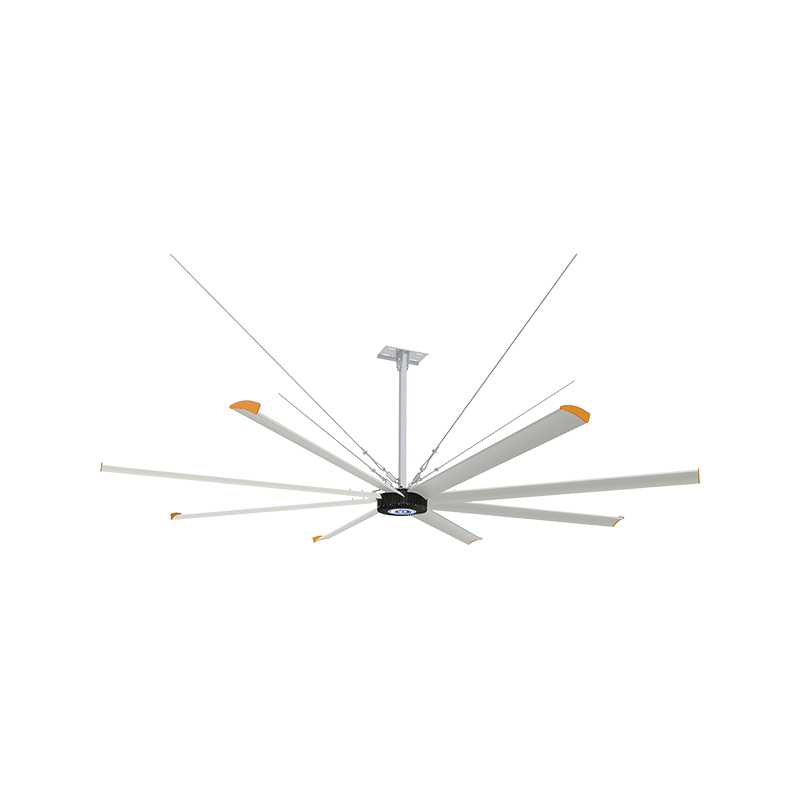
The 8-foot HVLS Large Industrial BLDC Ceiling Fan is equipped with a 0.3KW brushless DC motor, offering higher energy efficiency and lower noise levels. The lower power consumption design helps users ...
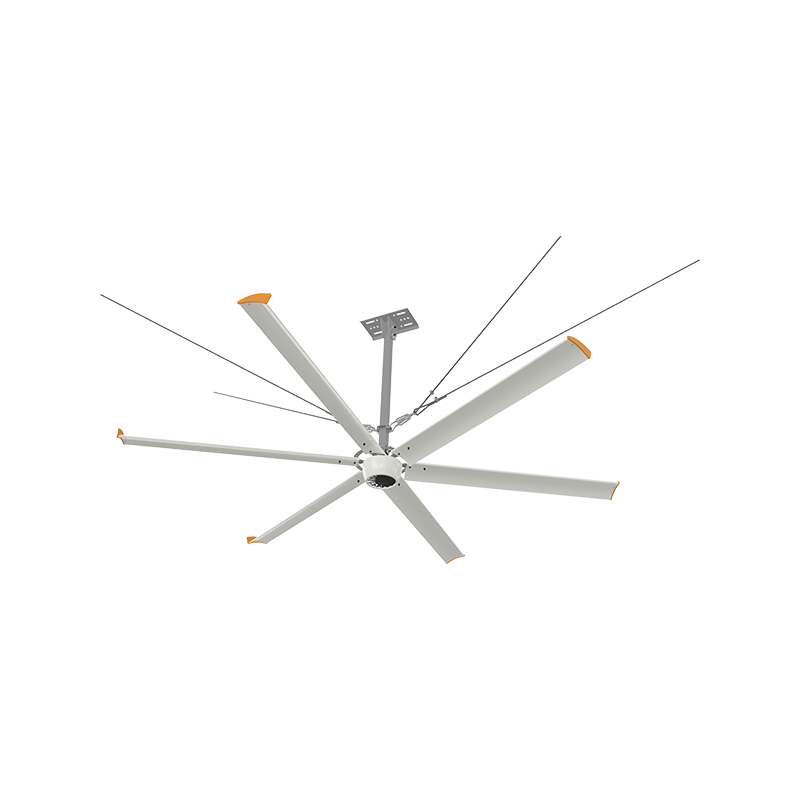
The 15-foot Even Airflow Industrial BLDC Ceiling Fan utilizes a high-efficiency BLDC motor and carefully designed blades. This ceiling fan operates with extremely low noise levels, making it suitable ...
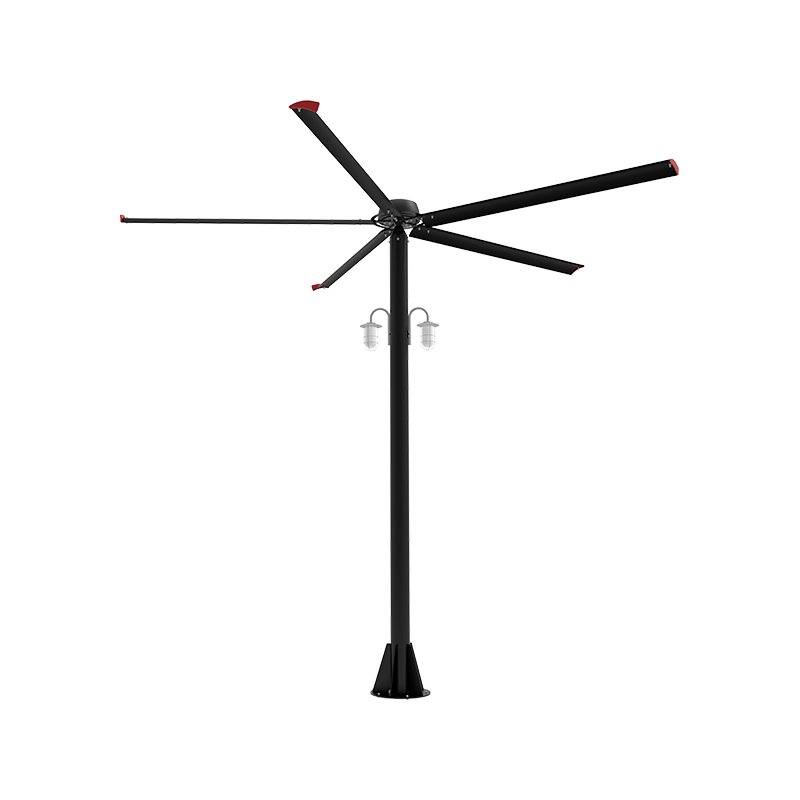
The large vertical HVLS floor-standing ventilation fan offers a variety of color options, allowing users to choose the most suitable color based on different environments and decoration needs. This c...
The 11-foot large industrial giant ceiling fan is a high-efficiency air circulation device designed for large spaces. It is widely used in warehouses, workshops, gymnasiums, exhibition halls, commerci...
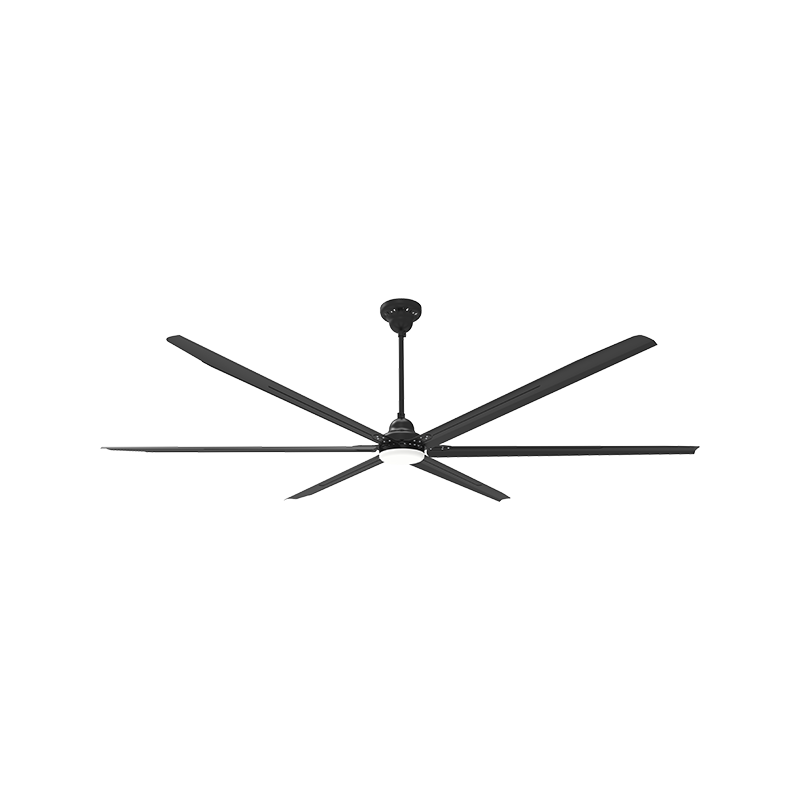
1. Massive 9-Foot WingspanWith a colossal 108-inch (2.8m) diameter and 6 high-efficiency streamlined blades, this fan moves massive volumes of air even at low speeds. It is the perfect solution for el...
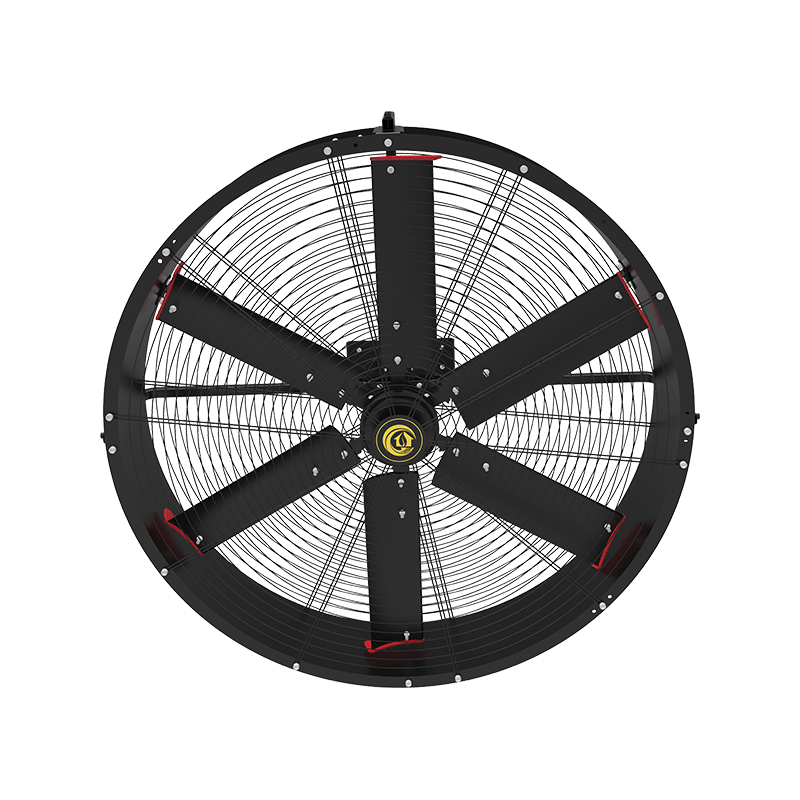
1. Extreme Airflow & Wide CoverageEquipped with massive 79-inch (2.0m) diameter aerospace-grade aluminum alloy blades. These precision-balanced blades generate a powerful, stable laminar airflow t...
A 6,800 m² factory floor used to be ventilated by roughly 300 small wall and pedestal fans. Six large ceiling fans now cover the same area, and in the manufacturer's own comparison that change cuts m...
READ MOREShanghai Aipu Fans Co., Ltd., established in Shanghai in 2006, focuses on manufacturing industrial-grade high-quality ceiling fans, relying on industry-leading motor technology and advanced manufactu...
READ MOREIndustrial Ventilation Planning The Right Industrial Ceiling Fan Size Starts With the Building A practical sizing guide to diameter, ceiling height, CFM, and fan layout for warehouses, plants, and di...
READ MORELarge-space air movement Big Commercial Fans: How to Size, Mount and Power Them One 24 ft ceiling fan can replace forty pedestal units, but only when span, mounting height and motor match the buildin...
READ MORE Custom Large Industrial Fans Manufacturers