

 English
 Español
 عربى

The 79-inch freestanding energy-efficient HVLS industrial fan features a robust construction designed to withstand the challenges of daily industrial use. Its impact-resistant frame ensures it can wit...
Content
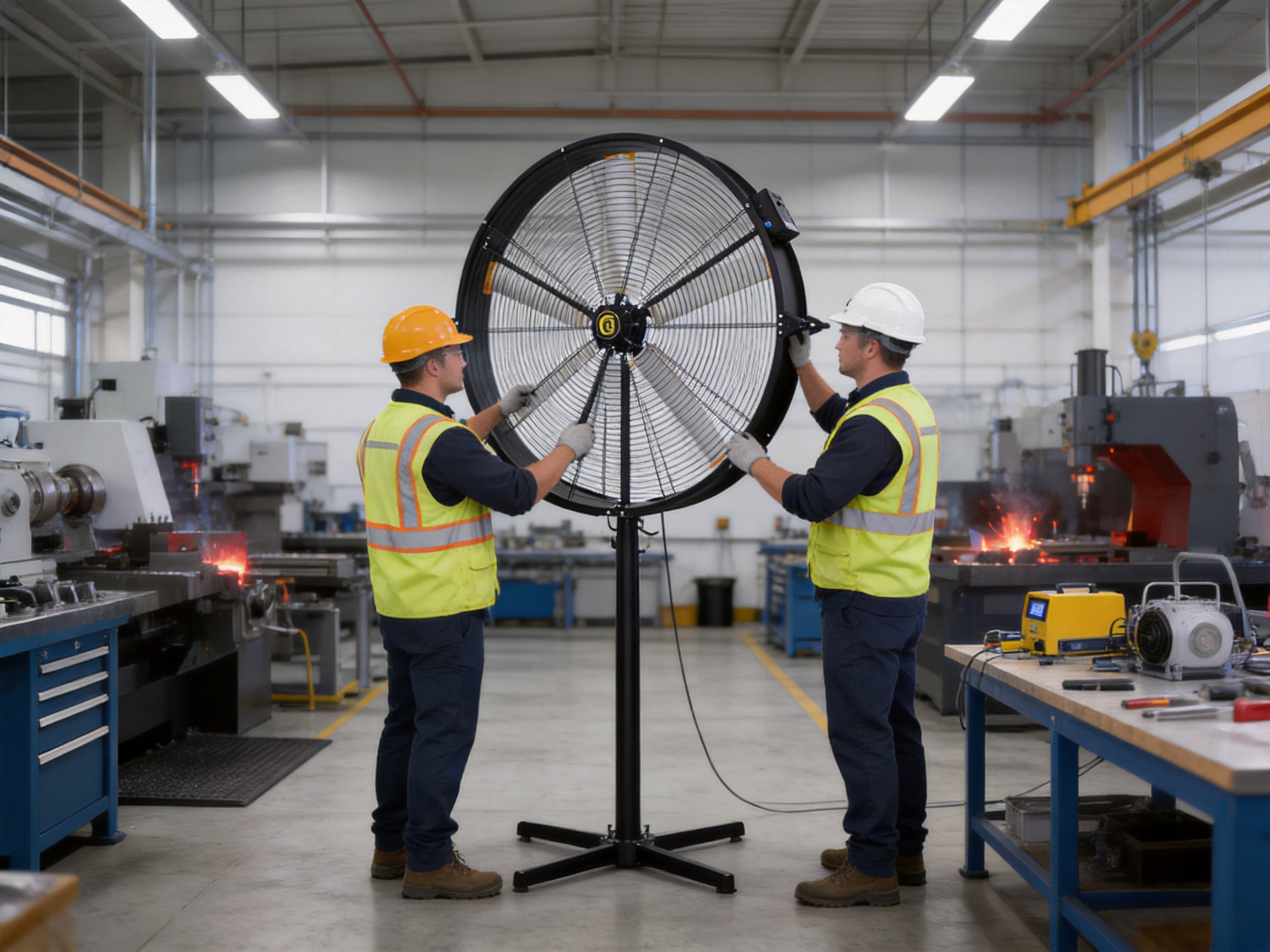
Industrial facilities need dependable air movement to maintain comfortable working conditions, support ventilation, reduce heat accumulation, and improve productivity. In many factories, warehouses, workshops, distribution centers, garages, and commercial spaces, a conventional ceiling fan is not always the most practical solution. Overhead obstructions, limited ceiling height, structural restrictions, cranes, storage racks, conveyor systems, and areas without a suitable ceiling can make ceiling-mounted ventilation difficult or impossible.
The 79-inch freestanding energy-efficient HVLS industrial fan is designed to solve these challenges. Combining large-diameter airflow, a mobile floor-standing structure, a gearless direct-drive motor, impact-resistant construction, and low operating noise, this fan provides a flexible alternative to fixed overhead ventilation equipment. It can deliver powerful air movement in areas where a traditional ceiling fan cannot be installed or where localized cooling is required.
Manufactured for demanding industrial applications, the fan is engineered to withstand daily use in challenging environments. Its robust frame, industrial-grade blades, IP55 protection level, and direct-drive motor are intended to provide reliable performance while limiting mechanical wear and routine maintenance requirements.
HVLS stands for high volume, low speed. Unlike compact high-speed fans that create a narrow and concentrated air stream, an HVLS fan is designed to move a large volume of air across a wider area. The large blade diameter allows the fan to produce broad airflow while operating at a comparatively low rotational speed.
The freestanding design places the fan on a stable support structure rather than suspending it from the ceiling. This configuration allows the fan to be positioned where airflow is most needed. It can be placed beside a production line, near a loading area, inside a warehouse aisle, in a maintenance workshop, or outdoors in a commercial work area, subject to appropriate electrical and environmental conditions.
The 79-inch size corresponds to approximately 2 meters or 7 feet in diameter. This large airflow coverage makes the fan suitable for open industrial spaces where workers, equipment, products, or surfaces need continuous air circulation. The design is especially useful where ceiling-mounted fans cannot provide direct airflow at floor level.
Because the fan operates at low speed while moving a substantial volume of air, it can create a more comfortable air movement pattern than smaller high-speed fans. It is intended to support air circulation rather than simply produce a strong, narrow blast at one location.
The fan combines several features that are important for industrial ventilation. These include a durable freestanding frame, an impact-resistant structure, a gearless direct-drive motor, large industrial-grade blades, low noise operation, and a weather-resistant protection level suitable for many commercial and industrial settings.
The direct-drive system connects the motor directly to the fan assembly. Traditional belt-driven fans normally include belts, pulleys, and other mechanical transmission components. These components can stretch, slip, wear, or require adjustment over time. By eliminating the belt and pulley arrangement, the direct-drive design reduces the number of wear parts and helps simplify maintenance.
The fan blades are designed to move large quantities of air without unnecessarily increasing motor load. Each blade is engineered to support an efficient airflow pattern at low rotational speeds. This design approach helps the fan balance air volume, energy consumption, and operating noise.
The impact-resistant frame is another important advantage for industrial environments. Warehouses and workshops often contain moving vehicles, material-handling equipment, stored goods, and busy work zones. A strong frame helps the equipment withstand the everyday knocks and operating conditions that can affect less durable commercial fans.
Depending on the selected model and configuration, the fan can be used for cooling people, circulating air, dissipating fumes and odors, drying wet or slick surfaces, and improving general ventilation. Its mobility also allows one unit to support multiple work areas instead of being permanently assigned to one ceiling location.
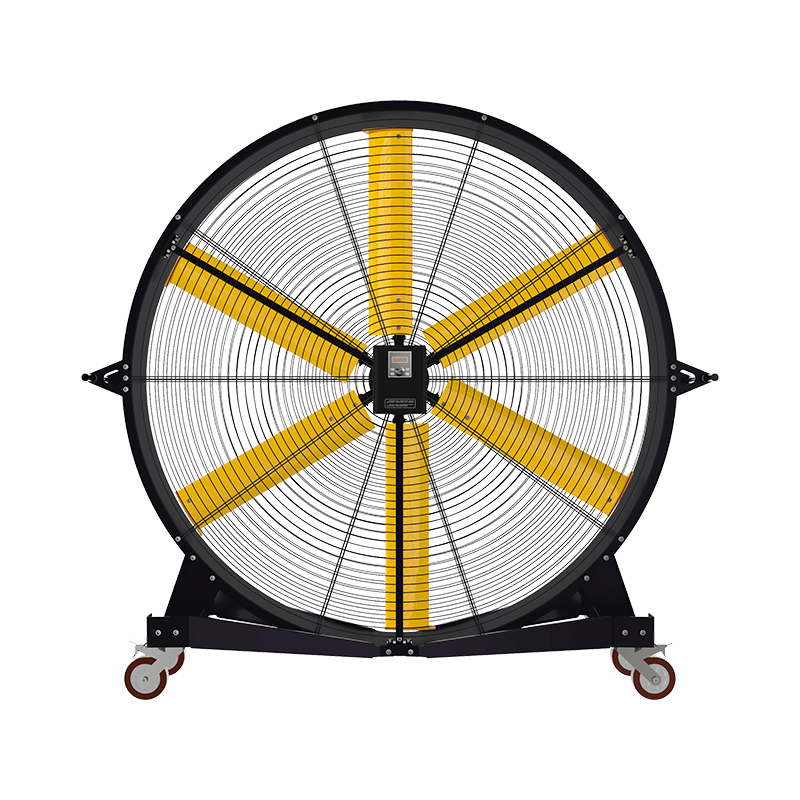
79-inch freestanding energy-efficient HVLS industrial fan
The product family includes several freestanding stand fan models. The ASF-20 configuration is the largest model listed in the supplied specifications and is associated with the 79-inch product description. Other models provide smaller dimensions and different operating speeds for applications requiring a more compact footprint.
| Model | Approximate Fan Size | Overall Dimensions | Maximum Speed | Power | Weight | Noise Level | Protection Level |
|---|---|---|---|---|---|---|---|
| ASF-09 | Approximately 35 inches | 1000 x 640 x 1100 mm | 420 RPM | 0.35 kW | 65 kg | Below 40 dB | IP55 |
| ASF-12 | Approximately 47 inches | 1310 x 640 x 1400 mm | 380 RPM | 0.40 kW | 80 kg | Below 40 dB | IP55 |
| ASF-15 | Approximately 59 inches | 1610 x 720 x 1700 mm | 300 RPM | 0.55 kW | 92 kg | Below 40 dB | IP55 |
| ASF-20 | Approximately 79 inches | 2100 x 720 x 2240 mm | 200 RPM | 0.65 kW | 142 kg | Below 40 dB | IP55 |
The specifications demonstrate the relationship between fan diameter, overall size, rotational speed, and power. The largest ASF-20 model has the lowest listed maximum speed at 200 RPM, yet its large diameter enables it to move air over a broad area. The smaller models operate at higher speeds and can be selected when the installation area is more restricted.
The listed operating noise level is below 40 dB for the available models. Actual perceived noise can vary depending on room acoustics, floor conditions, nearby machinery, fan speed, installation position, and the presence of obstacles. Nevertheless, the low listed noise level makes the fan suitable for many work areas where excessive sound could interfere with communication or concentration.
The defining characteristic of this fan is its large blade diameter. A 79-inch fan can influence a significantly wider volume of air than a compact portable fan. Instead of producing only a narrow stream, the large blade assembly helps distribute air across a broad zone.
Wide airflow coverage is valuable in facilities with large floor areas. In a warehouse, for example, a fan may be positioned near a staging zone to circulate air among workers and stored products. In a workshop, it can help move warm air away from machinery or direct airflow toward an occupied work area. In a loading bay, it can assist with ventilation when doors are open and overhead installation is not available.
Large-diameter airflow can also support perceived cooling. Moving air across the skin encourages evaporation and can make people feel cooler even when the surrounding air temperature has not changed substantially. This can improve comfort in hot production environments, especially when workers are engaged in physical tasks.
The fan is not intended to replace specialized heating, ventilation, and air-conditioning systems in every facility. Instead, it can complement existing ventilation by improving air circulation in localized areas, reducing stagnant zones, and distributing air more evenly throughout a workspace.
Energy efficiency is a major consideration when industrial ventilation equipment operates for many hours each day. The ASF-20 model has a listed power rating of 0.65 kW, while the smaller models range from 0.35 kW to 0.55 kW. Actual electricity consumption depends on operating speed, control settings, duty cycle, supply conditions, and the number of operating hours.
The gearless direct-drive motor is designed to support efficient power transmission. In a conventional belt-driven system, energy can be lost through belt friction, pulley movement, belt tension, and mechanical transmission resistance. Belts may also require replacement and periodic adjustment. Direct drive reduces these intermediate components and transfers motor rotation more directly to the fan assembly.
Fewer mechanical transmission parts can also contribute to improved long-term reliability. A belt that becomes loose or worn may reduce fan performance or produce additional noise. A direct-drive system avoids many of these issues and can reduce the number of routine maintenance tasks required by the operator.
The direct-drive arrangement is particularly beneficial in industrial applications where downtime is costly. A simpler drive system may help maintenance personnel diagnose problems more easily and reduce the need to stock multiple replacement belt sizes. While all motors and electrical systems still require appropriate inspection, the gearless structure is intended to provide a more streamlined operating design.
Energy efficiency should be evaluated as part of a complete ventilation plan. Correct fan placement, suitable speed selection, regular cleaning, unobstructed airflow, and scheduled maintenance all influence energy performance. Operating a large fan at an appropriate speed is generally more efficient than relying on multiple small high-speed fans that provide overlapping or poorly directed airflow.
The blades are manufactured from industrial-grade materials and are designed to move large volumes of air at relatively low speeds. Blade geometry has a direct effect on airflow, efficiency, noise, and motor loading. A properly designed blade can generate useful air movement without requiring excessive rotational speed.
Each blade is engineered to support a balanced airflow pattern. When blades are properly matched and installed, the fan can operate smoothly and reduce unnecessary vibration. Smooth operation is important in workplaces because excessive vibration can affect structural components, create noise, and shorten the service life of mechanical parts.
The supplied product information identifies the blade material as magnalium. This material is commonly associated with lightweight metal construction and can provide a balance between strength and manageable weight. The available blade colors include yellow, blue, silver, black, and red, allowing buyers to select a finish that matches facility preferences, safety requirements, or corporate color standards.
The product information also indicates a five- or six-blade configuration. The exact blade arrangement may depend on the selected model or production configuration. Buyers should confirm the final blade count, color, electrical requirements, and control system before placing an order.
Industrial-grade blades must be kept clean and properly balanced. Dust, grease, fibers, and other airborne materials can accumulate on the blade surface and affect airflow. A regular cleaning and inspection schedule helps maintain operating efficiency and supports safe long-term use.
Industrial environments are more demanding than ordinary residential spaces. Equipment may be exposed to accidental contact with carts, forklifts, stored materials, tools, and other machinery. A fan that is designed only for light domestic use may not withstand these conditions for a long period.
The impact-resistant frame of this stand fan is designed to handle the challenges of daily industrial operation. It provides structural support for the large fan assembly and helps protect key components from incidental impacts. The robust construction is particularly valuable in warehouses, workshops, garages, production floors, and service areas where equipment is frequently moved or repositioned.
The freestanding structure also provides flexibility without requiring permanent ceiling modifications. Facility managers do not need to reinforce a ceiling, install suspension rods, or interrupt production to create an overhead mounting point. The fan can be positioned on the floor and moved when the operational layout changes.
Although the frame is durable, the fan should still be placed in a safe location with adequate clearance. It should not obstruct emergency exits, access routes, fire equipment, vehicle paths, or material-handling operations. A clear operating zone helps protect both the fan and nearby personnel.
Industrial ventilation equipment should provide strong airflow without creating unnecessary noise. Excessive noise can affect worker communication, concentration, training, and general comfort. The supplied specifications list a noise level below 40 dB for the available stand fan models.
The low-noise design is supported by the direct-drive motor, balanced blade assembly, and low-speed airflow concept. Because the fan does not rely on a belt and pulley system, it avoids certain sources of mechanical noise associated with belt vibration, pulley misalignment, and belt friction.
Actual sound performance will vary according to operating speed and site conditions. A fan installed near metal walls, concrete surfaces, machinery, or hard ceilings may sound louder because reflected sound increases the perceived noise level. Proper placement and regular maintenance can help preserve quiet operation.
In offices connected to warehouses, retail back-of-house areas, hospitality facilities, workshops, and commercial spaces, low operating noise can be an important advantage. The fan can support airflow without overwhelming normal conversation or creating a distracting mechanical background.
The listed IP55 protection level indicates that the fan enclosure is designed to provide protection against dust ingress that could interfere with operation and against water jets from limited directions. IP ratings should always be interpreted according to the complete installation environment and the manufacturer's operating instructions.
IP55 does not mean that the fan is fully waterproof or suitable for submersion. The fan should not be exposed to uncontrolled heavy rain, standing water, high-pressure cleaning, or conditions beyond the product's design limits unless the installation has been specifically approved for those conditions.
The protection level is useful in many commercial and industrial environments where airborne dust, occasional moisture, or routine cleaning may be present. It can help protect internal electrical components and support more reliable operation when the fan is correctly installed and maintained.
Before using the fan outdoors, the purchaser should verify the electrical protection, local weather conditions, grounding requirements, control equipment, and site-specific safety regulations. Outdoor installations may require additional shelter or protective measures even when the equipment has an IP55 rating.
Ceiling-mounted HVLS fans are effective in many large buildings, but they require suitable structural support and adequate overhead clearance. Some facilities contain cranes, lighting systems, sprinkler networks, ductwork, storage racks, and conveyor systems that limit ceiling fan placement. Other buildings may have low ceilings, rented premises, temporary layouts, or no practical installation points.
A freestanding fan avoids many of these installation barriers. It can be positioned at floor level, directed toward an occupied area, and relocated as the facility changes. This is a significant advantage for manufacturers, logistics operators, event venues, repair shops, and construction-related workspaces that may reorganize their floor plans regularly.
The fan can also supplement a ceiling-mounted ventilation system. For example, a facility may use overhead fans for general circulation and place freestanding units near heat-producing machinery, loading doors, assembly areas, or locations where air movement is blocked by equipment.
Compared with small portable barrel fans, the large-diameter design can deliver broader airflow coverage. Compared with fixed ceiling fans, the freestanding design offers greater positioning flexibility. This combination makes the product a practical middle solution for facilities that need substantial airflow without permanent overhead installation.
Factories often contain heat-generating machinery, enclosed workstations, assembly lines, welding areas, and production equipment. A stand fan can direct air toward workers while helping circulate warm air away from specific zones. Its mobility allows operators to adjust the airflow as production lines, equipment, and workstations change.
In a workshop, the fan may be used to improve general comfort, help dissipate certain odors, or support drying processes. The fan should not be used to move hazardous gases, flammable vapors, or explosive dust unless the complete system is specifically certified for that application. A professional safety assessment is necessary where hazardous substances are present.
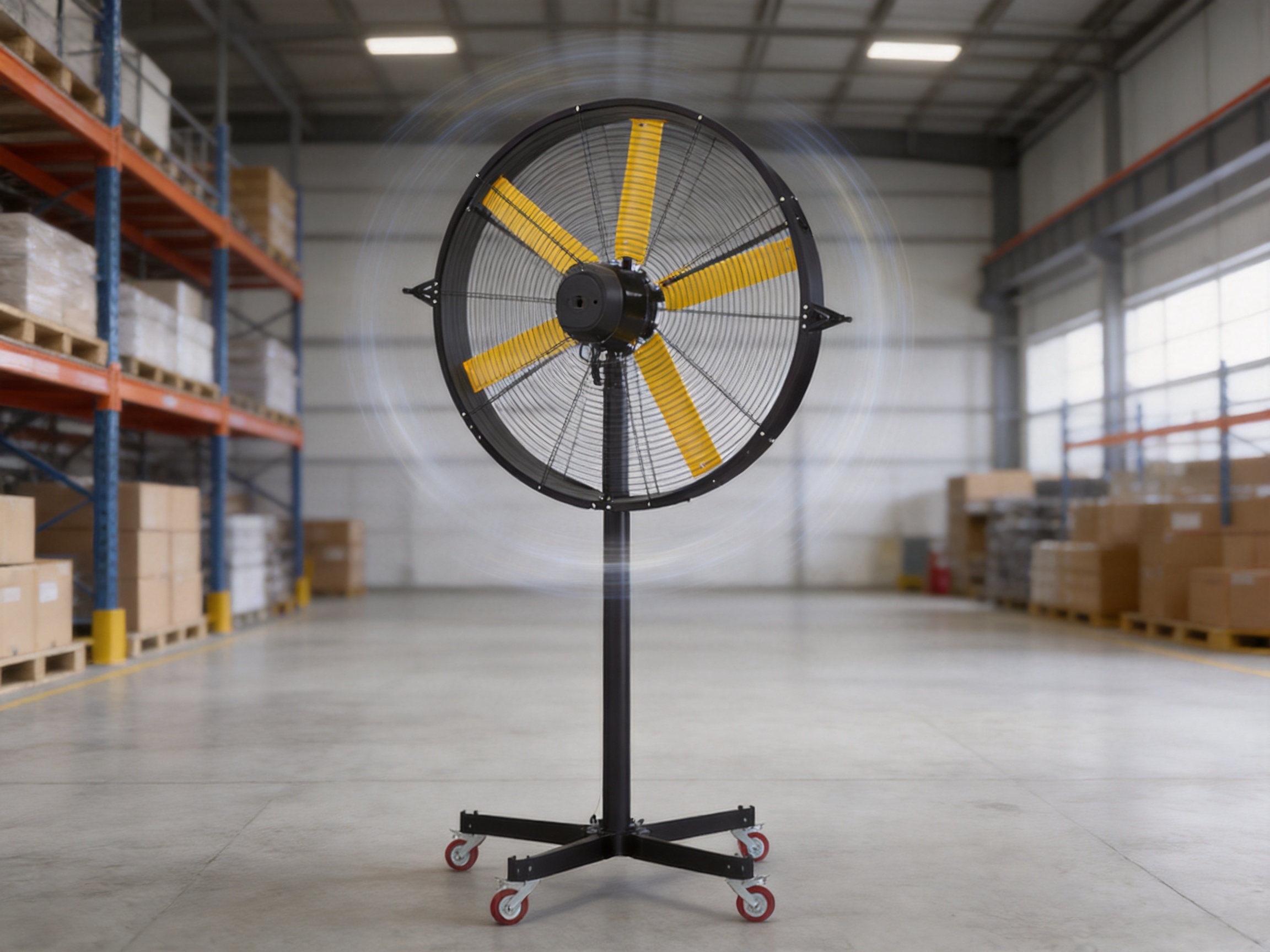
Warehouses frequently have high internal heat loads, large open areas, and changing storage layouts. Racking can block airflow from ceiling-mounted systems, while loading doors may create uneven temperature zones. A freestanding HVLS fan can be placed near packing stations, dispatch areas, receiving zones, or worker rest areas.
The large airflow pattern can help reduce stagnant air in open sections of a warehouse. The fan can also be moved as seasonal requirements or inventory arrangements change. Its robust construction is suitable for environments where material-handling equipment operates nearby, provided appropriate safety clearances are maintained.
Automotive garages, equipment maintenance shops, and repair facilities may not have suitable ceiling structures for large overhead fans. Doors are often opened and closed, vehicles move through the building, and work areas change throughout the day.
A stand fan can be positioned to improve air circulation around a service bay or direct airflow toward a technician working on a vehicle. The IP55 protection level and durable frame can be beneficial in a demanding commercial setting, although the fan must be kept away from combustible vapors, direct liquid spray, and unsuitable cleaning procedures.
Commercial spaces such as markets, exhibition areas, event venues, large restaurants, and service facilities may need temporary or flexible ventilation. A freestanding design can be installed without major building modifications and moved when the space is reconfigured.
The low listed noise level is useful in areas where customers, visitors, or staff need to communicate. The available blade colors may also help organizations select a configuration that fits the visual identity or safety-marking requirements of the space.
The product information lists outdoor applications among the possible uses. It may be suitable for sheltered outdoor areas, covered loading bays, patios, temporary work zones, and other locations where air movement is needed. However, outdoor use requires careful consideration of weather exposure, electrical safety, drainage, grounding, and local regulations.
The fan should be protected from severe weather unless the installation has been confirmed as appropriate for those conditions. It should never be placed where water can collect around the base, power connection, motor, or control equipment.
The fan can be used to cool people by creating continuous air movement across occupied areas. Air movement helps remove the layer of warm air that can form around the body and supports evaporative cooling. This can improve comfort during physically demanding work and in spaces with elevated temperatures.
In addition to personal cooling, airflow can support the cooling of products and equipment. Manufactured goods may require air circulation after processing, packaging, or handling. The fan can help distribute air through open areas and prevent heat from remaining concentrated around specific items.
Airflow does not replace controlled temperature management when products have strict storage requirements. Sensitive goods may require dedicated refrigeration, humidity control, or validated environmental systems. The industrial fan is best considered a circulation and comfort solution rather than a precision temperature-control device.
Freestanding industrial fans are often used to improve air movement in areas where fumes or odors need to be dispersed. They can support general ventilation by encouraging air exchange and reducing stagnant zones. The fan's effectiveness depends on building layout, exhaust equipment, air intake locations, wind conditions, and the nature of the substance involved.
Where hazardous fumes, combustible gases, chemical vapors, or explosive dust may be present, a qualified safety professional must determine whether the fan is suitable. Standard industrial equipment should not automatically be used in hazardous locations.
The fan can also assist with rapidly drying slick surfaces or recently cleaned areas. Moving air over a surface can increase evaporation and reduce drying time. This may be helpful in workshops, commercial cleaning areas, warehouses, and maintenance spaces. The fan should be positioned so that airflow does not spread contaminants, dust, or liquid into other areas.
The most appropriate ventilation solution depends on the building, airflow objective, installation limitations, operating schedule, and budget. The following comparison explains how the freestanding HVLS design differs from common alternatives.
| Fan Type | Main Strength | Typical Limitation | Advantages of the Freestanding HVLS Design |
|---|---|---|---|
| Small domestic or office fan | Low initial cost and compact size | Limited airflow coverage and industrial durability | Provides broader air movement and a stronger industrial construction |
| High-speed barrel fan | Strong localized air stream | Can be noisy and may cover a narrower area | Uses large-diameter, lower-speed airflow for wider coverage and quieter operation |
| Belt-driven industrial fan | Established conventional design | Belts and pulleys require inspection and replacement | Gearless direct drive reduces mechanical transmission components |
| Ceiling-mounted HVLS fan | Efficient coverage from overhead position | Requires suitable ceiling structure and permanent installation | Can operate where overhead mounting is obstructed or unavailable |
| Multiple small fans | Flexible distribution of localized airflow | More equipment, cables, motors, and potential maintenance points | One large fan may provide broad coverage with a simpler floor-level arrangement |
This comparison does not mean that one fan type is universally better than all others. Instead, it shows why the freestanding HVLS configuration can be advantageous when wide coverage, mobility, durability, and reduced mechanical maintenance are priorities.
The manufacturer has operated in the industrial fan sector since 2006 and specializes in industrial-grade ceiling fans and ventilation solutions. Its production base covers approximately 8,000 square meters and includes several dedicated manufacturing and testing areas.
The stated facilities include high-precision automated machinery, a machining center, a cutting center, a welding center, and a testing center. These capabilities support the production of structural frames, blade components, motor assemblies, and related parts with greater process consistency.
High-precision automated equipment can help improve dimensional control and repeatability. Consistent dimensions are important for fan balancing, frame alignment, blade installation, and motor assembly. Better process control can reduce variation between units and support more predictable performance.
A dedicated machining center supports the production of accurately formed and finished components. Machined parts may include motor interfaces, brackets, shafts, mounting elements, and other components that require controlled tolerances. Accurate mechanical interfaces help reduce vibration and improve assembly quality.
The cutting center enables efficient preparation of metal and structural materials. Controlled cutting processes can support consistent frame dimensions and reduce unnecessary material waste. A welding center provides a designated area for fabricating and joining structural components, which is important for a large freestanding fan that must remain stable during operation.
The testing center is particularly important for industrial ventilation products. Testing can evaluate electrical performance, motor operation, noise, vibration, airflow behavior, structural integrity, and protection-related characteristics. The exact tests performed may vary by product and order, but a dedicated testing capability gives the manufacturer a foundation for quality verification before shipment.
The company also provides customized OEM services. This can be valuable for distributors, industrial equipment suppliers, contractors, and businesses that require specific colors, labeling, packaging, electrical configurations, control systems, or product documentation. Custom requirements should be discussed during the quotation and technical confirmation stages.
The product information identifies magnalium as the blade material. Buyers may select from yellow, blue, silver, black, and red blade colors, subject to production confirmation. Color selection can serve functional and aesthetic purposes. Bright colors may improve visibility in busy industrial areas, while neutral colors may be preferred in commercial or architectural environments.
The listed inverter supplier is Kewo. The inverter and control system influence speed adjustment, energy use, starting behavior, and operating convenience. Buyers should confirm the input voltage, frequency, control interface, speed range, installation requirements, and compatibility with local electrical systems.
The listed wind-speed range is 0 to 24 meters. This specification should be interpreted together with the fan model, measurement method, operating distance, and site conditions. Actual air velocity at a specific point will depend on fan speed, room size, obstacles, mounting position, and ambient airflow.
The product is listed with CE certification. Certification documentation should be requested and reviewed for the exact model and configuration being purchased. Importers and end users should also verify compliance with applicable national electrical, machinery, workplace, and installation regulations.
Customization may include blade color, branding, packaging, electrical specifications, control arrangements, and OEM documentation. A detailed technical confirmation is recommended before production so that all selected options are recorded clearly.
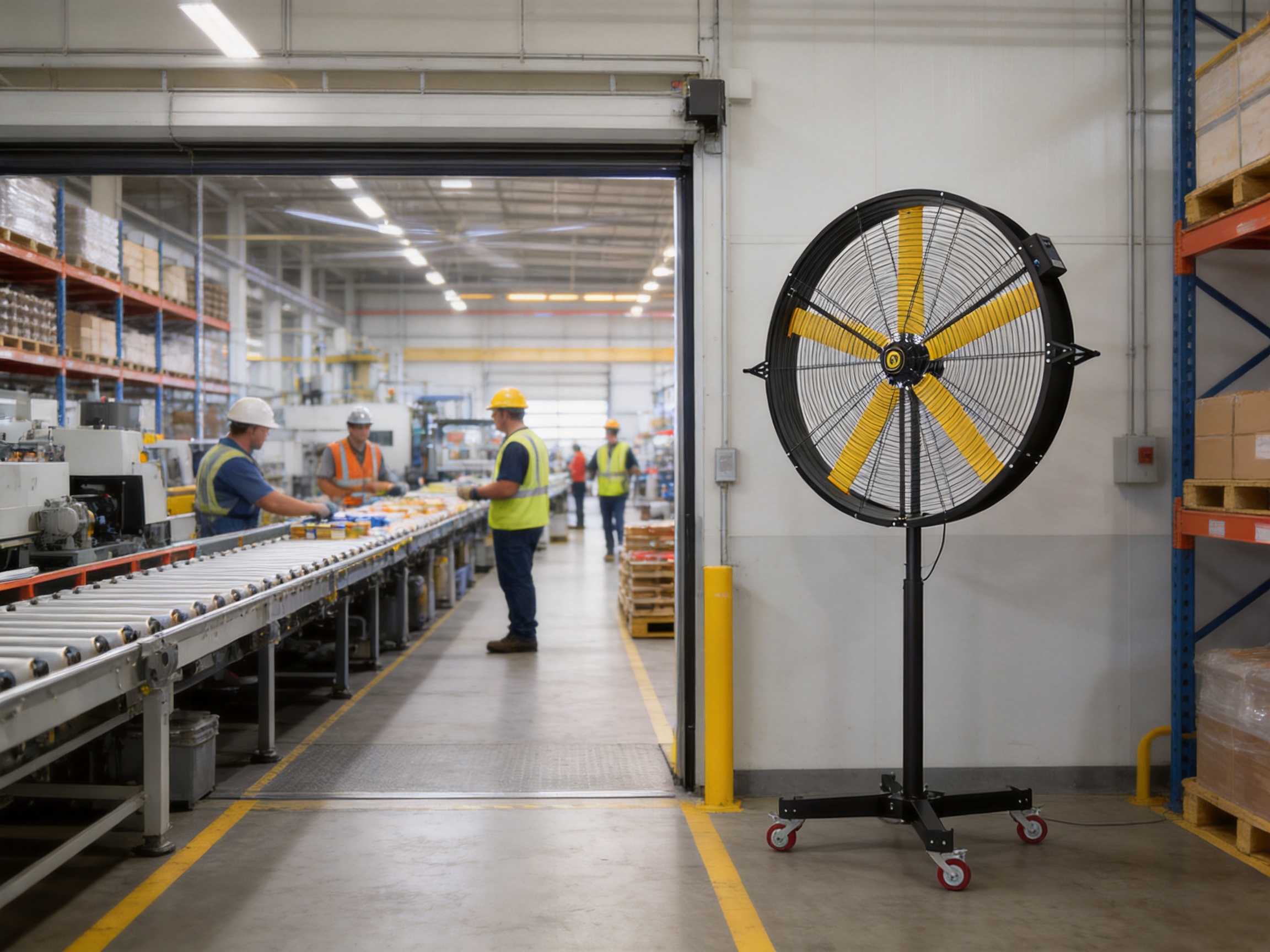
The fan should be placed on a level, stable surface that can support its listed weight. The ASF-20 model weighs 142 kilograms, so moving and positioning it requires appropriate handling equipment and trained personnel. The smaller models weigh between 65 and 92 kilograms and also require careful handling.
Adequate clearance should be provided around the blades and frame. The fan should not be positioned next to walls, racks, columns, machines, or stored goods in a way that blocks airflow or creates a contact risk. Airflow should be directed toward the intended cooling or ventilation zone without creating a hazard for workers or moving vehicles.
Power cables should be routed safely and protected from crushing, abrasion, water exposure, and vehicle traffic. Cables must not create trip hazards. Where the fan is used in a busy industrial area, cable management should be included in the site layout.
Before commissioning, technicians should check the frame, blade attachment, electrical connections, grounding, motor direction, control system, and protective devices. The fan should be operated initially at a low speed so that unusual vibration, noise, or movement can be identified before full operation.
Installation must follow the manufacturer's instructions and applicable local regulations. Where the fan is used in a commercial, industrial, or public facility, the responsible engineer or site manager should confirm that the installation meets workplace safety requirements.
Although the direct-drive design reduces the number of mechanical wear components, regular maintenance remains important. A maintenance program should include visual inspections, cleaning, electrical checks, and evaluation of operating performance.
Blades should be inspected for dirt, damage, deformation, and loose fasteners. Accumulated dust or grease can affect airflow and balance. Cleaning methods should be suitable for the materials and electrical protection level. High-pressure water should not be directed at the motor, electrical connections, inverter, or control equipment unless specifically permitted.
The frame and support structure should be checked for cracks, corrosion, loose fasteners, or signs of impact. Because the fan may be moved between locations, the base and wheels or movement components, if fitted, should be inspected regularly.
Electrical cables, plugs, switches, controllers, and grounding connections should be inspected by qualified personnel. Any unusual smell, sparking, overheating, repeated tripping, or abnormal motor noise should be investigated immediately. The fan should be isolated from the power supply before maintenance or cleaning.
Vibration should be monitored during operation. A change in vibration can indicate blade damage, imbalance, loose hardware, bearing problems, structural movement, or contact with an obstruction. Early investigation can prevent more serious damage and reduce downtime.
Large industrial fans must be operated responsibly. Personnel should not touch the blades or place objects into the fan while it is connected to power. Guards, covers, and protective structures must remain correctly installed.
The fan should be kept away from flammable liquids, explosive dust, and hazardous atmospheres unless the exact model has been approved for that environment. Air movement can spread dust, vapors, or contaminants, so the fan should be integrated into the facility's overall safety and ventilation plan.
Workers should be informed about the fan's operating zone, control procedures, emergency shutdown process, and movement restrictions. If the fan is relocated, the power must be disconnected and the unit moved using safe handling practices.
Noise, airflow, and temperature should be assessed in the context of the working environment. A fan that improves comfort in one location may disturb papers, lightweight materials, dust, or sensitive processes in another. Correct speed selection and positioning are essential.
The 79-inch freestanding energy-efficient HVLS industrial fan offers a combination of characteristics that is difficult to achieve with a basic portable fan. Its large diameter supports broad airflow coverage, while its floor-standing format avoids many ceiling installation limitations.
The gearless direct-drive motor is a key competitive advantage because it removes belts and pulleys that commonly require adjustment and replacement. This can simplify maintenance and support reliable operation. The low listed power rating for the large ASF-20 model also supports energy-conscious operation when the fan is correctly sized and controlled for the space.
The impact-resistant frame and industrial-grade materials make the product more suitable for demanding workplaces than light-duty residential equipment. The below-40 dB noise specification helps it serve applications where strong airflow is needed without excessive sound.
The IP55 protection level, broad application range, multiple model sizes, selectable blade colors, OEM capability, and international manufacturing experience add further flexibility. Buyers can select a smaller model for restricted areas or the ASF-20 configuration for large open spaces and approximately 79-inch airflow coverage.
The manufacturer's production infrastructure is another important strength. Automated machinery, machining, cutting, welding, and testing capabilities provide a foundation for repeatable manufacturing and quality control. The company's experience since 2006 and its focus on industrial ventilation solutions support its ability to serve both standard and customized requirements.
HVLS means high volume, low speed. An HVLS fan uses a large-diameter blade assembly to move a large volume of air while operating at a relatively low rotational speed. This creates broad air circulation rather than a narrow, concentrated air stream.
Yes. The large freestanding configuration is suitable for many warehouses, especially where ceiling obstructions, storage racks, cranes, or limited structural support make overhead installation difficult. The final selection should consider ceiling height, aisle layout, airflow requirements, and workplace safety clearances.
The ASF-20 model is associated with the approximately 79-inch or 2-meter fan diameter. Its listed overall dimensions are 2100 x 720 x 2240 millimeters, with a maximum speed of 200 RPM, a power rating of 0.65 kW, and a weight of 142 kilograms.
No. The product uses a gearless direct-drive motor system. This eliminates the traditional belt and pulley transmission arrangement and reduces the number of mechanical components that may require adjustment or replacement.
The listed noise level for the supplied models is below 40 dB. Actual sound may vary according to speed, room acoustics, surface reflections, nearby machinery, installation position, and maintenance condition.
The product information lists outdoor applications. However, outdoor use should be limited to suitable locations and conditions. The IP55 rating does not mean that the fan can be submerged or exposed to unrestricted severe weather. Buyers should confirm the installation requirements and local electrical regulations.
The listed blade material is magnalium. Available blade colors include yellow, blue, silver, black, and red, subject to confirmation for the selected model and order.
Yes. Air movement can support evaporation and help dry slick or recently cleaned surfaces more quickly. The fan should be positioned carefully so that it does not spread dust, contaminants, or liquid into other areas.
Not in every application. The fan improves air movement and can enhance perceived cooling, but it does not provide the same temperature, humidity, or filtration control as a dedicated air-conditioning or mechanical ventilation system. It is often used as a supplement to existing environmental systems.
The direct-drive design eliminates belt inspection and replacement, but the fan still requires routine cleaning, electrical inspection, blade checks, structural inspection, and vibration monitoring. Maintenance should be performed by qualified personnel according to the manufacturer's instructions.
The manufacturer provides customized OEM services. Potential options may include color, labeling, packaging, electrical specifications, controls, and product documentation. All customization details should be confirmed before production.
The supplied product information lists a three-year warranty. Buyers should confirm the warranty scope, applicable model, covered components, exclusions, service process, and geographical conditions in the final commercial agreement.
Before ordering, buyers should identify the room dimensions, ceiling height, floor layout, operating temperature, dust and moisture conditions, available electrical supply, desired airflow direction, and expected operating hours. These factors help determine whether the ASF-20 model or a smaller configuration is most appropriate.
The purchaser should also confirm the final model number, fan diameter, overall dimensions, weight, blade count, blade color, inverter configuration, control method, certification documents, warranty conditions, and delivery requirements.
For large projects, a site airflow assessment is recommended. The assessment can identify heat sources, stagnant zones, obstacles, worker locations, exhaust points, and areas where the fan may interfere with equipment or materials. Proper planning improves performance and helps avoid later relocation.
Installation, commissioning, and maintenance responsibilities should be assigned clearly. Operators should receive instructions on safe movement, speed control, cleaning, emergency shutdown, and fault reporting.
The 79-inch freestanding energy-efficient HVLS industrial fan is designed for facilities that need broad, reliable airflow without depending on ceiling installation. Its large-diameter blade assembly, low-speed operating concept, gearless direct-drive motor, impact-resistant frame, low listed noise level, and IP55 protection provide a strong combination for industrial and commercial use.
The product is particularly valuable in warehouses, factories, workshops, garages, loading areas, commercial facilities, and sheltered outdoor spaces where overhead fans are obstructed or impractical. Compared with small portable fans, it offers broader airflow coverage and stronger industrial construction. Compared with belt-driven equipment, its direct-drive system reduces mechanical transmission components. Compared with permanently installed ceiling fans, its freestanding structure offers greater mobility and layout flexibility.
The manufacturer's experience, 8,000-square-meter production base, automated machinery, machining center, cutting center, welding center, testing center, and OEM capabilities provide additional support for buyers seeking standard products or customized industrial ventilation solutions.
When correctly selected, installed, operated, and maintained, the fan can improve workplace comfort, support air circulation, assist with surface drying, and help reduce stagnant air in challenging spaces. Its value is greatest when integrated into a complete ventilation strategy that considers building design, safety, energy use, and the specific needs of workers and products.
1. Product specification sheet for the freestanding industrial stand fan series, including model dimensions, power ratings, speed, weight, noise level, and protection level.
2. Manufacturer-provided product information for the 79-inch freestanding energy-efficient HVLS industrial fan.
3. Manufacturer information regarding direct-drive motor technology, industrial fan applications, OEM services, and production capabilities.
4. International Electrotechnical Commission, Degrees of Protection Provided by Enclosures, IP Code classification reference.
5. General industrial ventilation and workplace airflow guidance for factories, warehouses, workshops, and commercial facilities.
6. General technical references concerning high-volume, low-speed fan operation, air circulation, energy efficiency, and industrial equipment maintenance.
7. Manufacturer-provided warranty and certification information for the applicable product configuration.
The 79-inch freestanding energy-efficient HVLS industrial fan features a robust construction designed to withstand the challenges of daily industrial use. Its impact-resistant frame ensures it can wit...
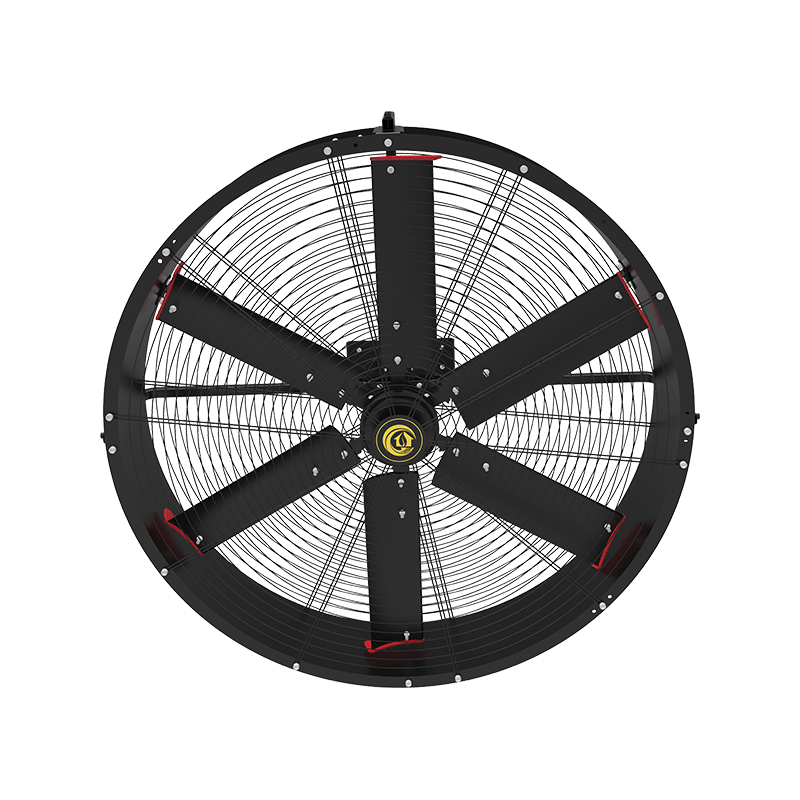
1. Extreme Airflow & Wide CoverageEquipped with massive 79-inch (2.0m) diameter aerospace-grade aluminum alloy blades. These precision-balanced blades generate a powerful, stable laminar airflow t...
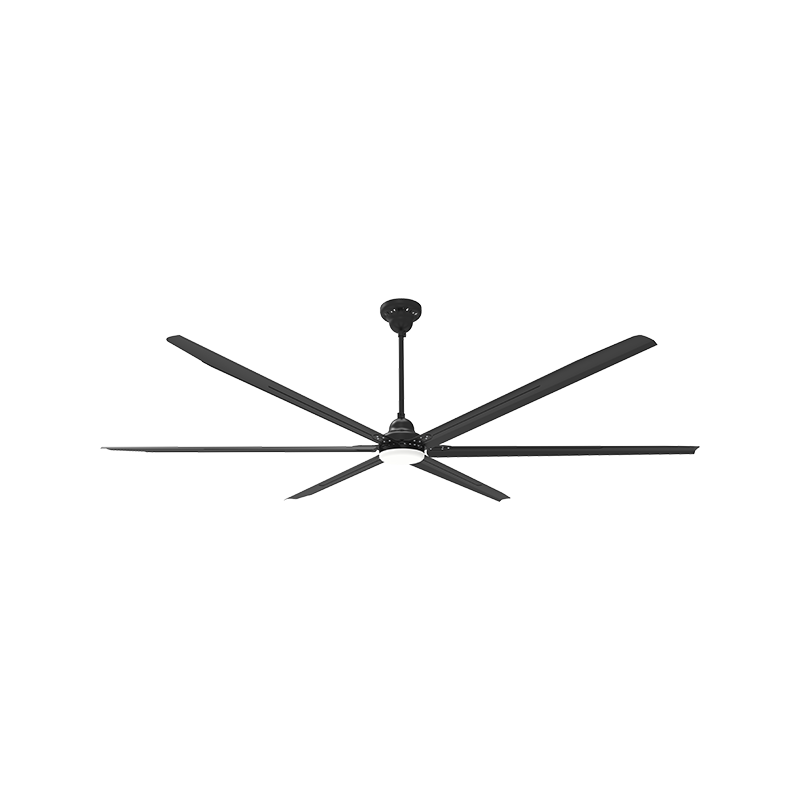
1. Core Technology: High Volume, Low SpeedNatural Breezes: Unlike the “harsh” wind from small fans, HVLS fans use massive blades rotating at low speeds to create a large-scale, three-dimensional breez...
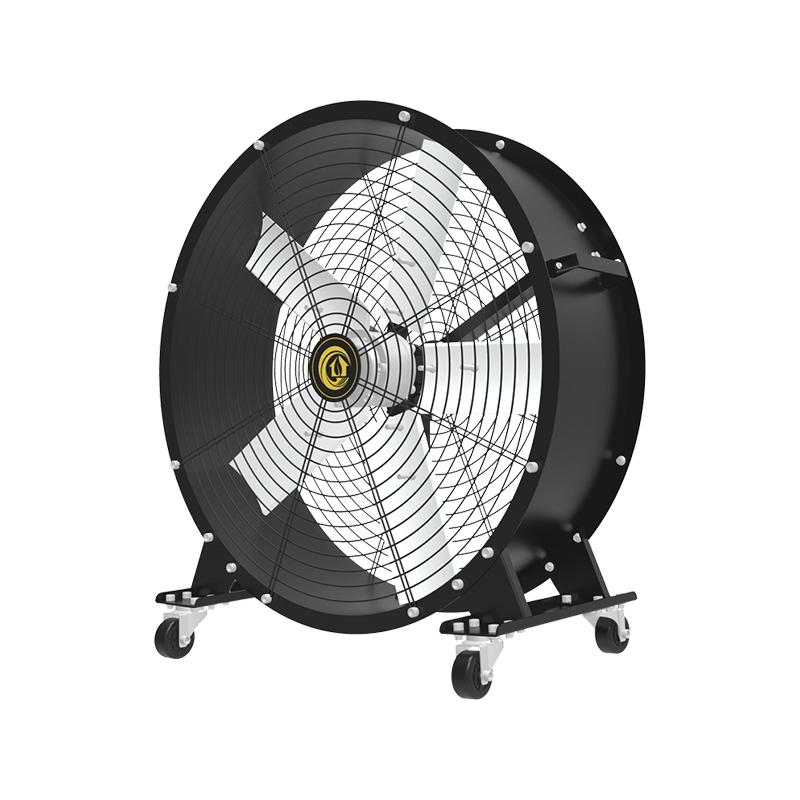
The 79-inch new mobile HVLS fan features a fan design made of magnetic aluminum alloy material, which ensures product durability while effectively reducing overall weight, making it easy to move and i...
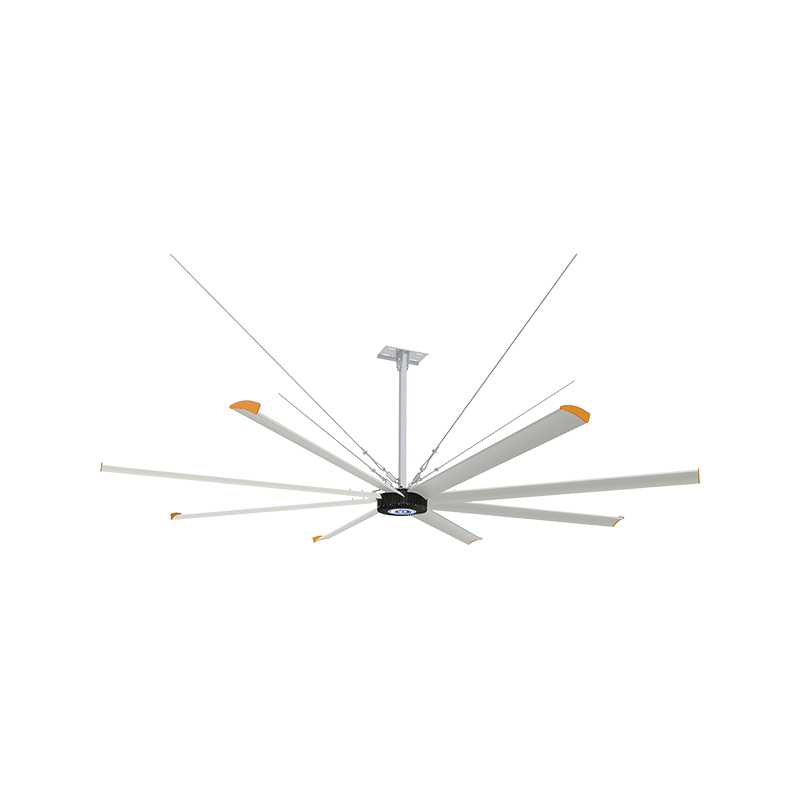
The 8-foot HVLS Large Industrial BLDC Ceiling Fan is equipped with a 0.3KW brushless DC motor, offering higher energy efficiency and lower noise levels. The lower power consumption design helps users ...
The 10-foot DC motor-driven HVLS (High Volume Low Speed) industrial and commercial ceiling fan utilizes a low-speed, high-airflow operating principle, achieving uniform airflow over a large area and a...
Big Fans, Low Speed, Real Results: HVLS Industrial Fans Explained When a factory floor hits 34°C, small fans only move hot air around. Large-diameter HVLS ceiling fans do the opposite: they push a t...
READ MORESpecifying industrial air movement The HVLS Ceiling Fan Isn’t a Big Ceiling Fan. Sizing, motor selection, and mounting height have to work together before a large industrial space can feel genuinely...
READ MORECommercial HVLS Fans: The Quiet Engineering Behind Large-Space Airflow A practical guide to selecting high-volume, low-speed ceiling fans for warehouses, factories, and commercial halls — with the ef...
READ MOREA 6.1-meter ceiling sounds like an opportunity — until you feel the stagnant air on the floor. In warehouses, workshops, and sanctuaries with a 20-foot deck, heat stratifies overhead while workstatio...
READ MORE Custom Large Industrial Fans Manufacturers