

 English
 Español
 عربى

1. Core Technology: High Volume, Low SpeedNatural Breezes: Unlike the “harsh” wind from small fans, HVLS fans use massive blades rotating at low speeds to create a large-scale, three-dimensional breez...
Content
Large industrial and commercial spaces require a different approach to air movement than homes, offices, and small retail rooms. Warehouses, manufacturing plants, logistics centers, agricultural buildings, sports facilities, workshops, distribution centers, and large commercial halls often have high ceilings and expansive floor areas. In these environments, ordinary wall fans or small ceiling fans may create strong air movement in a limited zone while leaving other areas poorly ventilated. They may also consume more energy when several units are installed to compensate for their limited coverage.
A high-volume, low-speed ceiling fan provides a more balanced solution. By moving a large quantity of air at a controlled rotational speed, an HVLS fan can create broad, gentle circulation across a substantial area. The 10-foot DC motor-driven HVLS industrial and commercial ceiling fan is designed around this principle. Its large six-blade configuration, brushless DC motor, adjustable operating speed, and adaptable installation structure make it suitable for applications that require dependable air circulation, energy-conscious operation, and convenient control.
The fan belongs to the 6FT–11FT BLDC ceiling fan category and is configured with a fan diameter of approximately 3.0 meters, or 10 feet. It is designed for industrial and commercial environments where airflow distribution, operating efficiency, noise control, and long-term reliability are important. At the same time, it is supported by the engineering, manufacturing, testing, and customization capabilities of Shanghai Aipu Fans Co., Ltd., a Chinese manufacturer specializing in industrial-grade ceiling fans and ventilation solutions.
This article examines the working principle, construction, performance, installation flexibility, control options, manufacturing strengths, and application value of this 10-foot HVLS ceiling fan. It also explains how the product compares with conventional air-moving equipment and why a professional manufacturing process is essential for dependable operation in demanding facilities.
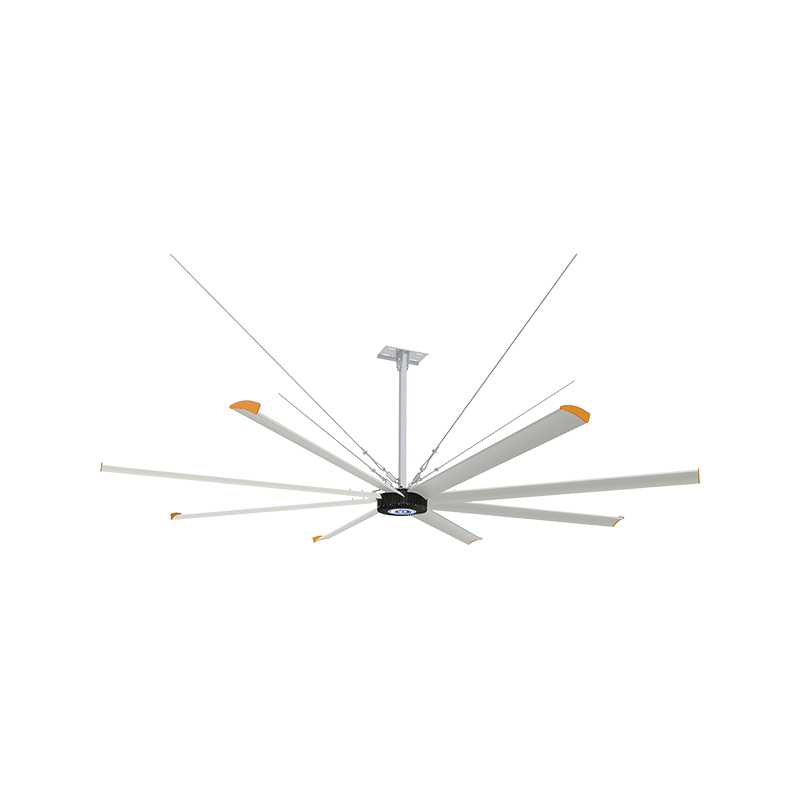
10-foot DC motor driven HVLS industrial and commercial ceiling fan
HVLS means “high volume, low speed.” Unlike a conventional high-speed fan that produces a concentrated stream of air, an HVLS fan uses a large-diameter rotor and carefully designed blades to move a broad volume of air at a relatively low rotational speed. The airflow is distributed over a wide area instead of being concentrated immediately below the fan.
The 10-foot model is intended for spaces where a compact residential fan would be too small and a much larger industrial fan would be unnecessary or difficult to install. With a diameter of approximately 3 meters, it offers a practical middle-size solution for medium and large rooms. It can be used independently in a smaller facility or installed as part of a coordinated ventilation plan across a larger building.
The fan’s large blades accelerate air and promote circulation from the ceiling toward the occupied zone. Once the air reaches the floor, it spreads outward and gradually returns upward along walls or through open spaces. This creates a continuous circulation pattern. The objective is not to produce an uncomfortable blast of air but to reduce stagnant zones and improve the overall movement of air throughout the facility.
Industrial spaces often contain heat-producing equipment, stored goods, people, vehicles, and processes that affect air distribution. Warm air may accumulate near the roof, while areas near the floor may feel stagnant. Controlled air circulation helps reduce temperature stratification and can make the indoor environment more comfortable. In warm seasons, the air movement across the skin can also improve perceived comfort without requiring every part of the building to be cooled aggressively.
The 10-foot HVLS fan is therefore not simply a larger version of a household ceiling fan. It is a ventilation component designed for large-volume air movement, continuous operation, adjustable performance, and integration into commercial or industrial building systems.
The supplied product information identifies this fan as a DC motor-driven HVLS industrial and commercial ceiling fan with an approximate diameter of 10 feet. The configuration includes six aluminum alloy blades, a PMSM brushless motor, adjustable speed control, and support for remote or Wi-Fi-based operation. These characteristics are intended to provide a combination of airflow performance, energy efficiency, quiet operation, and control flexibility.
Item |
Product Configuration |
Product type |
DC motor-driven HVLS industrial and commercial ceiling fan |
Category |
6FT–11FT BLDC ceiling fan |
Fan diameter |
Approximately 3.0 meters / 10 feet |
Blade quantity |
6 pieces |
Blade material |
Aluminum alloy |
Motor type |
PMSM brushless DC motor |
Power information |
Configured product information lists 0.4 kW; the broader series supports approximately 0.3–1.5 kW |
Speed range |
Adjustable; product information lists 0–88 RPM |
Voltage options |
110 V / 220 V; broader input information includes 200–240 V and 380–480 V options |
Frequency |
50 Hz / 60 Hz |
Approximate weight |
33 kg |
Control options |
Remote control and optional APP Wi-Fi control |
Customization |
OEM and ODM support |
Some of the supplied technical data describes the broader family of HVLS fans, while other information refers specifically to the 10-foot configuration. For final equipment selection, buyers should confirm the exact voltage, power, speed, controller, airflow, mounting arrangement, and certification requirements for the intended order. This is especially important when a project includes multiple electrical standards, high-ceiling installation, or integration with a building management system.
The first major advantage of this product is its ability to move air across a broad area. The six large blades work together to generate a substantial downward and outward airflow pattern. Because the air is moved gradually and distributed over a wide zone, the fan can help reduce the uneven airflow commonly associated with multiple small fans.
A conventional fan generally creates a localized air column. People close to the fan may experience excessive wind, while workers or stored products farther away receive little benefit. Installing additional small fans can address some of these weak zones, but it may also create a complicated layout with overlapping air streams, more electrical connections, more maintenance points, and increased noise.
An HVLS fan approaches the problem from a different direction. Its larger diameter allows it to cover a wider area with one central unit. The low-speed operating principle helps maintain a more uniform airflow pattern. This is particularly valuable in open-plan facilities where partitions are limited and air needs to circulate across a large floor area.
The product information indicates that the broader HVLS series can deliver very high air volumes, with listed figures reaching several thousand cubic meters per minute depending on the model. The 10-foot configuration is a smaller member of the family, so its actual airflow depends on motor settings, blade design, installation height, and operating conditions. Buyers should use the confirmed model data rather than applying the maximum value of a larger model to the 10-foot unit.
Airflow distribution is influenced by more than fan diameter. Roof height, obstructions, racking, machinery, doors, columns, ventilation openings, and neighboring fans all affect the final result. A professional supplier can help determine the number and spacing of units required for a particular facility. Proper planning is essential to obtain the benefits of HVLS circulation and avoid interference between fans or unwanted airflow near sensitive workstations.
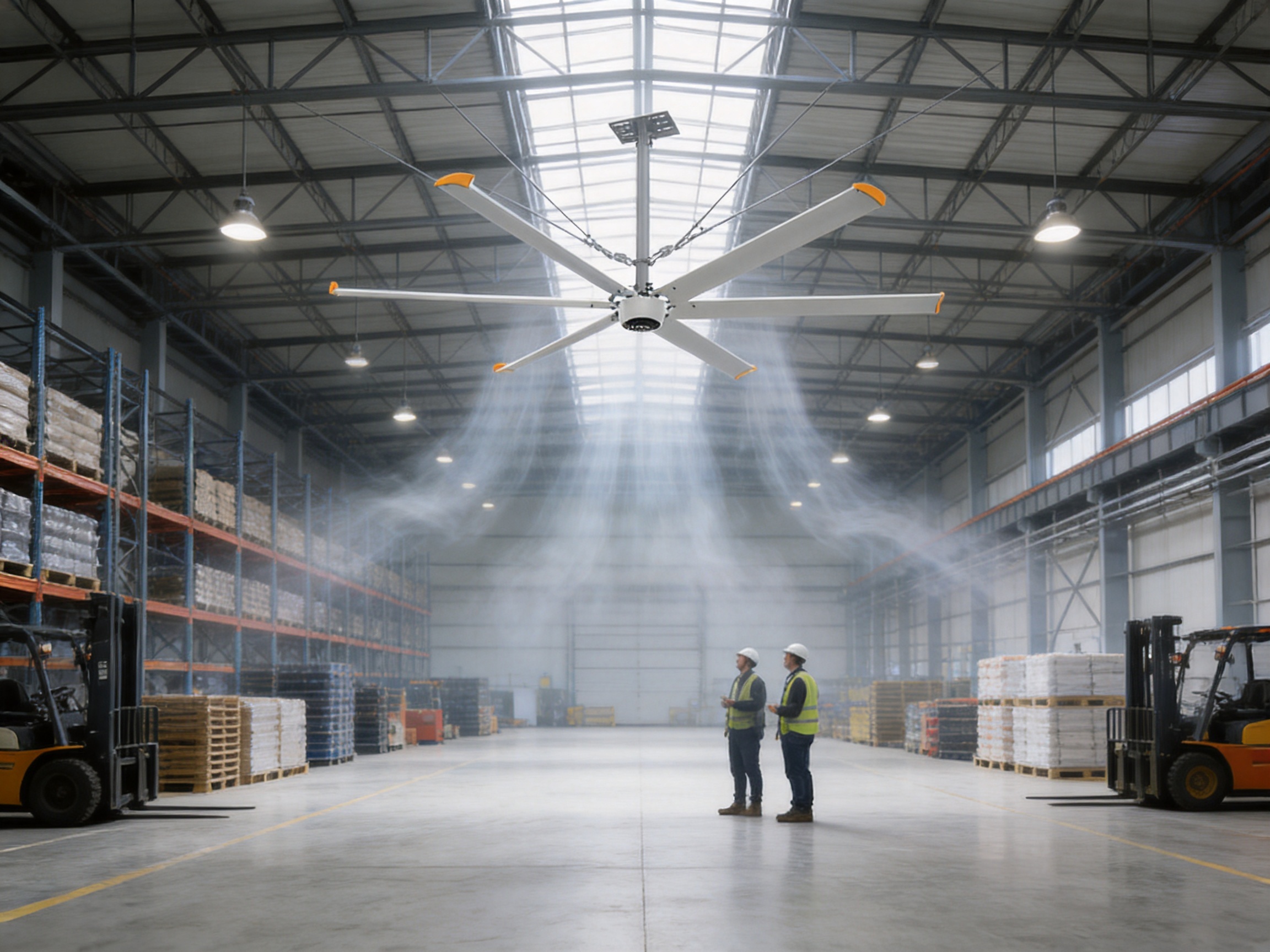
The fan uses a DC motor architecture with a PMSM brushless design. PMSM refers to a permanent magnet synchronous motor. In this type of motor, permanent magnets and electronic control are used to produce efficient rotational movement. The brushless structure avoids the mechanical brushes used in traditional brushed motors, reducing one source of friction, wear, and maintenance.
Compared with many conventional AC motor arrangements, a well-designed brushless DC or PMSM system can provide efficient operation across a broad speed range. This is especially useful for an HVLS fan because the fan does not need to operate at maximum speed at all times. During mild weather or low-occupancy periods, the controller can reduce the speed and power demand. During hotter conditions or when more air circulation is needed, the speed can be increased.
Adjustability is an important part of energy-conscious operation. A fixed-speed fan may continue to consume unnecessary power even when the room requires only moderate circulation. The 10-foot fan is designed to support variable speed control, with the supplied information listing an operating range of up to approximately 0–88 RPM for the specified configuration. The exact minimum and maximum values may depend on the controller and final electrical setup.
Variable speed also allows a facility manager to respond to seasonal changes. In summer, stronger circulation can improve perceived comfort and help move heat away from occupied areas. In cooler seasons, lower-speed operation may be sufficient to reduce stagnant air while avoiding an excessive draft. During periods when a room is unoccupied, the fan can be turned off or operated at a lower setting.
Energy performance depends on the complete system rather than the motor alone. Blade shape, blade balance, motor efficiency, controller quality, installation height, operating schedule, and building conditions all contribute to actual consumption. Nevertheless, the use of a brushless PMSM motor gives this product a strong foundation for efficient and controllable operation.
For facilities using several fans, even a modest reduction in power consumption per unit can produce meaningful savings over long operating periods. The potential benefit is greater when the fans help reduce dependence on mechanical cooling or when they allow a building to maintain comfort with fewer small fans.
Noise is a significant consideration in industrial and commercial facilities. Excessive fan noise can interfere with communication, create fatigue, reduce concentration, and make the working environment less comfortable. A large fan operating at low speed is generally better suited to noise-sensitive applications than a small fan spinning at a high speed.
The brushless DC motor contributes to quiet operation by reducing mechanical contact associated with brush-based systems. Electronic speed control also allows the fan to operate at the lowest effective speed instead of running continuously at an unnecessarily high rate. Aluminum alloy blades can further support stable operation when they are correctly manufactured, balanced, and installed.
Quiet operation is not determined by the motor alone. Vibration can result from an unbalanced blade, loose fasteners, insufficient support, misalignment, or an unsuitable mounting surface. This is why manufacturing precision and installation quality are both important. A professional production process should include dimensional checks, balancing procedures, electrical testing, and operational inspection before delivery.
In warehouses, retail halls, gyms, workshops, and production floors, a quieter circulation system can improve the general environment without requiring workers to tolerate a strong mechanical background noise. The fan is not intended to be completely silent, but its low-speed operating principle and brushless motor design support a more comfortable acoustic profile than many high-speed alternatives.
The product uses aluminum alloy blades. Aluminum alloy is widely used in industrial fan applications because it combines low weight with useful strength and corrosion resistance. Lower blade weight reduces the mechanical load on the motor and suspension system, while the material can maintain structural stability when properly designed for the fan’s rotational speed.
Blade geometry affects the volume of air moved, the pressure pattern, efficiency, sound level, and overall stability. For that reason, the blades must be produced according to controlled dimensions and installed at consistent angles. Small differences between blades can create imbalance, vibration, or uneven airflow. A reliable manufacturer must therefore control cutting, forming, drilling, surface treatment, and assembly processes carefully.
Aluminum alloy is also practical for facilities where equipment must remain in service for long periods. While no material is immune to corrosion or damage, appropriate alloy selection and surface finishing can help the blades withstand normal industrial conditions. The final suitability depends on humidity, chemicals, salt exposure, temperature, cleaning methods, and the specific environment in which the fan is installed.
The fan’s stated weight of approximately 33 kilograms reflects the importance of combining large airflow capacity with a manageable overall structure. The support system, safety cables, mounting brackets, and building connection must still be selected according to the installation conditions. A lighter fan is easier to handle than a much larger industrial model, but it remains overhead equipment and must be secured professionally.
Industrial buildings are not constructed with one universal roof design. Some facilities use steel structures, while others have concrete roofs, round steel members, beams, or customized support frames. The product information states that the fan is suitable for various roof types, including steel structures, round steel, and concrete structures.
This flexibility is valuable for engineering contractors and facility owners. Rather than limiting the product to one specific mounting condition, the installation system can be adapted to the load-bearing structure and available ceiling height. The exact support design must be verified for each project. The installer should confirm the strength of the roof or structural member, the fan’s weight, dynamic loads, vibration considerations, access requirements, and local safety regulations.
Ceiling height is particularly important for HVLS fans. The fan needs adequate clearance from the roof, lights, sprinklers, beams, storage racks, lifting equipment, and other obstacles. The lower edge of the fan must also be positioned safely above people, vehicles, and machinery. A suitable suspension length and mounting bracket can help place the fan in the correct operating zone.
Professional installation should include secure mechanical fastening, safety retention, correct electrical wiring, controller placement, and functional testing. If multiple fans are installed, their spacing should be planned to achieve consistent airflow. If the building has automated fire protection or other overhead services, the fan layout must be coordinated with those systems.
Modern industrial ventilation systems increasingly require more than a simple on-and-off switch. The 10-foot HVLS fan supports remote control, and APP-based Wi-Fi control is also available. These options can make daily operation more convenient and enable users to adjust the fan according to occupancy, temperature, production schedules, or seasonal conditions.
Remote control is useful when the fan is mounted high above the floor and direct access to a wall-mounted switch is inconvenient. Operators can adjust the speed without using ladders or interrupting work. This is particularly helpful in warehouses, sports halls, workshops, and high-ceiling commercial buildings.
Wi-Fi control can provide additional flexibility where the facility uses a connected equipment management system. Depending on the final controller configuration, users may be able to start or stop the fan, adjust the speed, organize operating schedules, and manage several units from one interface. The exact functions should be confirmed during the ordering process because software features can vary by controller version and project requirements.
Smart control should be viewed as a practical management tool rather than a replacement for correct system design. A fan that is poorly positioned or incorrectly sized will not deliver the expected result merely because it has remote connectivity. The best outcome combines accurate airflow planning, suitable hardware, reliable controls, and clear operating procedures.
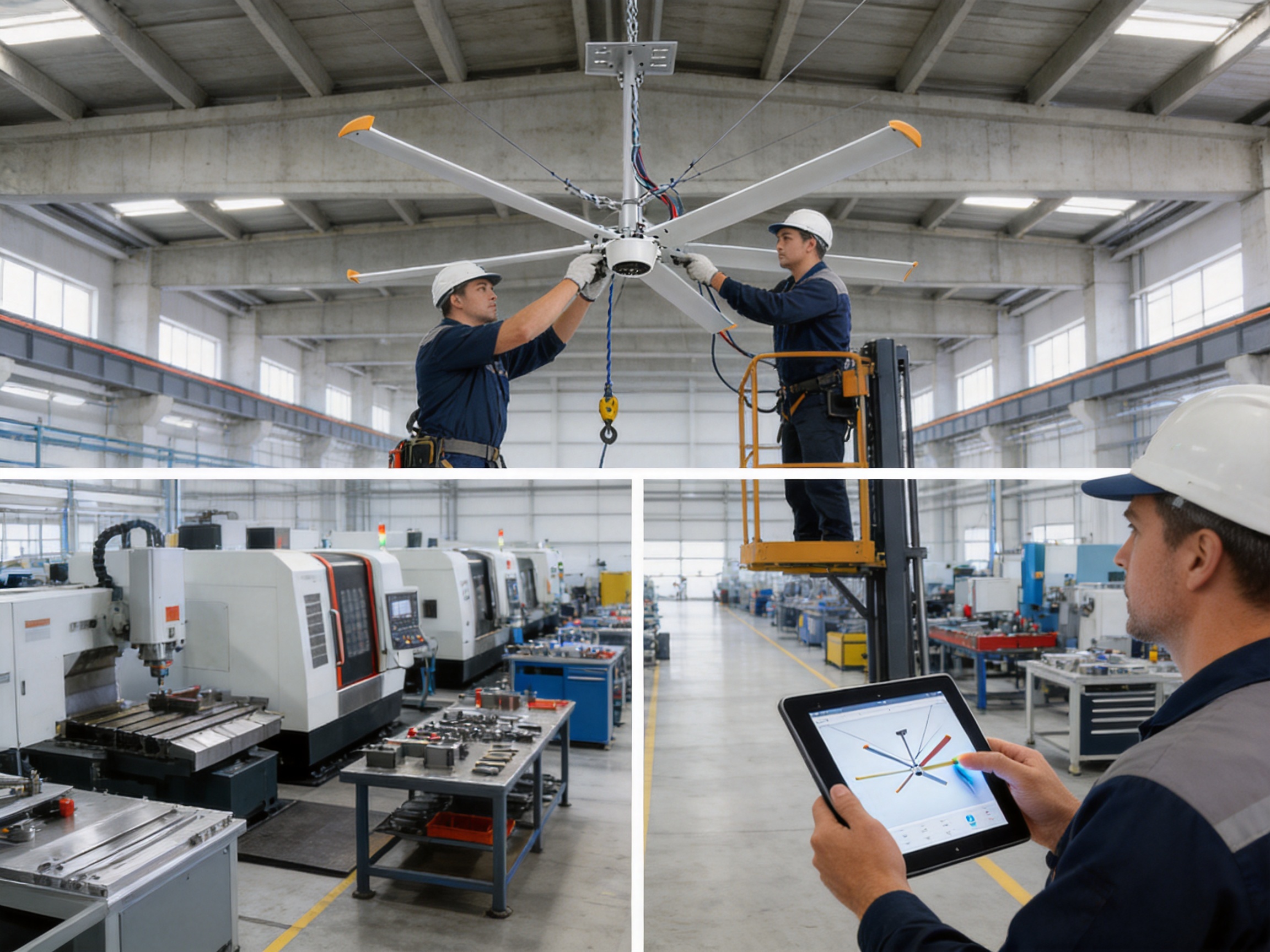
Traditional high-speed fans remain useful for localized cooling and targeted ventilation. They are often compact, relatively simple to install, and suitable for small rooms or specific workstations. However, they are not always the most efficient choice for large open spaces.
A high-speed fan usually creates a strong, narrow air stream. This may be helpful when a worker needs direct airflow, but it may also produce discomfort for people positioned close to the fan. Areas outside the air stream can remain stagnant. In large buildings, many high-speed fans may be required to cover the same general floor area that can be served by fewer large-diameter units.
The 10-foot HVLS fan is designed to create broader and more even circulation. Its lower speed reduces the likelihood of an excessively concentrated draft, while its large blades move air across a wider zone. Variable speed control allows the operator to select a suitable airflow level rather than accepting only a fixed high-speed output.
There are also differences in maintenance and system planning. Multiple small fans mean multiple motors, guards, brackets, switches, and maintenance points. A coordinated HVLS installation may simplify the overall air movement strategy, although each fan still requires inspection and servicing. The preferred solution depends on the building layout, air movement objectives, budget, ceiling structure, and operational requirements.
Evaluation area |
10-foot HVLS ceiling fan |
Typical small high-speed fan |
Air movement pattern |
Broad, distributed circulation |
Localized, concentrated airflow |
Operating speed |
Low speed with adjustable control |
Usually higher speed, often with limited adjustment |
Large-area suitability |
Designed for open industrial and commercial spaces |
More suitable for small or targeted areas |
Comfort profile |
Gentler circulation over a wider area |
Stronger airflow near the fan |
Motor technology |
PMSM brushless DC motor |
Often conventional AC or other motor designs |
Control flexibility |
Remote and optional Wi-Fi control |
Often manual or basic switch control |
System planning |
Requires ceiling layout and coverage planning |
Can be installed as individual local units |
This comparison does not mean an HVLS fan replaces every other ventilation product. Exhaust fans, air curtains, evaporative coolers, air-conditioning systems, and high-speed fans each have different functions. The HVLS fan is particularly valuable when the primary requirement is broad air circulation and improved indoor comfort across a large open area.
Warehouses commonly have high ceilings, large doors, extensive storage racks, and varying levels of occupancy. Air may become stagnant between storage zones, especially when the building has limited mechanical circulation. An HVLS fan can support general airflow without occupying valuable floor space or creating obstacles for forklifts and pallet movement.
In distribution centers, operating conditions change throughout the day. Doors may open frequently, workers may move between areas, and equipment can generate heat. Adjustable speed control allows the fan to respond to these changing requirements. Multiple units can be arranged across the ceiling to support a consistent environment throughout the facility.
Manufacturing facilities may contain machinery, production lines, welding areas, assembly stations, and inspection zones. Heat generated by equipment can accumulate near the roof, while workers at floor level may experience poor air movement. HVLS circulation can help move air through these large spaces and improve perceived comfort.
The fan should not be used as a substitute for required process exhaust or hazardous-material ventilation. Where fumes, dust, or heat must be removed at the source, dedicated extraction equipment remains necessary. The HVLS fan can complement that system by improving general circulation and reducing stagnant areas.
Gyms, indoor courts, training halls, and multipurpose sports buildings need air movement that does not create an excessively strong or distracting draft. A large low-speed fan can circulate air over a wide floor area and help reduce discomfort during physical activity. Remote control allows staff to adjust the operating level according to the number of people and the type of event.
Large retail halls, exhibition centers, showrooms, and event venues can benefit from ceiling-mounted air circulation because the equipment does not consume floor area. A clean, organized ceiling installation can support comfort without interfering with displays, aisles, or customer movement. The fan’s low-speed design is also appropriate where noise and visual comfort are important considerations.
Agricultural buildings, equipment storage areas, and utility halls often require durable air circulation over a broad zone. The actual suitability of the fan depends on humidity, dust, corrosive materials, temperature, and cleaning conditions. Buyers should discuss environmental requirements with the manufacturer before selecting materials, electrical protection, and installation accessories.
The performance of an industrial ceiling fan depends heavily on the quality of its manufacturing process. A product may have an attractive specification, but its long-term value is determined by motor reliability, blade consistency, controller stability, structural accuracy, assembly quality, and testing discipline.
Shanghai Aipu Fans Co., Ltd. was established in Shanghai, China, in 2006. The company specializes in industrial-grade ceiling fans and provides product solutions for industrial customers in domestic and international markets. Its experience in this field supports a product development approach focused on practical installation, energy efficiency, reliable operation, and customization.
The company operates an approximately 8,000-square-meter production base. According to the supplied company information, the facility includes high-precision automated machinery, a machining center, a cutting center, a welding center, and a testing center. These capabilities are important because an industrial fan is a coordinated mechanical and electrical system rather than a single isolated component.
High-precision automated machinery can improve repeatability in the production of brackets, hubs, motor-related components, and other parts. Consistent dimensions help ensure that components fit correctly during assembly. Repeatability is particularly important when manufacturing multiple fans for the same project, because consistent products simplify installation and help maintain similar airflow performance across the building.
The machining center supports accurate production of mechanical components. Parts such as shafts, mounting interfaces, hubs, and structural connectors require appropriate tolerances. Inaccurate machining can lead to misalignment, unwanted vibration, premature wear, or difficult installation. Controlled machining helps create a more stable foundation for the completed fan.
The cutting center supports the preparation of blade and structural materials. Accurate cutting is necessary for maintaining consistent blade dimensions and ensuring that all components match the design. The welding center is relevant to support frames, brackets, and other metal structures. Proper welding quality contributes to mechanical strength and long-term stability, especially for equipment installed overhead.
The testing center provides a dedicated location for product inspection and performance verification. Testing may include electrical checks, motor operation, controller response, vibration observation, speed verification, and general functional inspection. The exact test program can vary by model and order, but the existence of dedicated testing capability reflects the importance of quality control in industrial equipment manufacturing.
AIPU also provides OEM and ODM support. OEM services can help customers order products under their own commercial requirements, while ODM support can assist with product adaptation or development based on a specific application. Customization may involve voltage, frequency, color, branding, controller functions, mounting hardware, packaging, blade configuration, or project-specific documentation.
For international customers, customization capability is valuable because building standards, electrical systems, roof structures, climate conditions, and operational expectations vary from one market to another. A manufacturer that can discuss these requirements before production is better positioned to deliver a practical solution than a supplier offering only a fixed standard model.
Quality control should begin with incoming materials. Aluminum alloy, electrical components, fasteners, motor parts, controllers, and structural steel should be checked against the required specifications. Material consistency helps prevent variation in strength, weight, conductivity, and corrosion performance.
During fabrication, dimensions and workmanship should be monitored. Blades must be consistent in size and angle. Brackets must be correctly formed and welded. Machined components must meet the required tolerances. Electrical wiring should be routed and secured correctly. These details influence not only appearance but also safety, balance, energy use, and service life.
Assembly quality is especially important for rotating equipment. The motor, hub, blades, fasteners, and support system must work as one balanced assembly. A small imbalance can become more noticeable during operation and may cause vibration. Proper fastening torque and inspection of connection points help reduce the risk of loosening.
Functional testing should verify that the motor starts correctly, responds to control signals, operates through the intended speed range, and remains stable during running. Controllers should be checked for correct communication with remote or Wi-Fi functions when those options are included. The finished fan should also be inspected for visible defects and packaging protection before shipment.
The company states a warranty policy that includes three years for the motor and inverter and ten years for other accessories in the broader product information. Another product field lists a three-year warranty. Because warranty terms can vary by configuration, market, and contract, buyers should request the applicable written warranty for the exact order. Clear warranty documentation should identify covered components, service procedures, exclusions, and required installation conditions.
Before installation, the site should be surveyed. The survey should record ceiling height, structural members, available electrical supply, lighting, fire sprinklers, ventilation openings, storage racks, cranes, doors, and other obstacles. The planned fan location must provide sufficient clearance for safe operation and future maintenance.
The supporting structure must be verified by a qualified professional. Concrete, steel beams, round steel members, and customized frames have different connection methods and load characteristics. The mounting arrangement should be designed for both static weight and dynamic operating forces. Safety cables or secondary retention systems should be installed where required by local regulations and project specifications.
Electrical installation should match the approved voltage and frequency. The product information includes 110 V and 220 V options, while broader series data refers to 200–240 V and 380–480 V input ranges. These figures should not be treated as interchangeable. The buyer must confirm the correct electrical configuration before ordering, and a qualified electrician should complete the final connection.
After mechanical and electrical installation, the fan should be commissioned at low speed. The installer should observe starting behavior, blade clearance, support movement, vibration, sound, and controller response. Speed can then be increased gradually while checking that the fan remains stable. Any abnormal noise, excessive vibration, delayed starting, or control problem should be corrected before the unit is placed into regular service.
For multi-fan systems, commissioning should evaluate the entire layout. Operators should verify that airflow is distributed as intended and that neighboring fans do not create undesirable turbulence. Control zones and operating schedules should be documented so that facility personnel can use the equipment correctly.
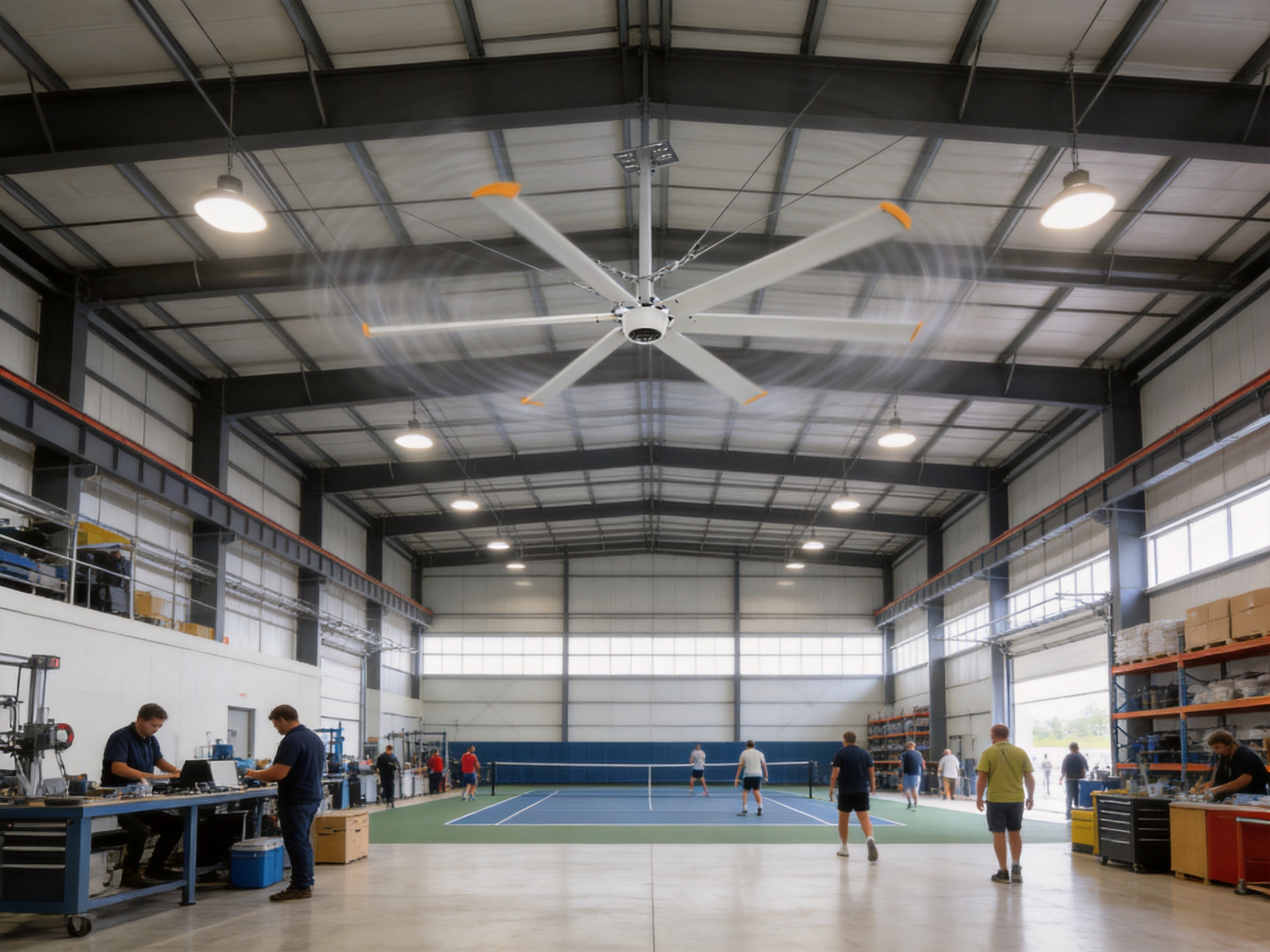
Routine maintenance helps preserve the fan’s performance and safety. Inspection intervals should reflect the operating environment, duty cycle, dust level, humidity, and local requirements. A facility with continuous operation or heavy dust may require more frequent inspection than a clean commercial hall.
Maintenance personnel should inspect blade surfaces, blade connections, hub fasteners, mounting brackets, safety cables, electrical connections, and controller components. The fan should be isolated from the power supply before physical inspection or service. Any sign of loose hardware, corrosion, unusual vibration, damaged wiring, or abnormal sound should be investigated promptly.
Dust accumulation can affect airflow and add weight to blades. In certain environments, regular cleaning may be necessary. Cleaning procedures should be compatible with the aluminum alloy and any surface treatment. Harsh chemicals, abrasive tools, or excessive water near electrical components should be avoided unless specifically approved.
The brushless PMSM motor reduces the need for some types of mechanical maintenance, but it does not eliminate the need for inspection. Bearings, electrical connections, controller performance, and structural supports still require attention. A preventive maintenance program is generally more cost-effective than waiting for an unexpected failure.
Operating records can help identify changes in performance. If a fan that normally runs smoothly begins to vibrate or draw unusual power, the problem may involve blade balance, fasteners, the motor, the controller, or the mounting structure. Early diagnosis can prevent secondary damage and reduce downtime.
Although the product is described as a 10-foot fan, the manufacturer offers a broader range of HVLS models. The supplied series information includes diameters from approximately 8 feet to 24 feet, different blade quantities, power levels, maximum speeds, and airflow capacities. This range allows a project to use a model appropriate to room size and ceiling conditions rather than applying one fan size to every space.
Selection should begin with the building’s dimensions and purpose. Important factors include floor area, ceiling height, occupancy, heat sources, desired comfort level, existing ventilation, obstructions, and operating hours. The number of fans should then be determined through a coverage and airflow assessment.
Power supply is another critical factor. Buyers should confirm whether the site uses 110 V, 220 V, 200–240 V, or a higher-voltage three-phase system. Frequency may be 50 Hz or 60 Hz depending on the country and facility. The controller and inverter must be matched to the selected motor and electrical supply.
Environmental conditions should also be considered. Facilities with high humidity, corrosive vapors, dust, outdoor exposure, or extreme temperatures may require specific materials, protective measures, or installation limitations. The customer should provide detailed environmental information during the quotation stage.
Finally, the buyer should confirm the required control method. A simple remote may be adequate for one fan, while a multi-fan project may benefit from zone control, Wi-Fi management, scheduled operation, or integration with other building systems. OEM and ODM support can be discussed when standard configurations do not fully meet the project needs.
The competitive value of the 10-foot HVLS ceiling fan comes from the combination of several features rather than one specification alone. Its approximately 3-meter diameter provides broad air movement without the physical scale of the largest industrial fan models. The six aluminum alloy blades are designed to support efficient circulation while keeping the structure relatively manageable.
The PMSM brushless DC motor provides an efficient and controllable drive system. Its adjustable speed range allows the fan to operate according to actual demand, which can reduce unnecessary energy use. The motor design also supports quieter performance and reduced mechanical wear compared with many conventional motor arrangements.
Remote and optional Wi-Fi control improve usability in high-ceiling facilities. Flexible roof compatibility supports installation on steel structures, round steel, and concrete structures when the appropriate mounting solution is selected. OEM and ODM services provide additional value for distributors, contractors, and facility projects with special requirements.
The company’s production base, machining, cutting, welding, automated equipment, and testing capabilities add another competitive advantage. These resources support more consistent manufacturing and provide a foundation for quality control. The company’s experience since 2006 and focus on industrial-grade ceiling fans also indicate specialization rather than a general consumer-appliance approach.
For buyers comparing suppliers, the most important questions are not limited to purchase price. They should also consider motor efficiency, controller quality, material consistency, balancing, structural safety, installation support, spare parts, warranty coverage, customization, and after-sales service. A reliable industrial fan must perform for many operating cycles, so the total cost of ownership is more meaningful than the initial unit price alone.
HVLS means high volume, low speed. An HVLS fan moves a large quantity of air at a relatively low rotational speed, creating broad circulation instead of a narrow, high-speed air stream.
The configured product is identified as a 10-foot fan with an approximate diameter of 3.0 meters. Final dimensional drawings should be confirmed for the specific order.
The supplied product configuration lists six aluminum alloy blades. Other models in the broader series may use different blade quantities.
The fan uses a PMSM brushless DC motor. This motor type supports adjustable speed, efficient operation, quiet performance, and reduced mechanical wear associated with brushed motors.
The product information lists an adjustable range of approximately 0–88 RPM for the configured product. Actual operating limits should be confirmed according to the selected controller, voltage, and final technical specification.
Yes. Remote control is available, and APP-based Wi-Fi control can also be accepted. The available functions depend on the final controller configuration.
The product information states that the fan can be adapted to steel structures, round steel, and concrete structures. The support method must be designed and verified according to the specific building structure by qualified installation professionals.
Yes. Its broad airflow pattern and ceiling-mounted design make it suitable for warehouses, distribution centers, workshops, manufacturing plants, commercial halls, sports facilities, and other large open spaces. The final number and placement of fans should be determined through a site assessment.
No. The HVLS fan supports general air circulation and comfort but should not replace dedicated exhaust systems required for fumes, dust, hazardous gases, or process heat. It can be used as part of a broader ventilation strategy.
The supplied information lists 110 V and 220 V options and 50 Hz or 60 Hz operation. Broader series input information also includes 200–240 V and 380–480 V. The exact electrical configuration must be confirmed before production.
The supplied information states three years for the motor and inverter and ten years for other accessories in one warranty description, while another product field lists a three-year warranty. Buyers should obtain the written warranty terms for the exact model, order, and market.
Yes. Shanghai Aipu Fans Co., Ltd. provides OEM and ODM support. Customization may be discussed for electrical specifications, controls, mounting arrangements, appearance, packaging, documentation, and project requirements.
The 10-foot DC motor-driven HVLS industrial and commercial ceiling fan is designed to solve a common challenge in large buildings: how to circulate substantial volumes of air evenly without relying entirely on numerous high-speed fans. Its approximately 3-meter diameter, six aluminum alloy blades, PMSM brushless motor, variable speed operation, and optional remote or Wi-Fi control provide a balanced solution for industrial and commercial ventilation.
Its main advantages include broad airflow distribution, adjustable energy-conscious operation, quieter performance, flexible installation, and suitability for large open spaces. The product is especially useful in warehouses, manufacturing plants, workshops, sports facilities, distribution centers, commercial halls, and other buildings where air movement and comfort must be managed across a wide area.
The product’s value is strengthened by the manufacturing capabilities of Shanghai Aipu Fans Co., Ltd. The company’s experience in industrial ceiling fans, 8,000-square-meter production base, automated equipment, machining center, cutting center, welding center, and testing center support a structured approach to product quality and customization. OEM and ODM services further assist customers with different electrical standards, building structures, control requirements, and commercial objectives.
For the best result, buyers should confirm the exact technical configuration, electrical input, airflow performance, installation height, coverage expectations, controller functions, warranty terms, and site-specific mounting design before ordering. When correctly selected, installed, and maintained, the 10-foot HVLS fan can become an effective component of a modern, energy-conscious, and comfortable industrial ventilation system.
1. Product technical information supplied for the 10-foot DC motor-driven HVLS industrial and commercial ceiling fan.
2. Product series information supplied for 6FT–11FT and related HVLS ceiling fan configurations.
3. Company information supplied by Shanghai Aipu Fans Co., Ltd., including manufacturing facilities, production capabilities, warranty statements, and customization services.
4. General engineering principles for high-volume, low-speed air movement in industrial and commercial buildings.
5. General technical principles of permanent magnet synchronous motors and brushless DC motor control.
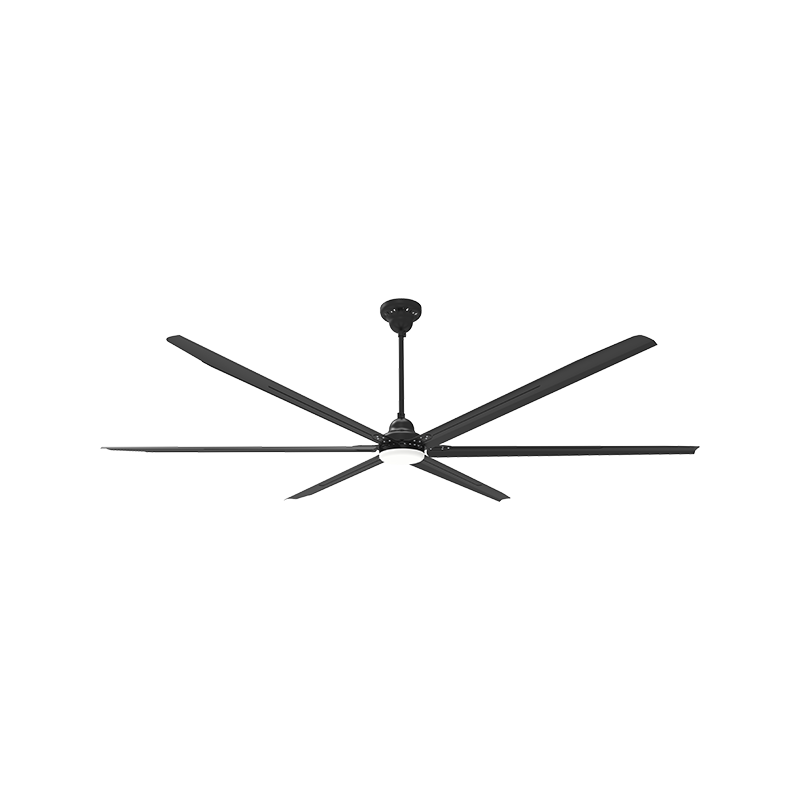
1. Core Technology: High Volume, Low SpeedNatural Breezes: Unlike the “harsh” wind from small fans, HVLS fans use massive blades rotating at low speeds to create a large-scale, three-dimensional breez...
The 10-foot DC motor-driven HVLS (High Volume Low Speed) industrial and commercial ceiling fan utilizes a low-speed, high-airflow operating principle, achieving uniform airflow over a large area and a...
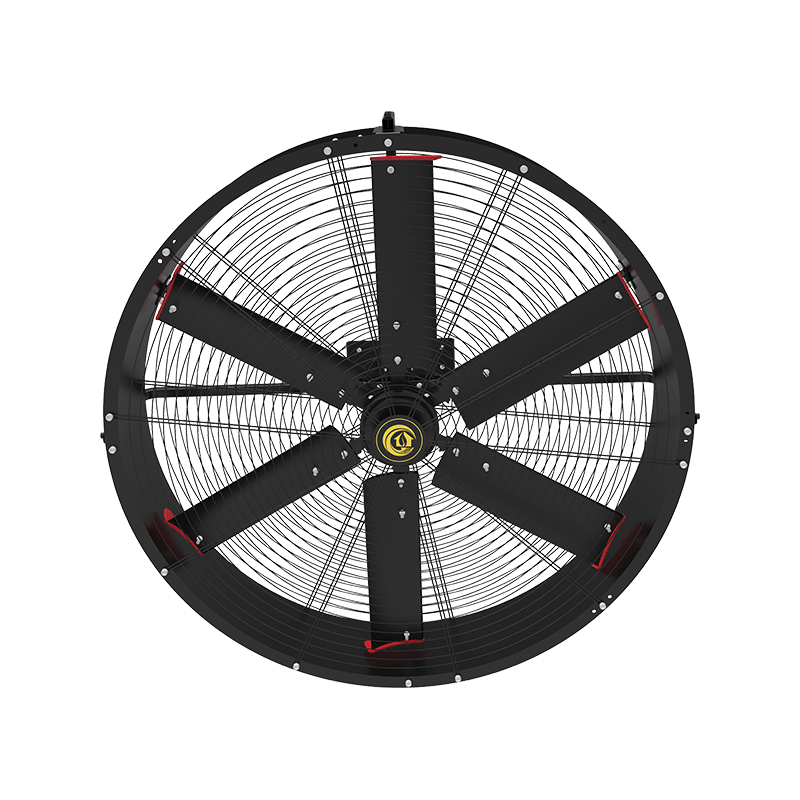
1. Extreme Airflow & Wide CoverageEquipped with massive 79-inch (2.0m) diameter aerospace-grade aluminum alloy blades. These precision-balanced blades generate a powerful, stable laminar airflow t...
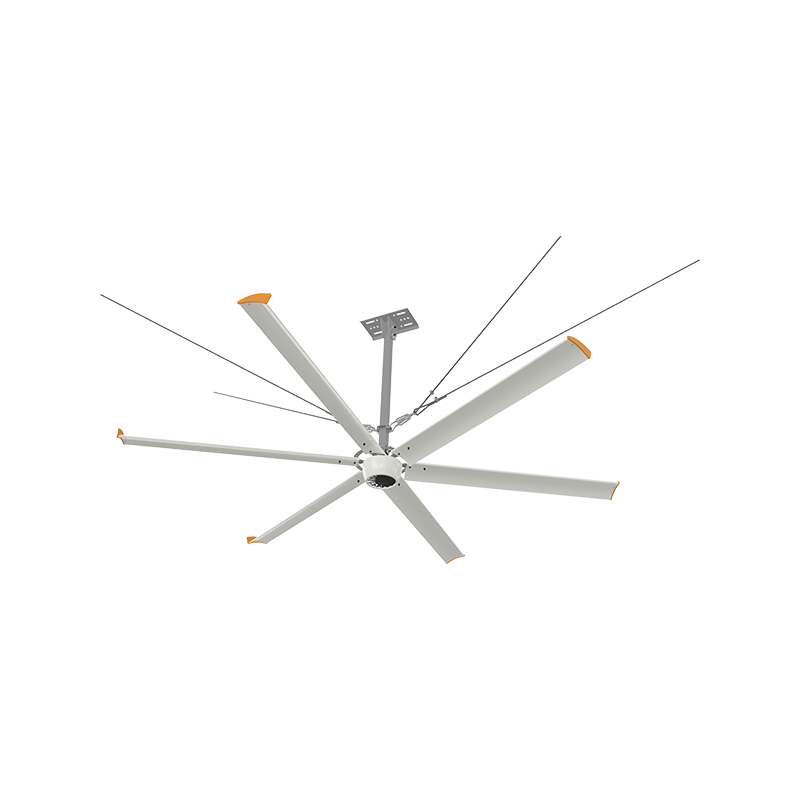
The 15-foot Even Airflow Industrial BLDC Ceiling Fan utilizes a high-efficiency BLDC motor and carefully designed blades. This ceiling fan operates with extremely low noise levels, making it suitable ...
The 8-foot HVLS Large Industrial BLDC Ceiling Fan is equipped with a 0.3KW brushless DC motor, offering higher energy efficiency and lower noise levels. The lower power consumption design helps users ...
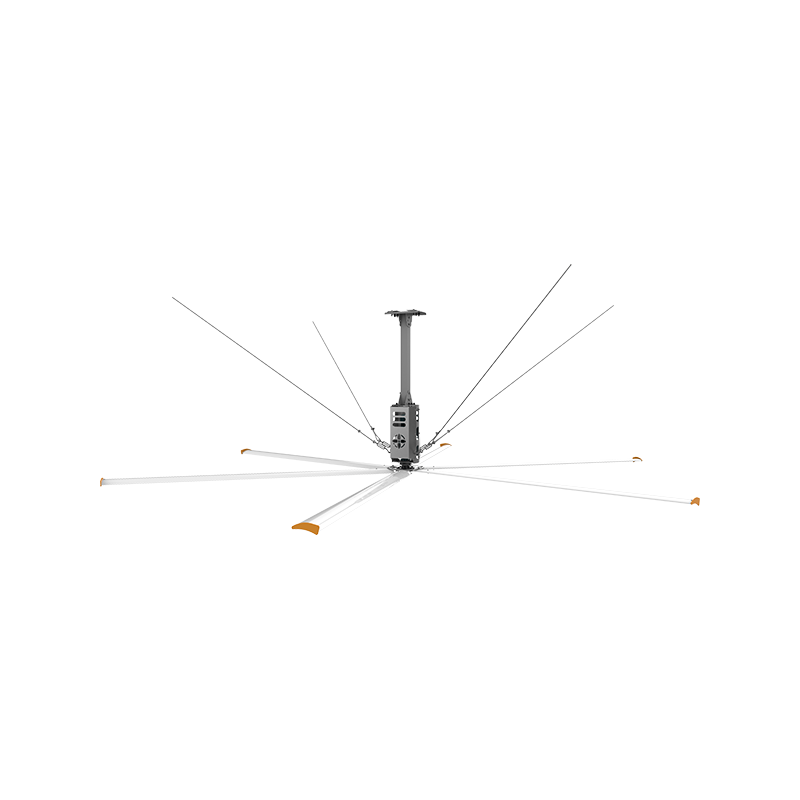
This 10-foot high-speed HVLS ceiling fan is equipped with a 0.75 kW motor, suitable for most industrial, commercial, and agricultural environments. Compared to traditional high-power fans, the 0.75 kW...
Commercial HVLS Fans: The Quiet Engineering Behind Large-Space Airflow A practical guide to selecting high-volume, low-speed ceiling fans for warehouses, factories, and commercial halls — with the ef...
READ MORESpecifying industrial air movement The HVLS Ceiling Fan Isn’t a Big Ceiling Fan. Sizing, motor selection, and mounting height have to work together before a large industrial space can feel genuinely...
READ MOREA 6.1-meter ceiling sounds like an opportunity — until you feel the stagnant air on the floor. In warehouses, workshops, and sanctuaries with a 20-foot deck, heat stratifies overhead while workstatio...
READ MOREShanghai Aipu Fans Co., Ltd., established in Shanghai in 2006, focuses on manufacturing industrial-grade high-quality ceiling fans, relying on industry-leading motor technology and advanced manufactu...
READ MORE Custom Large Industrial Fans Manufacturers