

 English
 Español
 عربى

The 8-foot HVLS Large Industrial BLDC Ceiling Fan is equipped with a 0.3KW brushless DC motor, offering higher energy efficiency and lower noise levels. The lower power consumption design helps users ...
Content
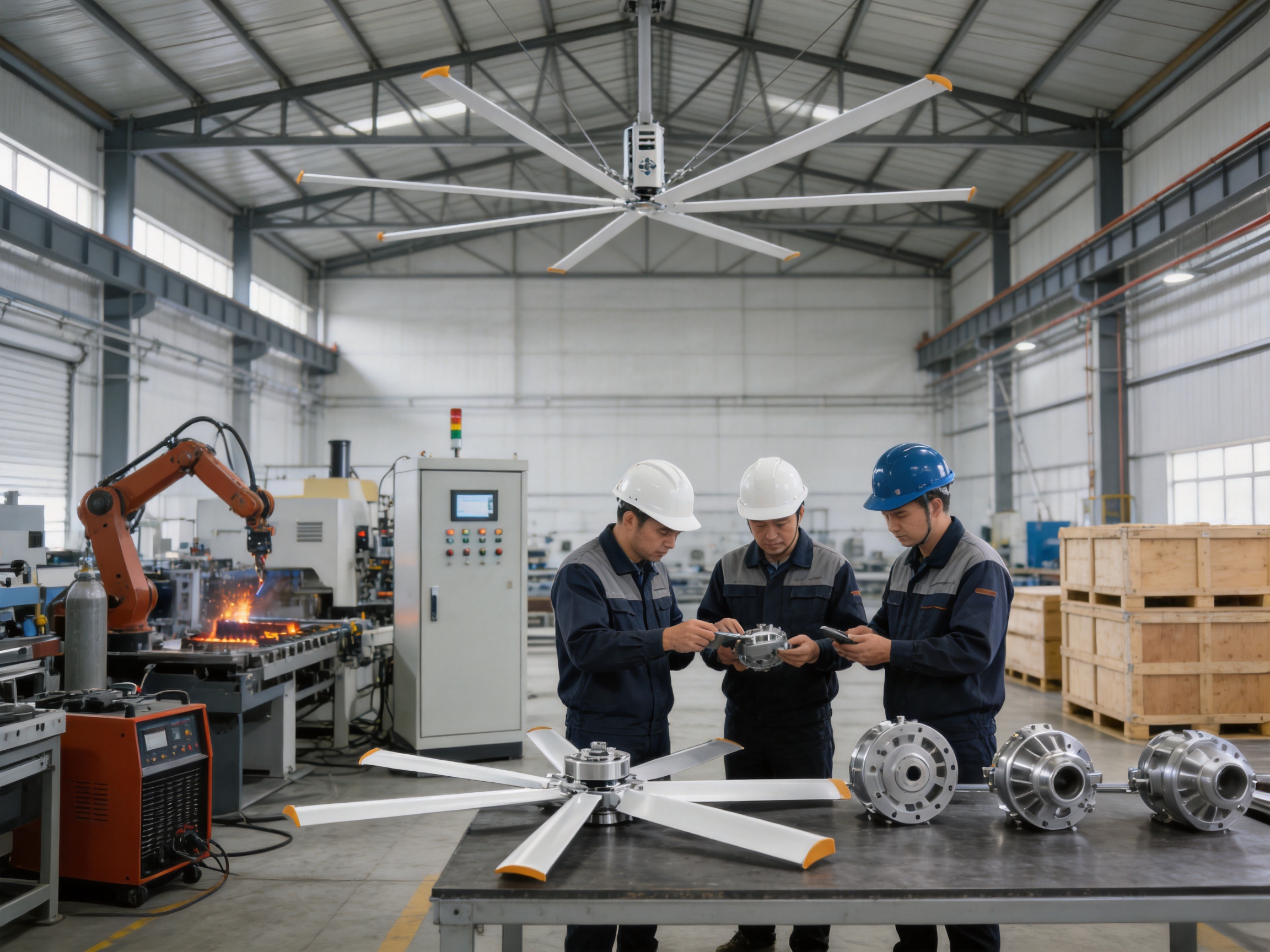
Large industrial buildings require a different approach to air movement than offices, retail stores, or residential rooms. Warehouses, production halls, logistics centers, sports facilities, workshops, agricultural buildings, and distribution spaces often have high ceilings, broad floor areas, heat-generating equipment, and changing occupancy levels. In these environments, a conventional small fan may move air only around a limited local area. Air-conditioning systems may also consume considerable energy when used as the primary method of maintaining comfort.
The 20-foot diameter aviation-grade metal blade warehouse HVLS large ceiling fan is designed for precisely these demanding conditions. With a diameter of 20 feet, a low-speed operating range, six aviation-grade metal blades, and an air volume of up to 12,000 cubic meters per minute, this industrial ceiling fan creates broad, gentle, and consistent airflow across large indoor spaces. Its high-volume, low-speed design helps reduce stagnant air, improve perceived comfort, and support more balanced temperatures from floor to ceiling.
Manufactured by Shanghai Aipu Fans Co., Ltd., the fan combines industrial-scale airflow with adjustable operation, durable aluminum alloy blades, multiple voltage options, OEM and ODM support, and a manufacturing system developed for professional ventilation applications. The result is a large ceiling fan intended not merely to circulate air near the installation point, but to influence the overall airflow pattern of a large facility.
Large buildings often develop uneven temperature zones. Warm air naturally rises, while cooler air remains closer to the floor. In a building with a high roof, this stratification can create a significant difference between the upper and lower levels. Workers may experience uncomfortable temperatures at floor level while heated air accumulates near the ceiling. In summer, heat from roofs, machinery, lighting, and people can also remain trapped in areas with insufficient air movement.
High-volume, low-speed fans address this problem by moving a large quantity of air slowly and continuously. Rather than creating a narrow, fast jet of air, an HVLS fan pushes air downward and outward. When the airflow reaches the floor, it spreads across the surface and moves toward the surrounding walls before returning upward. This circulation pattern can help create a more stable indoor environment and reduce areas of stagnant air.
The 20-foot model is particularly suitable for buildings that require coverage across broad open areas. Its approximately 6.1-meter diameter allows it to influence a wide zone from a single mounting point. The stated coverage area is up to 1,000 square meters, although the actual result depends on ceiling height, building layout, obstructions, installation spacing, local climate, and the number of fans used in the facility.
Compared with several smaller conventional fans, one large HVLS fan can provide a more unified airflow pattern. It can reduce the need to install many separate wall-mounted or pedestal units, each of which may create a localized draft while leaving other parts of the building relatively still. A large ceiling-mounted unit also keeps valuable floor and wall space available for storage, production equipment, walkways, and vehicles.
This model is a 20-foot diameter industrial ceiling fan with a six-blade configuration. It uses aviation-grade metal blades made from aluminum alloy and is powered by a 1.5-kilowatt motor. The maximum listed speed is 58 revolutions per minute, while the detailed product information identifies an adjustable operating range of approximately 0 to 58 RPM. This low rotational speed is a defining feature of the HVLS concept.
The fan is designed for 50 Hz or 60 Hz electrical systems and can be supplied for different voltage requirements, including 200–240 V and 380–480 V input options in the technical table. The product information also lists 220 V, 380 V, and 415 V configurations. Final electrical specifications should be confirmed before ordering so that the motor, controller, protective devices, and installation accessories match the destination facility.
| Specification | 20-Foot Model Information |
|---|---|
| Product type | High-volume, low-speed industrial ceiling fan |
| Model reference | AWF61 |
| Fan diameter | 20 ft / approximately 6.1 m |
| Blade quantity | Six blades for the described configuration |
| Blade material | Aviation-grade aluminum alloy |
| Rated motor power | 1.5 kW |
| Maximum speed | Approximately 58 RPM |
| Air volume | Up to 12,000 m³/min |
| Frequency | 50 Hz / 60 Hz |
| Voltage options | 220 V, 380 V, 415 V, and other compatible configurations |
| Indicative coverage | Up to approximately 1,000 m², depending on site conditions |
| Motor brand listed in product information | Nord |
| Weight | Approximately 113 kg |
| Warranty | Three years |
| Packaging | Wooden cases |
| Customization | OEM and ODM support |
Technical values should be treated as selection and planning information rather than a substitute for a site-specific engineering review. Ceiling structure, suspension height, electrical capacity, fire protection systems, lighting, sprinklers, cranes, racking, and local safety requirements all influence the final installation plan.
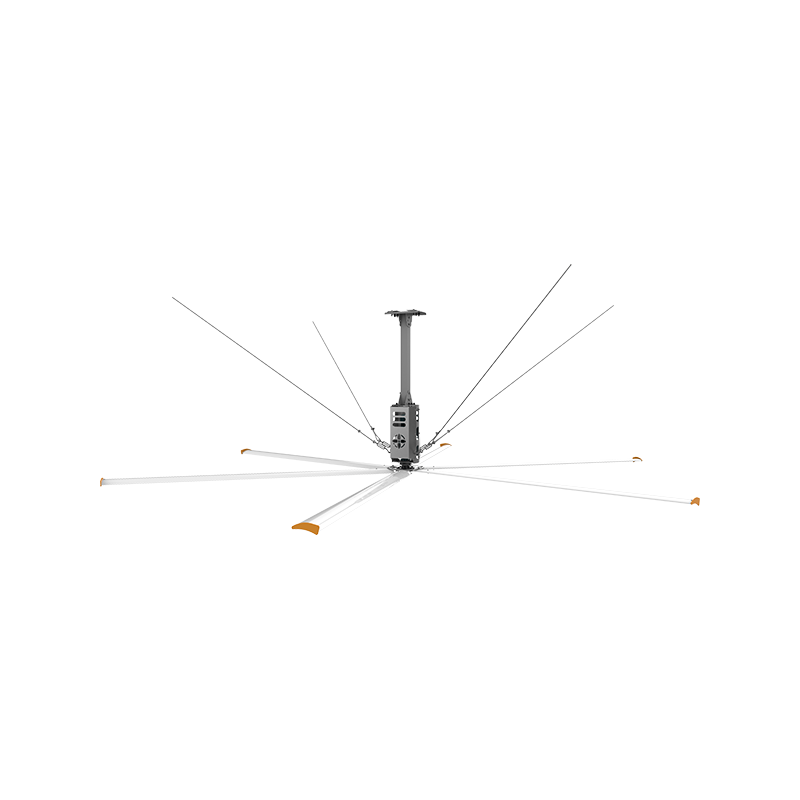
20-foot diameter aviation-grade metal blade warehouse HVLS large ceiling fan
The blades are a central part of the fan’s performance. The product uses aviation-grade metal blades made from aluminum alloy. Aluminum alloy offers a useful balance of low weight, strength, corrosion resistance, and dimensional stability. Keeping the rotating assembly relatively light can help reduce the mechanical load placed on the motor and support structure while maintaining the rigidity required for a large-diameter fan.
Large blades must maintain their designed shape while operating continuously. If a blade flexes excessively, becomes misaligned, or develops an uneven surface, the fan may experience vibration, reduced airflow, or increased mechanical stress. A properly engineered aluminum alloy blade helps preserve a stable aerodynamic profile and contributes to consistent operation across the speed range.
Metal construction is also advantageous in industrial environments where equipment may be exposed to dust, temperature variation, humidity, and frequent daily operation. While the appropriate finish and maintenance program remain important, aluminum alloy is generally well suited to applications where durability and service life are major considerations.
The six-blade configuration provides a practical balance between air delivery, rotational stability, and mechanical loading. The blades work together to create a broad airflow pattern rather than a concentrated high-speed stream. Their large span enables the fan to move substantial air volume at a comparatively low rotational speed.
The core advantage of this fan is its ability to move a large amount of air without rotating at the high speeds associated with smaller fans. The listed maximum speed of approximately 58 RPM is low compared with many conventional industrial fans. However, the 20-foot diameter allows the blade tips and total swept area to influence a large volume of air during each rotation.
High-volume, low-speed airflow can be more comfortable in occupied buildings because it tends to create a broad and gentle movement rather than an intense localized blast. This is especially useful in warehouses and production areas where employees may work beneath the fan for extended periods. The airflow can improve perceived comfort without necessarily producing the excessive turbulence associated with smaller high-speed fans.
The listed air volume of up to 12,000 cubic meters per minute demonstrates the scale of the fan’s intended application. Air volume is important in a large building because the goal is not simply to cool a person standing directly in front of the fan. The objective is to support air circulation across a significant portion of the floor area and to reduce stagnant zones.
Air movement does not replace a properly designed heating, ventilation, or air-conditioning system in every application. Instead, it can work as part of a broader environmental management strategy. In warm conditions, moving air across occupants can improve the sensation of comfort. In cooler conditions, controlled circulation can assist with destratification by mixing warmer upper-level air with cooler air near the floor.
Many conventional wall fans and pedestal fans are designed to direct air through a relatively narrow zone. They can be useful for targeted ventilation, but several units may be required to influence an entire warehouse. The 20-foot HVLS ceiling fan is designed to deliver a wide circular airflow pattern from above, making it better suited to open areas where broad coverage is more important than directional airflow.
Ceiling mounting keeps the fan above operations, storage, and traffic routes. This is a major advantage in facilities where floor space is valuable or where mobile equipment must move freely. Wall-mounted fans can occupy wall surfaces and may be vulnerable to impacts from forklifts, pallets, or other equipment. Pedestal fans can obstruct walkways and require protected locations. A properly installed ceiling fan avoids these common space constraints.
The low-speed design supports a more comfortable airflow pattern. Instead of relying on a high-speed air stream that may be noisy or uncomfortable at close range, the HVLS system spreads airflow over a much larger area. This can be particularly valuable in factories, gyms, logistics facilities, and agricultural buildings where many people occupy the same open space.
In tall structures, warm air can collect near the roof. During heating seasons, this represents a lost opportunity because heat remains above the occupied zone. The downward and outward circulation created by an HVLS fan can help return some of that heat toward the floor. During cooling seasons, the same circulation can help reduce hot or stagnant zones, provided that the fan is operated in coordination with the building’s ventilation and cooling systems.
The fan includes adjustable speed control, allowing operators to match airflow to actual conditions. A lower setting may be appropriate during mild weather, while a higher setting can be selected when heat loads, occupancy, or process conditions increase. Adjustable control also helps facility managers balance comfort, sound levels, and energy use.
The described 20-foot model is part of a broader large-diameter HVLS range. The available product family includes models from approximately 14 feet to 28 feet in diameter. This makes it possible to select a fan according to building size, ceiling height, airflow requirements, and installation layout rather than applying one fixed size to every project.
| Model | Diameter | Blade Options | Power | Maximum Speed | Air Volume |
|---|---|---|---|---|---|
| AWF86 | 28 ft / 8.6 m | 6 | 2.2 kW | 48 RPM | 15,800 m³/min |
| AWF80 | 26 ft / 8.0 m | 6 | 2.2 kW | 50 RPM | 15,200 m³/min |
| AWF73 | 24 ft / 7.3 m | 5 / 6 / 8 | 1.5 kW | 50 RPM | 14,600 m³/min |
| AWF61 | 20 ft / 6.1 m | 5 / 6 / 8 | 1.5 kW | 58 RPM | 12,000 m³/min |
| AWF55 | 18 ft / 5.5 m | 5 / 6 / 8 | 1.5 kW | 62 RPM | 9,400 m³/min |
| AWF49 | 16 ft / 4.9 m | 5 / 6 / 8 | 1.5 kW | 64 RPM | 8,600 m³/min |
| AWF42 | 14 ft / 4.2 m | 5 / 6 / 8 | 1.5 kW | 70 RPM | 4,600 m³/min |
The table illustrates why project selection should consider more than diameter alone. A larger model can produce greater air volume and cover a wider area, but the building’s structural arrangement and ceiling height must be suitable. A smaller model may be preferable where the available clearance, floor plan, or airflow target is more limited.
Warehouses often contain large unobstructed floor areas, tall storage racks, loading doors, and varying thermal conditions. During summer, open loading doors can allow hot air to enter. During winter, heated air can rise and remain near the roof. The 20-foot HVLS fan can support general air circulation in these conditions and help make temperature distribution more consistent.
In distribution centers, employee comfort is important because workers may spend long shifts picking, packing, sorting, and moving materials. A broad overhead airflow pattern can serve several work zones simultaneously, while the ceiling-mounted position reduces interference with forklifts and conveyors.
In manufacturing plants, heat generated by machinery and production processes may create localized hot spots. HVLS fans can be installed as part of a larger ventilation strategy to improve air movement between production lines. They can also help prevent still-air pockets in areas separated from exterior walls or mechanical ventilation outlets.
For agricultural buildings, livestock facilities, equipment sheds, and processing spaces, air circulation can help manage stagnant conditions. The suitability of any fan for a specific agricultural or process environment should be evaluated carefully, especially where corrosive substances, moisture, combustible dust, or strict hygiene controls are present.
Large commercial spaces such as exhibition halls, wholesale stores, indoor sports centers, gyms, and event venues can also benefit from large-diameter ceiling fans. These spaces usually require air movement across large open areas and may experience substantial variations in occupancy throughout the day.
In an indoor sports facility, a low-speed fan can promote air circulation without producing an overly concentrated draft in one location. In a gymnasium or fitness center, air movement may improve the perceived comfort of users during exercise. In an exhibition hall, ceiling mounting helps preserve the floor layout for booths, displays, and visitor traffic.
Commercial buildings may also use HVLS fans to complement air-conditioning. Rather than lowering the temperature of the entire building unnecessarily, facility managers can use air movement to improve comfort in occupied zones. The appropriate operating strategy depends on the HVAC system, local climate, indoor humidity, occupancy, and building controls.
The product is specified with a 1.5-kilowatt motor for the 20-foot configuration. This motor power is matched to the fan’s large blade span and low-speed operating principle. The listed motor brand is Nord, while the electrical system supports 50 Hz and 60 Hz operation. Multiple voltage configurations are available for different markets and industrial power systems.
Electrical flexibility is important for international projects. A fan intended for a warehouse in one country may require a different voltage or frequency from a fan installed in another region. Confirming the exact motor nameplate, controller specifications, phase requirements, protection rating, and starting characteristics before shipment helps reduce installation delays.
The adjustable speed system allows the fan to operate according to conditions instead of running continuously at maximum output. Facility managers may establish different settings for summer, winter, day shifts, night shifts, loading periods, or maintenance activities. A carefully planned control strategy can improve comfort while avoiding unnecessary operation.
Electrical installation should be completed by qualified professionals. The installation plan should include appropriate circuit protection, grounding, isolating equipment, controller placement, emergency stop provisions where required, and compliance with local electrical codes. The fan’s weight and dynamic loads must also be considered when selecting the support structure.
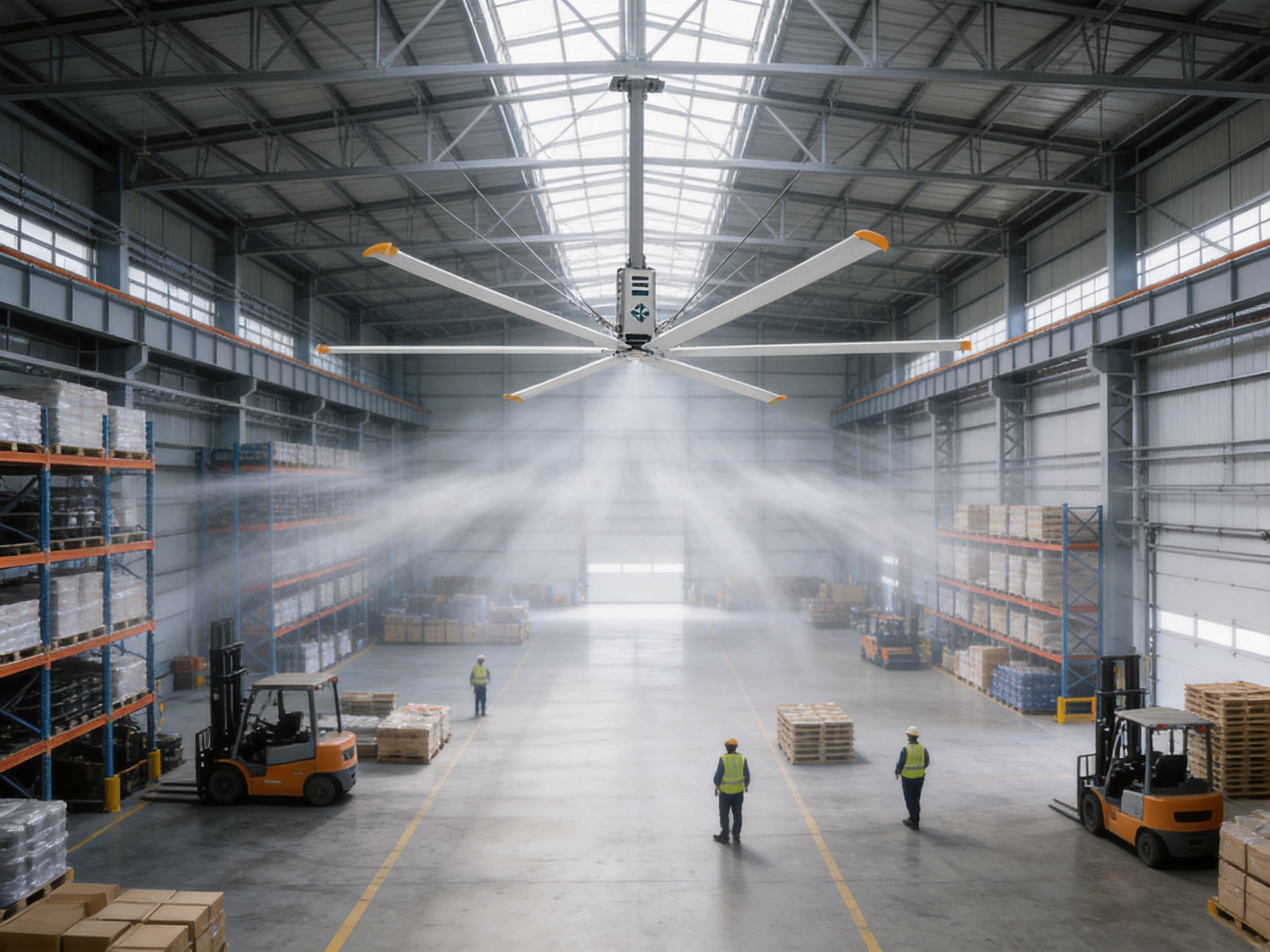
The manufacturer has operated in Shanghai, China, since 2006 and specializes in industrial-grade ceiling fans and ventilation solutions. Its production base covers approximately 8,000 square meters and includes automated machinery, a machining center, a cutting center, a welding center, and a testing center. These capabilities provide a foundation for producing large mechanical assemblies with repeatable dimensions and controlled quality.
Automated production equipment can improve consistency in repetitive manufacturing operations. For large fan components, dimensional accuracy is important because small variations can influence balance, fit, assembly time, and operating smoothness. Automation can help maintain repeatable results across different production batches while reducing avoidable manual variation.
A dedicated machining center supports the production of precision components such as hubs, mounting interfaces, connection parts, and other mechanical elements. Accurate machining contributes to correct alignment between the motor, hub, blades, and suspension structure. Properly machined interfaces also make assembly and inspection more reliable.
The cutting center supports the preparation of metal materials used in blades, brackets, supports, and other components. Controlled cutting processes help maintain accurate dimensions and reduce material waste. When working with aluminum alloy and other engineered metals, consistent cutting is an important part of producing reliable assemblies.
Welded structures must withstand static loads, operational vibration, and the forces associated with a large rotating fan. A dedicated welding center allows the manufacturer to organize welding procedures and inspections for structural components. Quality welding supports the strength and stability of mounting brackets, frames, and related assemblies.
A testing center is essential for industrial ventilation equipment. Large fans should be evaluated for operating behavior, speed control, mechanical stability, electrical performance, and airflow-related characteristics. Testing helps identify problems before products are packaged and shipped, supporting more consistent field installation and commissioning.
The combination of production equipment and testing resources is one of the manufacturer’s important strengths. It allows the company to manage more stages of production internally instead of relying exclusively on unrelated external suppliers. This can improve coordination among design, manufacturing, assembly, inspection, packaging, and after-sales support.
Industrial ceiling fans are expected to operate for long periods, often in demanding environments. Reliability depends on more than the motor alone. Blade balance, hub design, fastener quality, structural support, electrical protection, speed control, installation accuracy, and maintenance all contribute to long-term performance.
The use of aluminum alloy blades helps control rotating weight while maintaining a durable structure. The large-diameter assembly must be balanced carefully to minimize vibration. During installation, all fasteners should be tightened according to the approved instructions, and the suspension system should be inspected before the fan is placed into service.
The stated three-year warranty provides an additional level of purchase support. Warranty coverage normally depends on the precise sales agreement, installation conditions, maintenance practices, and local service arrangements. Buyers should request written warranty terms and clarify the process for technical assistance, replacement components, and claims before placing an order.
Wooden case packaging is specified for shipment. This type of packaging can help protect large metal components during international transportation, handling, and storage. Buyers should inspect the packaging upon arrival and report visible damage promptly. Components should be stored in a dry, protected location until installation.
Different customers may require different colors, control systems, labels, voltages, suspension lengths, mounting arrangements, packaging formats, or documentation. The manufacturer provides OEM and ODM support, allowing industrial customers, distributors, engineering contractors, and project integrators to discuss customized product solutions.
OEM services may be useful for buyers who want products supplied under a private label or integrated into an existing equipment portfolio. ODM services may support customers who need modifications based on a particular building, market, or application. Customization should be discussed during the design stage because changes to electrical systems, mounting hardware, blade configuration, or control architecture can affect testing and certification requirements.
A professional customization process should begin with complete project information. Useful details include building length and width, ceiling height, roof structure, intended mounting points, indoor temperature range, humidity, dust exposure, electrical supply, operating schedule, desired airflow, local codes, and any interference from sprinklers, cranes, lighting, or racking.
The fan weighs approximately 113 kilograms, and the structure must also withstand dynamic operating forces. It should not be attached to an unsuitable ceiling panel or a weak secondary member. A structural engineer or qualified installer should verify the load-bearing capacity of beams, trusses, mounting plates, and suspension components.
Large rotating blades require adequate clearance from the roof, beams, lighting fixtures, sprinkler heads, cranes, ductwork, and storage racks. The installation height must also provide suitable clearance from people, vehicles, and equipment at floor level. The final clearance requirements should follow the approved product documentation and local safety regulations.
Racking, partitions, machinery, and suspended equipment can affect airflow. A fan may still operate effectively in an obstructed building, but the layout may require more careful positioning or multiple fans. The objective is to develop a circulation pattern that reaches occupied zones rather than allowing airflow to be blocked by high structures.
HVLS fans should be coordinated with air-conditioning units, heating equipment, exhaust fans, fresh-air systems, and smoke-control systems. Air movement can support HVAC performance, but poorly coordinated systems may work against one another. For example, high-speed exhaust may remove conditioned air, while a fan installed directly beneath an obstruction may distribute air unevenly.
Control panels or speed controllers should be located where authorized personnel can operate them safely. If the system is integrated into a building management system, communication requirements should be defined before ordering. Maintenance access should also be planned so that inspections can be performed without disrupting production unnecessarily.
Routine maintenance helps preserve performance and safety. Operators should periodically inspect blades, fasteners, safety cables, suspension components, electrical connections, and visible signs of corrosion or damage. Any unusual vibration, noise, wobbling, overheating, or speed fluctuation should be investigated promptly.
Dust accumulation can affect equipment in industrial spaces. The cleaning interval depends on the application, but blades and nearby components should be cleaned when deposits become significant. Cleaning should be performed with the fan isolated from the electrical supply and in accordance with the manufacturer’s instructions.
Fasteners and structural connections should be checked according to a documented maintenance schedule. Large rotating equipment should not be treated as maintenance-free, even when it is designed for long service. Preventive inspection is generally more effective than waiting for a failure to interrupt operations.
Controls should be checked for correct response across the operating range. Operators should understand how to start, stop, adjust, and isolate the fan. Emergency procedures should be clearly communicated to personnel, particularly in facilities with multiple shifts or contract workers.
The fan’s main contribution to energy management comes from moving air effectively over a large area at relatively low speed. In warm conditions, airflow across the skin can improve perceived comfort. This may allow a facility to review its cooling setpoints, but any change should be made carefully and based on measured indoor conditions, humidity, occupational requirements, and local regulations.
In heated buildings, the fan can assist with destratification by mixing air layers. Warm air that collects near the roof may be brought back toward the occupied zone, potentially reducing temperature differences. The fan should be operated at a setting that produces useful circulation without creating discomfort or disturbing sensitive processes.
Energy performance depends on the complete system, not only on the motor rating. Operating hours, speed settings, the number of fans, building insulation, door opening frequency, HVAC controls, and outdoor weather all influence total consumption. A site evaluation can help determine the most effective operating schedule.
The 20-foot model offers a combination of large coverage, low-speed airflow, durable metal construction, adjustable operation, and international electrical flexibility. These characteristics make it a strong candidate for warehouses and other large facilities where localized fans cannot provide adequate circulation.
Its aviation-grade aluminum alloy blades provide a durable and comparatively lightweight rotating structure. The 1.5-kilowatt motor is matched to the 20-foot class, while the listed air volume of 12,000 cubic meters per minute gives the product the capacity required for large indoor environments. The approximately 58 RPM maximum speed supports a broad, low-speed airflow pattern.
The product is also supported by a manufacturer with dedicated production and testing resources. The 8,000-square-meter base, machining center, cutting center, welding center, automated equipment, and testing center demonstrate an industrial approach to manufacturing. OEM and ODM services further support distributors, contractors, and project customers that require customized solutions.
Compared with installing numerous small fans, a properly planned HVLS system can provide a cleaner and more organized approach to large-area air movement. It can preserve floor space, reduce wall congestion, improve general circulation, and provide operators with adjustable control. These benefits are especially valuable in facilities where comfort, productivity, safety, and unobstructed logistics are all important.
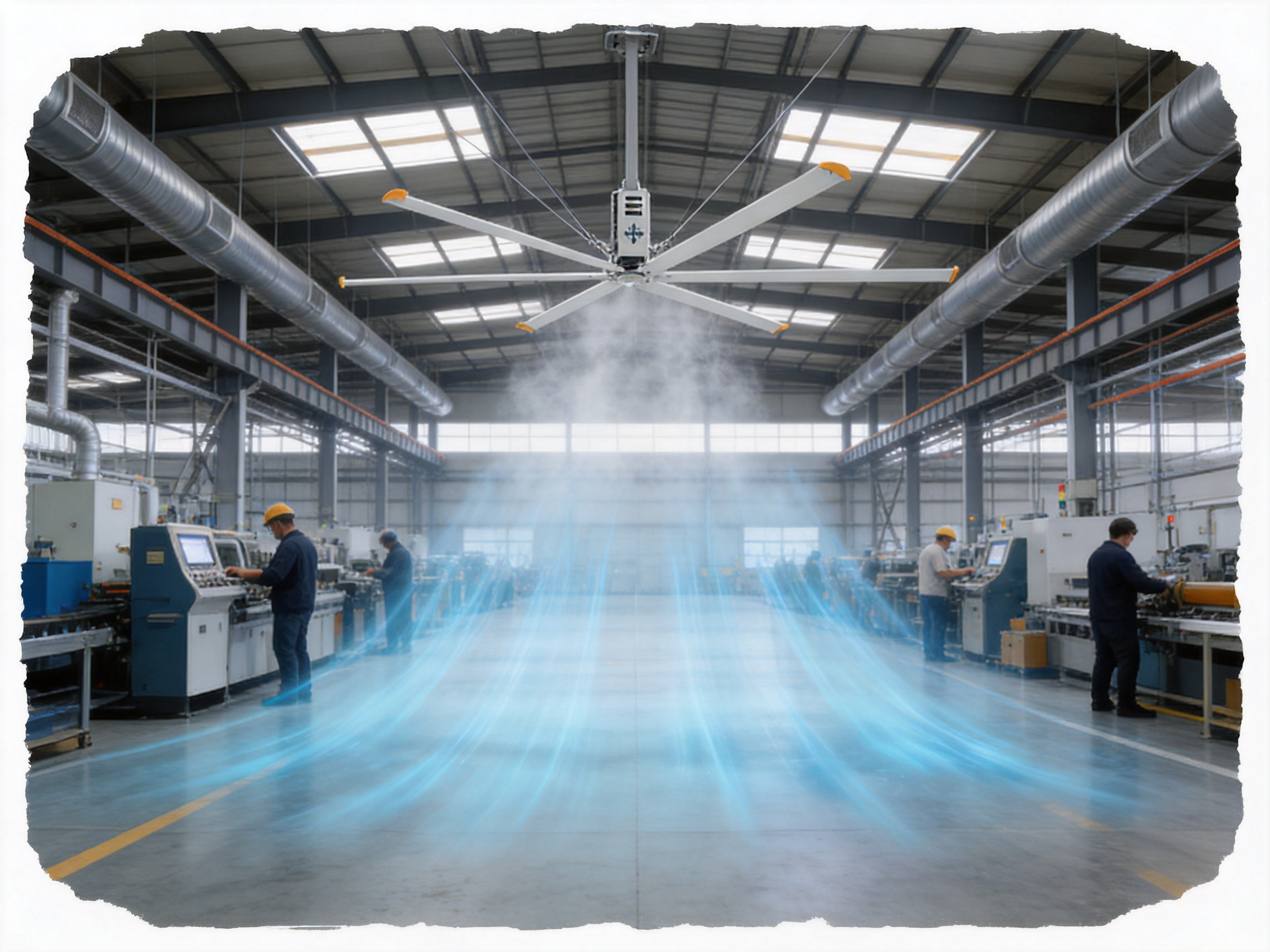
HVLS means high volume, low speed. An HVLS fan uses a large blade diameter to move a substantial volume of air while rotating at a relatively low speed. The airflow is distributed broadly across the floor area rather than concentrated in a narrow, high-speed stream.
The described model has a diameter of 20 feet, or approximately 6.1 meters. It is identified in the product range as model AWF61 and belongs to the 17-foot to 24-foot HVLS fan category.
The stated coverage area is up to approximately 1,000 square meters. Actual coverage depends on ceiling height, building shape, obstructions, indoor conditions, installation spacing, and the required airflow level. A site-specific layout should be prepared for final selection.
The described configuration has six aviation-grade aluminum alloy blades. The broader product family may offer different blade quantities on some models, but the 20-foot product information specifies six blades.
The listed maximum speed is approximately 58 revolutions per minute. The product information also indicates adjustable speed control, allowing the operating speed to be matched to actual site conditions.
The 20-foot model is specified with a 1.5-kilowatt motor. The motor is intended to support the large-diameter, low-speed airflow design.
Yes. The product information lists 50 Hz and 60 Hz operation and several voltage options, including 220 V, 380 V, and 415 V configurations. The exact voltage, phase, frequency, and controller arrangement should be confirmed before ordering.
Yes. Warehouses are one of the primary applications for this type of fan. The large diameter, broad coverage, ceiling-mounted position, and low-speed airflow are suitable for many high-ceiling storage and logistics facilities, subject to structural and safety review.
An HVLS fan does not automatically replace air-conditioning or mechanical ventilation. It improves air movement and can enhance perceived comfort or help distribute heated air. It should be evaluated as part of a complete ventilation and climate-control strategy.
The blades are made from aviation-grade aluminum alloy. This material is selected for its combination of strength, low weight, corrosion resistance, and suitability for large rotating components.
Yes. OEM and ODM support are available. Customers can discuss project-specific requirements such as voltage, labeling, packaging, control systems, finish, mounting arrangements, and other design details.
The product is specified as being packed in wooden cases. Customers should inspect the cases and components when the shipment arrives and report transport damage according to the purchase agreement.
The product information lists a three-year warranty. Buyers should confirm the detailed warranty terms, exclusions, installation requirements, service process, and replacement-part policy before purchase.
Before installation, verify the structural capacity, ceiling height, clearance, electrical supply, mounting position, interference from sprinklers and lighting, control location, maintenance access, and compliance with local building and electrical regulations.
The 20-foot aviation-grade metal blade HVLS ceiling fan is engineered for large spaces where effective air circulation cannot be achieved efficiently with small localized fans alone. Its approximately 6.1-meter diameter, six aluminum alloy blades, 1.5-kilowatt motor, adjustable speed control, and air volume of up to 12,000 cubic meters per minute make it suitable for warehouses, factories, logistics centers, sports buildings, agricultural facilities, and other high-ceiling applications.
The product’s advantages include broad coverage, low-speed comfort, reduced use of floor and wall space, improved air distribution, flexible electrical configurations, and compatibility with customized OEM and ODM projects. Its performance is supported by a manufacturing organization with automated equipment, machining, cutting, welding, and testing capabilities located within an approximately 8,000-square-meter production base.
For the best result, the fan should be selected and installed through a professional process that considers building structure, airflow obstacles, HVAC coordination, electrical requirements, safety clearances, and maintenance access. When correctly applied, this HVLS system can become an important part of an industrial facility’s long-term comfort, ventilation, and energy-management strategy.
1. Product technical information for the 20-foot HVLS industrial ceiling fan, including model AWF61, dimensions, motor power, speed, airflow, voltage, and coverage data.
2. Product range specifications for AWF42, AWF49, AWF55, AWF61, AWF73, AWF80, and AWF86 large-diameter HVLS fan models.
3. Manufacturer information regarding aluminum alloy blade construction, OEM and ODM services, warranty, packaging, and international electrical configurations.
4. Manufacturer company profile describing production facilities, automated machinery, machining, cutting, welding, and testing capabilities.
5. General engineering principles for high-volume, low-speed airflow, thermal stratification control, industrial ventilation planning, and large-space comfort management.
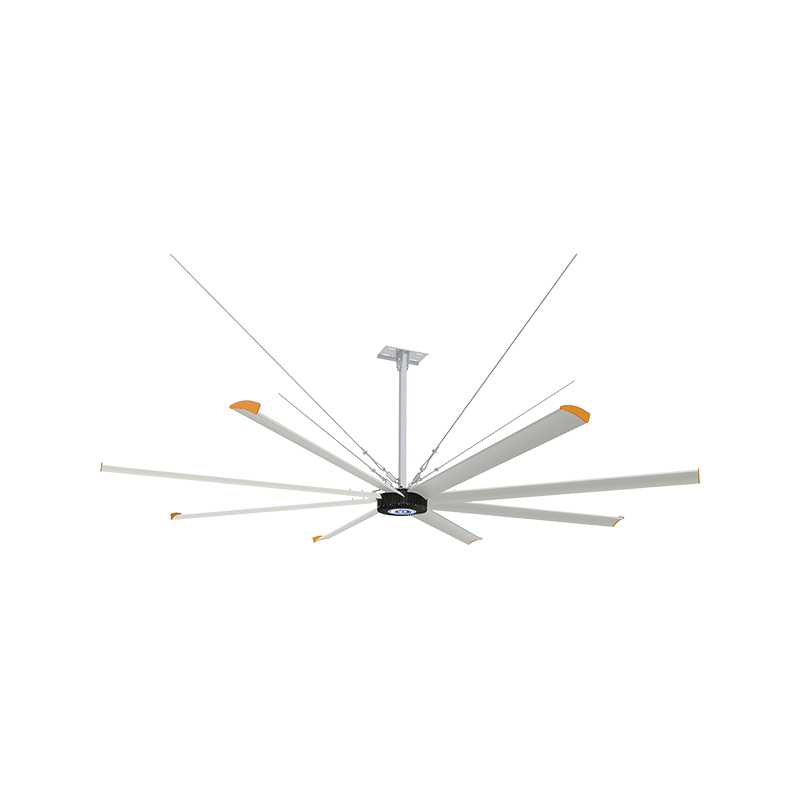
The 8-foot HVLS Large Industrial BLDC Ceiling Fan is equipped with a 0.3KW brushless DC motor, offering higher energy efficiency and lower noise levels. The lower power consumption design helps users ...
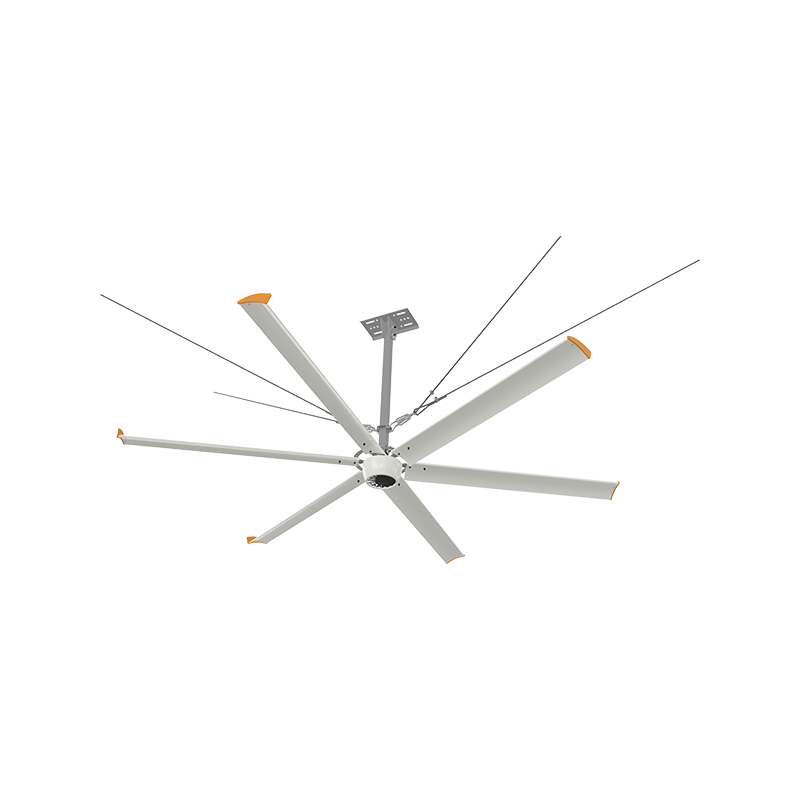
The 15-foot Even Airflow Industrial BLDC Ceiling Fan utilizes a high-efficiency BLDC motor and carefully designed blades. This ceiling fan operates with extremely low noise levels, making it suitable ...
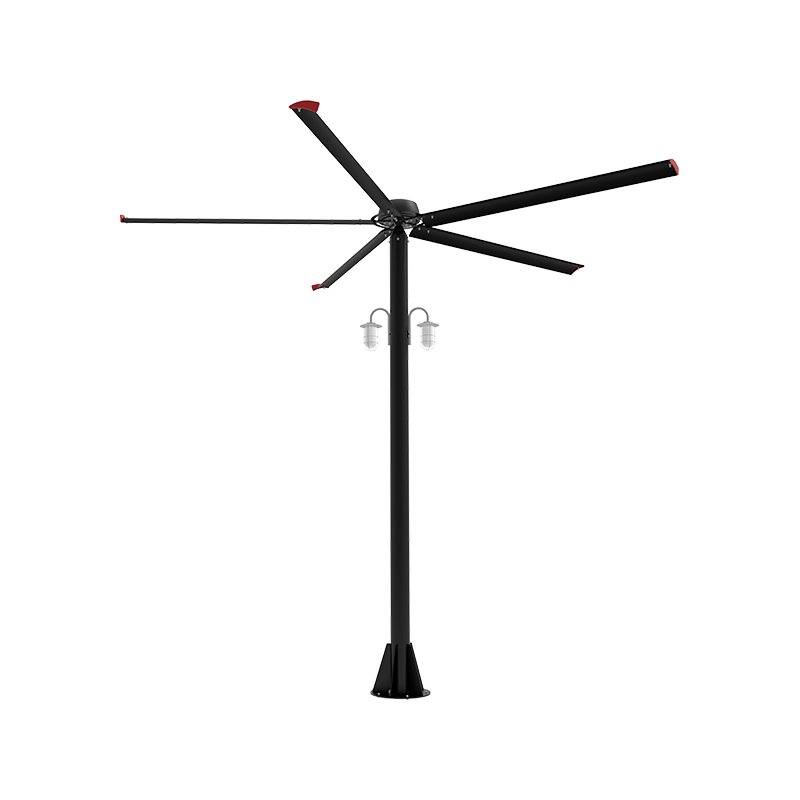
The large vertical HVLS floor-standing ventilation fan offers a variety of color options, allowing users to choose the most suitable color based on different environments and decoration needs. This c...
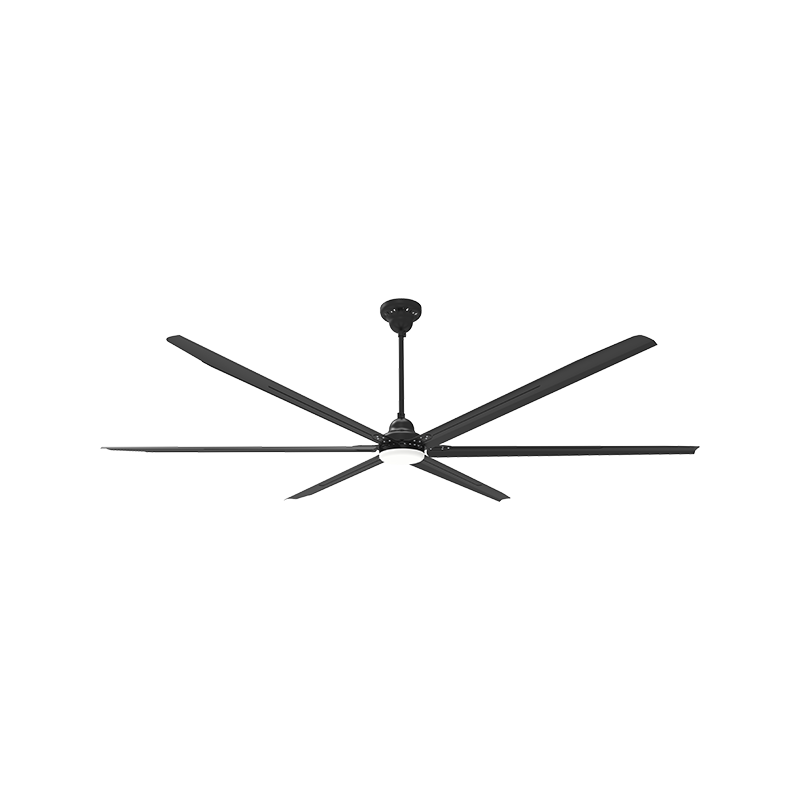
1. Core Technology: High Volume, Low SpeedNatural Breezes: Unlike the “harsh” wind from small fans, HVLS fans use massive blades rotating at low speeds to create a large-scale, three-dimensional breez...
This 20-foot diameter aviation-grade metal blade warehouse HVLS large ceiling fan is equipped with six aviation-grade metal blades, with a diameter of 20 feet (approximately 6.1 meters), effectively c...
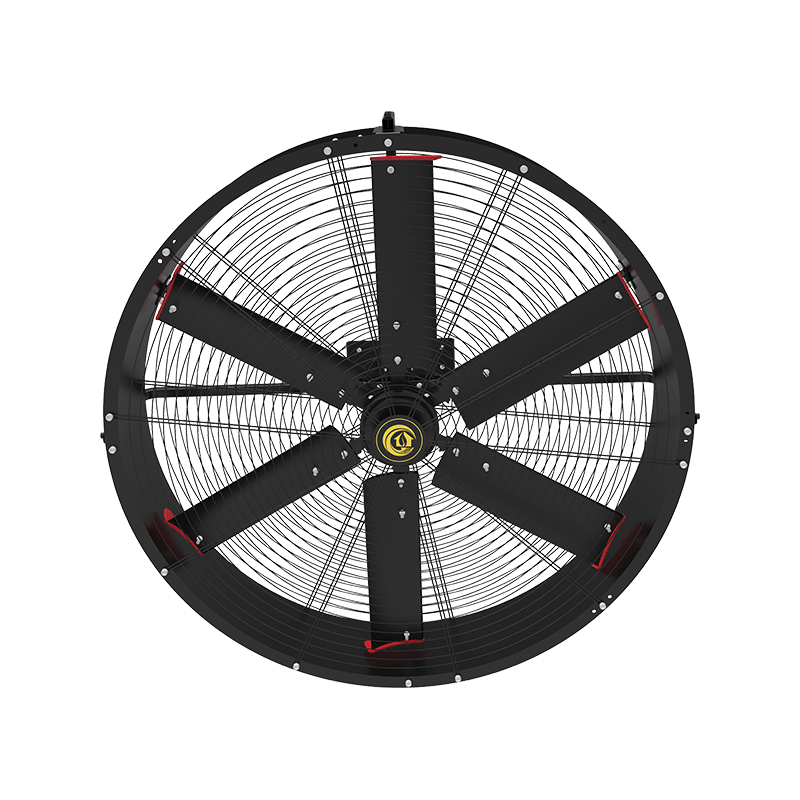
1. Extreme Airflow & Wide CoverageEquipped with massive 79-inch (2.0m) diameter aerospace-grade aluminum alloy blades. These precision-balanced blades generate a powerful, stable laminar airflow t...
A 6.1-meter ceiling sounds like an opportunity — until you feel the stagnant air on the floor. In warehouses, workshops, and sanctuaries with a 20-foot deck, heat stratifies overhead while workstatio...
READ MOREA 6,800 m² factory floor used to be ventilated by roughly 300 small wall and pedestal fans. Six large ceiling fans now cover the same area, and in the manufacturer's own comparison that change cuts m...
READ MOREShanghai Aipu Fans Co., Ltd., established in Shanghai in 2006, focuses on manufacturing industrial-grade high-quality ceiling fans, relying on industry-leading motor technology and advanced manufactu...
READ MOREBig Fans, Low Speed, Real Results: HVLS Industrial Fans Explained When a factory floor hits 34°C, small fans only move hot air around. Large-diameter HVLS ceiling fans do the opposite: they push a t...
READ MORE Custom Large Industrial Fans Manufacturers