

 English
 Español
 عربى

The large vertical HVLS floor-standing ventilation fan offers a variety of color options, allowing users to choose the most suitable color based on different environments and decoration needs. This c...
Content
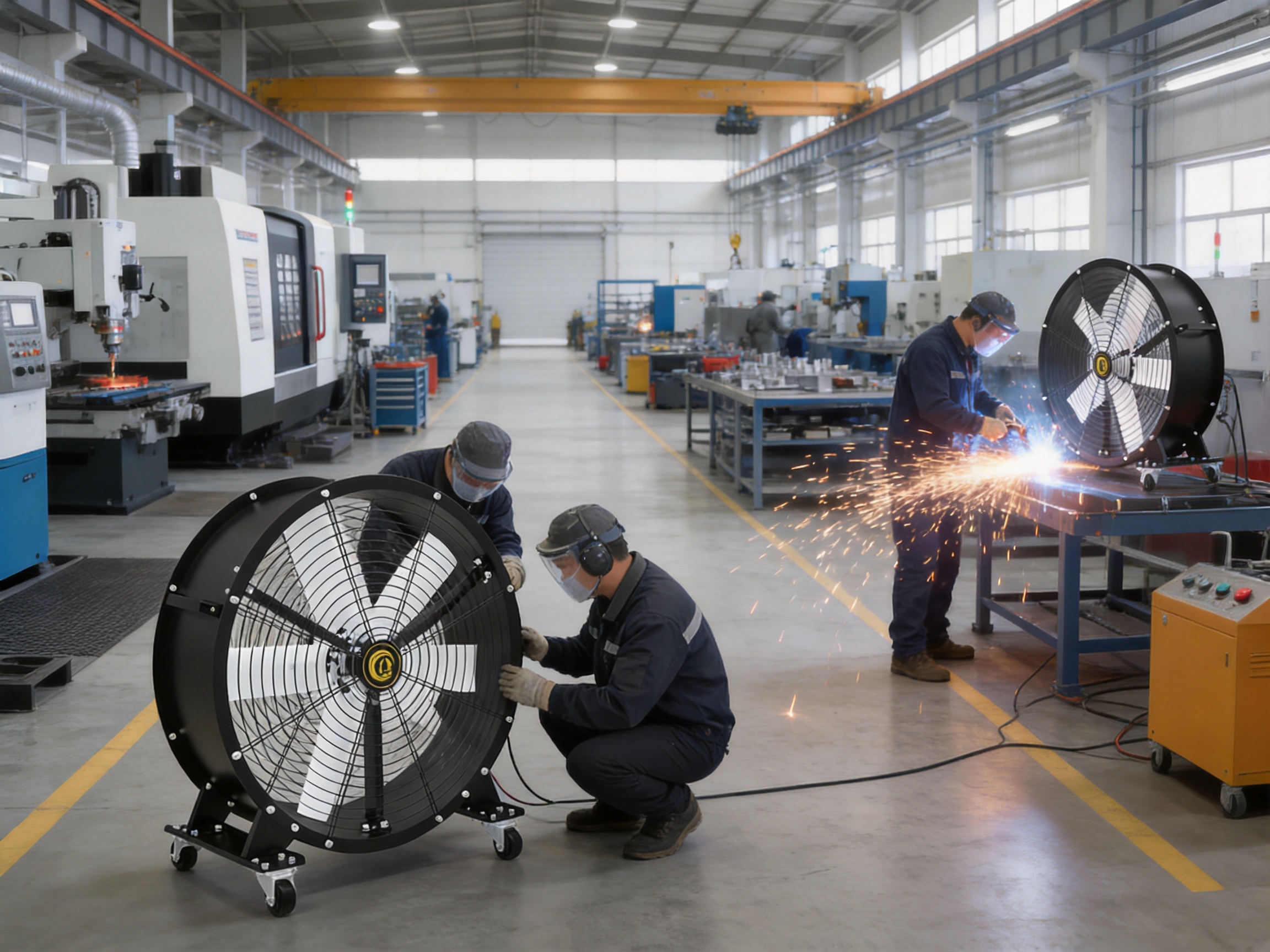
Large industrial, commercial, agricultural, and recreational spaces require more than a conventional electric fan to remain comfortable and well ventilated. Warehouses, workshops, exhibition halls, gymnasiums, agricultural barns, retail facilities, and indoor sports arenas often have high ceilings, wide floor areas, changing occupancy levels, and different ventilation requirements throughout the day. A small fan may create strong airflow in a limited area, but it cannot distribute air efficiently across a large space. Traditional fixed ceiling fans may cover a wider zone, yet they usually require permanent installation, structural preparation, electrical work, and professional relocation if the layout changes.
The 79-inch new mobile HVLS fan provides a practical alternative. Designed as an Airmove stand fan, it combines the wide-area airflow characteristics of high-volume, low-speed ventilation equipment with the flexibility of a mobile floor-standing system. Its large-diameter fan assembly, durable magnetic aluminum alloy construction, variable frequency control, low operating noise, and industrial protection rating make it suitable for many environments where efficient air circulation and flexible positioning are equally important.
Unlike ordinary portable fans, this mobile HVLS fan is designed to move a substantial volume of air over a broad area. Unlike fixed industrial ceiling fans, it can be repositioned according to seasonal conditions, production requirements, temporary events, storage arrangements, or changes in building use. This combination of large-area performance and mobility gives it an important advantage over many conventional ventilation products.
HVLS means high volume, low speed. The concept is based on moving a large quantity of air gradually and evenly rather than producing a narrow, concentrated jet of high-speed air. Large-diameter blades are especially effective for creating a broad airflow pattern. When the air reaches the floor and surrounding surfaces, it spreads outward and helps reduce stagnant zones, heat accumulation, and uneven temperature distribution.
The mobile format places this airflow technology on a stable floor-mounted structure. Instead of suspending the fan from a ceiling, users can place it where airflow is needed most. This is particularly beneficial in buildings with limited ceiling height, weak roof structures, rented premises, temporary work areas, or locations where permanent installation is not practical.
The product is available in several configurations under the ASF series. The listed models include ASF-09, ASF-12, ASF-15, and ASF-20. Depending on the selected model, the equipment offers different dimensions, maximum rotational speeds, weights, power ratings, and airflow ranges. This makes it possible to select a compact configuration for a smaller garage or workshop or a larger configuration for a warehouse, manufacturing plant, or sports facility.
| Model | Approximate Size | Maximum Speed | Weight | Power | Noise Level | Protection Rating |
|---|---|---|---|---|---|---|
| ASF-09 | 1000 × 640 × 1100 mm | 420 RPM | 65 kg | 0.35 kW | Below 40 dB | IP55 |
| ASF-12 | 1310 × 640 × 1400 mm | 380 RPM | 80 kg | 0.40 kW | Below 40 dB | IP55 |
| ASF-15 | 1610 × 720 × 1700 mm | 300 RPM | 92 kg | 0.55 kW | Below 40 dB | IP55 |
| ASF-20 | 1985 × 720 × 2100 mm | 200 RPM | 115 kg | 0.65 kW | Below 40 dB | IP55 |
Actual performance depends on the selected configuration, building layout, operating conditions, and installation position. Buyers should confirm the final model, fan diameter, blade arrangement, control system, electrical specifications, and airflow expectations before placing an order.
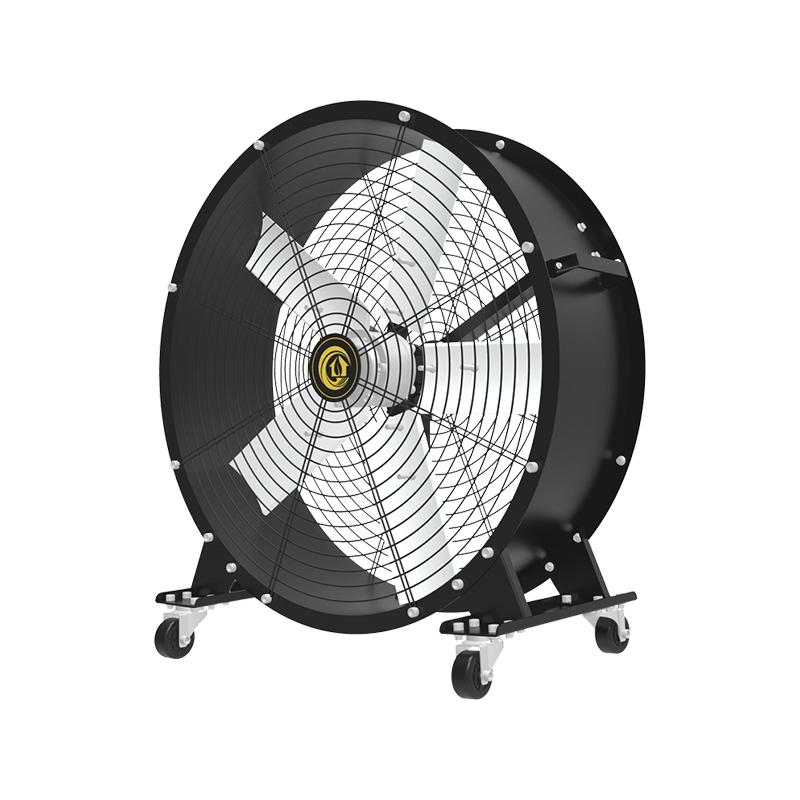
79-inch new mobile HVLS fan
The main advantage of a mobile HVLS fan over a standard portable fan is its ability to move air across a much wider area. Conventional pedestal fans often create a powerful but relatively narrow stream. People located directly in front of the fan may feel a strong breeze, while workers or customers several meters away experience little noticeable movement. Multiple ordinary fans may then be required, increasing equipment costs, power consumption, floor congestion, and maintenance demands.
A large-diameter HVLS design creates a wider and more uniform airflow pattern. The five- or six-blade configuration supports consistent air movement, while the larger fan diameter helps distribute air over a broader zone. In a warehouse, this can improve comfort along storage aisles and packing areas. In a gymnasium, it can help circulate air around exercise and spectator zones. In an automotive repair shop, it can move hot air away from technicians and vehicles without occupying many separate locations.
Wide-area airflow is also useful where heat collects near the roof or ceiling. As warm air rises, the upper part of a building can become significantly hotter than the working level. Proper air circulation can help mix air layers and reduce uncomfortable temperature differences. The fan does not replace a complete heating, ventilation, or air-conditioning system, but it can complement such systems by helping conditioned air reach more areas and reducing stagnant pockets.
Industrial and commercial facilities rarely operate under identical conditions throughout the day. A warehouse may have open loading doors in the morning and closed doors during the afternoon. A workshop may have a small team on one shift and a larger team on another. A retail space may require quiet operation during business hours and stronger ventilation during cleaning or restocking. A sports facility may experience changing occupancy during training, competitions, and events.
Because the mobile HVLS fan can be repositioned, the airflow strategy can change with the environment. Operators can place the fan near a loading zone, production line, workbench, seating area, or temporary event space as required. This flexibility is a major difference from ceiling-mounted systems, which are tied to one permanent location.
The fan design uses magnetic aluminum alloy, also referred to in the product information as magnalium. This material choice supports a balance between strength, durability, and manageable weight. Large industrial fans must withstand continuous operation and regular handling, but excessive weight can make transportation and installation more difficult. Aluminum alloy helps reduce the burden associated with moving the equipment while providing a durable structure for industrial use.
Compared with ordinary steel construction, aluminum alloy can offer improved resistance to corrosion in many common operating environments. This is valuable in garages, agricultural facilities, food-related areas, and buildings where humidity may fluctuate. While the fan should still be protected from corrosive chemicals, direct water exposure, and unsuitable outdoor conditions, the selected material supports longer service life when proper maintenance is followed.
The material also contributes to a modern appearance. Blade colors listed for the product include yellow, blue, silver, black, and red, allowing users or project integrators to select a finish that suits a facility’s visual identity, safety requirements, or equipment color scheme. Color selection may depend on the final production configuration and order quantity.
Industrial equipment must be strong enough for demanding service, but excessive bulk can reduce practical usability. A mobile fan that is difficult to move may eventually remain in one place, eliminating one of the main benefits of a mobile design. The use of a lightweight yet durable alloy helps the operator reposition the fan more easily than a comparable heavy steel unit.
For larger configurations, the total weight remains substantial. The ASF-20 model is listed at approximately 115 kilograms, so it should be moved using appropriate handling procedures and on a suitable floor surface. Mobility does not mean that the equipment should be moved casually or by a single untrained person. Proper transport and positioning are important for protecting both the product and the operator.
The fan uses a high-efficiency motor and advanced variable frequency control technology. This allows the operating speed to be adjusted according to actual ventilation needs rather than forcing the fan to run continuously at one fixed output. Variable speed operation is especially valuable in facilities where airflow demand changes during the day.
At times, a low or moderate speed may be sufficient to maintain comfort and air movement. During periods of high heat, heavy occupancy, production activity, or open-door operation, a higher speed can be selected. By matching output to demand, users can avoid unnecessary energy consumption and reduce the mechanical stress associated with constant full-speed operation.
The listed power ratings range from 0.35 kilowatts for the ASF-09 to 0.65 kilowatts for the ASF-20. These values provide a useful basis for preliminary energy planning, but actual consumption depends on the selected speed, operating duration, electrical supply, control settings, and site conditions. The energy-saving benefit should therefore be evaluated over the complete operating profile rather than by looking only at the nameplate power.
Fixed-speed fans have a limited response to changing conditions. If the fan is sized for the hottest or busiest period, it may provide more airflow than necessary during normal operation. If it is sized for ordinary conditions, it may be insufficient during peak demand. A variable frequency system provides a wider operating range and gives facility managers more control over comfort and energy use.
Precise speed adjustment can also improve the working environment. Excessively strong airflow may disturb lightweight materials, papers, dust-sensitive processes, or customer displays. Insufficient airflow may leave workers uncomfortable. The ability to select a suitable speed helps operators balance ventilation, comfort, product protection, and noise expectations.
For businesses seeking lower operating costs, the combination of high-volume airflow and variable speed control can be more practical than installing many small fans. However, the right comparison should consider the number of conventional fans that would otherwise be required, their combined power consumption, maintenance costs, floor area, and expected service life.
The listed noise level is below 40 decibels. Actual sound may vary with speed, floor condition, surrounding structures, installation position, and the acoustic characteristics of the building. Nevertheless, the low-noise specification makes the fan suitable for locations where people work, shop, exercise, study, or communicate.
Noise control is often overlooked when selecting industrial ventilation equipment. A fan that creates excessive sound may interfere with conversations, announcements, customer service, training sessions, or precision work. It may also reduce acceptance among employees and encourage operators to shut the equipment off, even when air circulation is needed.
The low-noise design is valuable in retail spaces, hotels, exhibition halls, indoor sports areas, workshops, and commercial garages. It enables the fan to deliver air movement without becoming the dominant sound in the room. For quiet environments, buyers should still assess the product under the intended operating speed and confirm noise expectations before final installation.
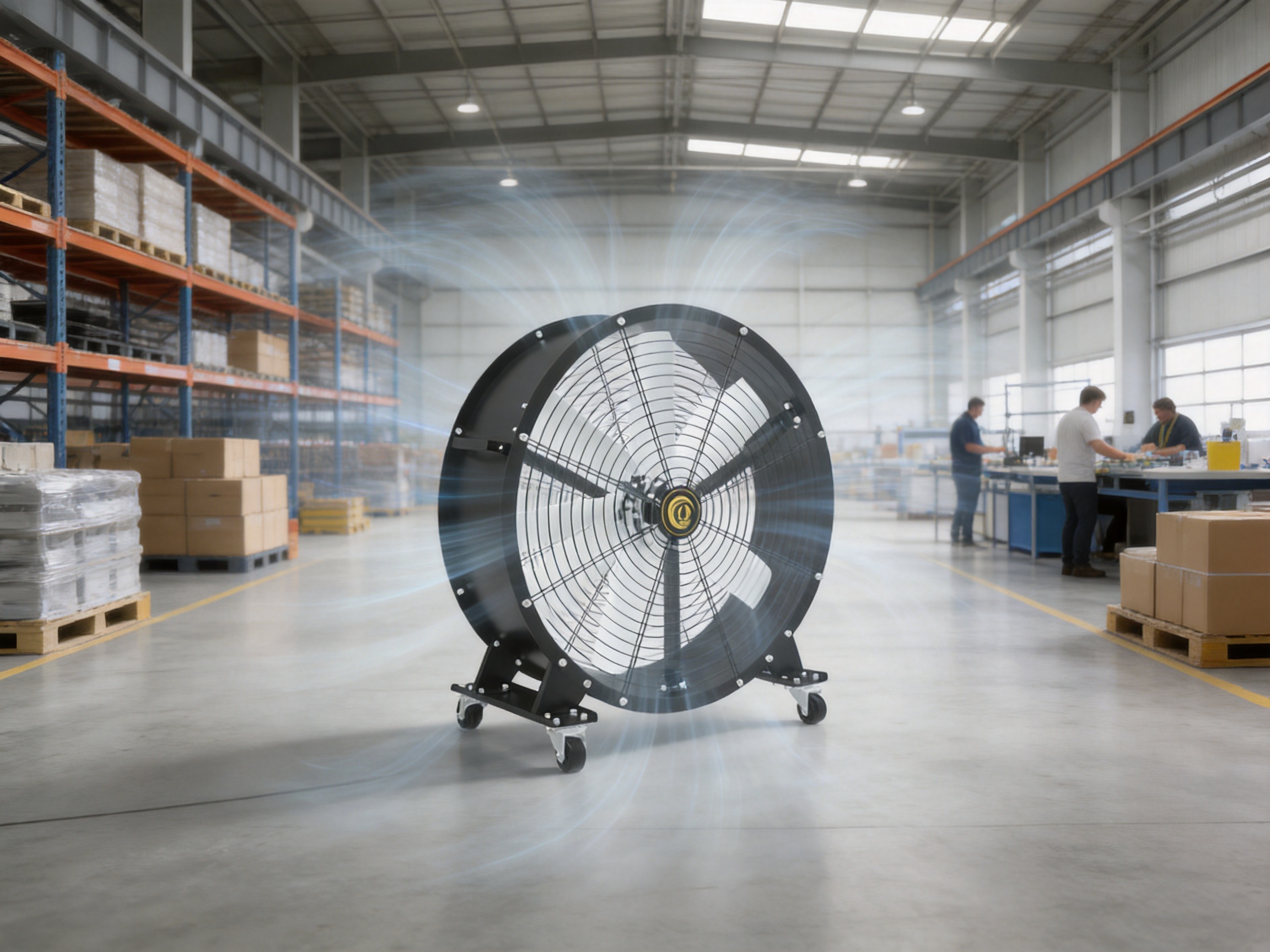
The product supports convenient operation through remote control or a wall-mounted controller, depending on the application and selected configuration. This allows users to adjust wind speed and operating mode without walking to the fan each time a change is required.
Remote control is helpful when the fan is positioned in a large warehouse, near a production line, or in a temporary event area. Operators can adjust the airflow from a practical distance while maintaining their work position. A wall-mounted controller may be preferred for facilities that require a fixed operating point, centralized access, or integration into a room management routine.
Control accessibility becomes especially important when several fans are used in one facility. Operators can establish different airflow zones, adjust fans according to occupancy, and respond quickly to changing conditions. When discussing a multi-unit project, buyers should confirm whether the selected controls can support the desired number of fans, control locations, operating modes, and electrical requirements.
The listed wind speed range is 0 to 26 meters, while individual models have different maximum rotational speeds. These specifications should be interpreted together. Rotational speed describes how quickly the blades turn, while airflow range or wind reach describes how far the moving air may be felt under particular conditions. They are not identical measurements.
Users should select the airflow level based on the room size, ceiling height, occupancy, heat load, work process, and sensitivity of nearby materials. A lower setting may be suitable for comfort ventilation, while a higher setting may be useful for heat removal or rapid circulation after doors have been opened. The goal is not always maximum speed; the goal is suitable and efficient airflow.
The product information identifies an IP55 protection rating. In general terms, the first digit indicates protection against dust ingress at a specified level, while the second digit indicates protection against water jets from certain directions. This rating supports use in demanding indoor industrial environments, but it does not mean the fan is designed for immersion, heavy flooding, or unrestricted exposure to severe weather.
IP55 protection is useful in warehouses, manufacturing plants, workshops, agricultural buildings, and commercial areas where dust and occasional water spray may be present. The rating can help protect important electrical and mechanical components when the fan is operated within its intended conditions.
Even with an IP55 rating, the equipment should be installed on a stable surface and kept away from corrosive substances, standing water, high-pressure cleaning equipment, and environments outside the manufacturer’s specifications. Regular inspection of cables, controls, fasteners, blades, guards, and the motor area remains important for safe operation.
Standard portable fans are useful for personal cooling and small spaces, but their performance is limited when a facility requires broad, consistent air movement. The mobile HVLS fan offers several advantages in this comparison.
First, its larger fan diameter allows it to move air over a wider area. One unit may serve a larger zone than a small pedestal fan, reducing the need for multiple devices. Second, the high-efficiency motor and variable frequency controller allow airflow to be adjusted more precisely. Third, the low-noise specification supports use in occupied commercial and working environments. Fourth, the industrial construction and IP55 protection are better suited to demanding locations than many household fans.
The mobile HVLS fan also reduces floor congestion when compared with deploying many small fans. Multiple conventional fans require multiple power connections and may create a network of cables across walkways. A larger mobile unit can simplify placement and reduce obstacles, provided it is positioned safely and does not interfere with emergency exits or material-handling routes.
Fixed ceiling HVLS fans remain an effective choice for buildings with suitable roof structures and stable layouts. However, they are not ideal for every facility. Installation may require structural assessment, lifting equipment, electrical work, and permanent mounting hardware. Once installed, their airflow position is difficult to change.
The mobile design avoids many of these limitations. It can be deployed without suspending a large assembly from the roof, making it suitable for rented buildings, temporary facilities, low-ceiling areas, and spaces where structural modifications are not allowed. It can also be moved when warehouse racks are rearranged, production equipment is relocated, or an event space changes configuration.
Mobility also supports seasonal use. During hot weather, the fan can be placed where employees or customers need additional comfort. During cooler periods, it can be stored or moved to a location where air circulation is still beneficial. This operational flexibility can improve the return on investment for businesses whose airflow needs change frequently.
Warehouses often contain high ceilings, long aisles, loading doors, storage racks, packaging areas, and different work zones. Airflow can become uneven, especially when goods or racks obstruct natural ventilation. A mobile HVLS fan can be positioned near packing stations, loading bays, inspection areas, or high-traffic aisles to improve local circulation.
Better air movement can support worker comfort during physically demanding tasks. It may also help reduce heat accumulation around equipment and improve the general feeling of freshness in areas with limited natural ventilation. Since the fan can be repositioned, warehouse managers can adapt airflow to changes in storage layout and seasonal logistics volume.
The fan should be placed away from forklift paths, emergency exits, sprinkler systems, suspended loads, and areas where it could be struck by moving equipment. A site assessment should determine the safest operating position and the appropriate clearance around the fan.
Manufacturing plants and workshops may generate heat from machinery, welding, processing, lighting, or production activity. Local heat sources can create uncomfortable workstations even when the overall building temperature appears acceptable. The mobile HVLS fan can provide targeted circulation without requiring permanent installation over every work area.
In automotive repair shops, the fan can help improve comfort around service bays and workstations. In general manufacturing, it can be repositioned as production lines change. In maintenance workshops, it may support ventilation during intensive work periods while remaining available for other areas when needed.
Air movement must be managed carefully around dust, fumes, coatings, solvents, and combustible materials. The fan is intended to circulate air, not to replace specialized extraction systems. Where hazardous vapors or process emissions are present, the facility should use properly engineered ventilation and follow applicable safety requirements.
Agricultural barns and livestock facilities require thoughtful air management. Stagnant air, heat, and humidity can affect animals, workers, and stored materials. A mobile HVLS fan can help circulate air across larger areas and reduce localized hot spots when positioned appropriately.
Because agricultural environments may contain dust, moisture, feed particles, and corrosive elements, regular cleaning and inspection are particularly important. Operators should verify that the selected configuration is suitable for the specific barn environment and should avoid exposing the fan to direct water spray or corrosive chemicals beyond its rated conditions.
The fan may also be useful in agricultural storage buildings, equipment sheds, and packing areas. Its flexible placement allows air movement to follow the location of stored crops, machinery, or work activity. It should not be used as a substitute for temperature and humidity controls required for sensitive agricultural products.
Retail spaces and exhibition halls must balance comfort, appearance, noise, and flexible use of floor area. The product’s quiet operation, color choices, controllable airflow, and mobile structure make it suitable for temporary or changing layouts. A retailer may reposition the fan during seasonal displays, renovations, or special events.
Exhibition halls often host different exhibitors with different space plans. Permanent ventilation equipment may not provide ideal airflow for every event. A mobile HVLS fan can support temporary air circulation while allowing organizers to respond to crowd density and booth arrangement.
Hotels, event venues, and commercial facilities may also use mobile fans for outdoor-adjacent areas, service zones, banquet spaces, or temporary gatherings. The fan should be selected and positioned in a way that protects guests from contact with moving parts and maintains clear access routes.
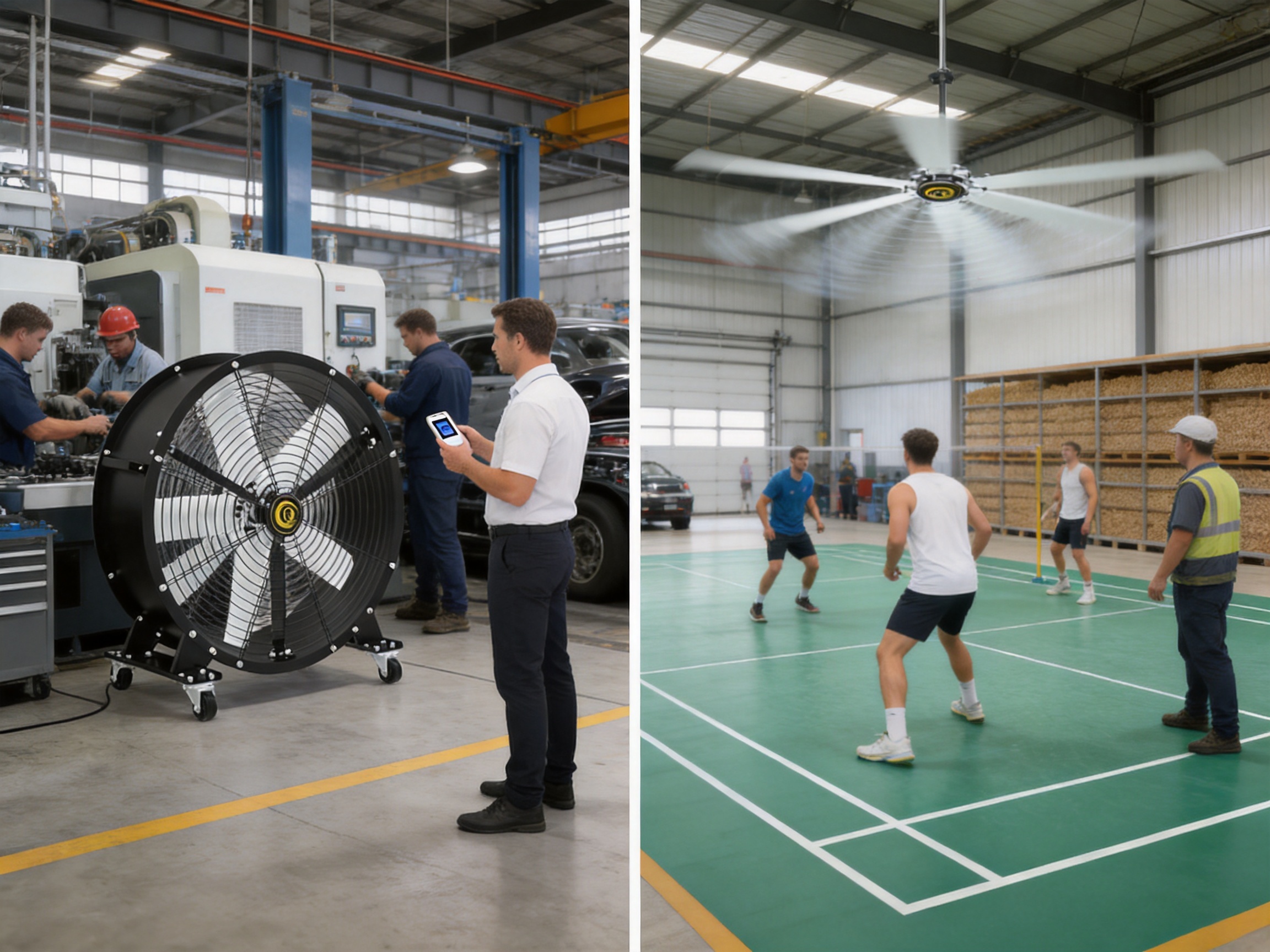
Sports facilities can become warm and uncomfortable during exercise, especially when many people occupy the same space. A large-area fan can help distribute air around training zones, spectator areas, and equipment spaces. Adjustable speed is useful because airflow needs may differ between an empty court, a practice session, and a crowded event.
The low-noise specification is also valuable in sports environments where coaches, athletes, referees, and spectators need to hear instructions and announcements. Operators should ensure that airflow does not disturb lightweight sports equipment, displays, papers, or temporary structures.
Mobility provides an additional advantage during competitions and events. The fan can be moved to accommodate seating, courts, stages, or broadcast equipment, provided that trained personnel handle relocation and the unit is secured in its operating position.
The product is manufactured by Shanghai Aipu Fans Co., Ltd., a company established in Shanghai, China, in 2006. The company specializes in industrial-grade ceiling fans, large industrial ventilation products, and customized solutions for industrial customers worldwide.
The company operates an approximately 8,000-square-meter production base equipped with high-precision automated machinery, a machining center, a cutting center, a welding center, and a testing center. This combination of equipment supports a controlled manufacturing process from material preparation through fabrication, assembly, inspection, and performance verification.
Advanced manufacturing capability is important for large fans because dimensional accuracy, balance, motor alignment, structural strength, and electrical reliability all influence performance. A small error in a large rotating assembly may create vibration, noise, or premature component wear. Precision machining and testing help reduce these risks and support consistent product quality.
Automated machinery can improve repeatability in cutting, forming, drilling, and other production steps. Consistent dimensions help ensure that components fit correctly during assembly and that replacement parts can be produced more reliably. Automation also supports efficient production when customers require multiple units or customized orders.
For industrial buyers, repeatability is especially important. A project may involve multiple fans installed across one facility or several buildings. Products with consistent dimensions and performance characteristics simplify planning, installation, service, and spare-parts management.
The machining center supports accurate processing of components that require controlled dimensions and alignment. The cutting center helps prepare metal and alloy parts with repeatable shapes and clean edges. These capabilities are relevant to fan frames, supports, motor-related components, mounting structures, and other assemblies where fit and balance matter.
Precision processing also contributes to a more professional finish. Smoothly prepared components reduce unnecessary stress concentrations and help create a cleaner final assembly. In a commercial or industrial setting, equipment appearance can influence customer perception and reinforce the impression of organized facility management.
The welding center is responsible for joining structural components and supports. Proper welding quality is essential for a mobile fan because the frame must withstand vibration, transportation, and repeated repositioning. Welded joints should be consistent, properly finished, and inspected according to the company’s internal quality procedures.
A robust structure supports safe operation and helps maintain alignment between the fan assembly, motor, frame, and base. Buyers requiring special dimensions, customized finishes, or project-specific mounting solutions can discuss these requirements with the manufacturer before production.
The testing center provides an important stage for evaluating finished products. Testing may include checks related to electrical operation, speed control, vibration, noise, motor function, protection features, and general assembly quality. Specific test procedures depend on the product configuration and order requirements.
Testing is particularly important for industrial fans because the equipment may operate for long periods in occupied workplaces. A properly tested fan is more likely to deliver predictable performance and reduce the risk of installation problems. Customers should request applicable inspection documents, test records, and certification information for the final configuration when required for their project.
Industrial customers often have requirements that differ from standard retail buyers. They may need a particular blade color, control arrangement, electrical specification, branding method, packaging format, airflow target, or delivery schedule. The company provides customized OEM services for industrial customers and can discuss project-specific product solutions.
Customization should be defined clearly before production. Important details include the intended application, available power supply, operating environment, floor conditions, desired air coverage, control method, color, number of blades, product quantity, and applicable certification requirements.
The listed product information includes CE certification, a three-year warranty, Kewo inverter equipment, yellow, blue, silver, black, and red blade colors, and five- or six-blade options. These details should be confirmed for the exact model and shipment because specifications may vary by configuration, market, or customized order.
Although the mobile HVLS fan does not require ceiling suspension, it still requires careful positioning. The floor should be level, stable, and capable of supporting the selected model. The fan should be placed where it will not block walkways, emergency exits, fire equipment, loading paths, or access to machinery.
There should be adequate clearance around the blades and frame. The operator should inspect the unit before use and confirm that guards, fasteners, cables, controls, and structural parts are secure. Any unusual vibration, scraping sound, odor, overheating, or control malfunction should be investigated immediately.
Before moving the fan, operators should switch it off, disconnect power where appropriate, wait until all moving parts have stopped, and use suitable handling methods. Large models may require more than one trained person or mechanical assistance. The fan should not be moved while operating.
Outdoor use requires special attention. The product information lists outdoor application among possible uses, but the precise meaning depends on the installation environment and configuration. An IP55 rating does not make the fan suitable for severe weather, flooding, salt spray, or unprotected long-term exposure. Buyers should confirm outdoor installation requirements with the manufacturer.
Routine maintenance helps preserve airflow performance, reduce noise, and extend service life. The maintenance schedule should be adapted to operating hours, dust levels, humidity, and the environment in which the fan is used.
Operators should periodically inspect the blades for dirt, deformation, cracks, or loose fasteners. Dust accumulation can affect balance and airflow. The frame, base, wheels or mobility components, guards, power cables, and control devices should also be checked for wear or damage.
Electrical inspection should be performed by qualified personnel. The motor and inverter should be kept within their intended operating conditions. Cleaning should be carried out using methods appropriate for the product’s protection rating. High-pressure water should not be directed at electrical components unless the manufacturer specifically approves that procedure.
Preventive maintenance is generally less expensive than emergency repair. Facilities that operate the fan continuously or in dusty environments should establish documented inspection intervals and record any changes in sound, vibration, speed control, or airflow.
Model selection should begin with the size and layout of the space. A large warehouse with high ceilings may require the ASF-20 or another larger configuration, while a smaller workshop or garage may be better served by the ASF-09 or ASF-12. The selected model should provide appropriate airflow without creating unnecessary turbulence or occupying excessive floor area.
Power availability is another important consideration. Buyers should confirm voltage, frequency, phase, current, inverter compatibility, plug or wiring requirements, and local electrical regulations. A suitable control system should also be selected, especially when the fan will be used in a multi-zone facility.
Noise requirements, floor loading, transport access, storage arrangements, color, blade count, and required certification should be reviewed before purchase. For a project involving several units, a layout plan can help determine the most efficient number and placement of fans.
| Selection Factor | Questions to Consider | Why It Matters |
|---|---|---|
| Space size | What is the floor area, ceiling height, and layout? | Helps determine the required airflow coverage. |
| Operating environment | Is the area dusty, humid, corrosive, or exposed to weather? | Confirms whether the selected protection and materials are suitable. |
| Mobility | Will the fan be moved regularly or remain in one zone? | Influences handling, floor design, and placement planning. |
| Power supply | What voltage, frequency, phase, and circuit capacity are available? | Ensures safe and compatible electrical operation. |
| Control method | Is remote control, wall control, or another arrangement preferred? | Improves usability and supports operating routines. |
| Noise expectations | Will people work, shop, communicate, or exercise nearby? | Helps maintain comfort and a suitable acoustic environment. |
| Safety clearance | Are walkways, exits, machinery, and equipment protected from interference? | Reduces operational hazards. |
Purchasing a large industrial fan involves more than comparing blade diameter and motor power. Product reliability, engineering support, manufacturing consistency, testing, spare parts, warranty service, and communication are all important factors. An experienced manufacturer can help match the product to the application and identify potential issues before delivery.
Shanghai Aipu Fans Co., Ltd. has operated in the industrial fan sector since 2006 and focuses on industrial-grade ventilation products. Its production base, automated equipment, machining, cutting, welding, and testing capabilities provide a foundation for controlled manufacturing and customized project support.
The company’s experience with industrial customers also supports applications beyond simple personal cooling. Warehouses, manufacturing plants, agricultural facilities, sports venues, retail spaces, exhibition halls, automotive repair shops, and food processing facilities each have different needs. A manufacturer familiar with these environments can provide more relevant technical guidance than a general household fan supplier.
The company serves customers in domestic and international markets and offers OEM services. This is valuable for distributors, project contractors, facility operators, and brands seeking a dependable manufacturing partner for large industrial ventilation equipment.
The 79-inch new mobile HVLS fan is designed for customers who need broad-area air movement without the limitations of a permanently installed ceiling fan. Its large-diameter design, magnetic aluminum alloy construction, variable frequency control, adjustable wind speed, low-noise operation, remote or wall-mounted control, and IP55 protection provide a strong combination of performance and flexibility.
Its greatest advantage is adaptability. The fan can be moved between warehouse zones, production areas, workshops, sports facilities, exhibition halls, agricultural buildings, and commercial spaces according to changing operational requirements. Compared with multiple small fans, it can simplify airflow management and reduce floor congestion. Compared with fixed ceiling fans, it provides greater installation flexibility and does not depend on permanent roof suspension.
The manufacturing capabilities behind the product further strengthen its value. An approximately 8,000-square-meter production base, automated machinery, machining and cutting centers, welding facilities, and a testing center support consistent production and quality verification. Customized OEM services, multiple blade and color options, CE certification, and a listed three-year warranty add value for industrial and project-based buyers.
For the best results, users should select the correct model based on building size, airflow requirements, power supply, operating environment, noise expectations, and safety conditions. With proper selection, placement, operation, and maintenance, a mobile HVLS fan can become an effective part of a modern industrial ventilation strategy.
HVLS means high volume, low speed. It describes a fan designed to move a large amount of air across a wide area at a controlled speed rather than producing only a narrow, concentrated airflow.
The fan is built as a floor-standing Airmove system rather than a permanently suspended ceiling unit. It can be repositioned when the layout, occupancy, production process, or airflow requirement changes, although larger models should be moved using appropriate handling procedures.
Yes. The fan is suitable for many warehouse applications because it can improve circulation across storage, packing, loading, and worker areas. Placement should be planned carefully to avoid forklifts, emergency exits, suspended loads, and other hazards.
Yes. Its adjustable airflow and mobile design make it useful in garages and automotive repair shops. However, it should not replace specialized fume extraction systems, and the facility must ensure that the operating environment is compatible with the product specifications.
The listed power ratings range from 0.35 kilowatts to 0.65 kilowatts depending on the model. Variable frequency control allows users to adjust the speed to actual demand, which can help reduce unnecessary energy use compared with operating at maximum output continuously.
The listed noise level is below 40 decibels. Actual sound may vary according to speed, floor condition, building acoustics, and the surrounding environment. Buyers with strict acoustic requirements should confirm performance for the intended application.
The fan uses magnetic aluminum alloy, also described as magnalium in the product information. This material provides a balance of durability, corrosion resistance in suitable environments, and reduced weight compared with some heavier metal constructions.
The listed protection rating is IP55. This supports protection against dust at a specified level and water jets under defined conditions. It does not mean that the fan can be immersed, flooded, or exposed without limitation to severe weather or corrosive substances.
Yes. The advanced variable frequency control system supports precise speed adjustment. Users can select different settings according to temperature, occupancy, airflow requirements, work activity, and the sensitivity of nearby materials.
The product supports remote control or wall-mounted control, depending on the selected configuration and application. Buyers should confirm the preferred control arrangement when requesting a quotation.
The product information lists five- or six-blade configurations. The final blade arrangement should be confirmed for the selected model and order.
Listed blade colors include yellow, blue, silver, black, and red. Availability may depend on the model, customization requirements, and order quantity.
Yes. The manufacturer provides customized OEM services for industrial customers. Customers can discuss product specifications, colors, controls, electrical requirements, packaging, and other project details before production.
The product information lists a three-year warranty. Buyers should confirm the warranty terms, coverage, exclusions, service process, and conditions for the exact order before purchase.
The choice depends on the required airflow coverage, facility size, available space, power supply, mobility requirements, and operating environment. The ASF-09 is the smallest listed configuration, while the ASF-20 is the largest listed configuration. A manufacturer or technical representative should review the application before final selection.
1. Product specification information for the 79-inch new mobile HVLS fan, including ASF series model data, dimensions, power ratings, speed, noise level, protection rating, material, controls, and applications.
2. Industrial ventilation principles related to high-volume, low-speed air movement and large-area circulation.
3. General guidance on variable frequency motor control and energy-conscious fan operation.
4. General interpretation of International Protection Code ratings for dust and water resistance.
5. Manufacturer information regarding Shanghai Aipu Fans Co., Ltd., its industrial fan production, manufacturing facilities, OEM services, and quality-testing capabilities.
6. General workplace ventilation and industrial equipment safety practices for warehouses, workshops, manufacturing plants, agricultural buildings, retail facilities, and sports venues.
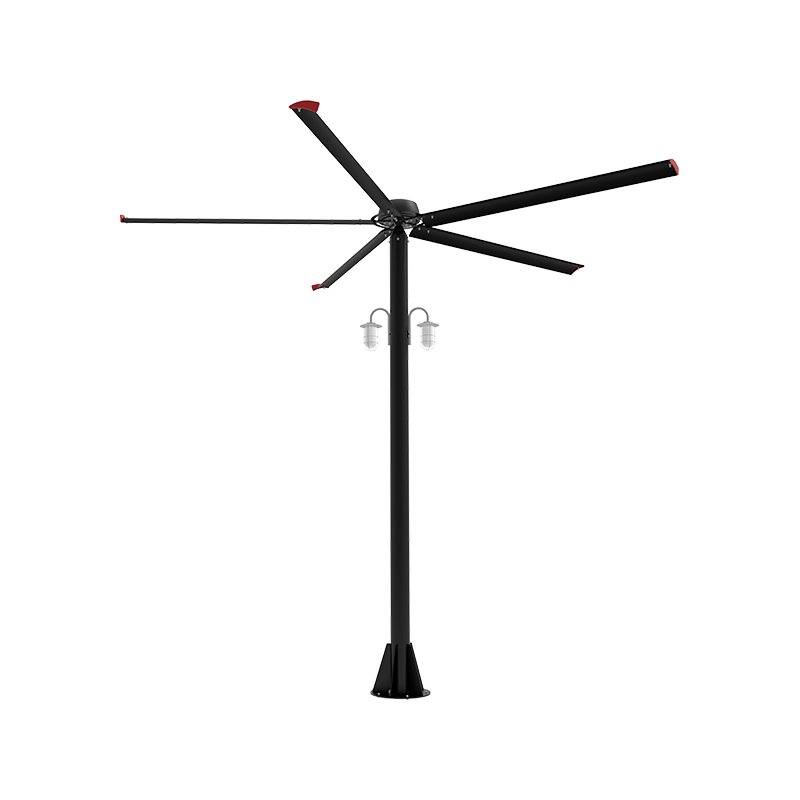
The large vertical HVLS floor-standing ventilation fan offers a variety of color options, allowing users to choose the most suitable color based on different environments and decoration needs. This c...
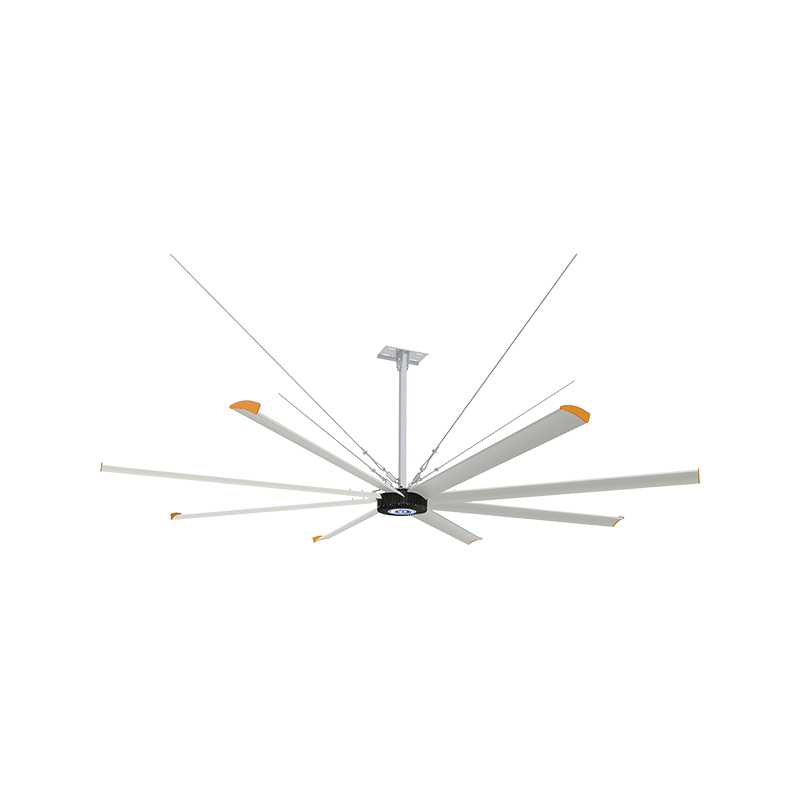
The 8-foot HVLS Large Industrial BLDC Ceiling Fan is equipped with a 0.3KW brushless DC motor, offering higher energy efficiency and lower noise levels. The lower power consumption design helps users ...
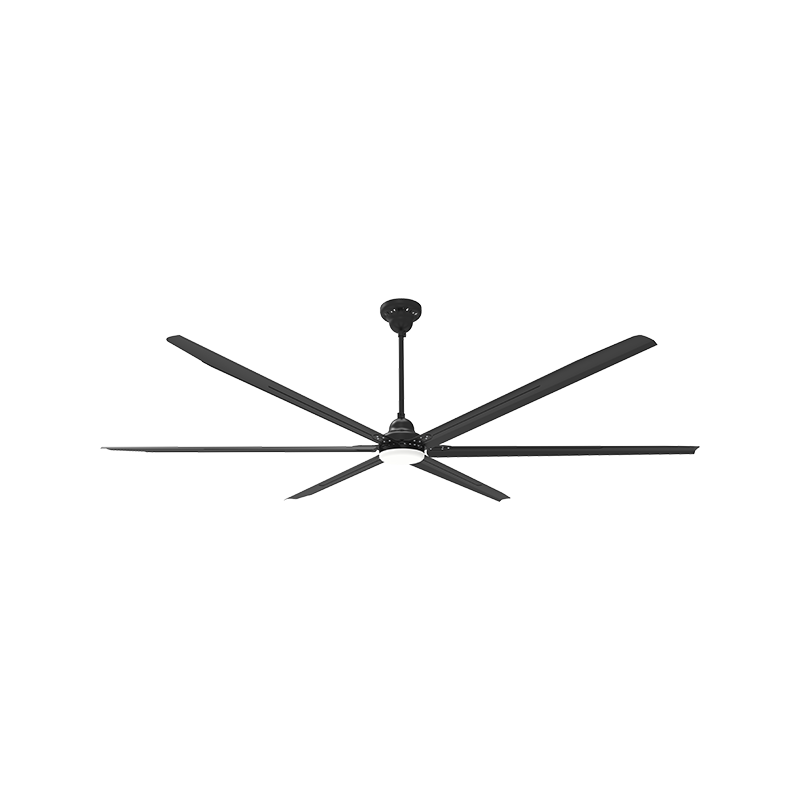
1. Core Technology: High Volume, Low SpeedNatural Breezes: Unlike the “harsh” wind from small fans, HVLS fans use massive blades rotating at low speeds to create a large-scale, three-dimensional breez...
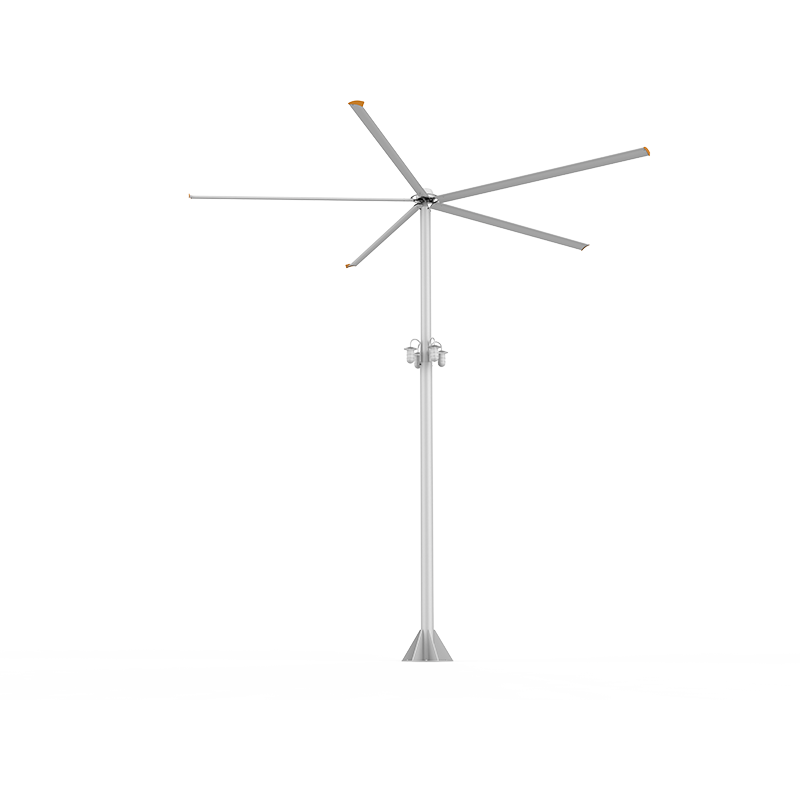
The 11-foot vertical HVLS commercial floor fan with light features a vertical floor-standing design with a total height of 3800mm (approximately 12.5 feet), suitable for spaces with ceiling heights of...
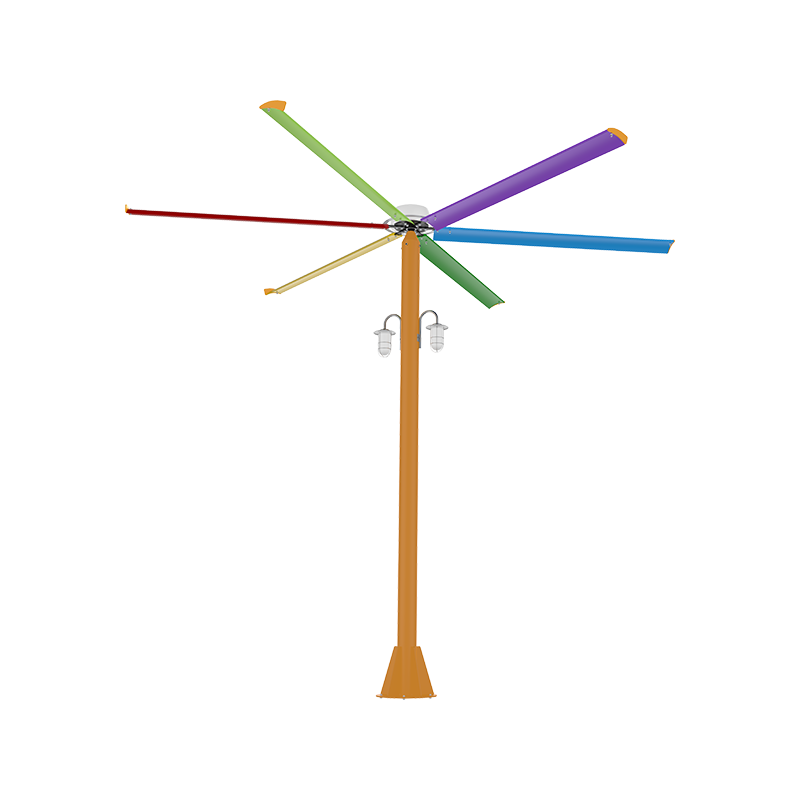
The aluminum alloy blade HVLS industrial vertical fan has a power consumption of 350 watts, demonstrating its energy efficiency. Compared to traditional high-speed fans, HVLS fans operate at low speed...
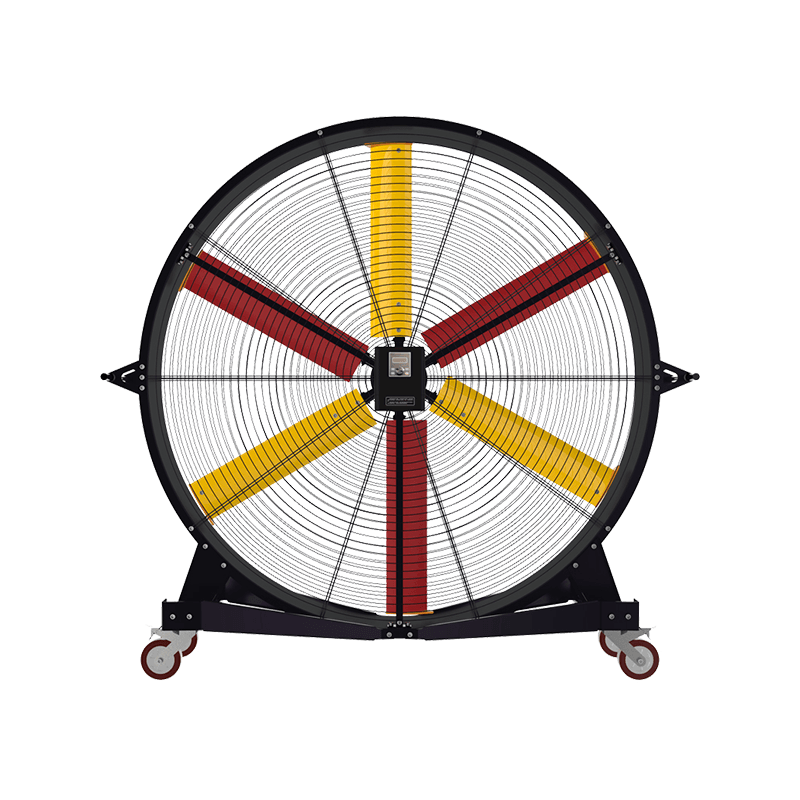
The 2-meter 4-wheel movable large floor-standing HVLS fan utilizes larger blades and a lower rotational speed, enabling it to generate a large volume of airflow while maintaining low noise levels. The...
A 6,800 m² factory floor used to be ventilated by roughly 300 small wall and pedestal fans. Six large ceiling fans now cover the same area, and in the manufacturer's own comparison that change cuts m...
READ MOREBig Fans, Low Speed, Real Results: HVLS Industrial Fans Explained When a factory floor hits 34°C, small fans only move hot air around. Large-diameter HVLS ceiling fans do the opposite: they push a t...
READ MORELarge-space air movement Big Commercial Fans: How to Size, Mount and Power Them One 24 ft ceiling fan can replace forty pedestal units, but only when span, mounting height and motor match the buildin...
READ MOREStanding on the floor of a 6,000-square-metre factory on a hot July afternoon, you quickly notice the problem: small ceiling fans running at full speed create noisy air pockets near the floor, while ...
READ MORE Custom Large Industrial Fans Manufacturers