

 English
 Español
 عربى

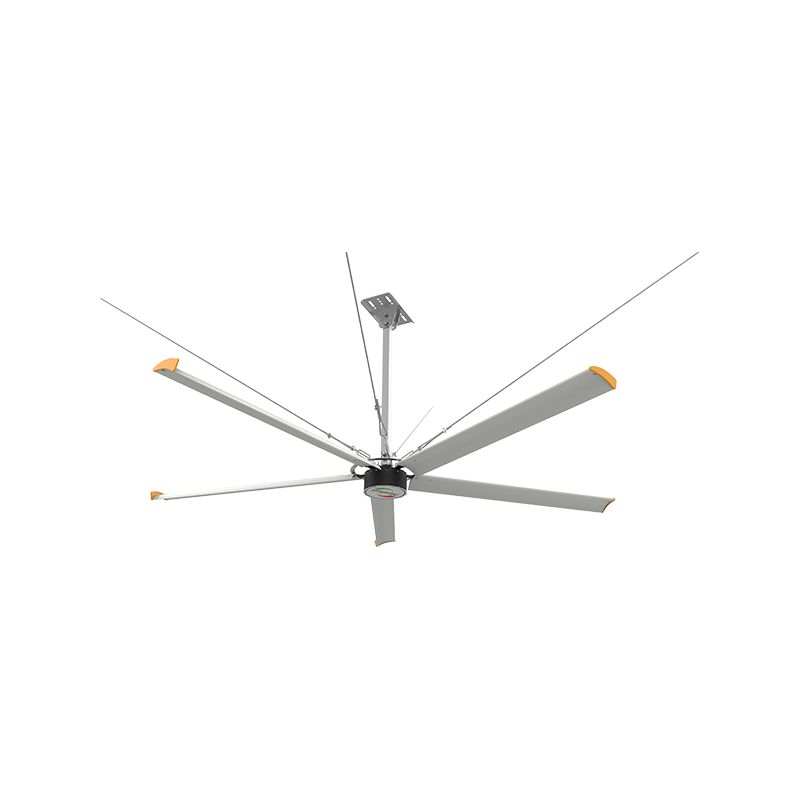
1. Massive 9-Foot WingspanWith a colossal 108-inch (2.8m) diameter and 6 high-efficiency streamlined blades, this fan moves massive volumes of air even at low speeds. It is the perfect solution for el...
Content
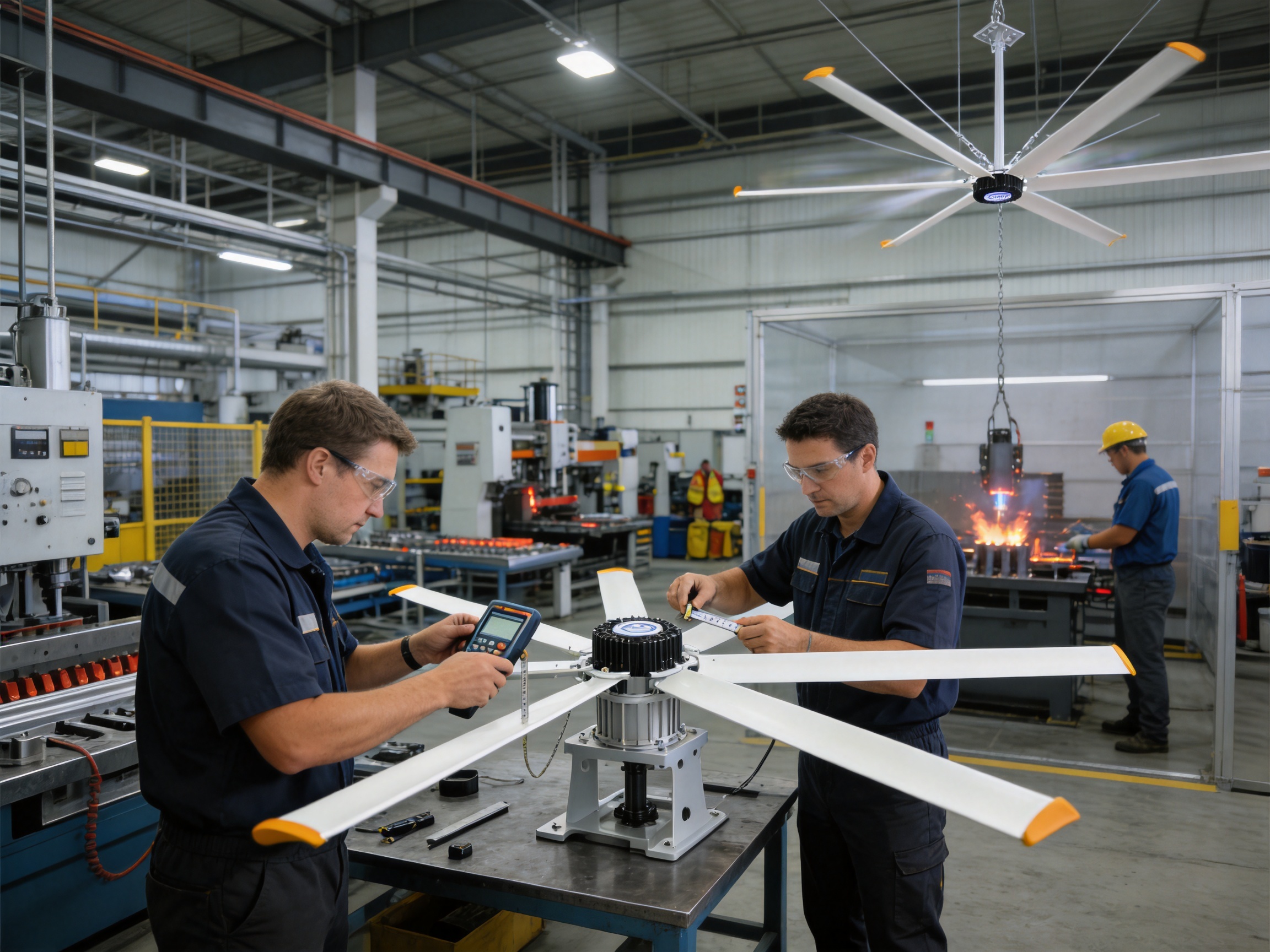
Industrial buildings require dependable air movement to maintain comfortable working conditions, reduce heat accumulation, and improve ventilation efficiency. In warehouses, workshops, manufacturing plants, logistics centers, agricultural facilities, sports halls, retail spaces, and other large structures, conventional small fans often provide only localized airflow. They may require numerous units, consume more combined energy, create distracting noise, and demand frequent maintenance. A large-diameter ceiling fan offers a more effective alternative by moving a high volume of air across a wide area from a single installation point.
The 9-foot low-noise 6-blade BLDC ceiling fan is designed for applications that need broad, controllable, and energy-conscious air circulation. With a 2.8-meter, approximately 9-foot diameter, six-blade configuration, brushless DC motor technology, multiple speed settings, and an operating range of 0 to 98 RPM, the fan combines large-area airflow with flexible control. Its low-noise blade design helps reduce the sound generated by air turbulence, while its motor architecture supports smooth starting, lower heat generation, and long service life.
Unlike many basic ceiling fans designed primarily for residential rooms, this product is engineered as part of a larger industrial ventilation solution. It can be installed in buildings with steel structures, round-steel supports, concrete roofs, and other suitable ceiling configurations. Remote control operation is available, and APP-based Wi-Fi control can also be supported for users who want centralized management or smart operating functions.
The product is manufactured by Shanghai Aipu Fans Co., Ltd., an industrial fan producer established in Shanghai in 2006. The company combines motor technology, automated production, precision machining, welding, cutting, and product testing to create large industrial ceiling fans for customers in different regions and industries. Its production capabilities and OEM/ODM services allow buyers to request customized product configurations and installation solutions.
The 9-foot low-noise 6-blade BLDC ceiling fan is a large industrial ceiling fan developed to create steady air movement over broad indoor areas. Its six aluminum-alloy blades rotate at controlled speeds to distribute air downward and outward. Rather than producing a narrow, forceful stream from one point, the fan is intended to encourage more uniform circulation throughout a room.
The fan uses a permanent-magnet synchronous motor and brushless motor technology. The supplied product information identifies the motor system as BLDC and PMSM technology, with a rated power specification of approximately 0.3 kW for the 9-foot configuration. The broader product series supports motor powers from approximately 0.3 kW to 1.5 kW, allowing different models to serve different building sizes and airflow requirements.
The fan diameter is listed as 2.8 meters or 9 feet, and the blade count is six pieces. The blades are manufactured from aluminum alloy, a material selected for its combination of low weight, structural strength, corrosion resistance, and suitability for repeated rotation. The product weighs approximately 32 kilograms, although final shipping weight may vary depending on the mounting system, controls, packaging, and customized accessories.
The motor speed range is listed as 0 to 98 RPM. This broad range allows the user to select a gentle circulation mode for ordinary occupancy or a stronger airflow mode for hot, crowded, or high-ceiling environments. Precise speed regulation is especially useful in facilities where temperature, occupancy, process conditions, or seasonal requirements change throughout the day.
| Product Item | Specification |
|---|---|
| Product type | Low-noise industrial BLDC ceiling fan |
| Nominal diameter | 2.8 meters / approximately 9 feet |
| Number of blades | 6 |
| Blade material | Aluminum alloy |
| Motor technology | Brushless DC / permanent-magnet synchronous motor |
| Motor power for the listed configuration | Approximately 0.3 kW |
| Speed range | 0–98 RPM |
| Input options | 110 V / 220 V; broader series input includes 200–240 V and 380–480 V options |
| Frequency | 50 Hz / 60 Hz |
| Approximate product weight | 32 kg |
| Control options | Remote control and optional APP Wi-Fi control |
| Warranty information | Three years for the motor and inverter; up to ten years for other accessories according to the supplied product information |
| Customization | OEM and ODM support |
Product specifications should be confirmed with the manufacturer before ordering because voltage, power, controls, mounting structure, airflow performance, and warranty coverage may vary according to the selected configuration and destination market.
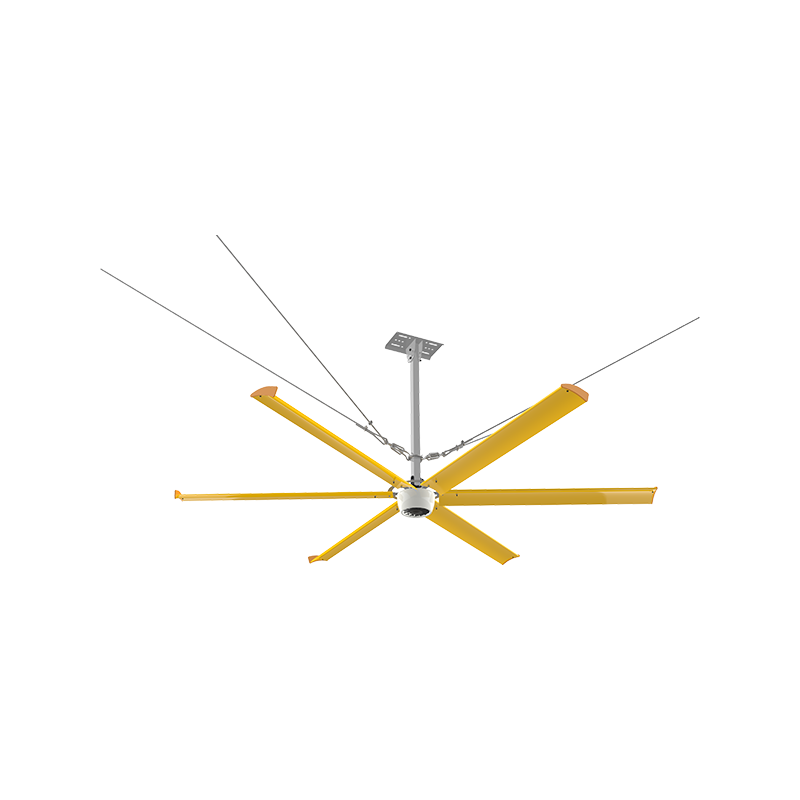
9-foot low-noise 6-blade BLDC ceiling fan
The motor is one of the most important differences between a modern industrial ceiling fan and a conventional fan. The BLDC motor in this product operates without mechanical brushes. Instead of relying on brush contact to transfer electrical current, the motor uses electronic commutation and permanent magnets to produce rotation. This design eliminates brush friction and the gradual wear associated with brushed motors.
One direct benefit is smoother operation. Electronic commutation allows the motor controller to regulate rotation more precisely, helping the fan maintain stable performance across multiple speed settings. Smooth rotation can reduce vibration, improve user comfort, and support more consistent airflow throughout the operating cycle.
Lower mechanical friction also contributes to quieter operation. A brushed motor can generate sound through brush contact, commutator wear, and mechanical irregularities. A brushless motor removes these particular noise sources. The product further addresses operating noise through its blade design and optimized airflow channels, helping reduce turbulence-related sound as air passes over and around the blades.
BLDC technology can also reduce heat generation. When a motor produces less friction and operates efficiently, less electrical energy is converted into unwanted heat. Lower motor temperature can be beneficial in facilities that already experience high ambient temperatures. It may also reduce thermal stress on internal components over long operating periods.
Another advantage is high starting torque. The motor can begin rotating effectively under controlled electronic regulation, supporting reliable startup and smooth acceleration. This is useful for large-diameter fans because the blades and rotor require controlled force to move from a stationary position to operating speed.
The absence of brushes reduces a major source of wear. Brush replacement is not normally required in the same way as it is with a brushed motor, which can help reduce routine maintenance requirements. Less maintenance can be particularly valuable when the fan is installed at a considerable height and service access requires lifting equipment or specialized personnel.
The motor also reduces the risk of electromagnetic interference associated with mechanical brush arcing. While the complete electrical installation still requires appropriate grounding, protection, and compliance with local regulations, brushless operation provides a cleaner motor architecture for modern industrial control systems.
Large-diameter fans are intended to move significant volumes of air using relatively low rotational speeds. The six blades sweep a broad circular area, allowing the fan to create useful circulation without the high RPM typically associated with small axial fans. The listed motor power for this 9-foot configuration is approximately 0.3 kW, supporting a low-energy approach to large-area air movement.
Energy performance depends on building conditions, selected speed, installation height, ambient temperature, control settings, and the number of fans used. Nevertheless, a controllable BLDC motor gives facility operators an important opportunity to match power consumption to actual airflow demand. The fan does not need to run at maximum speed when a gentle circulation mode is sufficient.
Variable-speed control can support different operating strategies. During mild weather, the fan may operate at a low setting to prevent stagnant air. During hot working periods, higher speeds can increase perceived cooling by improving air movement across the skin. In winter, carefully controlled air circulation may assist destratification by moving warmer air that accumulates near the ceiling toward the occupied zone.
It is important to distinguish air movement from mechanical refrigeration. A ceiling fan does not directly lower the temperature of the air. Instead, it can improve perceived comfort and distribute existing air more evenly. When used with an appropriate heating, ventilation, or air-conditioning system, the fan may help reduce temperature differences and improve the effectiveness of the broader climate-control strategy.
Noise is a significant consideration in workplaces, commercial venues, educational facilities, and public spaces. A fan that moves air effectively but produces excessive noise can interfere with communication, concentration, customer experience, or production activities. The 9-foot product is designed to address this concern through both motor selection and aerodynamic design.
The brushless motor helps reduce mechanical noise by eliminating brush friction and minimizing certain forms of internal wear. The six blades are shaped to support controlled airflow, while optimized air channels help reduce the turbulence that often causes whistling, pulsing, or irregular aerodynamic noise.
Low-speed, large-diameter operation also contributes to a more comfortable acoustic environment. Compared with a small fan rotating rapidly, a large fan can move air over a wide area at a comparatively lower rotational speed. Lower RPM generally supports a less aggressive sound profile, although actual sound levels depend on installation quality, ceiling height, structural resonance, room acoustics, and operating speed.
Correct installation is therefore essential. A stable mounting point, properly tightened connections, appropriate safety cables, balanced blades, and suitable clearance around the fan can help prevent avoidable vibration and noise. The supporting structure should be inspected by qualified personnel before installation, particularly in older buildings or facilities with complex roof systems.
The fan is appropriate for environments where air movement is needed without creating the distracting sound associated with some conventional industrial ventilation equipment. Potential applications include workshops, warehouses, logistics centers, gyms, retail halls, production areas, agricultural buildings, and other large indoor spaces.
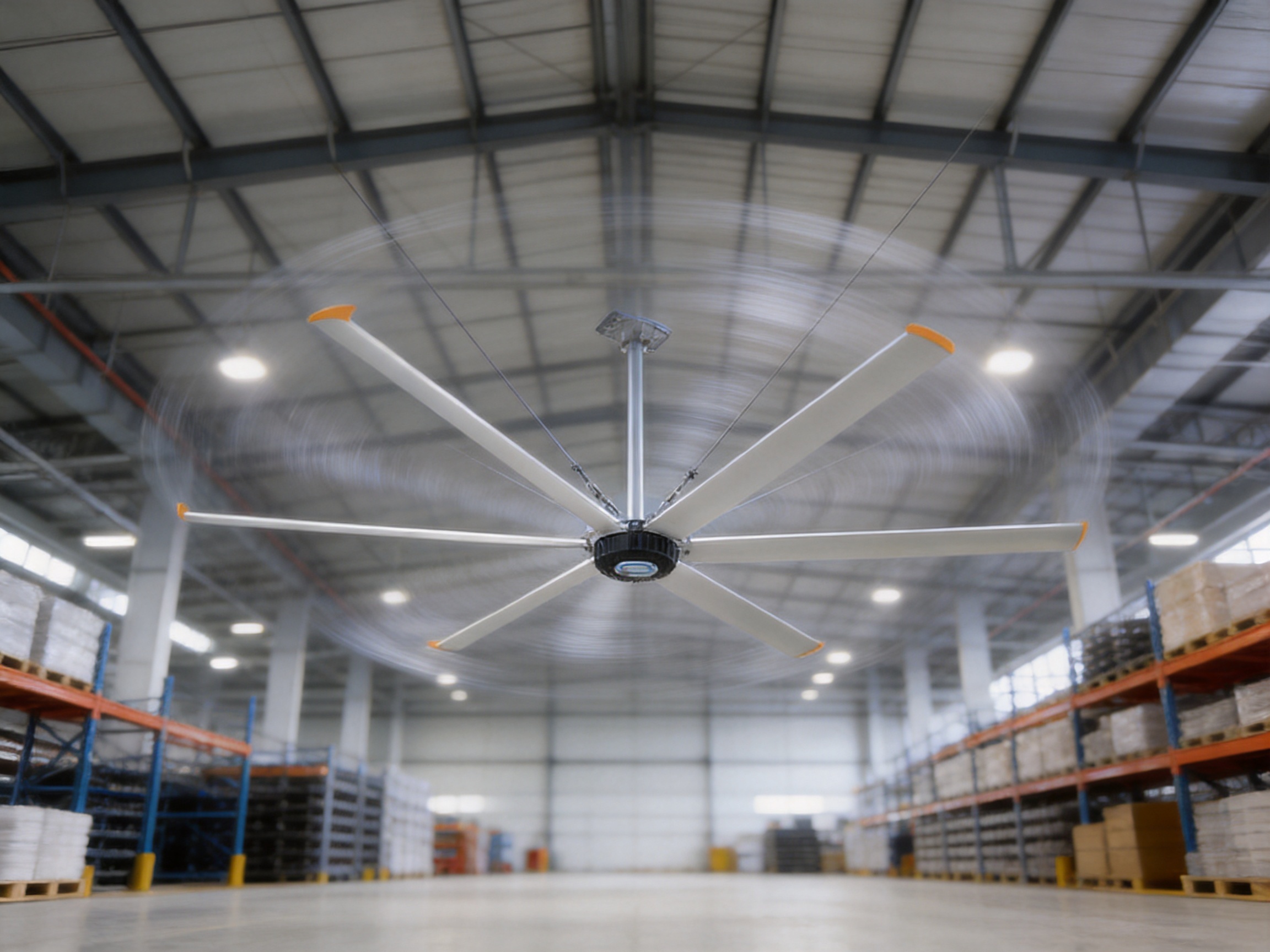
The six-blade configuration provides a balance between air-moving area, smooth rotation, structural simplicity, and visual uniformity. Each blade contributes to the formation of a broad airflow pattern. As the fan rotates, air is drawn into the blade path and directed downward and outward, creating circulation over a substantial floor area.
The product information identifies an air volume of approximately 3,200 cubic meters per minute for the 11-foot model in the broader series and gives a general application description of up to 14,200 cubic meters per minute and coverage of up to 1,800 square meters for the product family. These figures should not be automatically applied to the 9-foot model. Actual airflow and coverage must be confirmed according to the selected model, speed, installation height, building layout, and test method.
For project planning, the 9-foot fan should be evaluated as one component in a complete ventilation design. The buyer should consider floor area, ceiling height, obstructions, racking, machinery, partitions, doors, skylights, windows, heat-producing equipment, worker density, and local climate. A professional layout may use several fans with planned spacing rather than relying on one fan to cover the entire building.
Large industrial fans are especially useful in buildings with high ceilings. Warm air often rises and remains trapped near the roof, while occupied areas may experience stagnant or uneven conditions. Controlled downward circulation can help mix these layers. In summer, the airflow can increase the evaporation of perspiration and improve perceived comfort. In winter, it can help distribute accumulated warm air more evenly, potentially reducing temperature stratification.
The fan is not intended to replace specialized smoke extraction, hazardous-gas ventilation, dust collection, or legally required emergency ventilation systems. If a facility handles combustible dust, corrosive chemicals, flammable gases, or other hazardous materials, the complete fan and electrical system must be evaluated for the relevant safety classification and operating requirements.
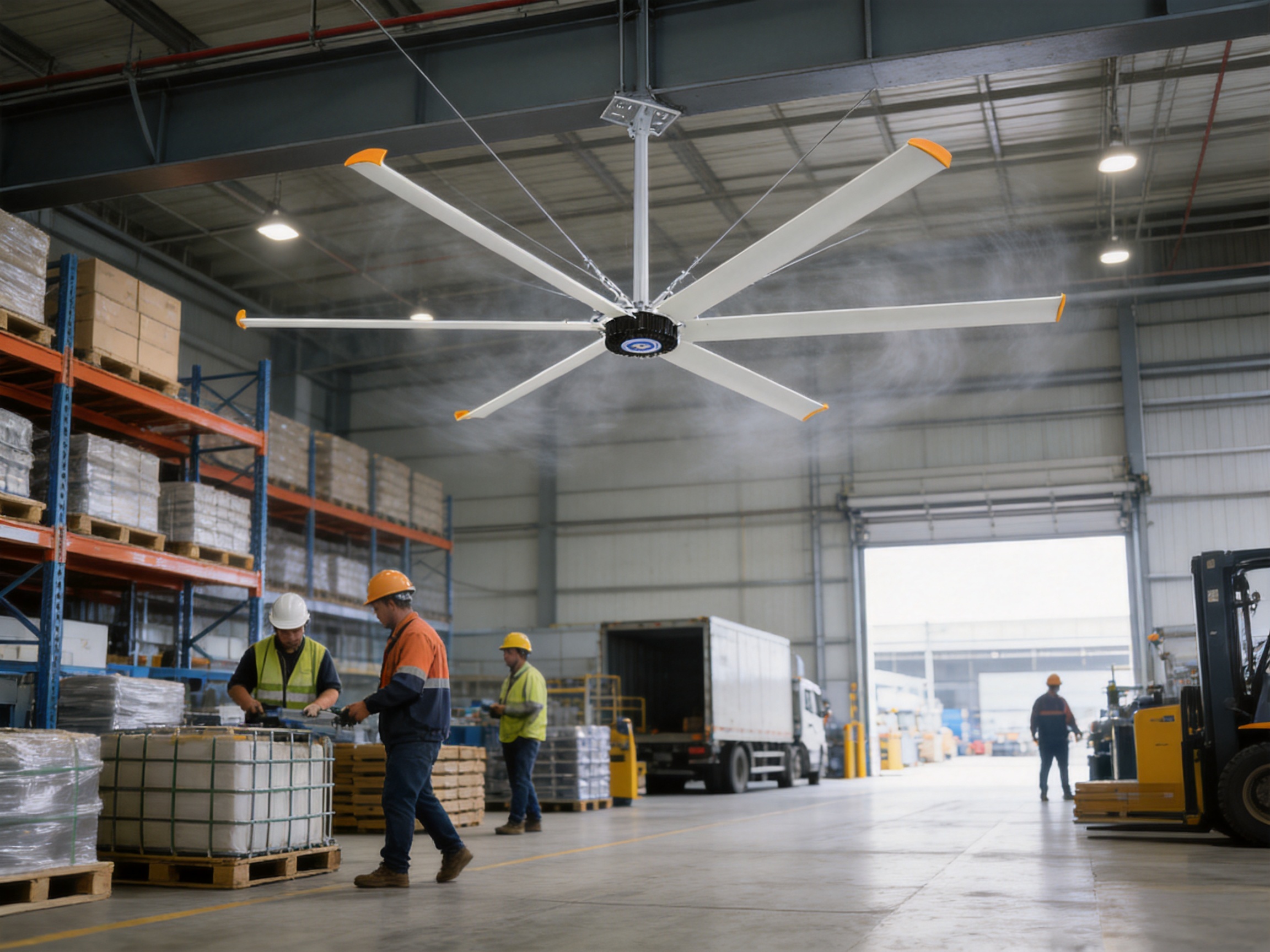
Warehouses and distribution centers often contain tall storage racks, loading areas, wide aisles, and frequently opened doors. These conditions can produce uneven temperatures and localized stagnant air. A large ceiling fan can support general circulation above the working area and help distribute air across open floor sections.
In logistics buildings, the fan can be coordinated with ventilation equipment, air curtains, heating systems, and environmental monitoring devices. Variable-speed operation allows the facility manager to respond to occupancy and loading activity. Lower settings may be suitable during quiet periods, while increased airflow can be used during peak operational hours.
Manufacturing facilities often contain process equipment that generates heat. Even when the overall building has mechanical ventilation, workers may experience uncomfortable hot spots near machinery, welding stations, assembly lines, or enclosed work areas. The fan can improve general circulation and reduce the feeling of still air.
Because industrial buildings differ greatly, the selected installation point should not interfere with cranes, conveyors, lighting, sprinklers, exhaust ducts, or production equipment. The mounting arrangement should be designed to maintain safe blade clearance and to prevent airflow from disturbing lightweight materials or sensitive processes.
Sports halls, exhibition areas, shopping facilities, and other commercial buildings require airflow that supports occupant comfort without excessive noise. The low-noise design and adjustable speed range make the fan suitable for spaces where people remain present for long periods.
In sports facilities, air circulation can reduce the sensation of stuffiness during active use. In retail and exhibition spaces, quiet operation helps preserve the customer experience. In large halls, a small number of strategically positioned large fans may provide more uniform movement than numerous small wall or pedestal fans.
The 9-foot BLDC ceiling fan offers several potential advantages over common alternatives. These benefits should be evaluated in relation to the building and project objectives rather than considered as universal claims for every installation.
| Comparison Factor | 9-Foot BLDC Ceiling Fan | Conventional Small Ceiling Fan | Multiple Portable or Wall Fans |
|---|---|---|---|
| Coverage approach | Broad area circulation from a large-diameter rotating system | Usually intended for a smaller localized area | Coverage depends on the number and placement of units |
| Motor technology | Brushless DC / PMSM electronic control | May use a brushed or conventional induction motor | Varies by product and motor design |
| Speed control | Wide, electronically controlled range up to approximately 98 RPM | Often offers fewer or less precise speed settings | Each unit may require separate adjustment |
| Noise management | Brushless motor and airflow-optimized blade design | Noise depends on motor, blade shape, balance, and speed | Multiple motors may increase combined noise |
| Floor usage | Mounted overhead, leaving the floor available | Mounted overhead but generally covers a smaller area | Portable units occupy floor or wall space |
| Maintenance access | Fewer large units may reduce the number of service points | More units may be needed for large buildings | Many units create more cables, controls, and maintenance tasks |
| Control integration | Remote control and optional APP Wi-Fi control | Usually local or basic remote operation | Control is often decentralized |
| Industrial suitability | Designed for large indoor spaces and structural mounting | May not be designed for industrial conditions | Suitability varies and may be limited by placement |
One important advantage is reduced equipment congestion. Portable fans require floor space and can create trip hazards or interfere with vehicles, forklifts, workstations, and cleaning operations. Wall-mounted fans occupy wall locations that may be needed for storage or equipment. A ceiling-mounted industrial fan keeps the floor and lower walls available while distributing airflow from above.
Another advantage is centralized control. When many small fans are installed, operators may need to adjust each unit individually. A large ceiling fan with remote or Wi-Fi control can simplify operation, particularly when used as part of a planned facility management system.
The product is also differentiated from some conventional ceiling fans by its industrial design focus. Its aluminum-alloy blades, structural mounting options, broad speed range, and motor technology are intended for demanding commercial and industrial applications rather than ordinary residential rooms.
Reliable industrial fans require more than a suitable motor and attractive blade design. The manufacturing process must maintain dimensional consistency, balance rotating components, protect electrical systems, and verify performance before shipment. Shanghai Aipu Fans Co., Ltd. operates an approximately 8,000-square-meter production base supported by specialized manufacturing and testing resources.
The company’s facilities include high-precision automated machinery, a machining center, a cutting center, a welding center, and a testing center. These capabilities allow different parts of the product to be produced and assessed within an organized industrial manufacturing environment.
Automated machinery can improve repeatability across production batches. Consistent positioning, cutting, drilling, forming, and assembly help reduce variation between individual fans. Repeatability is particularly important for rotating equipment because even small inconsistencies in blade dimensions or mounting points can affect balance, vibration, and noise.
Precision machining supports the production of motor components, structural parts, connection elements, and other components that require accurate dimensions. Correct tolerances help ensure that parts fit properly during assembly and that the motor and blade system maintain stable alignment.
The cutting center provides a controlled environment for preparing aluminum-alloy blades and other metal parts. Accurate cutting contributes to consistent blade geometry. When blade dimensions and shapes are matched, the finished fan can operate more smoothly and generate a more uniform airflow pattern.
Material selection and preparation also affect service life. Aluminum alloy is lightweight compared with many steel alternatives, helping limit the load placed on the motor and supporting structure. It also provides useful resistance to corrosion in many indoor environments. The appropriate alloy, surface treatment, thickness, and protective finish should be confirmed according to the final application.
The welding center supports the production of frames, brackets, supports, and other structural components. Welding quality is important because the mounting system must hold the fan securely above occupied areas. Welded structures should be checked for penetration, alignment, deformation, and surface quality according to the company’s internal procedures and the requirements of the project.
Structural assembly must account for the dynamic forces created by a rotating six-blade system. The final installation is not determined only by the fan itself. The roof, support beam, extension rod, brackets, safety cable, fasteners, and anchor points must work together as one engineered system.
A dedicated testing center allows the manufacturer to evaluate product performance before shipment. Testing may include motor operation, speed control, electrical behavior, vibration, noise, blade balance, and overall assembly condition. The specific tests and acceptance criteria should be confirmed with the manufacturer for each order.
Testing is particularly important for industrial fans because the consequences of poor balance or inadequate assembly can become more significant at large diameters. A controlled production and inspection process helps identify problems before installation and supports more dependable field performance.
Industrial buildings rarely share the same dimensions, roof structures, electrical systems, airflow requirements, or control preferences. For this reason, a standard catalog product may need to be adapted before it is suitable for a particular project. The manufacturer provides OEM and ODM support for customers requiring customized product solutions.
Customization may involve voltage selection, control methods, color, branding, mounting components, packaging, documentation, blade configuration, and project-specific accessories. The company’s broader product range includes diameters from approximately 8 feet to 24 feet, multiple blade-count options, different motor powers, and several maximum speed levels. This range allows a project to be evaluated according to both room size and airflow goals.
| Series Model | Approximate Diameter | Blade Options | Power | Maximum Speed | Listed Air Volume |
|---|---|---|---|---|---|
| ADF73 | 24 ft / 7.3 m | 5 or 6 | 1.5 kW | 55 RPM | 14,600 m³/min |
| ADF61 | 20 ft / 6.1 m | 5 or 6 | 1.5 kW | 57 RPM | 12,200 m³/min |
| ADF49 | 16 ft / 4.9 m | 5, 6, or 8 | 0.75 kW | 65 RPM | 8,800 m³/min |
| ADF42 | 14 ft / 4.2 m | 5, 6, or 8 | 0.75 kW | 74 RPM | 5,800 m³/min |
| ADF38 | 18 ft / 5.5 m | 5, 6, or 8 | 0.75 kW | 76 RPM | 4,600 m³/min |
| ADF33 | 11 ft / 3.3 m | 6 | 0.4 kW | 82 RPM | 3,200 m³/min |
| ADF25 | 8 ft / 2.5 m | 6 | 0.4 kW | 110 RPM | 2,900 m³/min |
The table represents the supplied series information and may include models with different intended applications. The 9-foot product configuration is described separately with a six-blade, 2.8-meter design and an operating range of 0 to 98 RPM. Buyers should request a formal technical data sheet to confirm the exact relationship between the product title, model designation, airflow value, motor rating, and control package.
OEM and ODM capability can be valuable for distributors, engineering contractors, building developers, and industrial equipment brands. A customized supply program can support project consistency, simplify replacement purchasing, and align the fan with the buyer’s preferred electrical and control standards.
Proper installation is necessary to achieve the intended performance and maintain safety. Before ordering, the buyer should provide ceiling height, roof structure, available mounting points, electrical voltage, intended operating environment, room dimensions, and any obstructions. These details help determine whether a 9-foot fan is appropriate and whether additional support components are required.
The product is described as suitable for different roof types, including steel structures, round steel, and concrete structures. However, suitability does not mean that every roof can accept the fan without engineering review. A qualified installer should evaluate the load-bearing capacity, structural condition, dynamic loading, anchor method, and safety clearances.
The fan should be installed with sufficient clearance from lighting fixtures, beams, sprinklers, cranes, ventilation ducts, storage racks, and other equipment. The installation point should also avoid locations where the blades could be exposed to impact from lifting equipment or moving materials.
Electrical installation should comply with local codes and the requirements of the selected voltage and frequency. Appropriate circuit protection, grounding, disconnecting means, controller installation, and cable routing are essential. The inverter or controller should be installed in a location protected from moisture, excessive heat, dust, and unauthorized access, unless the selected enclosure is specifically rated for those conditions.
After installation, the technician should verify blade tightness, rotation direction, balance, safety cable placement, fastener security, control response, and abnormal vibration. Initial operation should begin at a low speed before gradually increasing the setting. Any unusual noise, shaking, odor, or electrical behavior should be investigated immediately.
Brushless motor technology reduces certain maintenance requirements, but it does not eliminate the need for inspection. Industrial ceiling fans operate above people and equipment, so preventive maintenance should be included in the facility’s safety program.
Routine checks may include visual inspection of blades, mounting brackets, safety cables, fasteners, motor housing, wiring, and controller condition. Dust or deposits should be removed according to the manufacturer’s recommendations. In facilities with corrosive atmospheres, high humidity, chemical vapors, or airborne particles, inspections may need to occur more frequently.
Blade balance should be monitored. New vibration may indicate a loose fastener, damaged blade, structural movement, bearing wear, contamination, or another mechanical issue. The fan should be switched off and isolated before any inspection or service work is performed.
The supplied information states that the motor and inverter can be covered by a three-year warranty, while other accessories may receive up to ten years of warranty coverage. Warranty terms can depend on product configuration, installation, operating conditions, maintenance, and regional agreements. The purchaser should obtain the official warranty document and installation requirements before commissioning the equipment.
A well-managed service program can extend the useful life of the fan. Maintenance records should include installation date, inspection date, operating observations, replaced components, electrical tests, and any changes in vibration or noise. Such records can help facility managers identify trends before they become major failures.
Large rotating equipment requires responsible operation. Only trained personnel should install, configure, inspect, or repair the fan. The area below the fan should be controlled during installation and maintenance, and suitable lifting equipment should be used for overhead work.
Operators should not bypass protective devices, remove safety cables, modify blades, or install non-approved electrical components. Unauthorized modifications can affect balance, motor loading, electrical safety, and warranty coverage. Any customization should be reviewed by the manufacturer or a qualified engineering professional.
The fan should not be used in a hazardous environment unless the complete product and installation have been confirmed as suitable for that environment. Special consideration may be required for combustible dust, explosive atmospheres, corrosive chemicals, outdoor exposure, washdown areas, and extreme temperatures.
Airflow direction and speed should also be considered in relation to workplace processes. Excessive air movement may disturb loose packaging, lightweight components, dust-sensitive operations, papers, fabrics, or other materials. A variable-speed controller allows the operator to select a more appropriate setting when the airflow needs to be reduced.
Buying a large industrial fan is different from buying a standard household appliance. The product must be matched to a building, installed into a supporting structure, connected to an electrical system, and operated as part of a wider ventilation plan. A manufacturer with industrial specialization can provide more relevant technical assistance than a supplier focused only on small consumer fans.
Shanghai Aipu Fans Co., Ltd. has focused on industrial-grade ceiling fans since its establishment in 2006. Its experience covers large-diameter fan design, brushless motor systems, blade production, structural components, controls, and customized solutions. The company’s Shanghai production base supports coordinated manufacturing and testing activities.
The company’s product portfolio includes HVLS fans, PMSM ceiling fans, Airmove stand fans, Airpole pedestal fans, industrial wall-mounted fans, and commercial ceiling fans. This range allows customers to evaluate different airflow products for different parts of the same facility. A warehouse, for example, may use large ceiling fans in its central storage area, wall-mounted fans near service zones, and pedestal fans for temporary workstations.
The manufacturer also supports international customers through OEM and ODM services. Its products are intended for domestic and overseas markets, and the company emphasizes energy efficiency, quality control, customer satisfaction, and practical industrial ventilation solutions.
Technical communication is an important part of the purchasing process. A reliable supplier should be able to provide dimensional drawings, electrical data, installation instructions, control information, warranty details, replacement-part guidance, and recommendations for the intended application. Buyers should request these documents before finalizing a project.
Before purchasing the 9-foot low-noise six-blade BLDC ceiling fan, project buyers should define the operating objective. The requirement may be worker comfort, general ventilation, destratification, temperature equalization, energy reduction, or a combination of these goals.
The building survey should record the floor area, ceiling height, roof material, structural support points, obstructions, occupancy level, heat sources, existing ventilation equipment, and electrical supply. These details help determine the appropriate number and placement of fans.
The buyer should confirm the exact product configuration, including rated power, voltage, frequency, speed range, airflow performance, controls, blade material, dimensions, weight, mounting accessories, and finish. The supplied material contains specifications for both the 9-foot product and a broader industrial fan series, so the final quotation should identify which values apply specifically to the selected model.
Delivery planning should include packaging dimensions, shipping weight, unloading requirements, storage conditions, installation equipment, and commissioning support. For overseas projects, the buyer should also confirm electrical standards, documentation, customs requirements, spare parts, and local service arrangements.
Finally, the buyer should request a formal quotation and technical confirmation from the manufacturer. A clear document can prevent misunderstandings about performance, warranty, controls, installation responsibility, and any customized requirements.
The listed diameter is 2.8 meters, which is approximately 9 feet. The exact assembled dimensions should be confirmed on the technical drawing because mounting components and protective clearances may extend beyond the blade sweep.
The product has six aluminum-alloy blades. The broader product series includes other blade configurations, but the described 9-foot model is specified with six blades.
The fan uses brushless DC motor technology and is also described in the supplied information as using a permanent-magnet synchronous motor. This motor design supports smooth operation, lower mechanical wear, reduced noise, lower heat generation, high starting torque, and efficient speed control.
The stated motor speed range is 0 to 98 RPM. The actual operating speed selected by the user depends on airflow requirements, room conditions, comfort goals, and the control system.
Yes. The fan is designed for large indoor spaces and can be used in warehouses, logistics centers, workshops, manufacturing facilities, agricultural buildings, sports halls, and commercial areas. A site assessment is recommended to determine the number, spacing, and mounting method.
The product information states that it can be suitable for concrete structures as well as steel structures and round-steel supports. The concrete roof and anchoring method must be evaluated by qualified personnel before installation.
Remote control operation is available according to the supplied information. APP-based Wi-Fi control can also be supported, subject to the selected control package and project requirements.
The fan primarily moves and circulates air rather than directly lowering air temperature. It can improve perceived comfort by increasing air movement and can help distribute air more evenly. It may also support the efficiency of heating and cooling systems when properly integrated.
The product is designed for low-noise operation through its brushless motor, special blade design, and optimized airflow channels. Actual sound levels depend on speed, installation, structural resonance, room acoustics, and maintenance condition.
The listed power for the described 9-foot configuration is approximately 0.3 kW. The broader product series includes models from approximately 0.3 kW to 1.5 kW. Buyers should confirm the exact rated power on the quotation and technical data sheet.
The supplied information lists 110 V and 220 V options for the described product and also identifies broader series input options of 200–240 V and 380–480 V. The available voltage depends on the selected motor, inverter, and destination market.
The supplied information states three years for the motor and inverter and up to ten years for other accessories. Warranty terms should be confirmed in writing because coverage may vary according to the configuration, installation, region, operating conditions, and maintenance practices.
Yes. OEM and ODM support is available. Customization may include voltage, controls, mounting components, appearance, packaging, documentation, and other project requirements subject to technical review.
The buyer should check the roof structure, load-bearing capacity, mounting points, ceiling height, clearance, electrical supply, control location, surrounding equipment, safety cables, and applicable local regulations. Installation should be completed by trained personnel.
The 9-foot low-noise 6-blade BLDC ceiling fan is a practical solution for facilities that need broad air circulation, adjustable performance, and controlled operating noise. Its 2.8-meter diameter, six aluminum-alloy blades, 0 to 98 RPM speed range, brushless motor technology, remote-control capability, and optional Wi-Fi control provide a flexible foundation for industrial and commercial ventilation projects.
Compared with many small fans or groups of portable units, the product can deliver overhead circulation while preserving floor space and simplifying centralized control. Its low-speed large-diameter format is intended to create comfortable airflow over a wide area, while the BLDC motor reduces brush wear, mechanical friction, heat generation, and routine maintenance requirements.
The product’s value also depends on the capabilities behind it. Shanghai Aipu Fans Co., Ltd. combines industrial fan experience since 2006 with an approximately 8,000-square-meter production base, automated machinery, precision machining, cutting, welding, assembly, and product testing. These resources support consistent manufacturing and customized OEM/ODM programs for customers with specialized requirements.
For the best result, the fan should be selected as part of a complete building ventilation plan. Buyers should confirm the exact technical data, airflow performance, electrical configuration, mounting system, warranty conditions, and installation requirements before ordering. When properly specified, installed, and maintained, the 9-foot BLDC ceiling fan can contribute to a more comfortable, efficient, and manageable indoor environment.
1. Product specification materials supplied for the 9-foot low-noise 6-blade BLDC ceiling fan, including motor, blade, speed, voltage, control, and warranty information.
2. Product series data supplied for ADF73, ADF61, ADF49, ADF42, ADF38, ADF33, and ADF25 industrial ceiling fan models.
3. Manufacturer information concerning industrial fan production, OEM/ODM support, manufacturing facilities, and product applications.
4. General engineering principles for large-diameter air circulation, variable-speed fan operation, industrial ventilation planning, and motor maintenance.
5. General workplace guidance concerning overhead equipment installation, electrical safety, structural assessment, preventive maintenance, and rotating machinery protection.
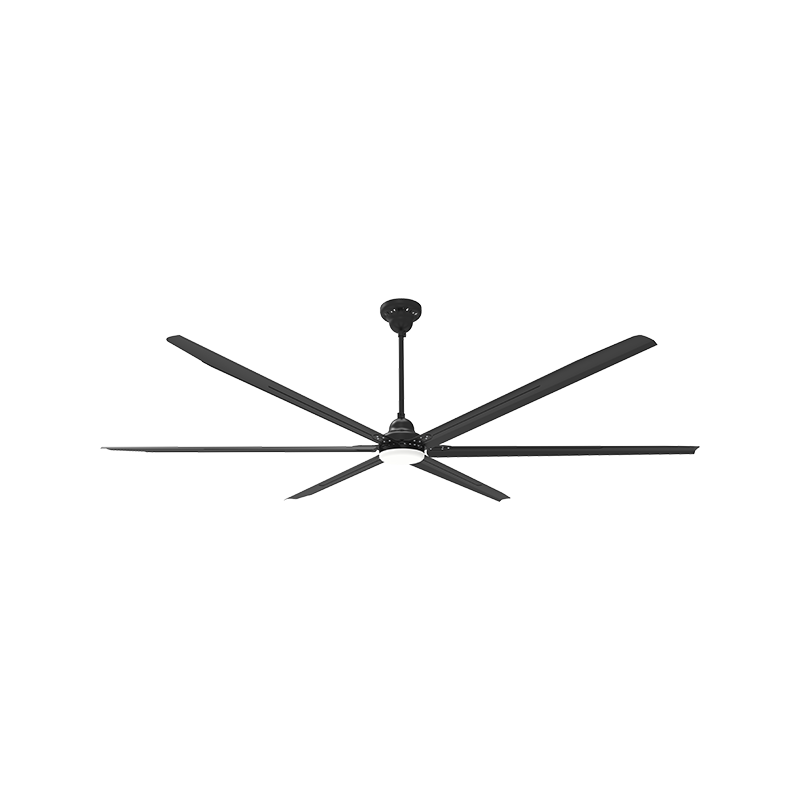
1. Massive 9-Foot WingspanWith a colossal 108-inch (2.8m) diameter and 6 high-efficiency streamlined blades, this fan moves massive volumes of air even at low speeds. It is the perfect solution for el...
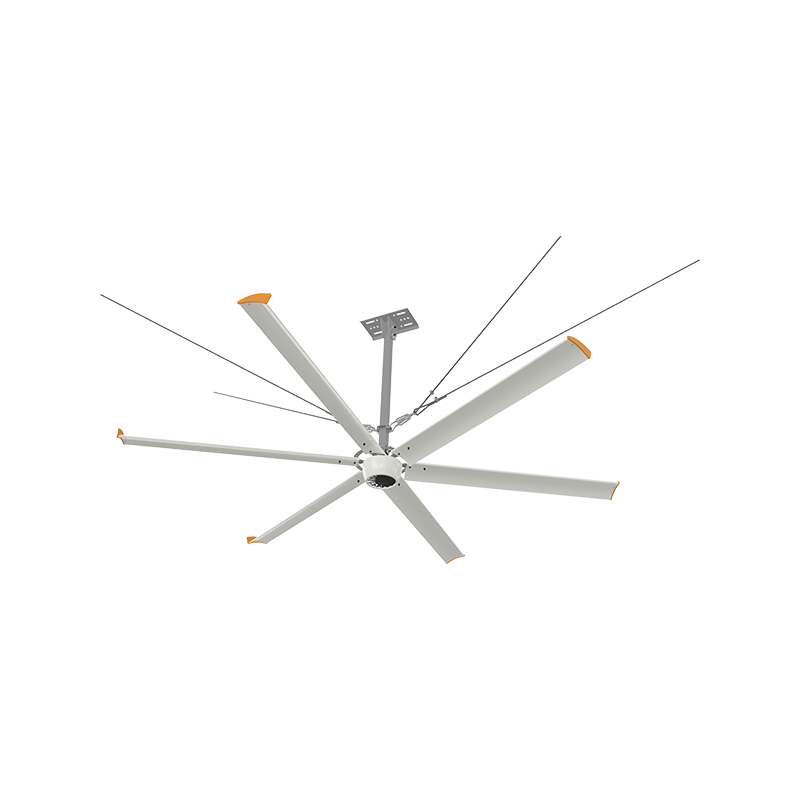
The 15-foot Even Airflow Industrial BLDC Ceiling Fan utilizes a high-efficiency BLDC motor and carefully designed blades. This ceiling fan operates with extremely low noise levels, making it suitable ...
The 9-foot low-noise 6-blade BLDC ceiling fan is an energy-efficient and quiet fan with a brushless DC (BLDC) motor. The advantages of the brushless motor include smoother operation, lower noise, les...
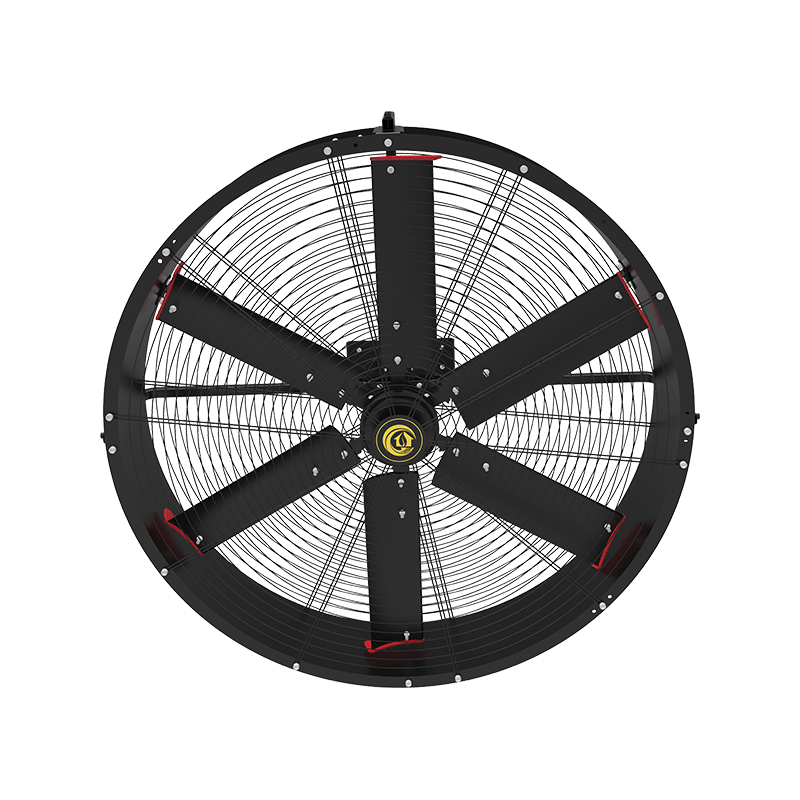
1. Extreme Airflow & Wide CoverageEquipped with massive 79-inch (2.0m) diameter aerospace-grade aluminum alloy blades. These precision-balanced blades generate a powerful, stable laminar airflow t...
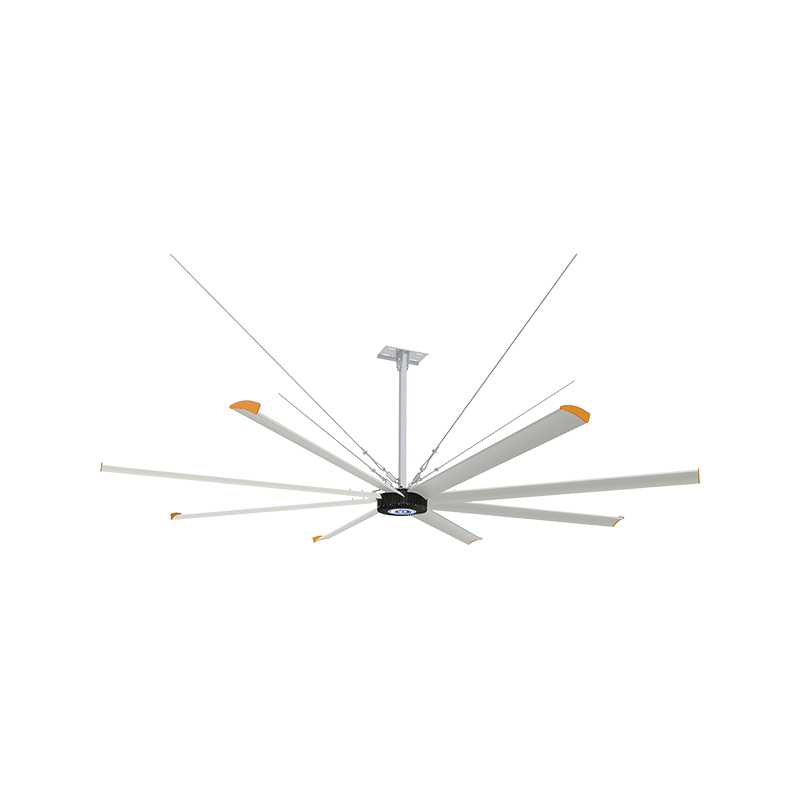
The 8-foot HVLS Large Industrial BLDC Ceiling Fan is equipped with a 0.3KW brushless DC motor, offering higher energy efficiency and lower noise levels. The lower power consumption design helps users ...
The industrial-grade aviation metal large-blade BLDC ceiling fan utilizes brushless DC motor (BLDC) technology, allowing it to provide powerful airflow with low power consumption. The ceiling fan rapi...
Industrial Ventilation Planning The Right Industrial Ceiling Fan Size Starts With the Building A practical sizing guide to diameter, ceiling height, CFM, and fan layout for warehouses, plants, and di...
READ MOREShanghai Aipu Fans Co., Ltd., established in Shanghai in 2006, focuses on manufacturing industrial-grade high-quality ceiling fans, relying on industry-leading motor technology and advanced manufactu...
READ MORECommercial HVLS Fans: The Quiet Engineering Behind Large-Space Airflow A practical guide to selecting high-volume, low-speed ceiling fans for warehouses, factories, and commercial halls — with the ef...
READ MOREGymnasium Ceiling Fans: Why Standard Fan Logic Stops at the Door A hall with twelve metres of air above the court is not simply a bigger room. It is a different airflow problem, and it is solved with...
READ MORE Custom Large Industrial Fans Manufacturers