

 English
 Español
 عربى

1. Massive 9-Foot WingspanWith a colossal 108-inch (2.8m) diameter and 6 high-efficiency streamlined blades, this fan moves massive volumes of air even at low speeds. It is the perfect solution for el...
Content
Large commercial spaces require more than an ordinary residential ceiling fan. Warehouses, cafés, gyms, hotels, garages, showrooms, workshops, and oversized living areas all need air circulation that can reach a wide floor area while operating efficiently and quietly. The 9-foot Smart Remote Control 6 Blades LED Ceiling Fan is designed for precisely this type of environment. With a diameter of approximately 9 feet, six aerodynamic blades, integrated LED lighting, reversible airflow, and a high-efficiency motor, it combines broad air distribution with practical lighting and convenient control.
This product belongs to the commercial ceiling fan category, but its application range is considerably broader. It can be installed in commercial buildings, hospitality venues, residential lofts, garages, covered outdoor areas, and other spaces with high ceilings or large open floor plans. Its large wingspan allows it to move substantial volumes of air at relatively low rotational speed, helping reduce stagnant areas and improve comfort throughout a room.
The fan is manufactured by Shanghai Aipu Fans Co., Ltd., an established Chinese industrial fan producer with experience dating back to 2006. The company operates an approximately 8,000-square-meter production base equipped with automated machinery, machining, cutting, welding, and testing facilities. This manufacturing foundation supports OEM customization, quality control, and the production of industrial-grade ventilation equipment for customers in different markets.
Unlike small ceiling fans intended for localized personal cooling, this 9-foot model is engineered as a space-management solution. It addresses air circulation, lighting, energy efficiency, noise control, and long-term operation in one integrated product. For buyers comparing commercial fans, these combined functions can provide a stronger overall value than purchasing multiple smaller fans or separate lighting equipment.
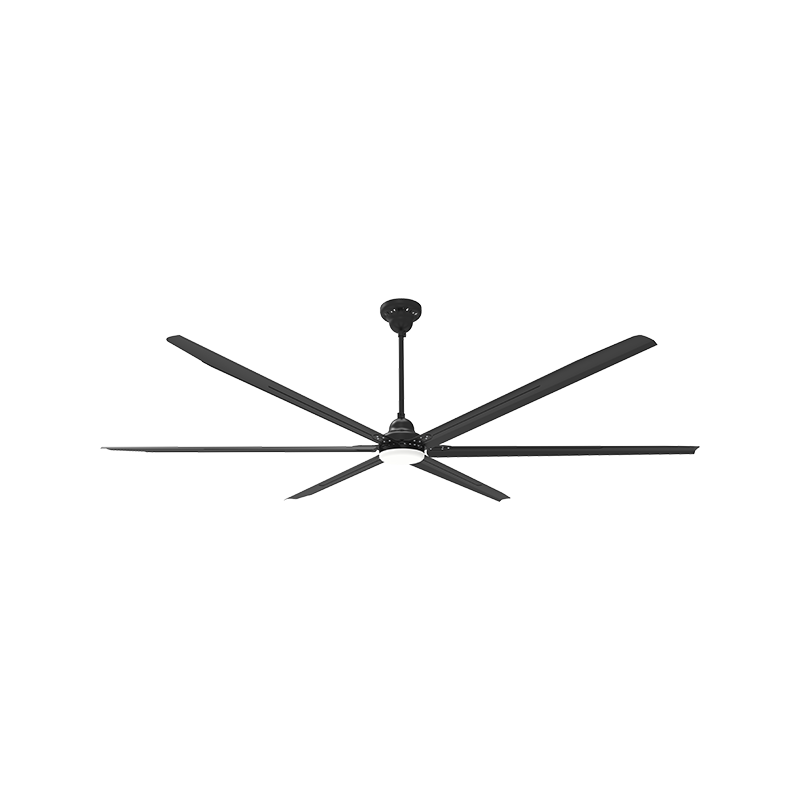
9FT Smart Remote Control 6 Blades LED Ceiling Fan
The defining feature of this ceiling fan is its large diameter. The product is promoted as a 9-foot or 2.7-meter model, while the detailed product information lists a measurement of approximately 106 inches. These dimensions place the fan within the large commercial ceiling fan category and allow it to cover a wider area than conventional residential fans.
A large-diameter fan does not need to rotate at extremely high speed to create effective air movement. Instead, its blades sweep through a much larger volume of air during every rotation. This operating principle makes the fan suitable for spaces where several small fans would otherwise be needed. One strategically positioned large fan may provide a more uniform air pattern and a cleaner ceiling layout than multiple smaller units.
The six-blade configuration contributes to stable air delivery. The blades are described as streamlined and aerodynamic, with a power-coated steel construction in the application information. Their shape is intended to generate air movement efficiently while maintaining structural strength for continuous commercial operation. The blade design also supports a visually balanced appearance, which is important in retail spaces, hotels, restaurants, and public-facing venues.
Large rooms often contain areas where air remains still. These dead zones may occur beneath high ceilings, between seating areas, around storage racks, or near walls and structural columns. By moving air across a broad diameter, the fan can help reduce such stagnant zones. The resulting air movement can make a room feel cooler in warm weather and help distribute heated air more evenly during colder periods.
The product is particularly suitable for oversized living rooms, high-ceiling lofts, cafés, gyms, hotel common areas, workshops, garages, commercial halls, and covered outdoor locations. Its application information also identifies household, hotel, outdoor, garage, and commercial environments. Final installation suitability should always be evaluated according to ceiling structure, environmental exposure, electrical requirements, and local safety regulations.
A major advantage of this model is its integrated LED lighting. Rather than installing a fan and a separate ceiling light, users can combine both functions in one ceiling-mounted appliance. This can simplify room planning, reduce the number of ceiling fixtures, and create a more organized appearance in commercial or residential interiors.
The LED light is described as equipped with the fan and includes a dimmable function in the application information. Dimmable lighting allows users to adapt brightness to different activities. A café may require brighter illumination during cleaning or preparation and softer lighting during service. A garage may need strong light for maintenance work, while a living room may benefit from a lower brightness level during relaxation.
Combining lighting and air circulation can also be useful in rooms with limited ceiling space. In a high-ceiling commercial venue, every fixture must be carefully positioned to avoid visual clutter and interference with other equipment. A dual-function unit can reduce the need for separate installation points while maintaining both illumination and ventilation.
The LED system also complements the fan’s energy-saving design. The product carries a Class A energy-efficiency rating in the supplied specifications. Actual energy performance depends on operating speed, lighting use, installation conditions, and electrical configuration, but the combination of an efficient motor and LED lighting is intended to support lower operating costs than older fan-and-light systems.
Lighting specifications such as color temperature, lumen output, dimming range, and voltage should be confirmed for each order. Commercial customers may require different lighting characteristics depending on local standards and the intended application. The manufacturer’s OEM capability can be valuable when buyers need product adjustments for a particular project.
The product information describes the fan as using a high-efficiency motor and identifies BLDC and AC motor terminology in different specification fields. The product content promotes a premium DC motor, while the technical table lists an AC motor. Because these entries represent different configuration descriptions, buyers should confirm the exact motor version before placing an order. Regardless of the selected configuration, the stated design objective is reliable, energy-conscious, and quiet operation for commercial environments.
The listed power rating is 200 watts, or approximately 0.27 horsepower. This rating provides a reference for electrical planning and operating-cost estimation. The fan is also listed with a speed of 108 revolutions per minute and an air volume of approximately 2,950 cubic meters per minute. These figures indicate a system designed to move a substantial quantity of air at a relatively moderate blade speed rather than relying on rapid rotation.
High-volume, low-speed operation can provide several practical benefits. It may reduce the sharp turbulence associated with smaller high-speed fans, create a broader and more comfortable breeze, and lower the visual and acoustic impact of the equipment. The large blades move air across a wide area, making the system suitable for spaces where uniform circulation is more important than concentrated airflow at a single point.
The fan is described as having a six-speed reversible logic in the product content, while the technical table lists four wind speeds. This difference should also be verified according to the final model and control package. Multiple speed settings allow users to balance comfort, airflow, and energy consumption. Lower speeds may be suitable for quiet background circulation, while higher settings can be used when a space requires stronger air movement.
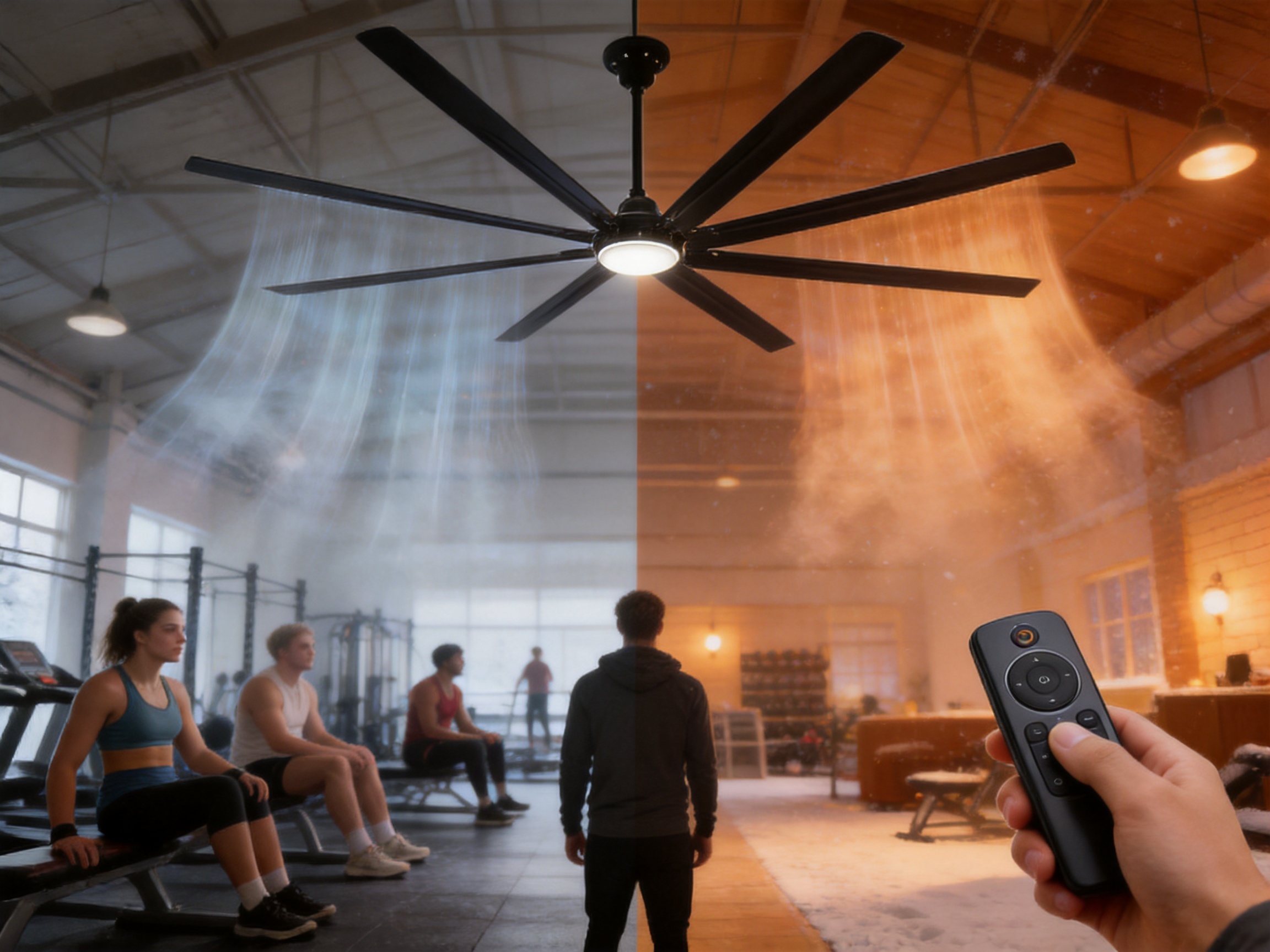
Reversible airflow is another useful feature. In summer mode, the fan produces a downward airflow that creates a cooling sensation for occupants. In winter mode, it reverses direction to draw air upward and help redistribute warm air that has collected near the ceiling. This seasonal function can improve the usefulness of the fan throughout the year and may assist heating and cooling systems in maintaining a more consistent indoor temperature.
Air movement does not directly lower the actual temperature of a room in the same way as an air-conditioning system. Instead, it improves perceived comfort by increasing air circulation around occupants. For this reason, the fan can often be operated together with HVAC equipment at a moderate setting. The final energy savings will depend on building design, climate, operating schedules, insulation, and the efficiency of the existing HVAC system.
Noise is a critical consideration in cafés, hotels, offices, studios, fitness centers, bedrooms, and other environments where people expect a comfortable acoustic atmosphere. The product specifications list a noise level of up to approximately 29 decibels, while another entry gives a range of 30 to 34 decibels. These figures suggest a low-noise design, although actual sound levels depend on speed, ceiling construction, balance, installation quality, and surrounding acoustics.
The product content states that the motor is engineered to operate substantially more quietly than traditional AC motors. Buyers should verify the comparison method and final motor configuration, but the intended benefit is clear: the fan is designed to provide effective airflow without becoming a dominant sound source.
Quiet operation is especially valuable in hospitality settings. Guests may notice rattling, humming, or mechanical vibration during meals, meetings, or overnight stays. A properly installed low-noise fan can improve comfort while remaining visually and acoustically unobtrusive. In residential applications, quiet operation allows the fan to be used in living rooms, bedrooms, and home offices without excessive distraction.
Noise performance is influenced by more than the motor. The ceiling support, mounting hardware, blade balance, electrical supply, and installation alignment all affect the final result. Commercial buyers should use a structurally suitable mounting point and follow the manufacturer’s installation instructions. Periodic inspection can also help identify loose fittings or imbalanced components before they create noise or reduce performance.
The standard product information identifies remote control as the primary control type. Remote operation allows users to adjust airflow without reaching a wall switch or accessing a high ceiling. This is particularly convenient in commercial spaces where the fan may be installed several meters above the floor.
The product description also presents multi-way control through a dedicated remote, smartphone application, and voice commands compatible with common smart-home platforms. However, the detailed specification table lists the app-controlled function as “No.” This indicates that control options may vary by configuration, market, or order version. Customers requiring app control or voice integration should request written confirmation before purchase.
When supported, smart scheduling can provide practical operating advantages. Users may set the fan to switch off after business hours, adjust airflow according to occupancy patterns, or reduce operation during periods of low demand. In a residence, a timer or schedule can help manage overnight operation. If the purchased configuration does not include app control or a timer, similar operating routines may need to be managed manually through the remote control.
The remote-control concept is valuable even without connected features. It provides basic access to speed selection, lighting operation, direction control, and power management from a convenient location. For a restaurant, warehouse, or gym, centralized remote operation can make daily use easier and reduce the need for staff to access switches installed at height.
Operating language is listed as English. Buyers supplying products to multilingual markets should confirm whether labels, manuals, remote-control markings, and packaging can be customized. The company’s OEM service may support project-specific requirements, subject to minimum order quantities and technical feasibility.
Product element | Supplied specification or stated capability | Practical value |
Fan diameter | Approximately 9 feet, 2.7 meters, or 106 inches as listed in different fields | Broad coverage for high-ceiling and open-plan spaces |
Number of blades | 6 | Stable, wide-area air distribution |
Motor information | High-efficiency motor; DC and AC descriptions require configuration confirmation | Designed for reliable commercial circulation and energy-conscious operation |
Rated power | 200 W | Reference for electrical planning and operating-cost analysis |
Listed air volume | Approximately 2,950 m³/min | High-volume air movement across large spaces |
Listed speed | 108 rpm | Large-area circulation at moderate rotational speed |
Airflow settings | Four settings in the technical table; six-speed operation in the product description | Adjustable comfort and energy use; confirm final configuration |
Air direction | Reversible | Cooling airflow in summer and warm-air redistribution in winter |
Lighting | Integrated LED light | Combines illumination and ventilation in one ceiling fixture |
Control | Remote control; smart options may depend on configuration | Convenient operation from floor level |
Noise information | Approximately 29 dB to 30–34 dB as listed | Suitable for comfort-sensitive environments when properly installed |
Warranty | 2 years | Basic support for commercial purchasing decisions |
After-sales service | Free spare parts listed | Support for maintenance and replacement requirements |
One of the clearest advantages over small conventional ceiling fans is the larger coverage area. A standard residential fan may provide effective cooling only within a limited section of a room. In a large commercial space, multiple small fans may be required, increasing installation complexity, ceiling congestion, maintenance points, and total visual impact.
The 9-foot format is intended to distribute air over a much wider area. This can be particularly beneficial in open-plan rooms where occupants are spread across a large floor surface. A single large fan may help create a more consistent airflow pattern than several smaller fans operating independently.
Many commercial installations require both air circulation and general illumination. This model integrates LED lighting into the fan assembly, potentially reducing the need for separate ceiling fixtures. The combined design can save ceiling space and make the layout more coherent.
For a café, showroom, or hotel lobby, a single coordinated product may be more visually attractive than separate fans and light fittings. For a garage or workshop, the integrated light can provide practical illumination directly beneath the air-moving equipment.
Some fans are designed primarily for summer cooling. The reversible airflow function gives this model broader seasonal usefulness. Downward airflow can improve comfort in warm conditions, while upward airflow can help circulate heat that naturally accumulates near a high ceiling.
This feature may be especially useful in buildings with high ceilings, mezzanines, or heating systems that leave upper air layers warmer than the occupied zone. Reversibility makes the fan a year-round air-management device rather than a seasonal appliance.
Large blades can move significant volumes of air without the high rotational speed associated with many small fans. This may provide a smoother breeze, lower mechanical stress, and improved acoustic comfort. The exact result depends on the installation and operating setting, but the design is well suited to broad, steady air movement.
The fan uses metal construction and is described with power-coated steel blades. These materials are appropriate for a product intended for long-term use in commercial and industrial environments. The manufacturer also identifies long-term continuous operation as part of the application concept.
Commercial construction does not eliminate the need for maintenance. Dust accumulation, electrical inspection, structural checks, and blade cleaning remain important. However, a product designed for commercial duty can provide a more appropriate starting point than a light-duty residential fan when the operating schedule is demanding.
Remote control is a practical advantage in high-ceiling buildings. Staff do not need to access a wall control located far from the working area, and users can adjust comfort while remaining in their normal position. Remote operation also allows a fan to be switched off or adjusted quickly when room occupancy changes.
The performance of a commercial ceiling fan depends not only on its advertised features but also on the manufacturing systems behind it. Shanghai Aipu Fans Co., Ltd. was established in Shanghai in 2006 and focuses on industrial-grade ceiling fans and ventilation solutions. The company’s experience gives it a foundation for understanding the mechanical, electrical, and application requirements of large air-moving products.
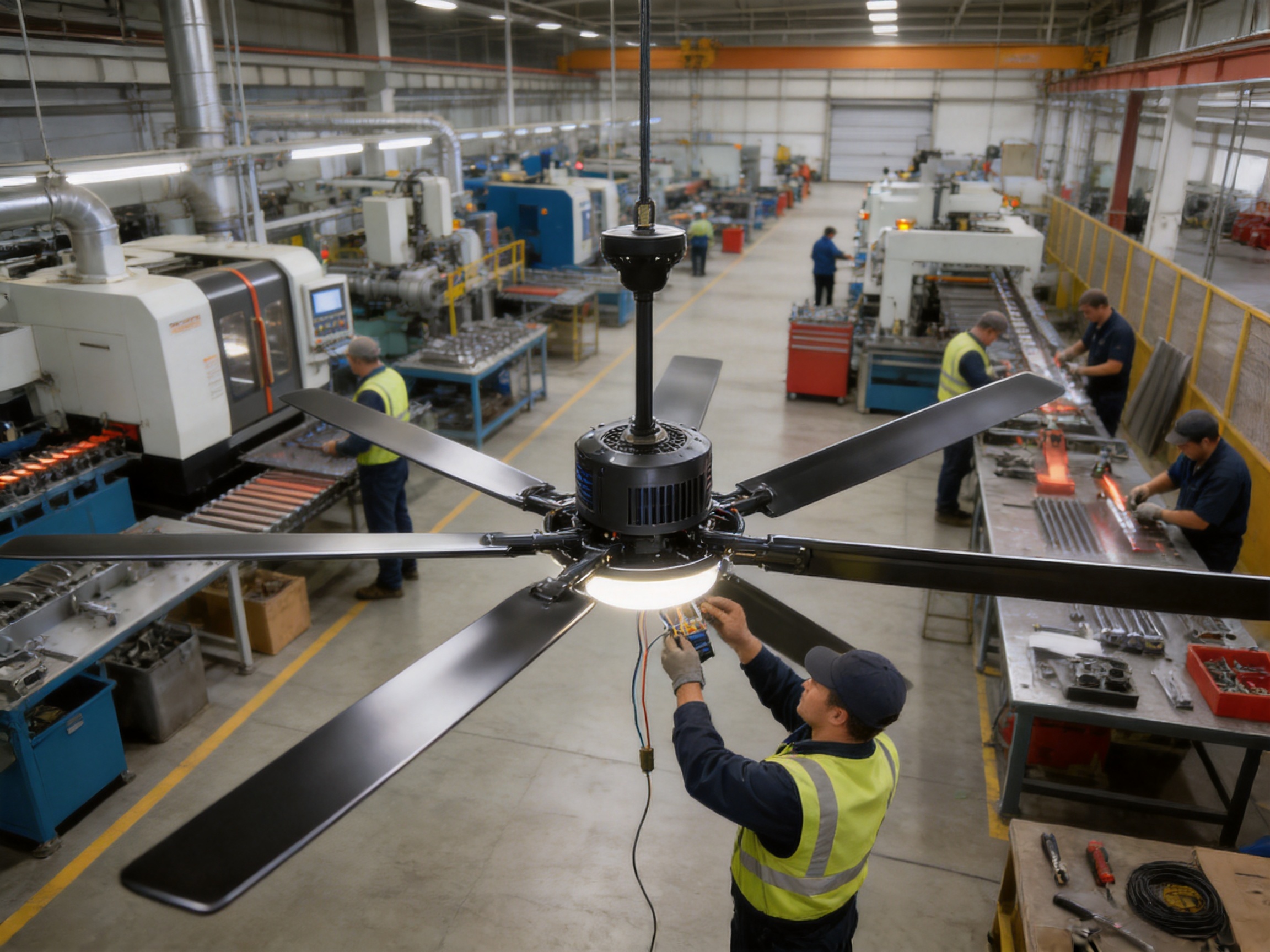
The company reports an approximately 8,000-square-meter production base. This facility includes high-precision automated machinery, a machining center, a cutting center, a welding center, and a testing center. The presence of dedicated production and testing areas supports a structured manufacturing workflow, from material preparation and component processing to assembly and final inspection.
Automated machinery can help improve repeatability in production. Consistent processing is important for fan components because small variations in blade shape, mounting points, or rotating parts can affect balance, vibration, noise, and airflow. Precision-oriented equipment can help reduce variation between units and support more stable product quality.
The machining center contributes to accurate processing of metal and mechanical components. Accurate dimensions are important for motor assemblies, mounting parts, brackets, and other components that must fit together correctly. Properly processed parts can support smoother assembly and reduce the likelihood of alignment-related problems.
The cutting center supports the preparation of metal components and blade materials. Clean, consistent cuts are important for producing repeatable shapes and maintaining balanced blade sets. Since the fan uses six blades, consistency among all six components is especially important for smooth rotation.
The welding center is relevant to the production of structural metal components. Controlled welding can support the strength and durability of brackets, supports, and other fabricated parts. Welding quality should be managed through suitable procedures, trained personnel, and inspection practices appropriate to the component being produced.
The testing center provides a dedicated location for evaluating finished products and components. Commercial fans may require checks related to electrical operation, speed, airflow, noise, vibration, lighting, remote-control response, and general assembly quality. The exact testing protocol depends on the model, destination market, and applicable standards, but a dedicated testing function is an important manufacturing strength.
The company also identifies private mold capability. This can be valuable for OEM customers that require customized housing shapes, control interfaces, packaging, colors, labels, or other product elements. Private mold development can help distributors and project buyers create a differentiated product rather than selecting an entirely standard unit.
Commercial fan purchases are often connected to projects rather than individual household purchases. A hotel chain may require consistent branding across multiple properties. A distributor may need packaging in a particular language. A contractor may need a specific mounting system, lighting specification, voltage, or control method. OEM capability allows the manufacturer to address these requirements more flexibly.
Potential customization areas may include exterior color, brand labeling, packaging format, lighting characteristics, remote-control design, documentation, and selected electrical configurations. Technical changes should be reviewed by the manufacturer before being promised, especially when they affect motor performance, structural safety, installation requirements, or regulatory compliance.
The product is supplied in a color box according to the packaging information. For retail distribution, this can provide a presentable package format. For project shipments, buyers should also confirm carton dimensions, palletization, protection against transport damage, container loading plans, and export documentation.
The manufacturer’s location in Shanghai provides access to a major industrial and logistics environment. This can support international sourcing, component coordination, export preparation, and communication with overseas customers. Buyers should still confirm lead times, order quantities, shipping terms, inspection arrangements, and destination-country certifications for each project.
A large commercial ceiling fan must be installed with greater attention to structure than a small residential unit. The ceiling or support framework must be capable of carrying the equipment and resisting operating forces. Installation should be completed by qualified personnel familiar with commercial electrical and mechanical work.
Before installation, the buyer should evaluate ceiling height, available clearance, structural capacity, electrical supply, lighting requirements, control location, and the presence of sprinklers, beams, ducts, signs, or other overhead equipment. The large diameter requires sufficient clearance from walls and obstructions to prevent interference with airflow and operation.
For outdoor or semi-outdoor applications, the environmental rating should be confirmed. The supplied application list includes outdoor use, but not every outdoor location has the same exposure. Covered patios, protected loading areas, and open garages differ significantly from locations exposed to rain, salt air, dust, or extreme temperatures. The appropriate environmental suitability should be verified before installation.
The fan should be positioned to support the intended airflow pattern. In a long commercial hall, the location may be selected to distribute air along the main occupancy zone. In a café or restaurant, the fan should be positioned to avoid uncomfortable direct airflow over tables while still reducing stagnant areas. In a warehouse, rack height and aisle arrangement should be considered.
Integrated lighting also requires planning. The light should provide useful illumination without glare or conflict with other lighting systems. If the room already has a lighting grid, the fan’s LED output and color characteristics should be evaluated for consistency. Dimming compatibility and control logic should be confirmed before the electrical installation is finalized.
Because the product data contains several configuration differences, buyers should request a final technical datasheet before approval. Important points include exact diameter, motor type, number of speed settings, app capability, timer function, noise measurement method, voltage, frequency, LED specifications, mounting hardware, and applicable certifications.
Regular maintenance helps preserve airflow, reduce noise, and extend service life. The blades should be inspected and cleaned according to the operating environment. Commercial spaces such as workshops, garages, warehouses, and restaurants may generate more dust or grease than residential rooms, making cleaning particularly important.
Mounting hardware and structural connections should be checked periodically. Vibration, temperature changes, and continuous operation can place stress on fasteners over time. Any unusual movement, rattling, wobbling, or electrical behavior should be investigated promptly by qualified personnel.
The LED lighting system should be checked for consistent operation, flickering, dimming response, and control performance. If a lighting component requires replacement, the correct part should be used to preserve electrical compatibility and safety.
The listed two-year warranty and free spare-parts service provide useful support for commercial buyers. Warranty coverage, exclusions, response procedures, and spare-parts availability should be confirmed in the sales agreement. Project purchasers may also request recommended spare parts, maintenance schedules, installation manuals, and troubleshooting guidance.
Long-term value should be assessed across the entire operating period rather than by purchase price alone. A fan that combines large-area air circulation, integrated lighting, remote operation, and reversible airflow may reduce the need for separate equipment. Lower energy consumption, simpler ceiling planning, easier operation, and accessible spare-parts support can all contribute to a lower total cost of ownership.
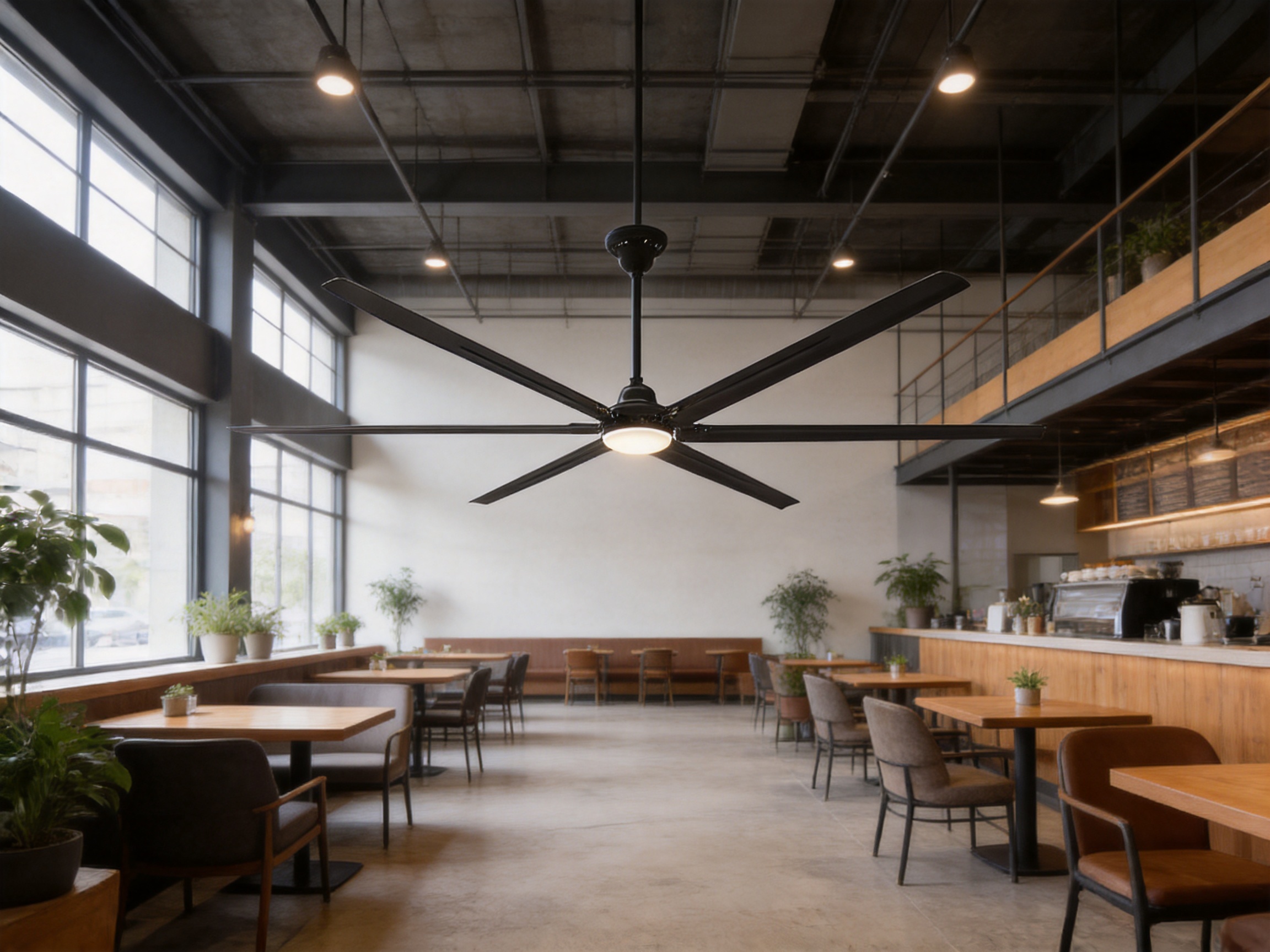
Cafés and restaurants often require comfortable airflow without excessive noise or visual obstruction. The large diameter can help circulate air across seating areas, while the integrated LED light supports general illumination. Reversible operation can be useful in venues that remain open throughout different seasons.
Physical activity increases the need for air movement. A large commercial fan can distribute air across exercise zones and reduce stagnant conditions. Remote control allows staff to adjust airflow as attendance changes. The fan should be positioned carefully to avoid producing an uncomfortable concentrated draft over exercise equipment.
Hotel lobbies, lounges, covered terraces, and event areas can benefit from a fan that combines quiet operation with broad coverage. The integrated lighting can support interior design objectives, while the large blade span can help maintain comfort in tall entrance halls and common areas.
Garages and workshops often have high ceilings, large doors, and variable occupancy. The fan can assist with general air circulation and provide integrated lighting for work areas. Before installation, dust conditions, structural support, and electrical safety should be carefully evaluated.
Although designed for commercial applications, the fan can also serve oversized residential rooms, lofts, open-plan living areas, and rooms with vaulted ceilings. Its scale should be considered in relation to room dimensions and interior style. The remote control and quiet design can make it suitable for daily household use when professionally installed.
Covered patios, outdoor dining spaces, and protected commercial areas may benefit from high-volume airflow. Environmental suitability must be confirmed for the specific location because exposure to moisture, wind, dust, and corrosive conditions can affect electrical and mechanical components.
The fan is not a replacement for every air-conditioning or heating system, but it can complement HVAC equipment by improving air distribution. In warm weather, moving air across occupants may increase perceived comfort and allow an air-conditioning system to operate at a less aggressive setting. In colder conditions, reverse operation can help mix warm ceiling air with cooler air near the occupied zone.
The 200-watt power rating provides a useful basis for comparing the fan with other air-moving equipment. Actual electrical consumption depends on the selected speed, operating duration, motor configuration, and whether the LED light is operating. Energy efficiency should therefore be evaluated using the complete system configuration rather than one isolated specification.
The Class A energy-efficiency rating listed in the product data indicates an efficiency-oriented product position. Buyers should request the applicable rating documentation for their destination market because energy-label systems and testing standards vary by region.
Scheduling can further support energy-conscious use when available. If the final product configuration includes app control or a timer, the fan can be programmed around occupancy and business hours. If those functions are not included, staff can still use the remote control to turn the product off when a space is unoccupied.
The supplied information contains several differences between the marketing description and the detailed specification table. These differences do not necessarily indicate a problem, because manufacturers may offer multiple configurations or use different data fields for related models. However, responsible purchasing requires confirmation of the exact version.
The first point is diameter. The product title and description identify a 9-foot fan, the size field states 9FT/2.7M, and another field lists 106 inches. Buyers should confirm the final diameter and the required ceiling clearance.
The second point is motor type. The content promotes a DC motor, while the table identifies an AC motor. Since motor type affects efficiency, control method, noise, and price, the exact motor should be written into the quotation or purchase contract.
The third point is control capability. The description refers to remote, smartphone, and voice control, while the table says app-controlled operation is not available and identifies remote control as the control type. Customers requiring smart-home integration should request a clear statement of whether the feature is standard, optional, or unavailable.
The fourth point is airflow adjustment. The description refers to six-speed operation, while the technical table lists four wind speeds. The number of available settings should be confirmed along with the remote-control functions.
The fifth point is noise. The data includes both up to 29 dB and 30–34 dB. Buyers should ask whether these numbers correspond to different speeds, different motor versions, or different test conditions.
Confirming these points is particularly important for architects, contractors, distributors, and commercial procurement departments. A final approved datasheet can prevent misunderstandings during installation, tender evaluation, and after-sales service.
For commercial customers, supplier reliability extends beyond the initial shipment. The manufacturer’s product focus, production facilities, testing resources, OEM capability, warranty, and spare-parts support all contribute to the purchasing decision.
Shanghai Aipu Fans Co., Ltd. presents itself as a specialist in industrial-grade ceiling fans and ventilation solutions. Its production base and dedicated manufacturing centers indicate a capability oriented toward engineered products rather than purely decorative household appliances. This is relevant for buyers who need equipment for demanding operating schedules or repeat projects.
The company’s stated experience since 2006 provides a foundation for product development and customer service. Its products are supplied to domestic and international customers, and the company emphasizes quality, customer satisfaction, energy efficiency, and customized solutions.
For international buyers, effective communication is also important. Product documentation, English-language operating materials, spare-parts information, packaging, and technical confirmation can all affect the success of a project. Buyers should establish a clear communication process covering design approval, production updates, inspection, shipment, installation, and warranty support.
The company’s OEM service may be especially valuable for importers and distributors seeking a private-label commercial ceiling fan. A private mold option can support a distinct product appearance, while coordinated packaging and labeling can help maintain brand consistency across a product range.
It is a large commercial ceiling fan with six blades, integrated LED lighting, remote control, reversible airflow, and a stated diameter of approximately 9 feet. It is intended for commercial, industrial-style, hospitality, garage, outdoor, and large residential applications.
The fan is suitable for large living rooms, high-ceiling lofts, cafés, gyms, hotels, garages, workshops, commercial halls, showrooms, and certain covered outdoor areas. The final application should be evaluated according to ceiling structure, clearance, electrical requirements, and environmental exposure.
Yes. The product information identifies integrated LED lighting as an equipped feature. The application information also refers to dimmable lighting. Buyers should confirm the exact lumen output, color temperature, voltage, and dimming method for the selected configuration.
The fan has six blades. The blades are described as streamlined and aerodynamic, and the application information identifies power-coated steel fan blades.
The listed power rating is 200 watts, or approximately 0.27 horsepower. Actual energy consumption may vary according to speed, motor configuration, lighting use, and operating conditions.
The supplied information contains both DC and AC motor descriptions. The product content promotes a high-efficiency DC motor, while the detailed table lists an AC motor. The exact motor type must be confirmed before ordering because different configurations may be available.
Remote control is listed as the standard control method. The product description also mentions smartphone and voice control, but the specification table states that app control is not available. Buyers should verify whether smart control is included in the exact model being purchased.
Yes. Reversible airflow is listed as a feature. Downward airflow is intended for summer cooling comfort, while upward airflow can help redistribute warm air near the ceiling during colder conditions.
The supplied specifications list noise figures ranging from approximately 29 dB to 30–34 dB. Actual sound depends on speed, installation, ceiling structure, blade balance, and the selected motor configuration.
The listed air volume is approximately 2,950 cubic meters per minute. Buyers should confirm the testing method and operating condition associated with this figure when comparing products.
The product is described as suitable for long-term continuous operation in commercial scenarios. Proper installation, cleaning, inspection, and maintenance remain necessary for safe and reliable use.
The listed warranty period is two years. Free spare-parts service is also identified in the product information. Buyers should confirm warranty terms, exclusions, claim procedures, and replacement-part availability in the sales agreement.
The manufacturer identifies OEM services and private mold capability. Possible customization areas may include branding, packaging, colors, lighting, controls, and selected technical features. Each request should be reviewed for feasibility, minimum order quantity, certification, and production lead time.
Buyers should confirm the exact diameter, motor type, number of speeds, smart-control capability, timer function, noise rating, LED specifications, voltage, frequency, mounting method, environmental suitability, certifications, warranty terms, packaging, and delivery schedule.
The 9-foot Smart Remote Control 6 Blades LED Ceiling Fan is designed as a broad-coverage air circulation and lighting solution for large commercial and residential environments. Its main strengths include a large wingspan, six-blade construction, integrated LED lighting, reversible airflow, remote operation, commercial-oriented metal construction, and a stated air volume of approximately 2,950 cubic meters per minute.
Compared with conventional small ceiling fans, the product is intended to cover a larger area, reduce stagnant zones, simplify ceiling layouts, and provide more consistent air movement. Its reversible function extends usefulness across the year, while the integrated light adds practical value in spaces that require both illumination and ventilation.
The manufacturer strengthens the product offering through an established production history, an approximately 8,000-square-meter manufacturing base, automated machinery, machining, cutting, welding, and testing centers, as well as OEM and private-mold capabilities. These resources can support repeatable production, customization, quality control, and international commercial projects.
Because the supplied information contains multiple configuration descriptions, professional buyers should verify the final technical version before purchase. In particular, motor type, diameter, speed settings, app capability, and noise data should be confirmed in writing. Once the configuration is matched to the project requirements, this large commercial ceiling fan can provide an efficient and practical combination of air movement, lighting, convenience, and long-term application value.
1. Product specification sheet for the 9-Foot Smart Remote Control 6 Blades LED Ceiling Fan, including dimensions, motor information, power, airflow, lighting, control, warranty, and application data.
2. Product application description for the integrated LED commercial ceiling fan, including large-area air circulation, reversible airflow, commercial construction, and continuous-operation information.
3. Shanghai Aipu Fans Co., Ltd. company profile, including company history, manufacturing facilities, production capabilities, OEM services, and industrial ventilation specialization.
4. Manufacturer-provided product and company information concerning metal construction, six-blade design, remote control, LED lighting, energy efficiency, spare-parts support, and commercial applications.
5. General commercial ceiling fan selection considerations covering installation clearance, structural support, airflow distribution, maintenance, noise, lighting integration, and project-specific technical verification.
1. Massive 9-Foot WingspanWith a colossal 108-inch (2.8m) diameter and 6 high-efficiency streamlined blades, this fan moves massive volumes of air even at low speeds. It is the perfect solution for el...
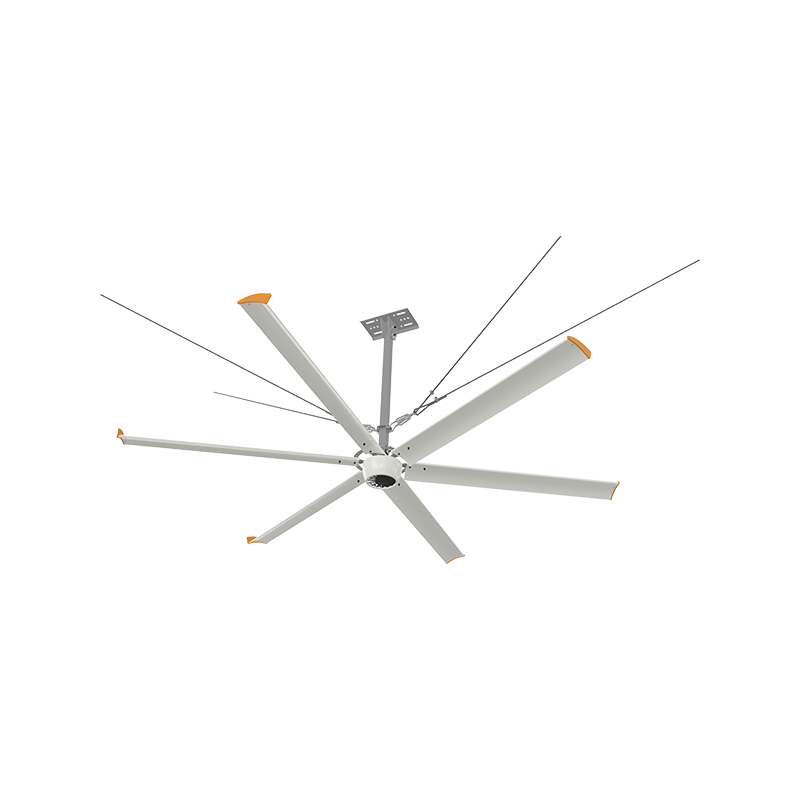
The 15-foot Even Airflow Industrial BLDC Ceiling Fan utilizes a high-efficiency BLDC motor and carefully designed blades. This ceiling fan operates with extremely low noise levels, making it suitable ...
1. Core Technology: High Volume, Low SpeedNatural Breezes: Unlike the “harsh” wind from small fans, HVLS fans use massive blades rotating at low speeds to create a large-scale, three-dimensional breez...
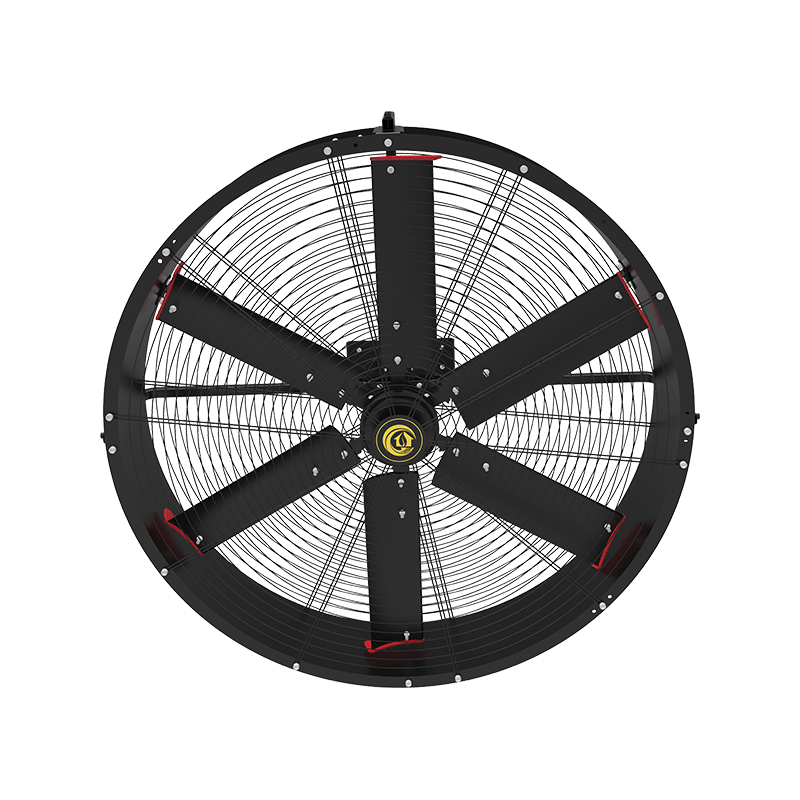
1. Extreme Airflow & Wide CoverageEquipped with massive 79-inch (2.0m) diameter aerospace-grade aluminum alloy blades. These precision-balanced blades generate a powerful, stable laminar airflow t...
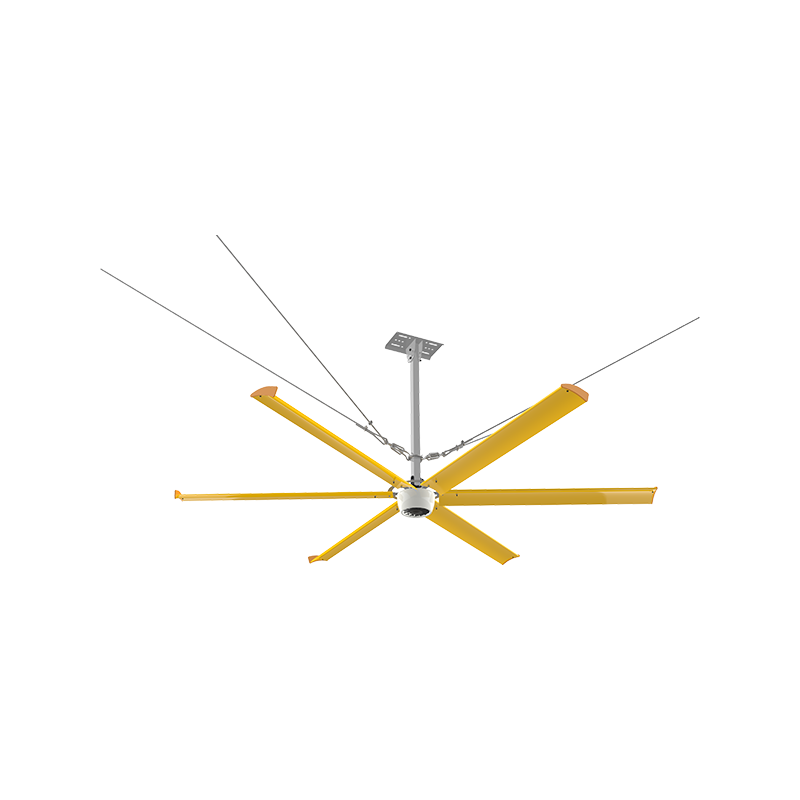
The 9-foot low-noise 6-blade BLDC ceiling fan is an energy-efficient and quiet fan with a brushless DC (BLDC) motor. The advantages of the brushless motor include smoother operation, lower noise, les...
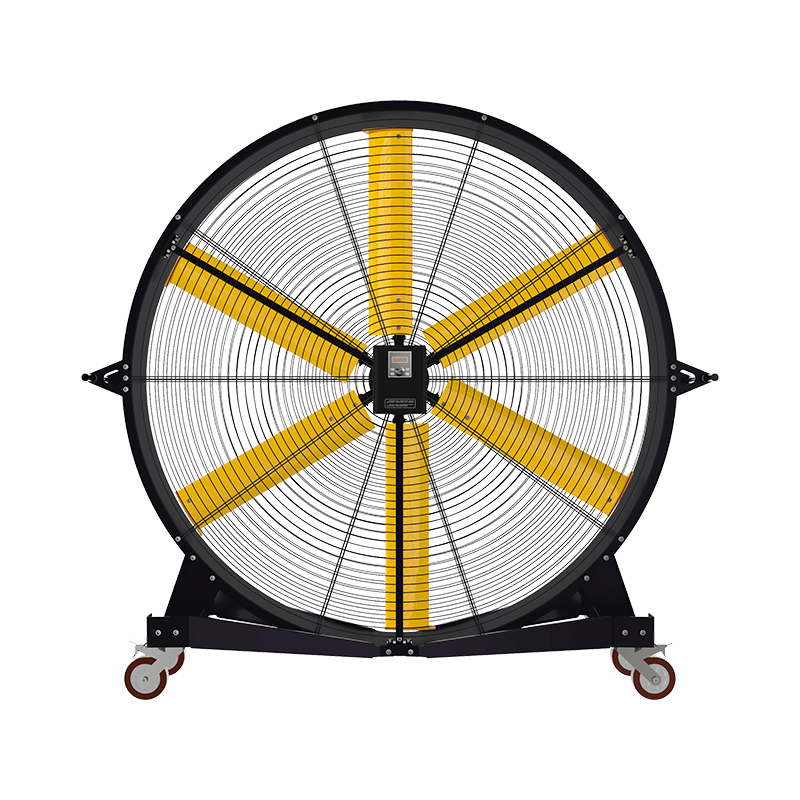
The 79-inch freestanding energy-efficient HVLS industrial fan features a robust construction designed to withstand the challenges of daily industrial use. Its impact-resistant frame ensures it can wit...
Gymnasium Ceiling Fans: Why Standard Fan Logic Stops at the Door A hall with twelve metres of air above the court is not simply a bigger room. It is a different airflow problem, and it is solved with...
READ MORESpecifying industrial air movement The HVLS Ceiling Fan Isn’t a Big Ceiling Fan. Sizing, motor selection, and mounting height have to work together before a large industrial space can feel genuinely...
READ MORECommercial HVLS Fans: The Quiet Engineering Behind Large-Space Airflow A practical guide to selecting high-volume, low-speed ceiling fans for warehouses, factories, and commercial halls — with the ef...
READ MOREA 6,800 m² factory floor used to be ventilated by roughly 300 small wall and pedestal fans. Six large ceiling fans now cover the same area, and in the manufacturer's own comparison that change cuts m...
READ MORE Custom Large Industrial Fans Manufacturers