

 English
 Español
 عربى

The 15-foot Even Airflow Industrial BLDC Ceiling Fan utilizes a high-efficiency BLDC motor and carefully designed blades. This ceiling fan operates with extremely low noise levels, making it suitable ...
Content
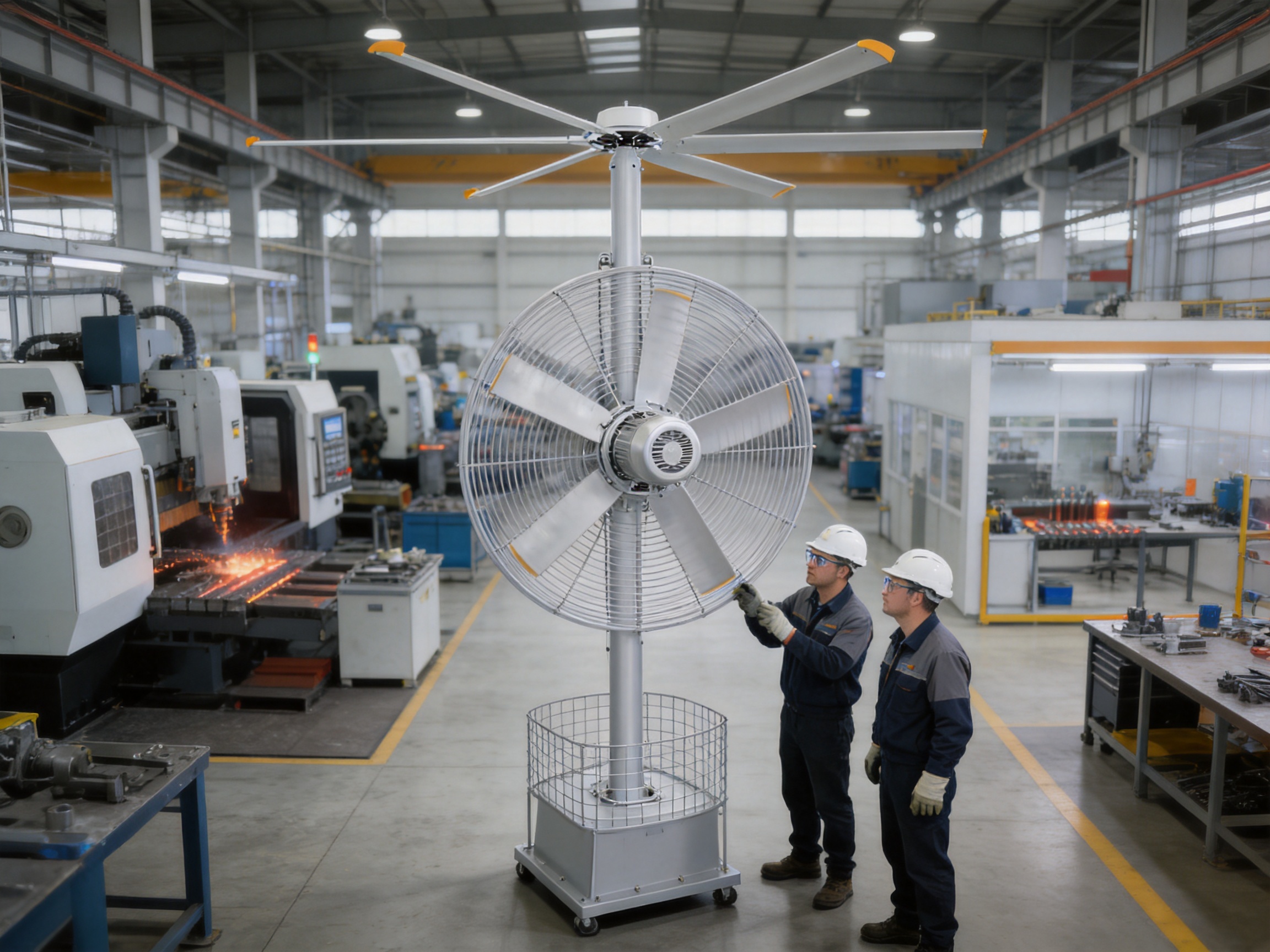
Large industrial and commercial spaces often require more than ordinary air movement. Warehouses, manufacturing plants, agricultural barns, exhibition halls, sports arenas, retail facilities, and repair workshops can contain thousands of cubic meters of indoor air. In these environments, heat, humidity, dust, odors, and stagnant air can accumulate quickly, affecting worker comfort, product quality, equipment performance, and operating efficiency. A professional industrial circulation fan must therefore deliver strong airflow, broad coverage, reliable operation, flexible speed control, and convenient installation.
The 12-foot 360-degree rotating pole-base industrial vertical fan is designed to meet these demanding requirements. As part of the Airpole Pedestal Fan range, this product combines a large-diameter blade assembly, a high-mounted vertical structure, adjustable operating speed, and a full rotation function. Together, these features allow the fan to move a significant volume of air across large areas while distributing airflow more evenly than a conventional fixed-position pedestal fan.
The featured ALF-36 configuration has a diameter of 3,600 millimeters, equivalent to approximately 12 feet. It is rated at 350 watts, uses five or six blades depending on the selected configuration, and has a maximum full-loading air volume of approximately 3,600 cubic meters per minute. Its speed can be adjusted from zero to approximately 92 revolutions per minute, while the 3,800-millimeter vertical structure places the fan at an elevated position for improved air distribution. The fan is also designed to rotate through 360 degrees, enabling air movement across a wide surrounding area.
This article explains the product’s operating concept, construction, performance, applications, competitive advantages, manufacturing strengths, selection considerations, installation requirements, maintenance practices, and frequently asked questions.
Air circulation is different from simple cooling. A conventional fan may create a strong breeze in one direction, but it may not distribute air throughout an entire facility. In a large building, hot air can remain trapped near the roof, while cooler or conditioned air stays concentrated in one zone. Areas behind equipment, between storage racks, and along production lines may receive very little movement.
Industrial circulation fans are intended to address this uneven distribution. They move air over a larger distance and help blend air layers throughout a working environment. This can reduce stagnant zones and support more consistent temperatures. In locations where air conditioning or ventilation systems are already installed, an industrial circulation fan can help distribute conditioned air more effectively, potentially improving the usefulness of the existing system.
The challenge is to achieve broad coverage without excessive energy consumption, disruptive noise, or complex installation. A high-capacity fan must also remain stable during operation, especially when its blades have a large diameter. The pole-base design provides a practical solution because the fan is supported on a vertical structure rather than suspended from the building roof. This avoids the need for ceiling reinforcement and allows the unit to be positioned where airflow is most useful.
The rotating base adds another important function. Instead of directing all airflow toward one fixed location, the fan can sweep across the surrounding area. This movement helps prevent a narrow airflow corridor and supports a more balanced air distribution pattern. For large spaces with changing layouts or multiple work areas, this flexibility can be especially valuable.
The 12-foot vertical industrial fan consists of several main elements: a large-diameter blade assembly, an industrial motor, a protective frame or guard system, a vertical pole structure, a supporting base, speed-control components, and the rotating mechanism. Each part contributes to the fan’s overall performance and safety.
The large blade diameter allows the fan to move a substantial quantity of air at a relatively low rotational speed. Rather than relying only on a high-speed concentrated jet, the fan creates a broad airflow pattern. This approach is suitable for facilities where the objective is to circulate air over a wide area and maintain comfortable working conditions across multiple zones.
The vertical structure raises the fan above many obstacles commonly found in industrial buildings. Storage racks, workbenches, machinery, vehicles, and production equipment can interrupt airflow when fans are installed too close to the floor. By placing the blade assembly approximately 3,800 millimeters above the supporting surface, the fan can send air across and over obstructions more effectively.
The 360-degree rotation system enables the fan head or pole-base assembly to sweep around the installation point. This broad movement can distribute air to different sides of a warehouse aisle, workshop, production line, or public venue. Operators can adjust the fan’s speed to match the application, using lower airflow during mild conditions and higher airflow when heat or humidity increases.
The operating speed range is particularly useful for facilities with variable occupancy or changing production schedules. A low setting can provide gentle movement during quiet periods, while a higher setting can provide stronger circulation when machinery, people, lighting, or outdoor weather conditions increase the indoor heat load.
The ALF-36 model is the principal 12-foot configuration in the supplied product specifications. Its 3,600-millimeter diameter corresponds to approximately 12 feet, making it a suitable choice for large-area circulation where a compact household or office fan would be insufficient.
| Specification | ALF-36 Value | Operational Significance |
|---|---|---|
| Product type | Industrial vertical pole-base fan | Suitable for large commercial and industrial spaces |
| Diameter | 3,600 millimeters | Provides broad airflow coverage |
| Approximate size | 12 feet | Designed for high-volume air circulation |
| Voltage | 220 volts | Compatible with applicable industrial electrical systems |
| Frequency | 50/60 hertz | Adaptable to common power-frequency requirements |
| Power | 0.35 kilowatts | Supports efficient continuous operation |
| Blade quantity | Five or six pieces | Configuration can be selected according to airflow requirements |
| Adjustable speed | Zero to approximately 92 revolutions per minute | Allows airflow to be matched to site conditions |
| Full-loading air volume | Approximately 3,600 cubic meters per minute | Provides high-capacity circulation for large spaces |
| Height | 3,800 millimeters | Elevates airflow above many floor-level obstructions |
| Weight | Approximately 55 kilograms for the featured configuration | Provides a substantial structure for industrial use |
| Rotation | 360 degrees | Supports wide-area air distribution |
| Blade colors | Silver, yellow, red, blue, black, and other options | Allows visual coordination with the facility |
The stated performance values should be evaluated together rather than separately. The large diameter contributes to high air volume, while the relatively low operating speed helps create a broad and comfortable airflow pattern. The elevated design improves the reach of the airflow, and the rotating function extends coverage around the fan’s installation position.
Actual performance in a facility will depend on building height, obstructions, indoor temperature, humidity, layout, air inlets, exhaust openings, and the number and position of fans. For this reason, a site assessment is recommended when planning ventilation for a large facility.
Ordinary pedestal fans are often intended for localized cooling. They may be suitable for a workstation, reception desk, small shop, or limited residential area, but their influence is generally restricted. A 12-foot industrial fan is engineered for a different purpose. Its large blade diameter and elevated structure enable it to move air across a much larger area.
This difference is important in buildings where several workstations or production zones need air movement at the same time. Instead of installing many small fans at floor level, a facility may use strategically positioned industrial circulation fans to create broader airflow patterns. This can simplify the layout and reduce the number of individual devices competing for floor space.
A fixed fan continuously directs air toward the same location. While this can be useful for a particular workstation, it may leave other areas without adequate circulation. The 360-degree rotation function allows the vertical fan to sweep airflow around its base, improving distribution across multiple directions.
Rotating airflow can also reduce the discomfort caused by a constant high-speed breeze aimed at one person or one workstation. By changing direction, the fan can provide more balanced circulation rather than concentrating all output in a single narrow zone.
Floor-level fans are vulnerable to obstruction. Pallets, boxes, vehicles, tools, and machinery can block their airflow. The 3,800-millimeter height of the Airpole design allows air to pass above many common obstacles. This elevated arrangement can support more consistent air movement in warehouses, workshops, and production areas.
Air naturally stratifies in large indoor buildings. Warm air often rises and accumulates at higher levels, particularly beneath roofs or in spaces with heat-producing machinery. High-mounted airflow can help mix different air layers, although it should be integrated with the building’s overall ventilation strategy rather than treated as a replacement for required exhaust systems.
Not every operating condition requires maximum airflow. A variable speed range from zero to approximately 92 revolutions per minute allows the operator to adjust the fan according to occupancy, weather, production activity, and comfort requirements. Adjustable operation can help avoid unnecessary energy use and may extend the service life of components by reducing continuous operation at full output.
Many large air circulation fans are suspended from a building’s ceiling. Ceiling-mounted products can be effective, but installation may require structural review, lifting equipment, special supports, and permanent changes to the building. A pole-base industrial fan offers a ground-supported alternative.
This design is useful for rented facilities, buildings with limited roof structure, locations where ceiling equipment would interfere with cranes or lighting, and sites that require repositioning. The fan can be placed near a production zone, warehouse aisle, loading area, or event space without suspending equipment from the roof.
The stated full-loading air volume of approximately 3,600 cubic meters per minute demonstrates the product’s ability to move a high quantity of air. Air volume is a key factor in large-space circulation because it indicates how much air the fan can influence over a given period. However, air volume should always be considered alongside the facility’s dimensions and layout.
A warehouse with high ceilings may require airflow to be distributed vertically as well as horizontally. A workshop with densely arranged equipment may require multiple fans or a carefully planned position to prevent dead zones. An exhibition hall may prioritize gentle, uniform circulation, while an agricultural barn may require a stronger exchange of air to manage heat and humidity.
The rated power of the ALF-36 is approximately 0.35 kilowatts. This provides a useful combination of high air-moving capacity and relatively modest electrical demand. Compared with multiple small high-speed fans, a large-diameter industrial fan may provide broader coverage with fewer units. The actual energy benefit will depend on the number of fans installed, the operating schedule, speed settings, and the building’s ventilation design.
Variable-speed operation is an important part of energy management. During cooler periods, the fan can operate at a lower setting or remain off. During peak heat, the speed can be increased. A control strategy based on temperature, humidity, occupancy, or production schedules can help ensure that the fan operates only as much as necessary.
Air circulation can also support the operation of air-conditioning systems. When indoor air is unevenly distributed, conditioned air may remain concentrated near supply outlets. Circulation fans can help blend the air and improve the perceived comfort of workers or visitors. In some facilities, this may allow the air-conditioning system to operate at a less aggressive setting, although any such adjustment should be verified through professional energy monitoring.
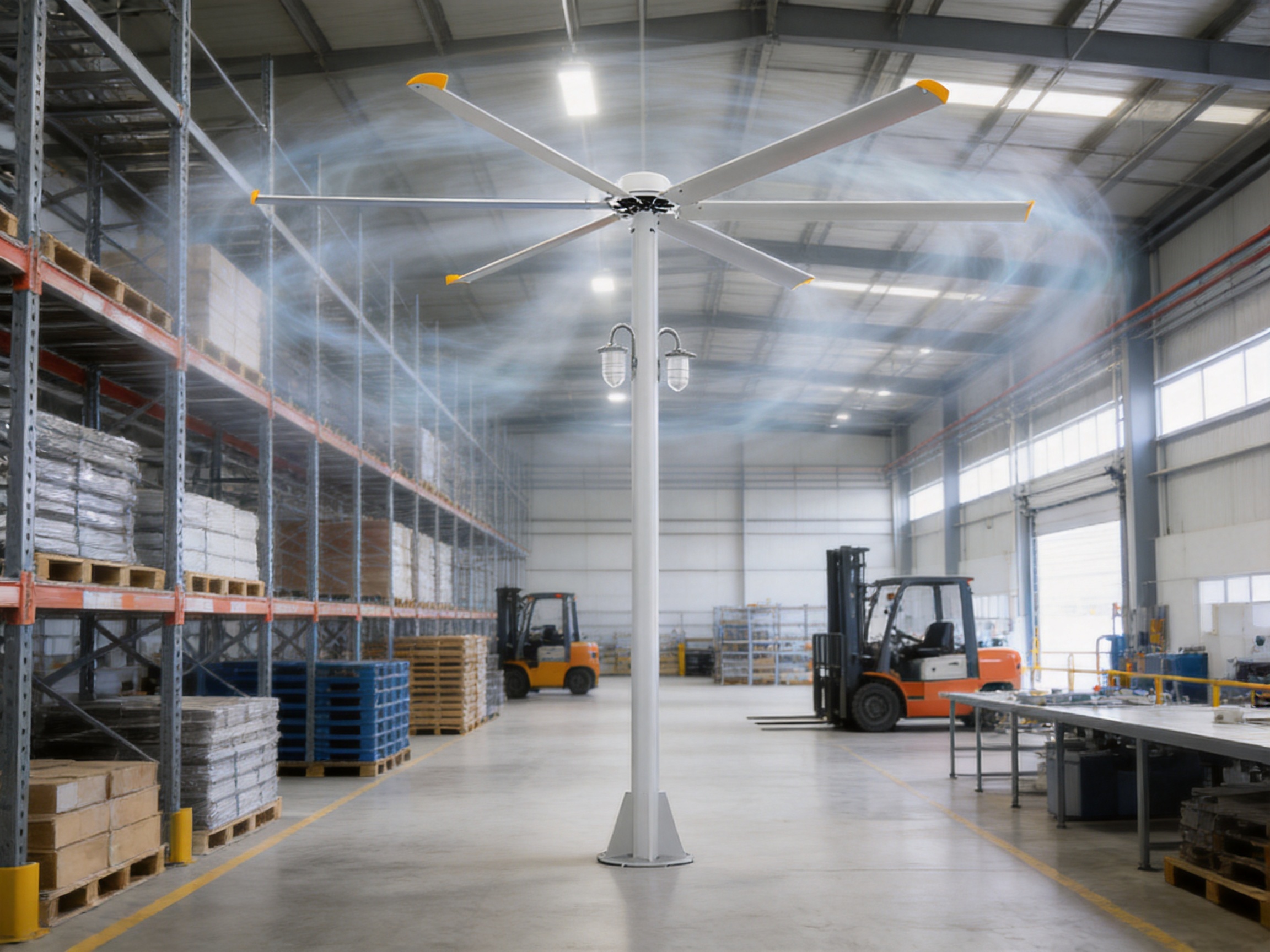
Warehouses often have high ceilings, long aisles, large storage racks, and frequent door openings. These conditions can create temperature differences between zones. The 12-foot industrial fan can assist in distributing air through open areas and along storage zones. Its elevated position helps airflow pass above pallets and equipment, while the rotating function supports coverage across multiple directions.
Improved circulation can contribute to a more comfortable environment for warehouse workers. It may also help reduce stagnant areas where odors, humidity, or dust accumulate. However, the fan should not be used as a substitute for required dust extraction, fire safety systems, or controlled storage conditions for sensitive goods.
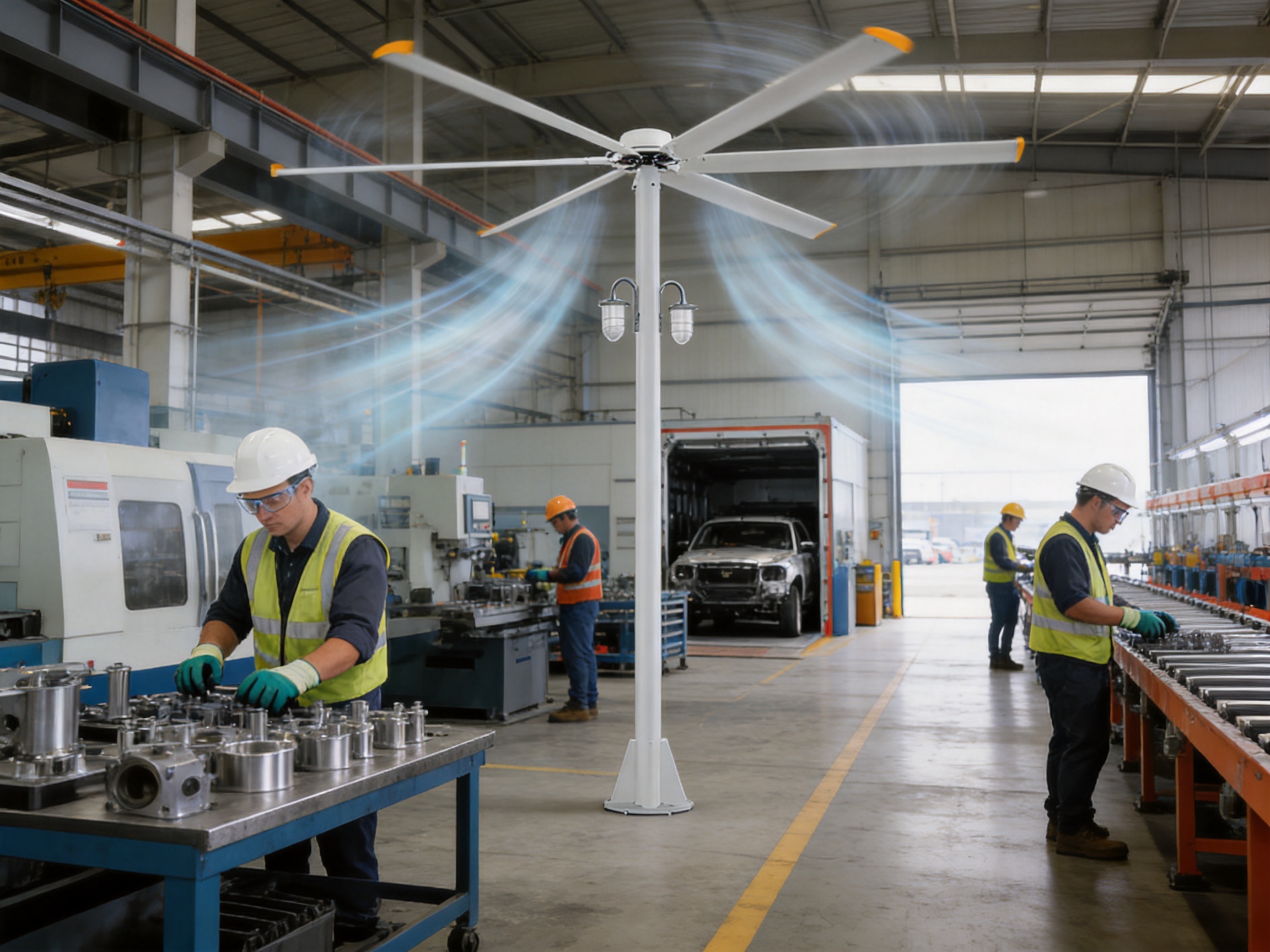
Manufacturing equipment can generate heat continuously. Motors, furnaces, welding stations, machining equipment, lighting systems, and production lines may all contribute to rising indoor temperatures. A large industrial fan can improve general air movement around these areas and help reduce the sensation of stagnant heat.
The rotating base allows the fan to serve several work areas instead of directing airflow toward one fixed line. In plants with changing production layouts, the fan can also be repositioned more easily than a permanently suspended unit. Operators should evaluate whether any process produces hazardous fumes or combustible dust, because specialized exhaust and certified equipment may be required in such environments.
Vehicle repair facilities typically contain open bays, high ceilings, tools, lifts, and vehicles that obstruct floor-level airflow. The elevated 3,800-millimeter structure allows air to move across the shop more effectively. The fan can help improve general comfort during hot working conditions and can support air movement when doors are open.
Because vehicle workshops may contain fuel vapors, solvents, paint materials, and exhaust gases, the fan must be integrated with appropriate safety procedures. General circulation should not be confused with mechanical exhaust designed to remove hazardous contaminants.
Agricultural buildings require careful management of temperature, humidity, and air quality. The large diameter of the fan can help circulate air through barns and other large agricultural structures. Broad airflow may support more consistent environmental conditions for livestock, crops, or stored agricultural materials.
Farm operators should consider animal location, bedding, dust levels, moisture, cleaning routines, and seasonal temperature requirements before selecting fan positions. Protective guards and regular cleaning are especially important in dusty or humid agricultural settings.
Sports venues can become uncomfortable when many people are active in a large enclosed area. A rotating industrial fan can provide broad circulation without directing a powerful stream continuously toward one section of the court or seating area. The fan can help maintain air movement during training sessions, events, and maintenance periods.
Noise, visual appearance, access routes, and spectator safety should be considered when installing equipment in public venues. The available blade color options can help the fan coordinate with the facility’s visual design.
Large retail stores and exhibition halls often need a comfortable environment without creating strong drafts that disturb customers, displays, or temporary structures. Adjustable speed control allows the operator to select a suitable airflow level, while rotation distributes air around a wider area.
In exhibition environments, airflow must be selected carefully where sensitive displays, hanging materials, or lightweight promotional structures are present. A low or moderate setting may be preferable in these applications.
Food processing facilities may require temperature and humidity management in specific production areas. A circulation fan can assist general air movement, but it must be selected and installed according to hygiene, washdown, contamination-control, and process requirements. The fan should not be used to move contaminants from one controlled area to another.
The performance of an industrial fan depends not only on its design but also on the precision and consistency of its manufacturing process. Shanghai Aipu Fans Co., Ltd. has specialized in industrial-grade ceiling fans and ventilation products since 2006. Its manufacturing experience supports the development of large air circulation equipment for industrial customers and international markets.
The company operates an approximately 8,000-square-meter production base. The facility includes high-precision automated machinery, a machining center, a cutting center, a welding center, and a testing center. These production resources allow important manufacturing steps to be managed in a controlled environment rather than relying solely on manual assembly.
Automated equipment can improve repeatability in manufacturing. For a large industrial fan, consistent component dimensions are important because even small variations may affect balance, vibration, assembly accuracy, or long-term operating stability. Automated machinery helps maintain repeatable processing conditions across multiple production batches.
Precision production also supports the interchangeability of parts and simplifies quality control. When components are manufactured within defined tolerances, assembly teams can identify deviations more easily and reduce the likelihood of fitment problems.
The machining center supports the production of accurately dimensioned metal components and mechanical interfaces. Fan structures, motor-related parts, brackets, and rotating assemblies require reliable alignment. Precision machining can contribute to smoother operation and improved structural integrity.
Accurate machining is particularly relevant to rotating products. The motor, shaft, hub, and blade assembly must work together with suitable alignment. Poor alignment can create vibration, noise, uneven loading, and premature wear. Controlled machining provides a foundation for more dependable assembly.
The cutting center supports the preparation of structural and sheet-metal components. Clean, repeatable cuts help ensure that parts fit correctly during welding and assembly. This can improve production efficiency and reduce the need for excessive rework.
For large fans, structural components must be sufficiently strong while avoiding unnecessary weight. Controlled cutting allows the manufacturer to produce parts that meet the intended design geometry and support the required balance between durability and transportability.
Welding quality affects the strength and stability of the pole, base, supports, guards, and other structural components. A dedicated welding center provides a more consistent environment for joining metal parts. Correct welding procedures can improve joint strength and help maintain the geometry of the finished assembly.
In a tall pole-base fan, structural rigidity is important because the elevated blade assembly creates dynamic loads during operation. A properly manufactured structure helps maintain stability while the fan rotates and operates at different speeds.
Testing is an essential stage in industrial fan production. A testing center allows products and assemblies to be examined before shipment. Testing may include functional operation, motor performance, speed response, vibration observation, rotation function, electrical checks, and general assembly inspection.
Although individual test procedures may vary according to product configuration and customer requirements, a controlled testing process helps identify defects before the fan reaches the installation site. It also supports more consistent product quality for domestic and international customers.
Industrial customers often require equipment that can operate for long periods under demanding conditions. Reliability involves more than motor performance. It also includes structural stability, blade balance, electrical safety, control response, protective components, and the quality of assembly.
The product is available with different blade quantities and several blade color choices. Five- and six-blade configurations can be selected according to the desired airflow characteristics and product specification. Color choices such as silver, yellow, red, blue, and black allow the fan to match facility branding, safety schemes, or interior design requirements.
Customization is also valuable when the fan must be integrated into a specific industrial environment. Customers may need different electrical standards, control arrangements, packaging methods, structural finishes, or product markings. The manufacturer’s OEM capabilities support the development of product solutions for industrial customers worldwide.
A customized product should always be evaluated technically before production. Important factors include the available power supply, installation location, operating temperature, humidity, dust exposure, cleaning method, required airflow, control system, and local safety regulations.
Correct installation is necessary to obtain the intended performance from a large industrial fan. The supporting surface should be level, stable, and strong enough for the product’s weight and dynamic operating forces. The base should be secured according to the manufacturer’s installation instructions and applicable local requirements.
Clearance around the blade assembly is essential. The fan should not be positioned near walls, beams, signs, electrical cables, lifting equipment, doors, or other objects that could contact the blades or restrict airflow. The rotating movement should be checked across the entire 360-degree path before the fan is placed into service.
The electrical installation should be completed by qualified personnel. The power supply must match the required voltage and frequency, and appropriate protection should be provided. Wiring should be routed away from moving components and protected from impact, moisture, heat, and abrasion.
Operators should also consider pedestrian traffic and vehicle movement. In warehouses and workshops, the fan should not create an obstruction for forklifts, maintenance vehicles, emergency exits, or material handling routes. Where the fan is installed in a public area, additional barriers or access controls may be appropriate.
Airflow planning should include the positions of doors, exhaust fans, ventilation openings, air-conditioning outlets, and heat-producing equipment. A fan may perform poorly if its airflow is immediately blocked or if it conflicts with another ventilation device. Strategic placement can help the fan support the building’s overall air movement rather than simply producing turbulence in one location.
Before each operating period, personnel should visually inspect the fan, pole, base, guard, blades, fasteners, cables, and control components. Any unusual looseness, cracking, corrosion, noise, vibration, or electrical odor should be investigated before continued operation.
The blades and guard should be kept reasonably clean. Dust accumulation can affect balance and airflow. In agricultural, woodworking, manufacturing, and recycling environments, cleaning may need to be performed more frequently. The appropriate cleaning method depends on the construction and the facility’s hygiene requirements.
Fasteners should be checked according to a planned maintenance schedule. Vibration can gradually loosen mechanical connections, especially in equipment with large rotating assemblies. Maintenance personnel should follow the manufacturer’s instructions and use suitable tools rather than tightening components without regard to specified requirements.
The motor and electrical components should be kept within their intended operating conditions. Moisture, excessive dust, high ambient temperature, and chemical exposure can shorten component life. Where the fan is used in a harsh environment, a more frequent inspection schedule may be necessary.
The rotating mechanism should be checked for smooth movement and abnormal resistance. The fan should rotate through its intended range without striking surrounding objects. If rotation becomes irregular or stops unexpectedly, the unit should be isolated and inspected by qualified personnel.
When maintenance is required, the power supply must be disconnected and secured against accidental reconnection. No person should approach the blades while the fan is energized or coasting to a stop. A written maintenance procedure can improve safety in facilities where multiple operators use the equipment.
The product offers several advantages compared with smaller fans, fixed floor fans, and some permanently mounted alternatives.
First, its large 12-foot diameter is designed for high-volume air circulation. This makes it appropriate for large spaces where localized cooling is not enough. Second, its elevated structure helps airflow reach over equipment and storage. Third, its 360-degree rotation improves the distribution of air around the installation point. Fourth, variable speed allows operation to be matched to changing site conditions.
The pole-base structure is another important advantage. It provides flexibility in buildings where ceiling installation is difficult or undesirable. It can also be repositioned when the layout changes, subject to proper handling and reinstallation procedures.
The product’s power rating of approximately 350 watts is competitive for a large-area circulation device, particularly when its broad airflow coverage is considered. However, buyers should compare products using consistent data, including air volume, power consumption, operating speed, coverage, noise, installation requirements, warranty conditions, and service support.
Manufacturing capability is equally important. A supplier with automated machinery, machining resources, cutting and welding centers, and product testing capability can offer greater consistency than a supplier that relies entirely on informal assembly. The manufacturer’s long-term experience, dedicated production base, OEM service, and international customer support further strengthen its suitability for industrial procurement.
When selecting an industrial fan, buyers should begin with the size and height of the room. A large open warehouse may benefit from one or more high-capacity fans, while a narrow production area may require a different arrangement. The number of workers, heat sources, doors, windows, and ventilation openings should also be documented.
The expected operating schedule is another consideration. A fan used continuously in a hot manufacturing plant may require a different control strategy from one used occasionally in an exhibition hall. Variable-speed operation provides flexibility, but the control system should be selected and configured appropriately.
Environmental exposure must be reviewed carefully. Dust, humidity, corrosive chemicals, washdown processes, and outdoor air can affect product selection. Customers should communicate these conditions to the supplier before ordering so that the appropriate configuration can be evaluated.
Electrical requirements should be confirmed before installation. The listed configuration uses 220 volts and supports 50/60 hertz operation, but the actual facility supply and local electrical regulations must be checked. Any special control requirements, such as remote control, centralized operation, emergency stop integration, or automatic temperature control, should be discussed during the specification stage.
Finally, buyers should consider after-sales support, replacement parts, technical documentation, packaging, delivery, installation guidance, and warranty arrangements. A fan is part of a facility’s operating system, so reliable support can be as important as the initial purchase price.
The 12-foot rotating fan is primarily an air circulation device. It can improve the movement and mixing of indoor air, but it does not automatically remove contaminants, replace fresh-air intake, or substitute for exhaust ventilation. Facilities with fumes, dust, smoke, combustible particles, or biological hazards require ventilation systems designed for those specific risks.
A balanced strategy may combine the fan with roof vents, wall exhaust fans, fresh-air inlets, air-conditioning systems, evaporative cooling equipment, or process extraction. The industrial fan can help distribute air between these systems and reduce stagnant zones. However, airflow direction should be planned so that contaminants are not pushed from a dirty area into a clean area.
Temperature and humidity monitoring can help determine the best operating speed. In a large facility, sensors placed at different heights and zones may reveal stratification or dead spots. Operators can then adjust fan positions and speed settings based on actual conditions rather than relying only on general impressions.
International industrial projects often require a supplier that can provide consistent quality, technical communication, customization, and export experience. The manufacturer’s production base in Shanghai and its experience serving customers in domestic and international markets support this type of procurement.
For overseas buyers, the specification should clearly identify the model, diameter, blade quantity, power, voltage, frequency, speed range, height, weight, control method, color, packaging, and installation requirements. Clear documentation reduces confusion when products are reviewed by contractors, electricians, facility managers, and local authorities.
Project buyers may also request product drawings, spare parts information, inspection records, packing details, and operating instructions. These materials can support installation and future maintenance. OEM labeling and customized product arrangements may be available for qualified projects, subject to technical review.
The featured ALF-36 configuration has a diameter of 3,600 millimeters, which is approximately 12 feet. The overall listed height is 3,800 millimeters.
The stated full-loading air volume is approximately 3,600 cubic meters per minute. Actual airflow at a specific location will depend on the building layout, installation position, obstructions, operating speed, and surrounding ventilation conditions.
The product is designed with a 360-degree rotation function for broad air distribution. The exact rotation control and operating mode should be confirmed according to the selected configuration and control system.
The featured product has an adjustable speed range from zero to approximately 92 revolutions per minute. This allows the operator to select a suitable airflow level for different conditions.
The listed power rating for the ALF-36 is approximately 0.35 kilowatts, or 350 watts. Actual electrical consumption can vary with operating speed, load, control method, and power supply conditions.
Yes. Warehouses are one of the intended applications. The elevated design, large diameter, broad air volume, and rotating function can help circulate air through open storage and working areas. Installation should account for racks, forklifts, doors, emergency routes, and other obstacles.
Yes. It can support general air circulation in manufacturing environments. If the plant contains hazardous fumes, combustible dust, or regulated contaminants, the fan must be used together with suitable specialized ventilation and safety systems.
The fan is supported by a vertical pole and base rather than being suspended from the ceiling. This can reduce the need for ceiling reinforcement, but the floor or supporting surface must still be stable and strong enough for the equipment.
The product information identifies five- or six-blade configurations. The available blade quantity may depend on the model and customer requirements. Buyers should confirm the selected configuration before placing an order.
Listed options include silver, yellow, red, blue, and black, with other colors potentially available for customized projects. Color availability should be confirmed during the quotation and specification process.
No. The fan is designed mainly for air circulation and distribution. It should not be considered a replacement for systems that remove smoke, fumes, dust, chemical vapors, or contaminated air.
Routine maintenance includes visual inspection, cleaning of blades and guards, checking fasteners, examining cables and controls, monitoring vibration and noise, and confirming smooth rotation. All maintenance should be performed with the power disconnected and by suitably trained personnel.
The manufacturer provides OEM services and product solutions for industrial customers. Possible customization areas may include blade configuration, color, electrical requirements, control arrangements, labeling, and project-specific details. All custom requirements should be reviewed technically before production.
Buyers should confirm the facility dimensions, required airflow, electrical supply, installation surface, operating environment, control method, blade quantity, color, delivery requirements, and local safety regulations. A site assessment is recommended for large or complex projects.
The 12-foot 360-degree rotating pole-base industrial vertical fan is designed for large spaces that require broad, flexible, and efficient air circulation. Its 3,600-millimeter diameter, approximately 3,600-cubic-meter-per-minute full-loading air volume, adjustable speed range, 3,800-millimeter height, and 360-degree rotation function give it a strong foundation for warehouse, workshop, manufacturing, agricultural, retail, exhibition, and sports applications.
Compared with conventional localized fans, the product offers greater coverage, elevated airflow, flexible positioning, and wide-area distribution. Its pole-base construction avoids the need for ceiling suspension, while the adjustable speed allows operators to respond to changing environmental conditions.
The product is supported by a manufacturer with experience dating back to 2006, an approximately 8,000-square-meter production base, automated machinery, machining, cutting, welding, and testing capabilities, and OEM experience for industrial customers worldwide. These manufacturing strengths contribute to consistent production, product customization, and dependable technical support.
For the best results, the fan should be selected and installed as part of an integrated ventilation plan. Facility conditions, airflow paths, electrical requirements, safety risks, maintenance access, and local regulations should all be evaluated before operation. When properly specified and maintained, this industrial vertical fan can become an effective component of a high-performance air circulation system.
1. Product specification materials for the ALF industrial vertical fan series, including model, diameter, power, speed, air volume, height, weight, and blade configuration data.
2. Industrial ventilation planning principles for warehouses, manufacturing plants, agricultural buildings, sports venues, and commercial facilities.
3. General guidance on large-space air circulation, temperature stratification, airflow distribution, and variable-speed fan operation.
4. Manufacturer information concerning industrial fan production, OEM services, automated machinery, machining, cutting, welding, testing, and international customer support.
5. General workplace equipment safety practices covering rotating machinery, electrical isolation, installation clearance, inspection, and preventive maintenance.
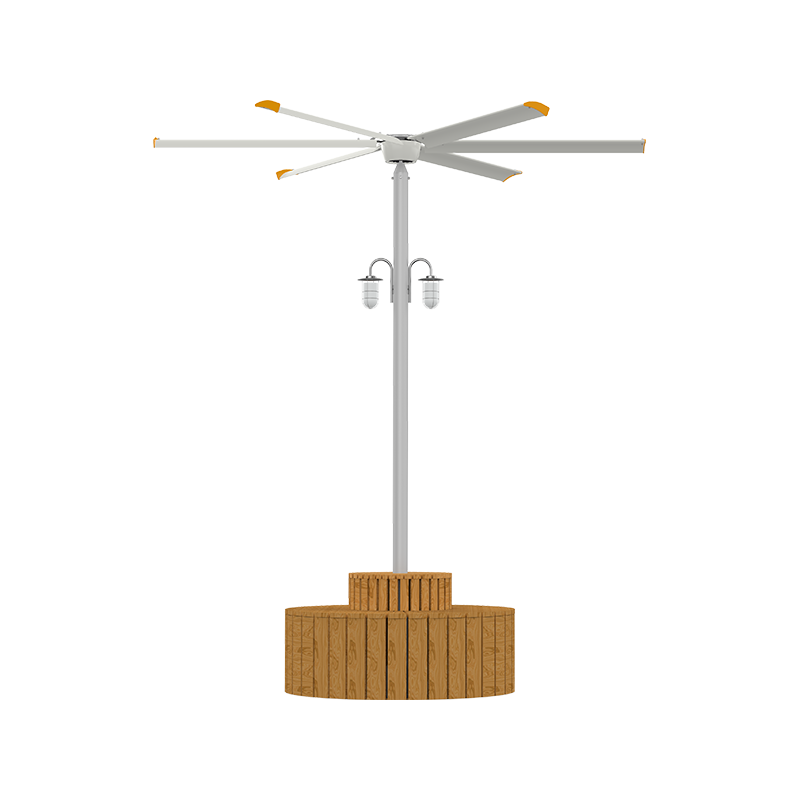
12-foot 360-degree rotating pole base industrial vertical fan
| Item | Specification |
|---|---|
| Model highlighted in this article | ALF-36 |
| Product category | Airpole Pedestal Fan |
| Fan diameter | 3,600 millimeters |
| Approximate fan size | 12 feet |
| Rated power | 0.35 kilowatts |
| Rated voltage | 220 volts |
| Frequency | 50/60 hertz |
| Blade options | Five or six blades |
| Adjustable operating speed | Zero to approximately 92 revolutions per minute |
| Full-loading air volume | Approximately 3,600 cubic meters per minute |
| Overall height | 3,800 millimeters |
| Approximate weight | 55 kilograms for the featured configuration |
| Rotation | 360 degrees |
| Blade color options | Silver, yellow, red, blue, black, and other options |
| Typical applications | Warehouses, workshops, factories, barns, retail spaces, exhibition halls, sports venues, automotive repair shops, and food processing facilities |
For project quotations, customers should provide the intended application, building dimensions, installation location, available power supply, expected operating hours, environmental conditions, quantity required, preferred blade configuration, preferred color, and control requirements. Providing this information allows the supplier to recommend a more appropriate product arrangement and identify any installation concerns before production.
Technical communication should also confirm whether the fan will operate indoors or outdoors, whether the site contains dust or moisture, whether the fan will be used near people or animals, and whether it must coordinate with existing air-conditioning or exhaust equipment. These details are important for safe and effective system planning.
Shanghai Aipu Fans Co., Ltd. provides industrial fan manufacturing and OEM services from its production base in Shanghai, China. Customers may contact the company for product consultation, specification confirmation, customized solutions, and project support.
Company: Shanghai Aipu Fans Co., Ltd.
Telephone: +86-189 6499 6520
Email: yazhang@shaipu.com
WhatsApp: +86 189 6499 6520
Address: Building 4, No. 5, Shengta Road, Shihudang Town, Songjiang District, Shanghai, China
Before purchase, confirm that the selected model matches the required air volume and coverage area.
Verify that the installation floor or supporting surface can safely carry the fan and withstand operating forces.
Confirm that the complete 360-degree rotation path is free from walls, machinery, cables, signs, and other obstacles.
Check that the available electrical supply matches the product requirements and local regulations.
Determine whether five or six blades are more appropriate for the intended application.
Select the preferred blade color and confirm whether customized colors or markings are required.
Review environmental conditions, including dust, humidity, temperature, chemicals, washdown procedures, and outdoor exposure.
Coordinate the fan with existing ventilation, air-conditioning, exhaust, and fresh-air systems.
Prepare a regular inspection and maintenance schedule before commissioning the equipment.
Ensure that operators receive appropriate training in speed control, rotation operation, emergency shutdown, cleaning, and safe maintenance procedures.
When these points are reviewed carefully, the 12-foot 360-degree rotating pole-base industrial vertical fan can provide a practical, adaptable, and high-capacity solution for demanding commercial and industrial air circulation requirements.
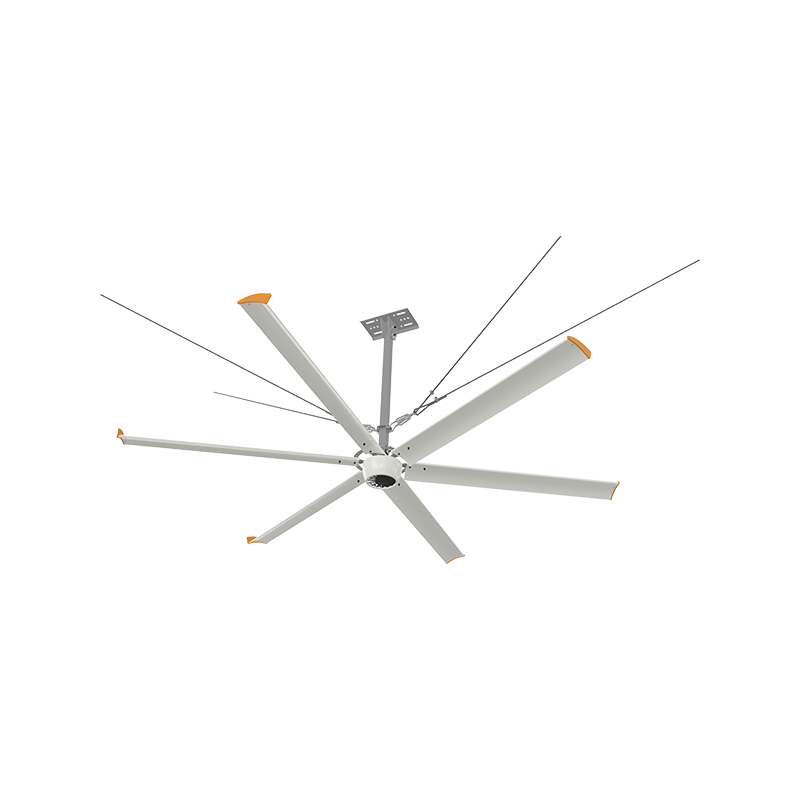
The 15-foot Even Airflow Industrial BLDC Ceiling Fan utilizes a high-efficiency BLDC motor and carefully designed blades. This ceiling fan operates with extremely low noise levels, making it suitable ...
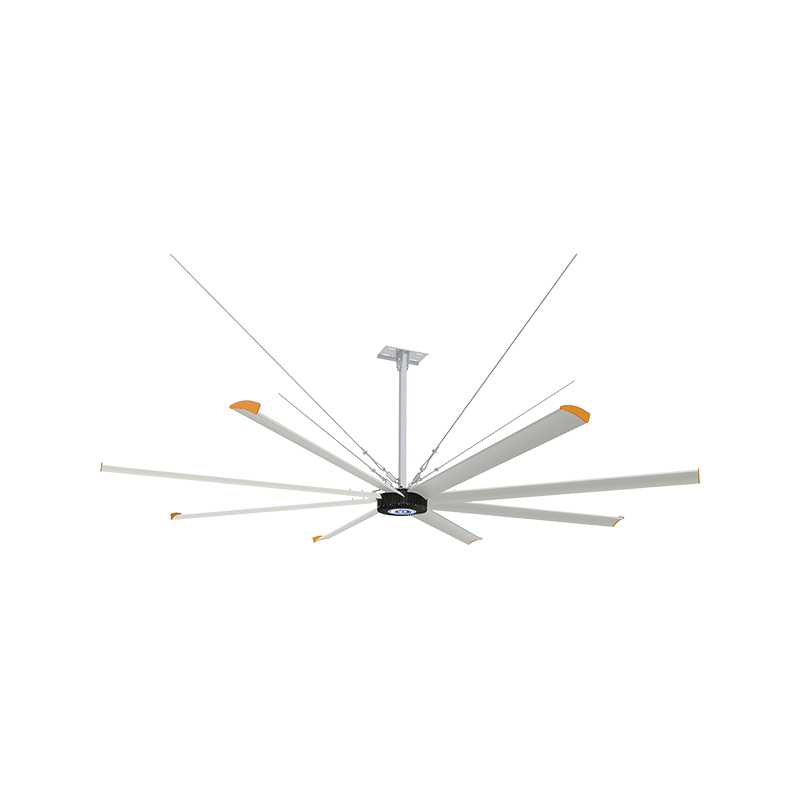
The 8-foot HVLS Large Industrial BLDC Ceiling Fan is equipped with a 0.3KW brushless DC motor, offering higher energy efficiency and lower noise levels. The lower power consumption design helps users ...
The 12-foot 360-degree rotating pole base industrial vertical fan is a high-efficiency air circulation device designed for large spaces, suitable for large-scale commercial or industrial applications ...
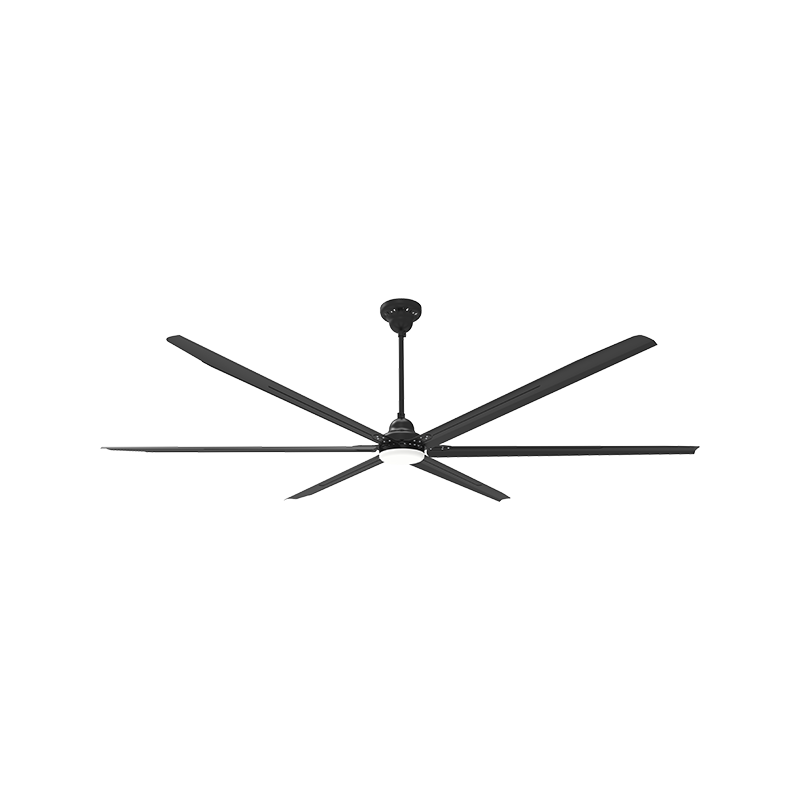
1. Core Technology: High Volume, Low SpeedNatural Breezes: Unlike the “harsh” wind from small fans, HVLS fans use massive blades rotating at low speeds to create a large-scale, three-dimensional breez...
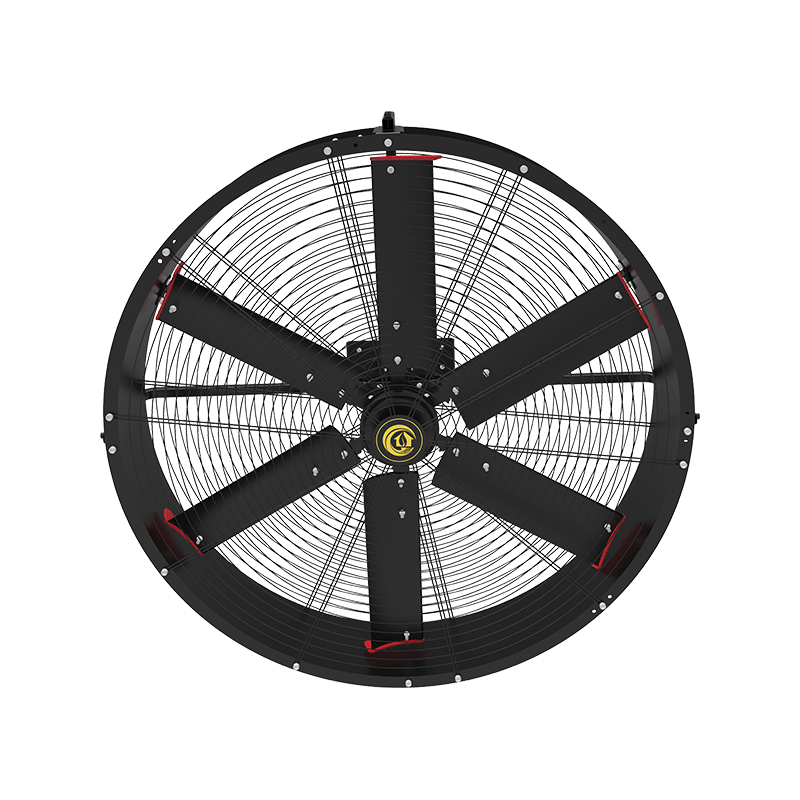
1. Extreme Airflow & Wide CoverageEquipped with massive 79-inch (2.0m) diameter aerospace-grade aluminum alloy blades. These precision-balanced blades generate a powerful, stable laminar airflow t...
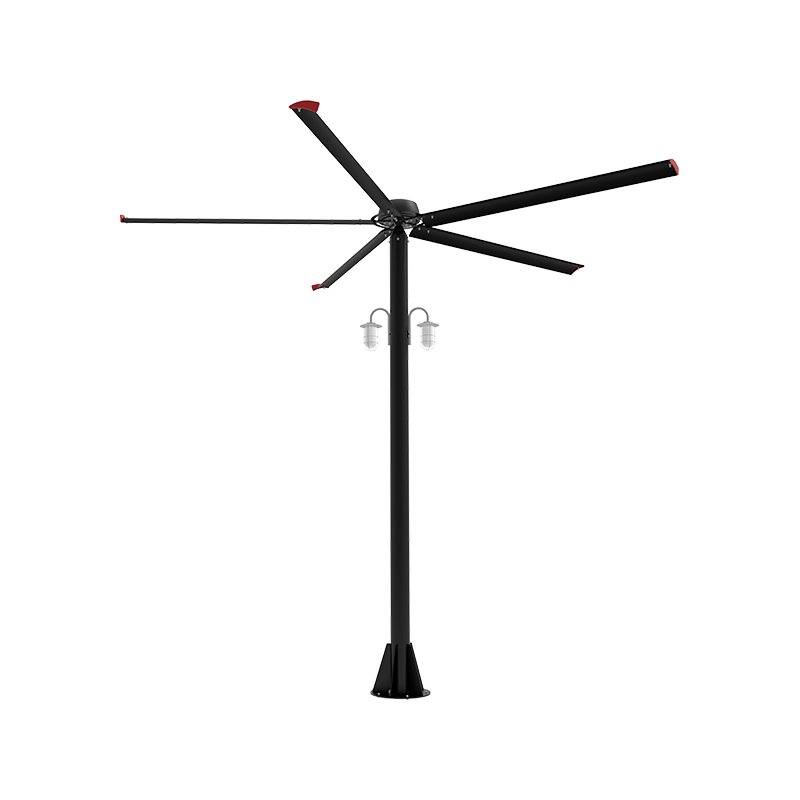
The large vertical HVLS floor-standing ventilation fan offers a variety of color options, allowing users to choose the most suitable color based on different environments and decoration needs. This c...
A 6,800 m² factory floor used to be ventilated by roughly 300 small wall and pedestal fans. Six large ceiling fans now cover the same area, and in the manufacturer's own comparison that change cuts m...
READ MORELarge-space air movement Big Commercial Fans: How to Size, Mount and Power Them One 24 ft ceiling fan can replace forty pedestal units, but only when span, mounting height and motor match the buildin...
READ MOREShanghai Aipu Fans Co., Ltd., established in Shanghai in 2006, focuses on manufacturing industrial-grade high-quality ceiling fans, relying on industry-leading motor technology and advanced manufactu...
READ MOREAt a distribution center in a hot climate, the worst heat gathers near the loading dock. The bay doors stay open through most of the shift, so any air that moves toward the dock gets pulled outside b...
READ MORE Custom Large Industrial Fans Manufacturers