

 English
 Español
 عربى

1. Extreme Airflow & Wide CoverageEquipped with massive 79-inch (2.0m) diameter aerospace-grade aluminum alloy blades. These precision-balanced blades generate a powerful, stable laminar airflow t...
Content
Large industrial spaces often require more than conventional portable fans can provide. Warehouses, workshops, agricultural buildings, sports facilities, exhibition halls, and outdoor work areas need powerful air movement, stable operation, practical mobility, and dependable resistance to demanding environmental conditions. The 7-foot permanent magnet synchronous DC motor large mobile outdoor industrial floor fan is designed to address these requirements with a combination of large-diameter airflow, energy-efficient motor technology, durable construction, low operating noise, and flexible installation.
This industrial floor fan belongs to the Airmove Stand Fan category and is engineered for applications in which a ceiling-mounted system is impractical or where airflow must be directed toward a particular work zone. Its mobile structure enables operators to position the fan where cooling or ventilation is most needed. At the same time, its large fan diameter and carefully calculated blade geometry allow it to move a substantial volume of air across wide areas.
The fan is available in several model sizes, including ASF-09, ASF-12, ASF-15, and ASF-20. The largest configuration provides a fan diameter of approximately 2 meters, equivalent to 7 feet, and is designed for high-volume airflow in demanding industrial and commercial environments. Depending on the selected model, the fan provides a maximum speed ranging from 200 to 420 revolutions per minute, power consumption from 0.35 to 0.65 kilowatts, and noise levels below 40 decibels.
Its permanent magnet synchronous motor is an important part of the product’s value. Compared with many traditional motor arrangements, a permanent magnet synchronous motor can deliver efficient torque and stable speed control while reducing unnecessary energy loss. The direct-current drive system also supports precise operation and smooth adjustment, making the fan suitable for facilities that need dependable airflow without excessive electrical consumption.
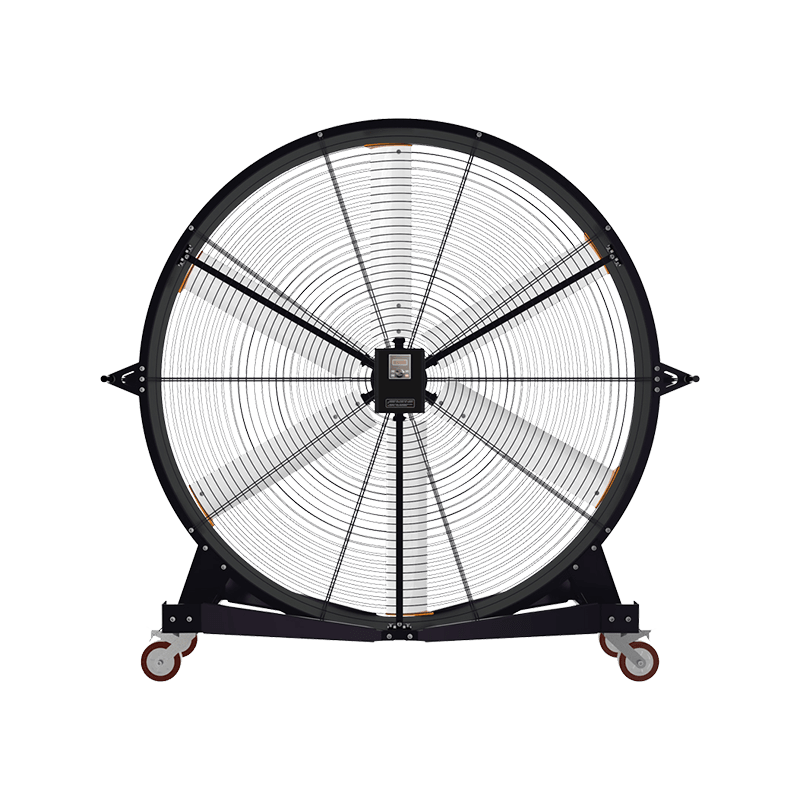
7-foot permanent magnet synchronous DC motor large mobile outdoor industrial floor fan
Air movement has a direct effect on workplace comfort, humidity management, equipment performance, and the preservation of materials. In a large building, simply lowering the air temperature may not be sufficient. Stagnant air can create hot zones, humidity pockets, unpleasant odors, and uncomfortable working conditions. A large industrial floor fan helps distribute air more evenly and can improve the perceived comfort of employees and visitors.
Unlike small domestic fans, industrial fans are designed to move air over a much greater distance. A large-diameter fan can generate a broad airflow pattern, allowing one unit to cover a larger area than several small fans in certain applications. This may simplify equipment placement, reduce floor clutter, and support more consistent ventilation.
A mobile industrial fan also provides an important advantage over permanent installations. A ceiling fan is effective when the building layout remains fixed, but it may not be suitable for rented facilities, temporary work areas, production lines that change frequently, or outdoor locations. A mobile floor-standing unit can be repositioned according to seasonal needs, production schedules, maintenance work, or changes in occupancy.
The 7-foot configuration is particularly useful where a wide, long-range airflow pattern is required. It can support air circulation in large workshops, logistics areas, agricultural barns, sports facilities, and open commercial spaces. The fan’s design is intended to balance airflow volume, operating noise, durability, and mobility rather than focusing on speed alone.
The fan uses a large blade diameter to move air across a wide area. The largest model has a fan diameter of approximately 2 meters or 7 feet. Large blades can move substantial quantities of air at relatively moderate rotational speeds, which helps create broad circulation while limiting the sharp, high-frequency noise sometimes associated with small, fast-rotating fans.
The blade dimensions are calculated to support efficient wind-speed transmission. Blade shape, pitch, length, and spacing all influence how effectively the motor’s rotational energy is converted into airflow. The design therefore considers not only maximum speed but also the quality and reach of the air movement.
The available configurations use five or six blades. This provides flexibility for different airflow requirements and product configurations. Blade colors may include yellow, blue, silver, black, or red, allowing buyers to select an appearance suitable for their facility or branding requirements.
The permanent magnet synchronous DC motor is one of the product’s main technical advantages. In this type of motor, permanent magnets help create the magnetic field required for rotation. Because the motor does not rely on the same level of rotor excitation losses found in some conventional designs, it can support efficient energy conversion and stable operation.
The synchronous operating principle allows the motor to maintain a controlled relationship between the magnetic field and rotor position. This contributes to smooth rotation and reliable speed management. For facilities operating fans for extended periods, the resulting efficiency can be valuable because even modest reductions in power consumption may produce meaningful savings over the service life of the equipment.
The DC drive system also supports adjustable operation. The fan can be configured for a wind-speed range of 0 to 26 meters, allowing operators to select a suitable airflow level rather than running continuously at full output. Lower settings may be appropriate for occupied areas, mild weather, or sensitive materials, while higher settings can be used when stronger air circulation is required.
Inverter technology is incorporated into the system, with Kewo identified as the inverter supplier in the provided specifications. The inverter supports motor control and helps manage operating speed. Proper control can reduce unnecessary starting stress, improve adjustment accuracy, and help the fan respond more effectively to changing ventilation requirements.
Industrial equipment is often associated with high sound levels, but excessive noise can reduce workplace comfort and make communication difficult. The fan’s blade design considers both airflow efficiency and noise reduction. The listed noise level is below 40 decibels for the supplied model range, subject to measurement conditions and installation environment.
Low-noise operation is especially valuable in retail spaces, exhibition halls, hotels, indoor sports facilities, offices connected to warehouses, and work areas where employees must communicate. A quieter fan can operate for longer periods without becoming a major source of acoustic discomfort.
Noise performance depends on several factors, including blade balance, motor condition, bearing condition, mounting stability, operating speed, and the presence of nearby walls or objects. The stable stand and carefully designed blades help establish a strong foundation for quiet operation, while regular maintenance remains important throughout the product’s service life.
The fan casing and stand are made from Magnalium alloy. This material is selected for its combination of low weight, hardness, strength, and impact resistance. A mobile industrial fan must be robust enough for frequent repositioning while remaining manageable for operators and maintenance teams.
Magnalium alloy can provide a useful balance between durability and portability. A heavy steel structure may be strong but difficult to move, while a lightweight structure that lacks rigidity may be unstable during operation. The alloy construction helps the fan maintain structural integrity while supporting its mobile design.
The surface of the casing receives a special treatment intended to improve resistance to oxidation and corrosion. This is important for outdoor use, humid workshops, agricultural environments, coastal areas, and facilities where temperature and moisture fluctuate. Surface treatment does not eliminate the need for care, but it helps protect the material from premature deterioration caused by prolonged exposure.
Large mobile fans must remain stable while operating at high airflow levels. The stand is precisely designed to support the fan on the ground and reduce the possibility of tilting or swaying. Stability is particularly important in outdoor environments, where wind, uneven surfaces, and accidental contact may affect equipment positioning.
A stable stand also helps reduce vibration. Excessive vibration can create noise, loosen fasteners, accelerate component wear, and reduce operating comfort. The fan’s structural design is intended to provide a steady base, although the unit should always be placed on a firm, level surface and positioned away from obstacles.
For additional safety, operators should inspect the stand, wheels or mobility components, fasteners, guards, and electrical connections before use. The fan should not be moved while the blades are rotating, and power should be disconnected before carrying out maintenance or adjustment work.
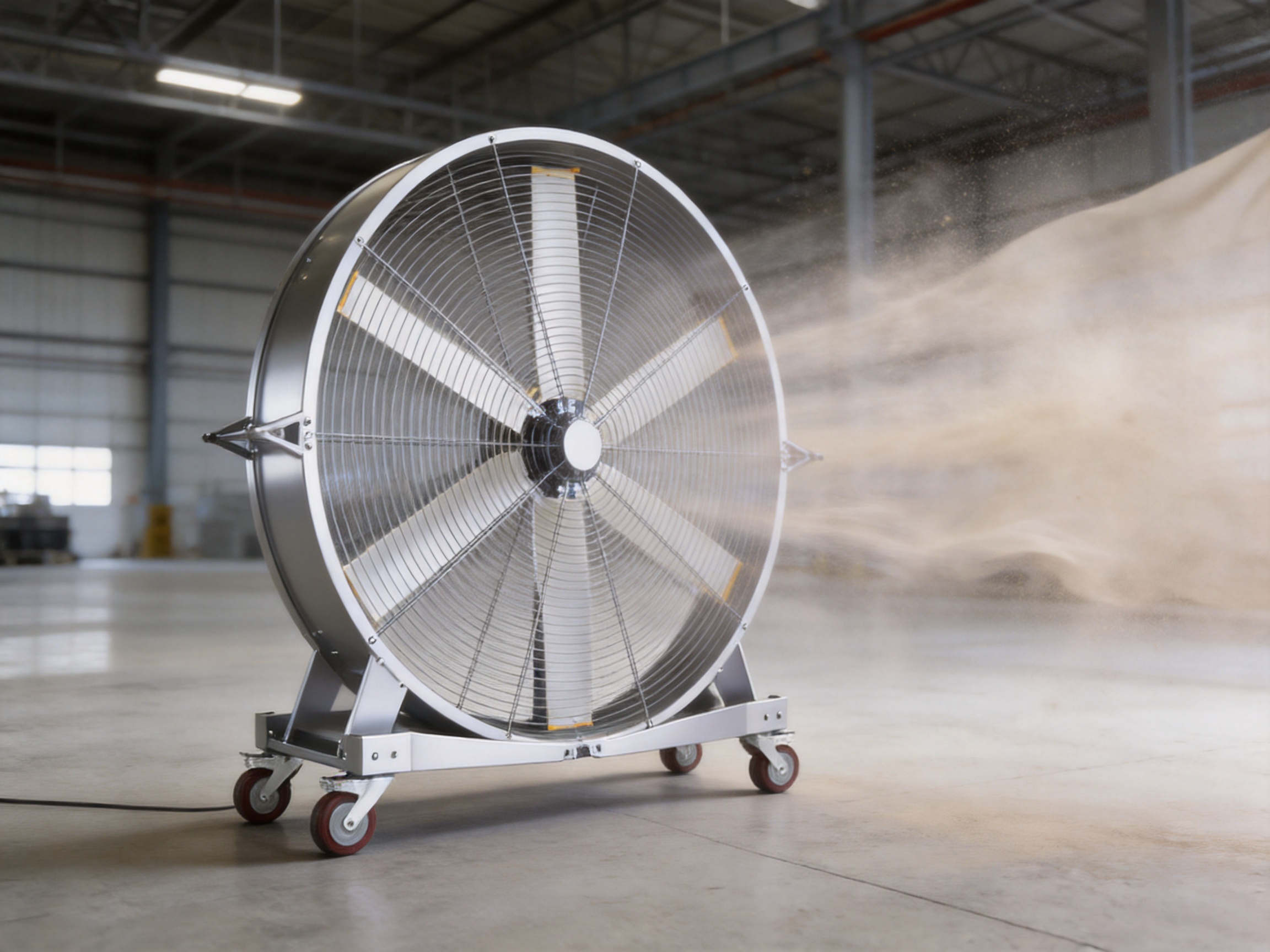
The product family includes four main configurations. The dimensions, power ratings, weight, and maximum speed vary by model. Buyers should select a configuration based on the floor area, airflow distance, available electrical supply, mobility requirements, and intended operating environment.
| Model | Approximate Dimensions | Maximum Speed | Weight | Power | Noise Level | Protection Level |
|---|---|---|---|---|---|---|
| ASF-09 | 1000 × 640 × 1100 mm | 420 RPM | 65 kg | 0.35 kW | Below 40 dB | IP55 |
| ASF-12 | 1310 × 640 × 1400 mm | 380 RPM | 80 kg | 0.40 kW | Below 40 dB | IP55 |
| ASF-15 | 1610 × 720 × 1700 mm | 300 RPM | 92 kg | 0.55 kW | Below 40 dB | IP55 |
| ASF-20 | 2100 × 720 × 2240 mm | 200 RPM | 142 kg | 0.65 kW | Below 40 dB | IP55 |
The ASF-20 is the largest configuration in the supplied product range. Additional product information identifies the largest fan as having a diameter of approximately 2 meters or 7 feet, a rated power of 650 watts, a fan speed of approximately 220 RPM in one product configuration, and a wind-speed range of 0 to 26 meters. As with all technical equipment, buyers should confirm the final configuration, operating speed, dimensions, and electrical requirements before ordering because specifications may vary according to customization and production configuration.
The product specifications identify an IP55 protection level. The first number indicates protection against dust ingress at a level suitable for industrial use, while the second number indicates protection against water jets from various directions. This makes the product better suited to challenging environments than equipment designed only for clean, dry indoor spaces.
IP55 protection does not mean that the fan should be submerged or exposed to uncontrolled heavy rainfall indefinitely. Outdoor installation should include appropriate placement, drainage, electrical protection, and weather management. The fan should not be positioned where water can collect around the motor, inverter, plug, or control components.
The combination of alloy construction, surface treatment, and IP55 protection provides a practical foundation for outdoor and semi-outdoor applications. It can be useful in covered loading areas, agricultural facilities, temporary event spaces, construction-related work zones, workshops with open doors, and other locations where dust and moisture are common.
For long-term outdoor use, users should inspect the surface, fasteners, wiring, protective guards, and control system at regular intervals. Salt air, chemical vapor, fertilizers, cleaning agents, and industrial fumes may require additional protection or a customized material and coating solution.
One of the main advantages of the permanent magnet synchronous DC motor is the potential for improved energy efficiency. Traditional induction motors can be reliable and widely available, but they may experience greater electrical losses depending on their operating condition and control method. A permanent magnet motor can maintain effective torque production with a more efficient magnetic system.
The actual energy savings depend on operating hours, selected speed, electrical supply, load, maintenance, and local energy prices. Nevertheless, the ability to adjust the fan from low to high airflow can help operators avoid using more power than necessary. This is especially valuable in warehouses, production facilities, and agricultural buildings where fans may operate for many hours each day.
Compared with fixed ceiling fans, the mobile floor design offers greater placement flexibility. The fan can be moved between production zones, loading areas, workshops, storage sections, or event spaces. This is useful when a facility has changing layouts or when airflow needs vary according to the season.
Compared with multiple small pedestal fans, a large industrial fan may simplify equipment management and provide a broader airflow pattern. Fewer units may mean fewer electrical connections, fewer control points, and less obstruction at floor level. The correct comparison depends on the building, but the large-diameter design is particularly attractive where wide-area circulation is required.
The Magnalium alloy structure and protective surface treatment are intended to provide stronger resistance to impact, oxidation, and corrosion than ordinary unprotected materials. This can extend the practical service life of the equipment when it is correctly operated and maintained.
Industrial equipment is exposed to more challenging conditions than household appliances. It may encounter dust, vibration, accidental contact, high humidity, temperature changes, and frequent movement. The fan’s design addresses these conditions through a durable casing, stable stand, protected electrical system, and industrial-grade motor arrangement.
The listed noise level below 40 decibels gives the product an advantage in applications where acoustic comfort matters. Large blades moving air at controlled speeds can produce a more comfortable sound profile than small fans operating at very high rotational speeds.
Quiet operation does not mean that the fan is completely silent. Airflow itself produces sound, and environmental conditions can influence the measured result. However, a low-noise design is beneficial for facilities that combine ventilation with customer service, education, communication, sports instruction, or office work.
The four-model range enables customers to select a configuration that matches the size and requirements of the application. Smaller models may be more suitable for compact workshops or localized ventilation, while larger units can support broad airflow in warehouses, sports halls, and manufacturing areas.
Model selection should consider more than fan diameter. Operators should evaluate the available electrical capacity, floor load, movement frequency, required airflow distance, door and aisle dimensions, storage requirements, and environmental exposure. A properly selected fan generally performs more effectively than an oversized or undersized unit.
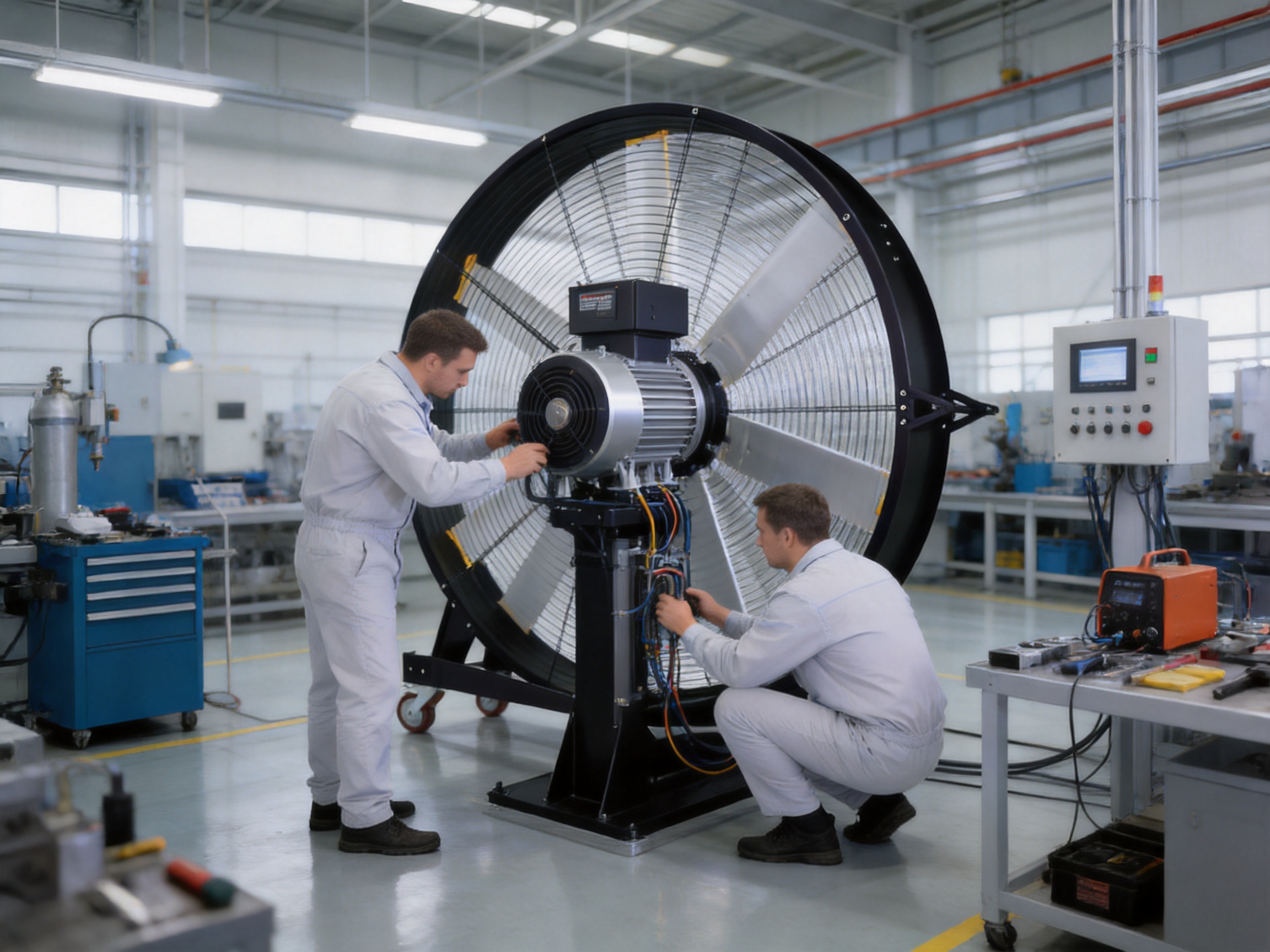
Warehouses often contain tall storage racks, loading zones, packing stations, and areas with varying temperatures. Air can become stagnant between racks or near large doors. A mobile industrial fan can be positioned near packing areas, dispatch zones, or workstations to improve circulation without requiring permanent ceiling modification.
Improved airflow can also help reduce perceived heat for employees working near loading bays or in areas without full air conditioning. During warmer months, the fan can support ventilation by moving air through open doors and windows. Operators should ensure that the airflow does not disturb lightweight packaging, labels, powders, or sensitive inventory.
Physical activity increases body heat, and indoor sports spaces can become uncomfortable when air circulation is limited. The large fan can support airflow along courts, training areas, spectator zones, or changing areas. Its low-noise operation is useful because excessive mechanical noise can interfere with coaching, announcements, and communication.
The fan should be placed outside the active playing area whenever possible and protected from impact by sports equipment or moving participants. A stable position and guarded blade assembly are essential in facilities with frequent human activity.
Agricultural buildings require air movement to support livestock comfort, moisture management, and general environmental control. The fan can be used in barns, covered livestock areas, storage buildings, and agricultural workspaces. Its corrosion-resistant design is useful in environments where humidity and airborne particles may be present.
Because agricultural sites can contain dust, ammonia, fertilizers, and cleaning chemicals, operators should establish a regular cleaning and inspection schedule. The actual suitability of the fan should be evaluated according to the specific livestock, building ventilation plan, chemical exposure, and local safety requirements.
Retail stores, hotels, and commercial venues may require temporary or supplemental ventilation during busy periods, renovations, special events, or hot weather. A mobile fan can be moved according to customer flow and placed in service areas, atriums, loading zones, or covered outdoor spaces.
The product’s low-noise design and colored blade options can help it integrate into commercial environments. However, the fan should be positioned so that it does not obstruct walkways, emergency exits, accessibility routes, or customer displays.
Exhibition halls often have large open interiors and changing layouts. Permanent ventilation may not provide equal airflow in every area, particularly when booths, partitions, lighting systems, and temporary structures alter the space. A mobile fan can provide localized circulation during setup, events, and dismantling.
Its mobility is also beneficial for event organizers who need equipment that can be transported and stored between exhibitions. The fan should be operated with attention to booth materials, hanging displays, lightweight signage, and visitor safety.
Automotive workshops can become hot because of vehicle engines, welding, compressed-air tools, and limited natural ventilation. A large floor fan can move air through service bays and help improve worker comfort. It may also be positioned to support drying processes or general ventilation, subject to safety rules concerning flammable vapors and dust.
Fans should not be used in a way that spreads hazardous fumes toward workers or ignition sources. The site’s ventilation strategy should account for exhaust gases, solvents, fuel vapor, paint products, and other substances before selecting the fan’s position.
Manufacturing plants contain machinery, production lines, heat-generating processes, and workstations that may need targeted air movement. The mobile structure allows operators to direct airflow toward specific areas without interrupting the entire facility.
In production environments, the fan can support employee comfort and general air circulation. It should be positioned carefully around moving machinery, conveyors, cables, overhead cranes, and material-handling equipment. A pre-use risk assessment is recommended for every new installation location.
Food processing areas may require careful control of temperature, humidity, and air movement. A fan can assist with general circulation in suitable non-critical areas, storage zones, packaging areas, or loading spaces. Hygiene requirements must be considered before introducing any mobile equipment into a food-related environment.
Users should confirm that the fan’s materials, coatings, cleaning procedures, and placement comply with facility hygiene policies. The fan should not direct dust, contaminants, or unfiltered outside air toward exposed food products.
The manufacturer, Shanghai Aipu Fans Co., Ltd., was established in Shanghai in 2006 and specializes in industrial-grade ceiling fans, large industrial fans, and ventilation solutions. Although the product described here is a mobile floor fan, its development reflects the company’s broader experience with high-volume industrial airflow equipment.
The company operates an approximately 8,000-square-meter production base. Its manufacturing resources include high-precision automated machinery, a machining center, a cutting center, a welding center, and a testing center. These facilities support the controlled production of structural components, motor assemblies, stands, casings, blade systems, and other parts required for industrial fans.
Automated machinery can improve consistency in repeated manufacturing operations. Consistent dimensions are important for fan blades, motor housings, brackets, stands, and connection points. Precision processing can reduce assembly variation and help maintain balanced operation.
For a large fan, manufacturing accuracy is especially important. Small differences in blade shape, weight, or alignment may contribute to vibration and noise when multiplied across a large rotating assembly. Controlled processing and inspection help support stable performance from one production unit to the next.
Machining centers allow manufacturers to produce accurately formed parts and mounting components. Cutting centers support the preparation of alloy sections, structural panels, and other components before assembly. These capabilities can help the company manage production quality internally rather than depending entirely on external suppliers.
Integrated manufacturing resources also make it easier to respond to custom requirements. Industrial customers may request changes to dimensions, colors, control systems, installation arrangements, or application-specific configurations. A manufacturer with in-house processing capabilities is generally better positioned to assess and implement such requirements.
Welding quality directly affects the stability and service life of an industrial fan stand and frame. Properly prepared joints, controlled welding procedures, and inspection can help ensure that the structure withstands vibration and repeated movement.
The fan’s stable floor stand depends on accurate assembly as well as material strength. A well-designed frame must distribute weight effectively, maintain balance, and resist deformation during transportation and operation. Welding and final assembly controls are therefore essential parts of the manufacturing process.
A dedicated testing center allows products to be evaluated before shipment. Testing may include motor operation, speed control, vibration, noise, electrical safety, structural stability, and protective performance. The specific testing protocol may vary according to the model and customer requirements, but final inspection is essential for industrial equipment.
Testing is particularly important for products used outdoors or in high-duty-cycle environments. A fan that operates correctly in a short demonstration must also be capable of stable performance during extended use. Verification of operating parameters gives customers greater confidence when integrating the product into a facility’s ventilation plan.
The company provides OEM services and product solutions for industrial customers worldwide. Customization can be useful when standard models do not fully match a project’s requirements. Potential areas for customization may include blade color, control method, voltage, dimensions, protection arrangements, packaging, and installation accessories.
Customization should be confirmed during the technical quotation stage. Customers should provide information about the application area, operating temperature, humidity, dust levels, power supply, required airflow, duty cycle, and local compliance requirements. Clear technical communication helps ensure that the final product is appropriate for its intended use.
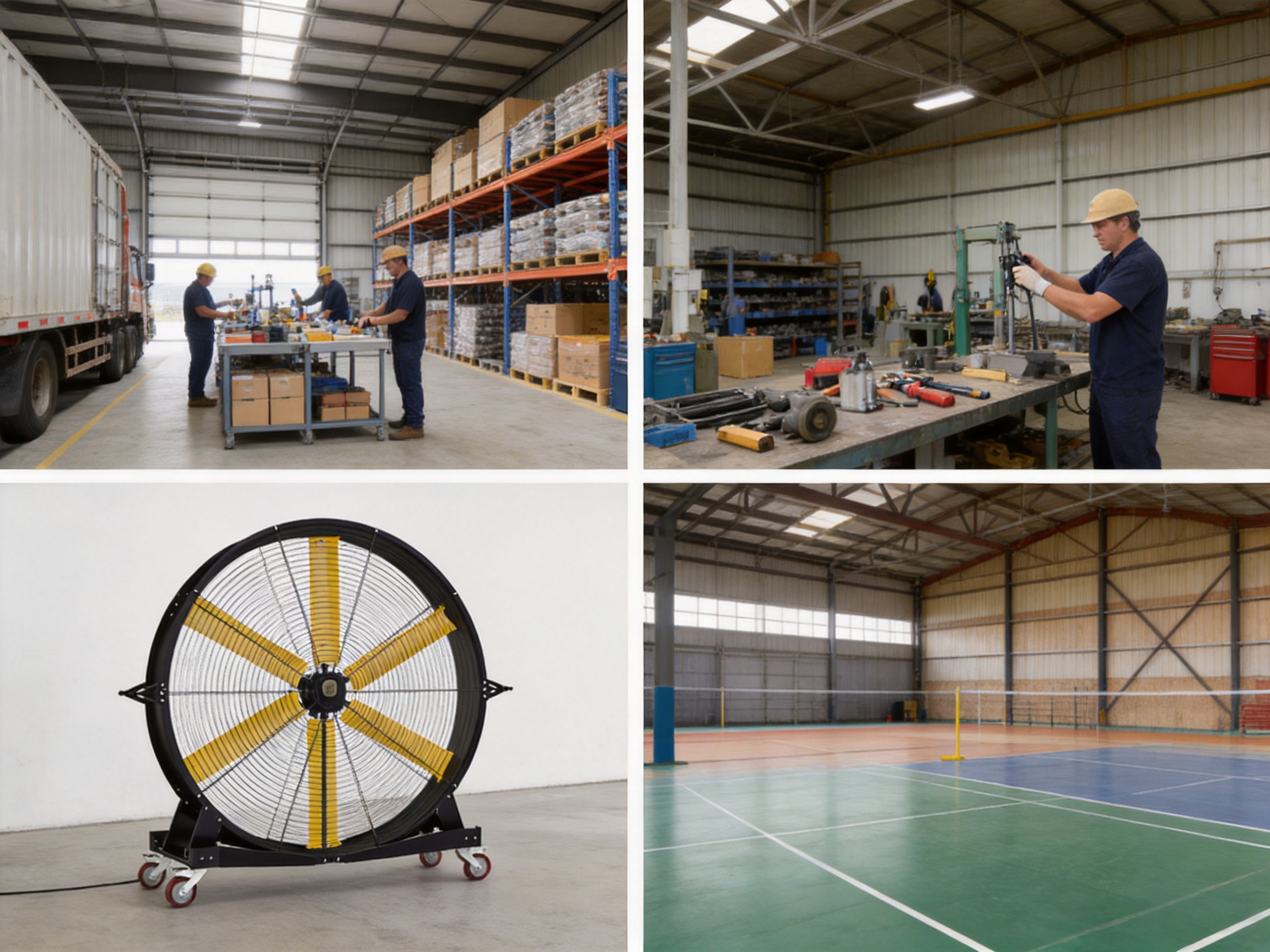
The fan should be placed on a firm, level surface with sufficient clearance around the blades and protective guard. The surrounding area should be free from loose materials, hanging cables, packaging, and objects that could be drawn into the airflow or contact the fan.
Before connecting the unit, verify that the electrical supply matches the product configuration. Inspect the cable, plug, inverter, motor housing, control panel, and grounding arrangement. Do not operate the fan if electrical components show signs of damage, moisture intrusion, overheating, or loose connections.
Allow the fan to reach a stable operating condition before changing its position or adjusting the controls. The fan must be switched off and isolated from the power supply before it is moved. This is particularly important for large models because their size and rotating components create additional handling risks.
When used outdoors, position the fan under suitable shelter whenever possible. Avoid areas subject to standing water, direct exposure to severe storms, chemical spray, or uncontrolled flooding. IP55 protection improves environmental resistance, but responsible placement remains essential.
Operators should begin at a lower speed and increase airflow gradually. This allows them to observe vibration, sound, airflow direction, and the effect on surrounding materials. In facilities with dust, lightweight packaging, or sensitive products, high airflow may create unwanted movement or contamination risks.
Regular maintenance helps preserve the fan’s performance and safety. The protective guard and blades should be inspected for dust accumulation, impact damage, deformation, and loose fasteners. Dust on the blades can affect balance and airflow efficiency, while accumulated material may increase vibration.
The motor and inverter should be kept clean and dry according to the manufacturer’s maintenance instructions. Cleaning methods should be selected carefully so that water or solvents do not enter electrical components. If the fan is used in a dusty or humid environment, inspection intervals should be shortened.
Fasteners, stand connections, wheel assemblies, and structural joints should be checked regularly. Vibration and repeated movement can gradually loosen hardware. Any abnormal noise, smell, temperature, vibration, or speed fluctuation should be investigated before continued operation.
The service life of the fan depends on operating hours, environmental conditions, maintenance quality, electrical stability, and handling practices. The listed product warranty is three years, subject to the manufacturer’s terms and conditions. Buyers should retain purchase records and follow the recommended service procedures to support warranty claims.
The first selection factor is the area requiring airflow. A compact workspace may not need the largest model, while a high-ceiling warehouse or sports facility may benefit from a larger fan diameter and longer airflow reach.
The second factor is operating duty. If the fan will run continuously for many hours, motor efficiency, control accuracy, noise level, and maintenance access become particularly important. If it will be used occasionally for temporary ventilation, mobility and storage may receive greater priority.
The third factor is environmental exposure. Indoor clean areas, agricultural buildings, open workshops, coastal facilities, and outdoor work zones may require different materials, coatings, cleaning schedules, and protection arrangements. The IP55 rating provides a useful level of protection, but customers should describe the environment accurately when requesting a quotation.
The fourth factor is electrical compatibility. Confirm the rated power, voltage, frequency, control system, inverter arrangement, and connection requirements. Electrical information should be reviewed by a qualified professional where necessary.
The fifth factor is physical access. Measure doors, aisles, ramps, storage areas, and elevator dimensions before ordering a large model. The fan must be able to reach the intended operating position and be stored safely when not in use.
Industrial fans should be operated only by trained personnel who understand the controls and potential hazards. The protective guard should remain installed during operation. Never insert tools, hands, clothing, or other objects into the rotating assembly.
Keep children, untrained visitors, and unauthorized personnel away from the fan. In public or commercial locations, use barriers or controlled placement where necessary. The fan should not block fire exits, emergency equipment, accessible routes, or vehicle paths.
Do not use the fan near explosive atmospheres, flammable vapors, or hazardous dust unless the complete product configuration has been specifically approved for that environment. Standard industrial protection does not automatically make equipment suitable for explosive or classified areas.
Stop operation immediately if the fan develops abnormal vibration, unusual noise, smoke, burning odor, electrical arcing, or uncontrolled speed changes. Disconnect the power and arrange inspection by qualified service personnel.
It is a large mobile industrial floor fan in the Airmove Stand Fan category. It uses a permanent magnet synchronous DC motor and is designed for industrial, commercial, agricultural, outdoor, and large-area ventilation applications.
The largest configuration has a fan diameter of approximately 2 meters, which is roughly equivalent to 7 feet. The large diameter enables broad, long-range airflow at a controlled rotational speed.
The fan uses a permanent magnet synchronous DC motor. This motor technology supports efficient power conversion, stable rotation, and adjustable operation through an inverter-based control system.
The product can be configured with five or six blades. The selected blade arrangement may depend on the model, airflow requirements, and customer configuration.
Yes, it is designed for outdoor and semi-outdoor applications. The casing and stand use Magnalium alloy, the surface receives protective treatment, and the listed protection level is IP55. Outdoor users should still provide suitable placement and avoid standing water, severe weather, and direct chemical exposure.
The listed noise level for the model range is below 40 decibels under specified test conditions. Actual sound may vary according to speed, installation surface, surrounding structures, airflow obstruction, and environmental conditions.
The largest listed configuration has a power rating of 0.65 kilowatts or 650 watts. Buyers should confirm the final rated power and electrical requirements for the exact configuration before purchase.
IP55 indicates protection against dust ingress at an industrial-use level and protection against water jets from different directions. It does not mean the fan is submersible or suitable for uncontrolled exposure to severe weather.
No. The fan should be switched off and disconnected from the power supply before it is moved. This reduces the risk of contact with rotating parts, electrical strain, instability, and accidental impact.
Potential applications include warehouses, gymnasiums, agricultural barns, retail spaces, exhibition halls, indoor sports arenas, automotive repair shops, manufacturing plants, food processing facilities, hotels, garages, and covered outdoor areas.
The manufacturer provides OEM services and industrial product solutions. Depending on project requirements, customers may discuss blade colors, control systems, dimensions, electrical specifications, materials, and other configuration details.
The supplied product information identifies a three-year warranty. The exact coverage, exclusions, service procedure, and required documentation should be confirmed in the formal quotation and warranty terms.
Selection should be based on the required airflow area, available space, operating duty, environmental conditions, electrical capacity, mobility requirements, and budget. The larger models provide greater physical scale and airflow potential but also require more floor space and handling capacity.
The 7-foot permanent magnet synchronous DC motor industrial floor fan combines large-area airflow with mobile placement, low-noise operation, durable alloy construction, and adjustable DC motor control. Its five- or six-blade configuration, broad airflow range, IP55 protection, stable stand, and corrosion-resistant surface treatment make it suitable for a wide variety of industrial and commercial environments.
Compared with conventional small fans, it is designed to deliver wider and longer-range air circulation. Compared with fixed ceiling fans, it provides greater flexibility for changing layouts and temporary applications. Compared with basic portable equipment, its Magnalium alloy structure, industrial motor technology, inverter control, and manufacturing support are intended for more demanding service conditions.
The manufacturer’s production base, automated machinery, machining center, cutting center, welding center, and testing center provide a foundation for consistent industrial fan production. Its experience since 2006 and OEM capabilities also support customized solutions for customers with specialized airflow and installation requirements.
For the best result, purchasers should select the model according to the actual facility, confirm all electrical and environmental requirements, install the fan on a stable surface, and follow a regular inspection and maintenance program. When correctly selected and operated, this large mobile fan can become a practical component of an energy-conscious industrial ventilation strategy.
1. Product specification sheet for the 7-foot permanent magnet synchronous DC motor large mobile outdoor industrial floor fan.
2. Manufacturer-provided model data for ASF-09, ASF-12, ASF-15, and ASF-20 industrial floor fan configurations.
3. Manufacturer-provided information concerning Magnalium alloy construction, blade configurations, inverter control, IP55 protection, and three-year warranty coverage.
4. General principles of industrial ventilation, air circulation, fan selection, and workplace thermal comfort.
5. General interpretation of ingress protection classifications for dust and water resistance.
6. Manufacturer information concerning production facilities, machining, cutting, welding, automated equipment, testing, OEM services, and industrial ventilation solutions.
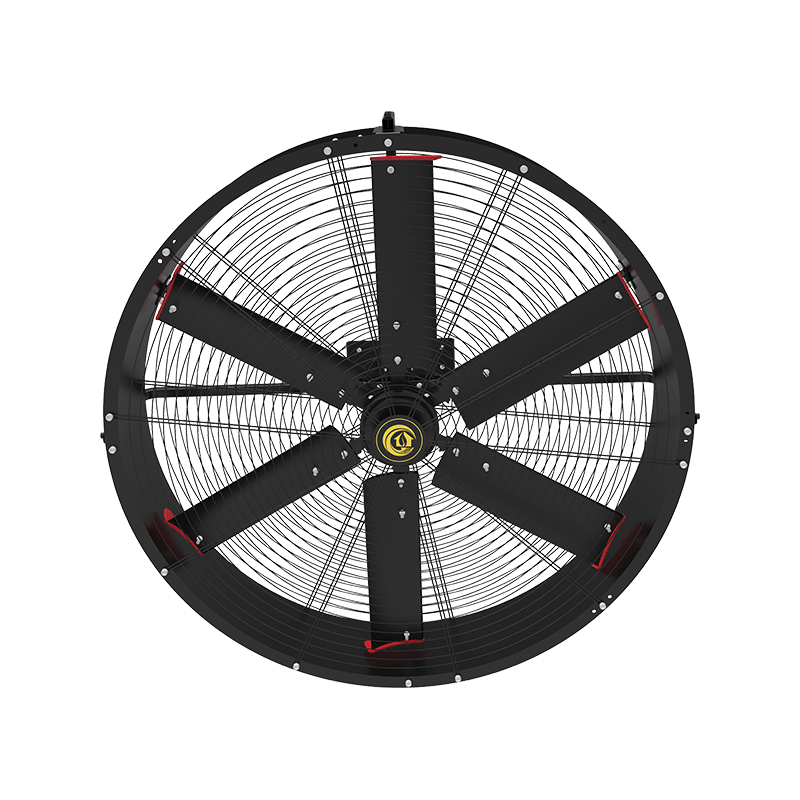
1. Extreme Airflow & Wide CoverageEquipped with massive 79-inch (2.0m) diameter aerospace-grade aluminum alloy blades. These precision-balanced blades generate a powerful, stable laminar airflow t...
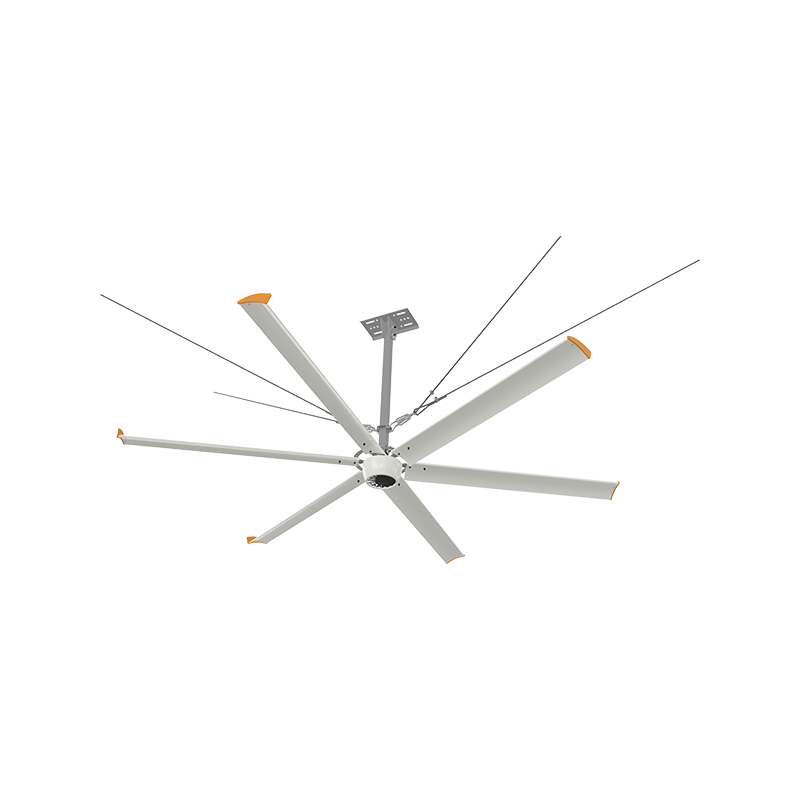
The 15-foot Even Airflow Industrial BLDC Ceiling Fan utilizes a high-efficiency BLDC motor and carefully designed blades. This ceiling fan operates with extremely low noise levels, making it suitable ...
The 7-foot permanent magnet synchronous DC motor large mobile outdoor industrial floor fan features a design with 5 or 6 fan blades. The blade dimensions are carefully calculated to ensure maximum air...
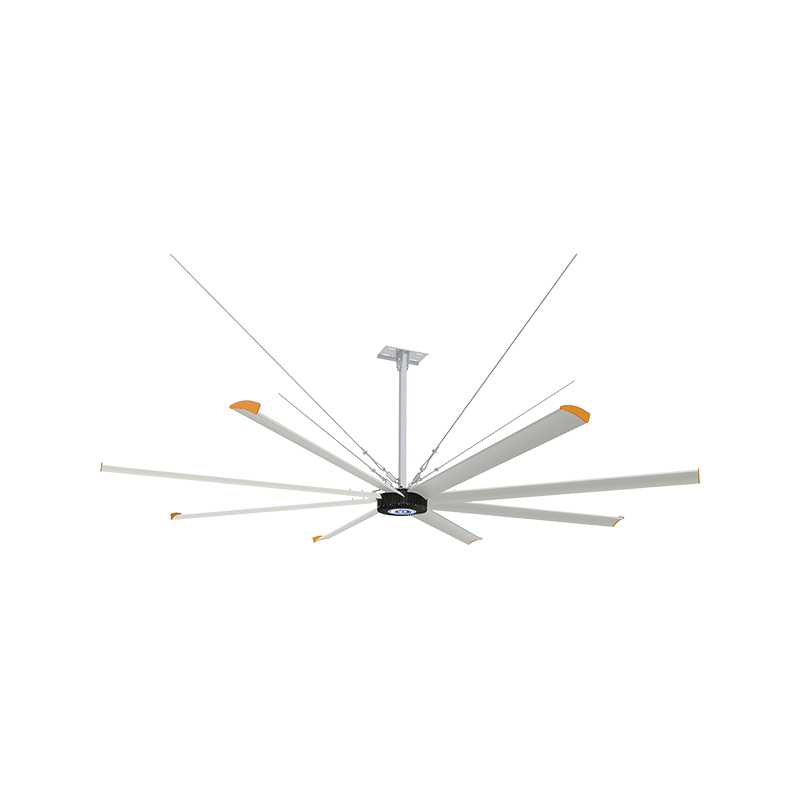
The 8-foot HVLS Large Industrial BLDC Ceiling Fan is equipped with a 0.3KW brushless DC motor, offering higher energy efficiency and lower noise levels. The lower power consumption design helps users ...
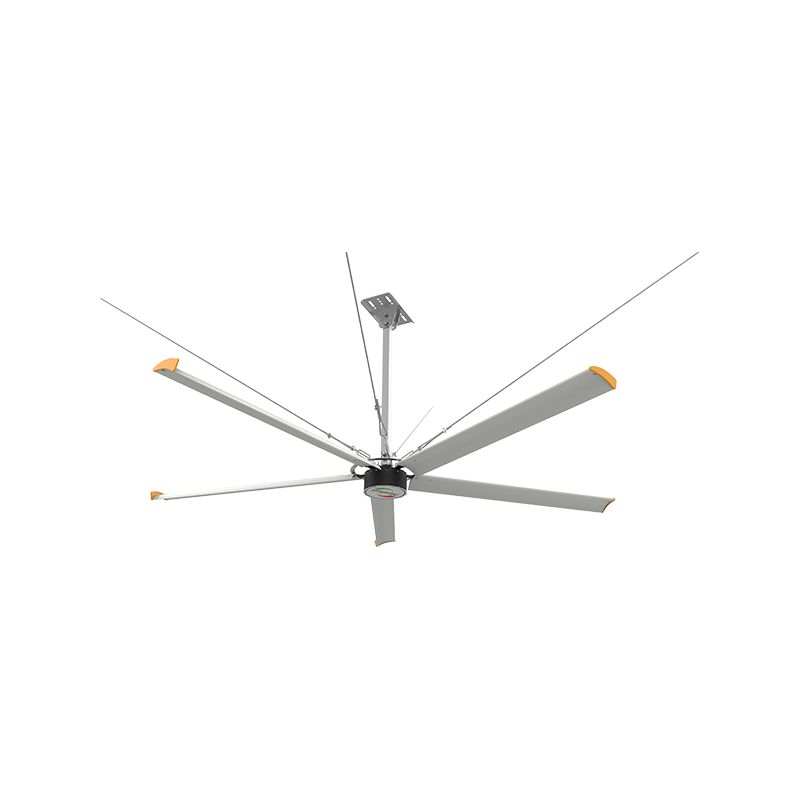
The industrial-grade aviation metal large-blade BLDC ceiling fan utilizes brushless DC motor (BLDC) technology, allowing it to provide powerful airflow with low power consumption. The ceiling fan rapi...
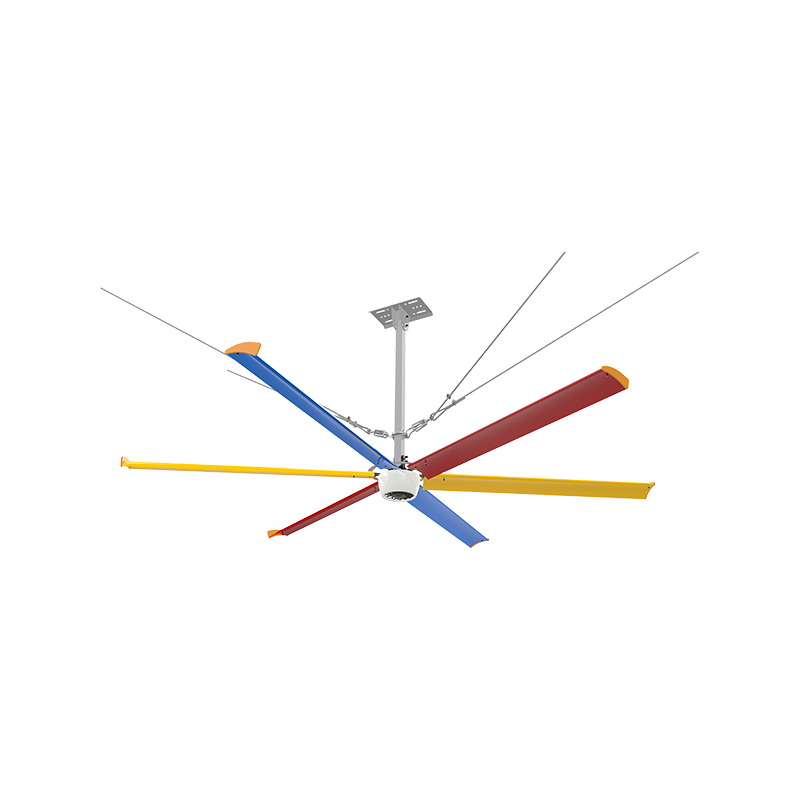
The 7-foot low-energy HVLS industrial brushless DC ceiling fan weighs 30kg. Despite using lightweight materials in its design, it ensures stability and long-term reliable operation. Installation and ...
Specifying industrial air movement The HVLS Ceiling Fan Isn’t a Big Ceiling Fan. Sizing, motor selection, and mounting height have to work together before a large industrial space can feel genuinely...
READ MOREDealership Ventilation Planning Car Showroom Fan Installation: Comfort That Sells Tall glass facades, high ceilings, and polished floors make a showroom one of the hardest retail spaces to keep comfo...
READ MOREIndustrial Ventilation Planning The Right Industrial Ceiling Fan Size Starts With the Building A practical sizing guide to diameter, ceiling height, CFM, and fan layout for warehouses, plants, and di...
READ MOREAt a distribution center in a hot climate, the worst heat gathers near the loading dock. The bay doors stay open through most of the shift, so any air that moves toward the dock gets pulled outside b...
READ MORE Custom Large Industrial Fans Manufacturers