

 English
 Español
 عربى

The 15-foot Even Airflow Industrial BLDC Ceiling Fan utilizes a high-efficiency BLDC motor and carefully designed blades. This ceiling fan operates with extremely low noise levels, making it suitable ...
Content
Large industrial and commercial buildings often require a different approach to ventilation than ordinary offices, homes, or small retail spaces. Warehouses, manufacturing plants, agricultural barns, sports venues, exhibition halls, automotive workshops, and food-processing facilities may have high ceilings, large floor areas, heat-producing equipment, changing occupancy levels, and limited opportunities for conventional air-conditioning. In these environments, effective air movement is essential for comfort, productivity, humidity management, and the preservation of goods and equipment.
The 12-foot 360-degree rotating pole-base industrial vertical fan is designed for precisely this type of demanding application. As a large industrial air-circulation device in the Airpole Pedestal Fan category, it combines a large-diameter fan assembly, a tall vertical support structure, adjustable operating speed, and full-area rotational coverage. The result is a practical ventilation solution capable of moving substantial volumes of air across extensive indoor spaces.
With a featured ALF-36 configuration, the fan has a 3,600 mm diameter, equivalent to approximately 12 feet, a rated power of 350 W, a height of 3,800 mm, and a full-loading air volume of up to 3,600 cubic meters per minute. Its speed can be adjusted from 0 to 92 rpm, allowing operators to select a gentle circulation setting or a stronger airflow level according to seasonal conditions, building use, and occupant requirements.
Unlike a fixed fan that sends air primarily in one direction, the rotating pole-base design distributes airflow across a wide area. The 360-degree rotation function allows air to reach multiple zones in sequence, helping reduce stagnant pockets and improving the overall uniformity of circulation. This makes the fan suitable for large spaces where one-directional airflow would leave distant areas poorly ventilated.
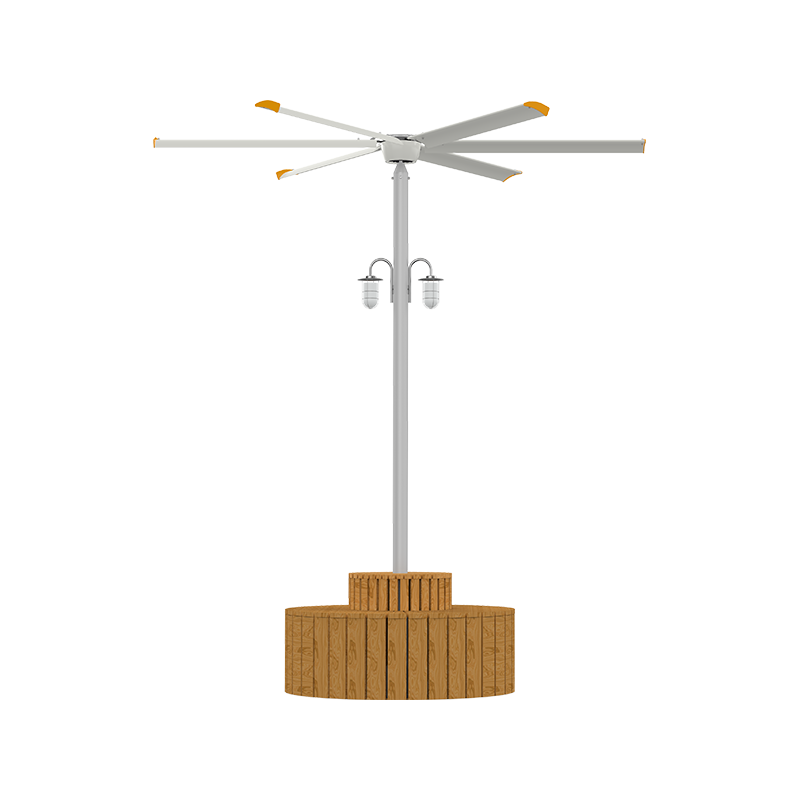
12-foot 360-degree rotating pole base industrial vertical fan
Industrial buildings create ventilation challenges that cannot always be solved with standard ceiling fans or compact pedestal fans. A large warehouse may contain tall storage racks, loading areas, packaging stations, and aisles separated by substantial distances. A production facility may include machinery, heat sources, welding areas, process lines, and workstations operating simultaneously. In each case, air must move over a considerable distance and through a changing layout.
Large indoor venues also experience uneven temperature distribution. Warm air naturally rises and may accumulate below the roof, while occupied zones remain uncomfortable or poorly ventilated. In summer, stagnant air can increase the perception of heat even when the measured temperature is not extreme. In winter, suitable air circulation can help distribute conditioned air more evenly and reduce temperature differences between zones.
A purpose-built industrial vertical fan addresses these issues through a combination of blade diameter, airflow volume, installation height, and directional coverage. Its 12-foot fan diameter allows it to influence a broad area, while its 3,800 mm pole height positions the air-moving assembly above many common obstructions. The elevated position helps the fan circulate air across open floor areas rather than limiting airflow to a narrow local zone.
The fan is also useful as part of a broader ventilation strategy. It may be used alongside doors, windows, exhaust systems, evaporative cooling equipment, or mechanical HVAC systems. It does not replace every form of ventilation, especially where contaminated air must be extracted, but it can improve air mixing and reduce the uneven conditions often found in large buildings.
The 12-foot 360-degree rotating pole-base industrial vertical fan is a freestanding industrial air-circulation unit designed for high-volume airflow in large commercial and industrial environments. The fan assembly is mounted on a tall pole-base structure, providing a stable vertical installation without requiring direct attachment to a ceiling or wall.
This configuration is particularly valuable in buildings where ceiling installation is difficult, expensive, or unsuitable. Some facilities have limited roof access, complicated structural systems, suspended lighting, cranes, fire-protection equipment, or frequently rearranged production areas. A pole-base fan can be positioned at a selected location on the floor and relocated when the layout changes.
The principal featured model is ALF-36. It has a nominal fan diameter of 3,600 mm, a 350 W motor rating, five- or six-blade options, a listed rotational speed range of 0 to 92 rpm, and a full-loading air volume of 3,600 cubic meters per minute. The fan is supported by a 3,800 mm-high structure and has a listed weight of approximately 55 kg for the featured configuration.
The wider product family includes several sizes. Models ALF-28, ALF-33, ALF-36, and ALF-38 correspond to nominal diameters of 2,800 mm, 3,300 mm, 3,600 mm, and 3,800 mm respectively. This range enables purchasers to select a fan based on the dimensions of the space, the desired air movement, available electrical service, and the required balance between coverage and installation flexibility.
| Specification | Featured Value |
|---|---|
| Model | ALF-36 |
| Nominal diameter | 3,600 mm / approximately 12 feet |
| Voltage | 220 V |
| Frequency | 50/60 Hz |
| Motor power | 350 W |
| Blade options | 5 or 6 blades |
| Adjustable speed | 0–92 rpm |
| Full-loading air volume | Up to 3,600 m³/min |
| Overall height | 3,800 mm |
| Approximate listed weight | 55 kg |
| Blade color options | Silver, yellow, red, blue, black, and other options |
Actual operating performance can vary according to building structure, indoor temperature, fan positioning, electrical conditions, blade configuration, and the presence of obstructions. Before installation, purchasers should confirm the final technical configuration, local electrical requirements, safety clearances, and application-specific airflow objectives with the supplier and qualified installation personnel.
The most important performance characteristic of a large industrial fan is its ability to move air effectively across a broad area. The ALF-36 is specified with a full-loading air volume of up to 3,600 cubic meters per minute. This substantial airflow capacity makes it suitable for applications where compact fans would need to be installed in large numbers to achieve comparable circulation.
High-volume air movement can help disperse accumulated heat, reduce the sensation of stuffiness, and improve the distribution of conditioned or naturally ventilated air. In warehouses, it can support a more consistent environment around stored materials. In workshops and factories, it can improve comfort around workstations and help move warm air away from process areas. In sports facilities, it can provide broad circulation across activity and spectator zones.
Air volume should not be confused with exhaust capacity. The fan is primarily an air-circulation product. It mixes and moves indoor air rather than automatically removing pollutants, smoke, chemical vapors, or excessive moisture from a building. Facilities with hazardous airborne contaminants still require properly engineered extraction and filtration systems. However, when used correctly, the fan can complement those systems by reducing stagnant air and supporting a more even indoor environment.
The large diameter is one of the main reasons this product can move significant air volumes at a relatively low rotational speed. Rather than relying on very high rpm from a small impeller, the fan uses a broad blade sweep to influence a larger air mass. This operating principle can support a comfortable, wide-area breeze while avoiding the concentrated, narrow airflow associated with many small high-speed fans.
A major advantage of the product is its 360-degree rotating function. A stationary fan directs air toward a defined area, which can be useful when a particular workstation requires focused airflow. However, fixed direction also creates the possibility of uneven conditions. Areas directly in front of the fan may receive excessive airflow, while areas outside the discharge path may receive little benefit.
The rotating pole-base design changes the distribution pattern. As the fan turns through its operating range, airflow is directed toward different zones around the installation point. Over time, more of the surrounding area receives circulation. This can be especially effective in open warehouses, production floors, gymnasiums, and exhibition halls where the occupied or stored area surrounds the fan.
Rotational coverage may also reduce the need to install multiple fixed fans in closely spaced positions. The correct number of units depends on the building and the required airflow pattern, but one rotating fan can serve a broader area than a comparable fixed unit under suitable conditions. This may simplify equipment planning and help reduce visual clutter, cable routing, and maintenance points.
The rotation function is also useful when the internal layout changes. A warehouse may be reconfigured for seasonal inventory, a sports hall may change from training use to competition use, and a production area may add or remove equipment. A fan that distributes air over 360 degrees can remain useful despite moderate changes in the position of people, machines, storage racks, and temporary partitions.
For best results, the fan should be positioned after considering walls, columns, racks, machinery, doors, windows, and other airflow barriers. Rotation does not eliminate the effects of physical obstructions. A professional site assessment can help identify a position that maximizes open circulation and avoids creating turbulent or blocked airflow.
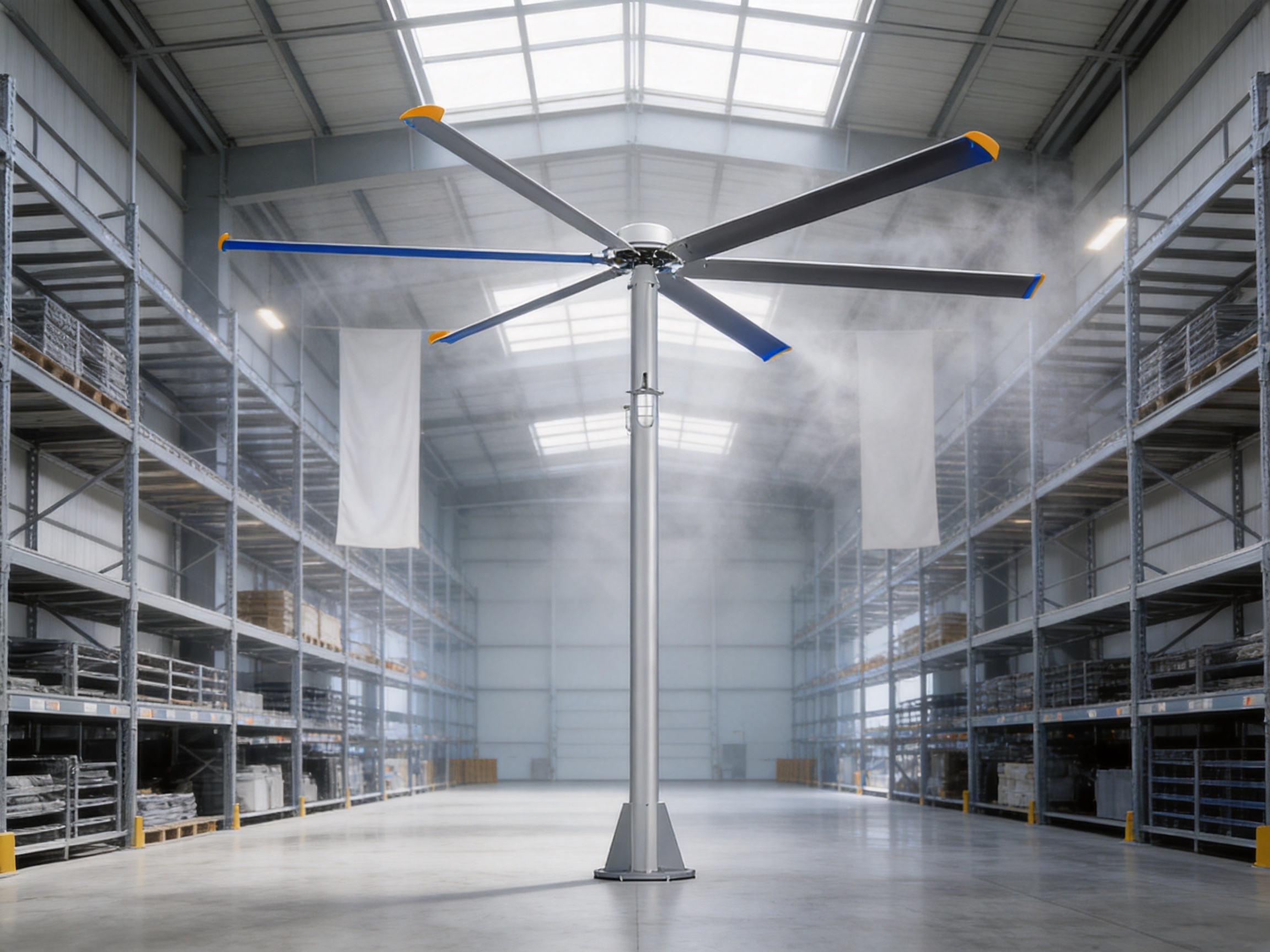
The ALF-36 offers an adjustable operating speed from 0 to 92 rpm. This feature allows the fan to respond to different operating conditions instead of running continuously at a single output. A lower setting may be appropriate during mild weather, in lightly occupied areas, or when only gentle air movement is needed. A higher setting can be selected when heat loads increase, occupancy rises, or stronger circulation is required.
Adjustable speed can support energy-conscious operation. Rather than operating every unit at maximum capacity throughout the day, facility managers can match fan output to actual demand. This may be useful in buildings with changing production schedules, seasonal temperature variation, or different occupancy levels between shifts.
Speed adjustment also improves user comfort. Different workstations may have different airflow preferences, and some activities may require stronger circulation than others. A controllable industrial fan gives operators more flexibility than an on-and-off system with no intermediate setting.
When the fan is integrated into an overall ventilation plan, speed control can be coordinated with doors, exhaust fans, air-conditioning systems, and environmental monitoring. For example, a facility may use moderate circulation during normal operations and increase the airflow during peak production or warmer afternoon conditions. Any automated control arrangement should be designed according to the final electrical and control configuration supplied for the project.
The featured ALF-36 specification lists a motor power of 350 W. For a large-diameter industrial fan, this power rating supports a useful combination of broad air movement and modest electrical demand. The product is designed to move a large quantity of air without depending on the high electrical input commonly associated with numerous small fans operating simultaneously.
Electrical consumption is influenced by actual operating speed, motor efficiency, controls, supply conditions, and operating hours. Even so, the rated power provides a useful reference for facility planning. Purchasers can compare the expected energy use of one large circulation unit with the combined consumption of multiple smaller fans that may otherwise be required to cover the same area.
Lower operating power can provide additional practical benefits. It may reduce the load on electrical circuits, simplify facility power planning, and support lower operating costs over the service life of the equipment. These benefits are particularly relevant in warehouses, workshops, and commercial spaces that require ventilation for long periods each day.
Energy efficiency should always be assessed together with the required airflow result. A fan with a low nominal power rating is not automatically the best choice if it cannot deliver adequate circulation. The advantage of this product is its combination of a large blade diameter, high listed air volume, variable speed, and a relatively compact motor rating for the intended application.
The product family provides blade configurations that include five- and six-blade options. Blade quantity influences the airflow character, rotational balance, loading, and final performance of the fan. The correct configuration should be selected according to the technical requirements of the project and the supplier’s final engineering recommendation.
Color customization is also available for the blade finish. Listed color choices include silver, yellow, red, blue, black, and other options. This allows the product to be coordinated with facility branding, safety color schemes, architectural preferences, or customer-specific project requirements.
Color choice may have practical importance in industrial locations. Bright colors can improve equipment visibility in certain facilities, while neutral finishes may be preferred in retail, exhibition, or sports environments. In all cases, the selected finish should be confirmed as part of the purchase specification.
Customization is more than a visual feature. Industrial customers may require particular dimensions, control arrangements, packaging methods, documentation, electrical specifications, or installation accessories. A manufacturer with its own production and testing capabilities is better positioned to evaluate such requirements and coordinate them across engineering, manufacturing, inspection, and delivery.
Many industrial sites use several wall-mounted, floor-standing, or portable fans to address local heat and ventilation problems. These products can be useful for targeted cooling, but they may become less efficient when a large area must be covered. Multiple small fans require more installation locations, more electrical connections, more maintenance points, and more frequent repositioning.
The 12-foot rotating pole-base fan offers a different approach. Its large sweep diameter and high listed air volume allow it to influence a broad area from one elevated position. The rotating function extends coverage around the base, while adjustable speed enables the output to be matched to operational needs.
Compared with wall-mounted fans, the pole-base design does not depend on a suitable wall structure. This can be important in warehouses with limited wall space, facilities with insulated or lightweight wall panels, and buildings where wall-mounted equipment would interfere with storage or machinery. The fan can be located in an open floor zone, provided that the installation area meets the necessary safety requirements.
Compared with fixed ceiling fans, the pole-base configuration may be simpler to deploy in buildings where ceiling support, structural reinforcement, or access equipment would make overhead installation difficult. It can also be useful when ceiling height, lighting systems, sprinkler layouts, or overhead cranes restrict the available installation positions.
Compared with portable compact fans, the industrial vertical fan is intended for a more permanent and wide-area role. Its larger dimensions, tall support, and industrial construction make it better suited to sustained operation in spacious commercial and industrial settings. It should not be treated as a lightweight household appliance or moved casually without following proper handling procedures.
Fixed-direction fans remain appropriate for localized cooling, but their effectiveness depends heavily on precise positioning. If the work area changes, the airflow path may no longer align with the people, equipment, or storage zones that need circulation. A rotating fan offers more flexibility by changing its discharge direction during operation.
The 360-degree movement can improve perceived comfort over time because it avoids concentrating all airflow on one small group of users. It can also support a more balanced environment in facilities where several teams work around a central area or where people move between different workstations.
Rotation may be particularly useful in agricultural barns, exhibition halls, indoor arenas, and retail spaces. These environments often contain broad open areas with changing activity patterns. A fixed fan may require manual repositioning, whereas the rotating model can provide continuing circulation without constant intervention.
Warehouses commonly have large floor plans, high ceilings, long operating hours, and varying levels of activity. The fan can support air circulation between storage aisles, packing zones, loading areas, and employee workstations. By moving air through open areas, it may help reduce the sensation of stagnant conditions and distribute naturally ventilated or conditioned air more evenly.
Warehouse managers should consider rack height and aisle orientation when selecting the fan position. Large storage structures can interrupt airflow, so the fan should be located where its rotating pattern can reach the greatest open area. The installation should also maintain appropriate clearance from forklifts, lifting equipment, emergency routes, and stored goods.
Manufacturing facilities often contain heat-producing machinery, production lines, welding stations, conveyors, and assembly areas. The fan can help circulate air around these zones and improve comfort for workers. Adjustable speed allows airflow to be increased during higher production loads or reduced during quieter periods.
The fan should be used as part of a complete industrial ventilation plan. Where processes generate dust, fumes, vapor, or hazardous gases, local exhaust ventilation and filtration remain essential. The circulating fan can complement those systems but should not be used as a substitute for source capture.
Automotive workshops may experience heat from engines, exhaust systems, compressors, welding equipment, and vehicle movement. The large rotating fan can circulate air through service bays and help create a more comfortable working environment. Its freestanding format can be advantageous where wall space is occupied by tools, cabinets, lifts, or service equipment.
Workshop operators should evaluate the fan’s position in relation to vehicle movement, overhead doors, lifting platforms, fuel storage, and exhaust extraction systems. The fan must be installed and operated in accordance with workplace safety requirements and the environmental conditions of the shop.
Indoor sports facilities require effective air movement during training, competitions, and public events. The fan can support broad circulation across courts, spectator areas, and activity zones. Its adjustable speed enables operators to choose a comfortable airflow level for different sports and occupancy conditions.
The 360-degree rotation function can help avoid directing excessive airflow toward one court or seating section. The fan should be positioned so that it does not interfere with sports equipment, emergency exits, lighting, or spectator movement. Protective measures and appropriate clearances are especially important in public venues.
Barns and agricultural buildings benefit from air circulation for temperature management and general environmental control. The fan may support airflow around livestock areas, storage zones, or crop-handling spaces. Its broad coverage can be useful where natural ventilation alone does not provide consistent air movement.
Agricultural applications require careful attention to dust, moisture, corrosive environments, cleaning practices, and animal safety. The final product configuration should be selected according to the conditions of the barn. Operators should establish a regular inspection schedule to address dust accumulation, fastener condition, electrical safety, and structural stability.
Large retail spaces and exhibition halls often need a comfortable environment without excessive localized drafts. A rotating fan can support air mixing across open customer areas, event zones, and temporary displays. Blade color and overall placement can be coordinated with the visual requirements of the venue.
In these applications, noise, appearance, pedestrian clearance, and control convenience may be especially important. The equipment should be positioned away from customer pathways and display structures, and the control strategy should prevent unintended operation during periods when the venue is closed.
Food-processing facilities may use industrial air circulation to support temperature and humidity management in suitable noncritical areas. Consistent airflow can contribute to a more uniform indoor environment, but hygiene requirements must guide the selection, installation, and maintenance process.
The product should not be installed where uncontrolled airflow could compromise product protection, sanitation zones, or controlled cleanroom conditions. Facility managers should evaluate materials, cleaning procedures, air direction, and applicable food-safety standards before approving use in a processing area.
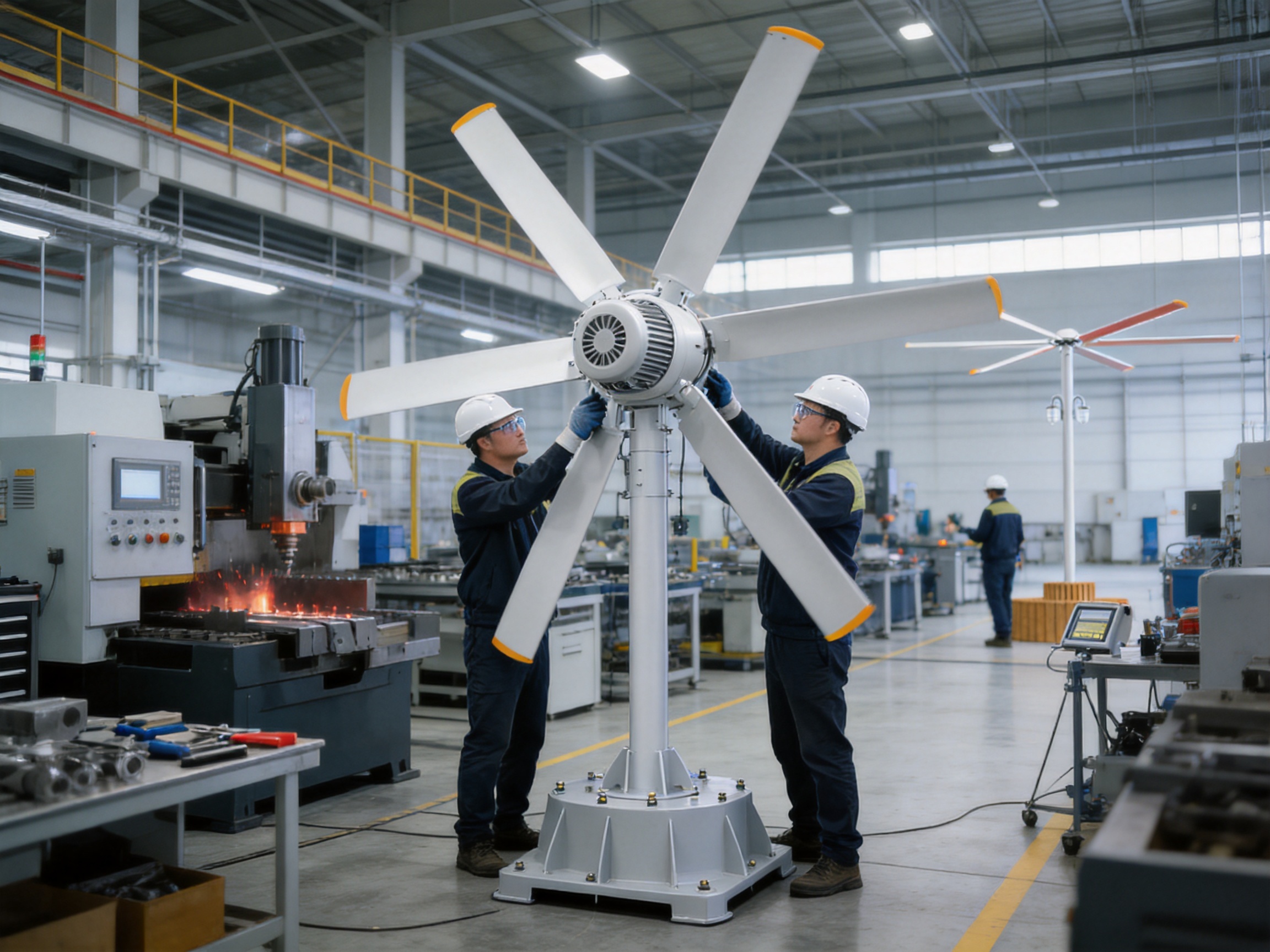
The product is manufactured by Shanghai Aipu Fans Co., Ltd., an industrial fan company established in Shanghai, China, in 2006. The company focuses on industrial-grade ceiling fans, large air-movement products, and ventilation solutions for industrial customers in different markets.
A significant manufacturing advantage is the company’s approximately 8,000-square-meter production base. A dedicated production facility provides space for organized material handling, component processing, assembly, inspection, packaging, and finished-product management. For industrial equipment, a controlled production environment can improve consistency and make it easier to coordinate multiple stages of manufacturing.
The facility includes high-precision automated machinery, a machining center, a cutting center, a welding center, and a testing center. These capabilities support a more integrated production process. Instead of relying entirely on dispersed external processing, the manufacturer can manage important operations within a coordinated manufacturing system.
High-precision automated machinery can support repeatable component production and dimensional consistency. This is important for large rotating equipment, where accurate parts contribute to balance, fit, and reliable assembly. Automated processing can also improve production efficiency for repeated orders and help maintain consistency across different batches.
The machining center supports the preparation and finishing of mechanical components that require accurate dimensions. Precision machining is relevant to connection points, shafts, brackets, supports, and other parts whose fit affects the performance and stability of the assembled fan.
The cutting center enables controlled preparation of metal or other structural materials according to production drawings and specifications. Accurate cutting can reduce unnecessary material waste and contribute to more consistent frame, support, and structural components.
The welding center provides a designated environment for structural fabrication. Industrial fans require robust support components because the equipment must remain stable during operation and rotation. Controlled welding processes, appropriate inspection, and skilled fabrication help support the integrity of the pole-base structure and related assemblies.
The testing center is another important strength. Testing allows finished products or key components to be evaluated before shipment. Depending on the final product configuration, inspection may include electrical checks, operational testing, rotational behavior, structural review, dimensional verification, and appearance inspection. The exact inspection program should be confirmed with the manufacturer for each project.
Quality control for a large industrial fan should begin with the selection and verification of materials and continue through every major production stage. Components must be inspected for dimensions, surface condition, compatibility, and suitability for their intended function. A consistent process helps reduce the risk of assembly problems and supports dependable operation.
During fabrication, structural components should be checked for alignment, weld quality, and dimensional accuracy. A tall pole-base assembly must be stable and correctly assembled because the fan’s operating forces are transferred through the support structure. Proper alignment also contributes to smoother rotation and reduced mechanical stress.
During assembly, the blade system, motor, support structure, rotating mechanism, fasteners, electrical components, and protective elements should be installed according to the product design. Fasteners should be tightened correctly, and moving parts should be checked for interference or abnormal resistance.
Final testing provides an opportunity to identify issues before delivery. The manufacturer’s testing center can help verify that the assembled unit performs according to the approved configuration. Customers purchasing customized quantities or project-specific models should request the relevant inspection records, test procedures, and acceptance criteria as part of the commercial agreement.
Quality is also influenced by packaging and shipment preparation. Large fan components must be protected against impact, moisture, abrasion, and deformation during transportation. Properly organized packaging can simplify on-site inventory checks and reduce installation delays.
Industrial customers often need more than an off-the-shelf product. They may require a particular blade color, voltage, frequency, control arrangement, packaging format, documentation package, or quantity configuration. The manufacturer’s focus on industrial fan production and OEM services creates a foundation for handling these project-specific requirements.
Customization should be developed through a clear technical process. The customer should provide information about the building size, ceiling height, operating environment, expected use, power supply, airflow objectives, installation location, and any applicable safety or hygiene requirements. The manufacturer can then review the application and confirm an appropriate model and configuration.
For international customers, communication about technical units is particularly important. Diameter, height, air volume, speed, voltage, frequency, power, and weight should be clearly documented using consistent units. Product drawings, electrical diagrams, installation instructions, spare-parts information, and inspection documents can further support successful project execution.
OEM capability can also assist distributors and industrial equipment suppliers that need products aligned with their own market requirements. Branding, packaging, color, labeling, and documentation may be discussed according to the applicable business agreement and regulatory requirements.
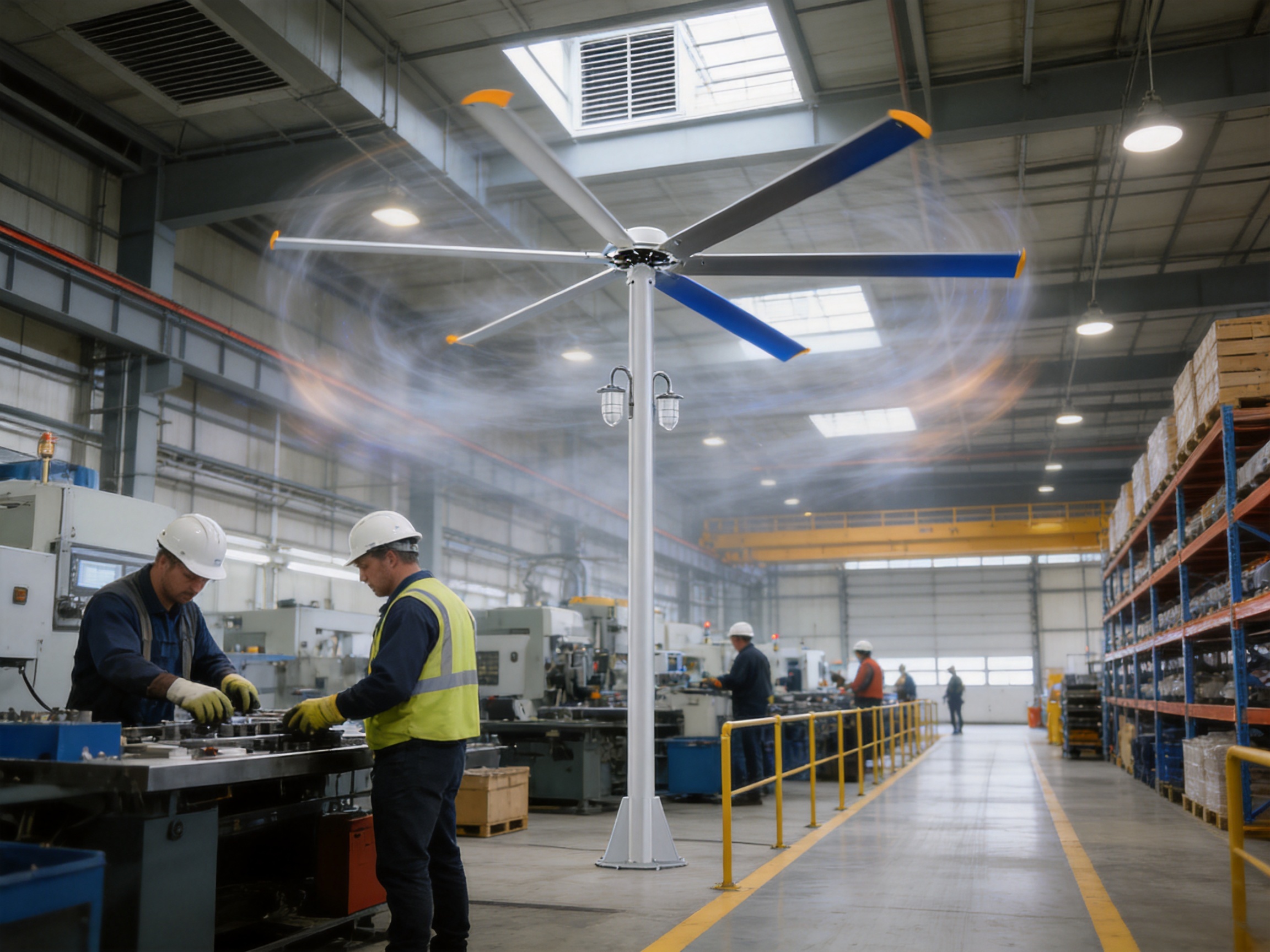
Proper installation is essential for the safe and effective operation of a large rotating industrial fan. Before delivery, the customer should confirm that the intended location provides a stable and level base. The floor must be capable of supporting the equipment and the forces associated with operation.
The installation area should be separated from forklift routes, vehicle paths, pedestrian lanes, emergency exits, fire equipment, and areas where materials may fall or collide with the fan. A clear safety zone should be maintained around the rotating assembly and pole-base structure. The exact clearance should follow the manufacturer’s instructions, local codes, and the final installation design.
The electrical supply must match the approved specification. The featured product is listed at 220 V and 50/60 Hz, but electrical conditions can vary between countries and facilities. A qualified electrician should verify supply voltage, frequency, grounding, protection, isolators, control wiring, and any required overload or short-circuit protection before commissioning.
Installation should be performed by trained personnel familiar with industrial rotating equipment. The fan should not be operated if there is visible structural damage, loose hardware, damaged wiring, unusual resistance, or contact between moving and stationary parts. A commissioning inspection should be completed before the fan is placed into routine service.
Regular maintenance helps preserve performance and reduce the risk of unexpected downtime. Maintenance intervals should be determined by operating hours, environmental conditions, dust levels, humidity, vibration, and the manufacturer’s service recommendations.
Routine inspections may include checking blade condition, fasteners, support components, electrical connections, control devices, protective parts, and the rotation mechanism. Operators should look for cracks, deformation, corrosion, unusual noise, abnormal vibration, or changes in airflow. Any problem should be investigated before continued operation.
Dust and debris can accumulate in industrial environments, particularly in warehouses, agricultural buildings, workshops, and manufacturing plants. Accumulation may affect balance, airflow, motor cooling, and hygiene. Cleaning should be completed using methods suitable for the product’s electrical and surface materials. Power must be isolated before maintenance or cleaning near moving and electrical components.
Lubrication, if required, should follow the manufacturer’s approved procedure and lubricant specification. Unapproved lubricants or excessive application may attract dust or affect components. Bearings, rotating assemblies, and other service parts should be inspected according to the equipment documentation.
Maintenance records should include inspection dates, observed conditions, repairs, replacement parts, and responsible personnel. A documented maintenance program helps facility managers identify recurring issues and schedule service before a small problem becomes a major interruption.
The ALF product family includes several diameter options. The ALF-28 has a listed diameter of 2,800 mm, ALF-33 has a diameter of 3,300 mm, ALF-36 has a diameter of 3,600 mm, and ALF-38 has a diameter of 3,800 mm. The correct selection depends on the area to be covered, the required air movement, available space, and the building’s operational conditions.
| Model | Nominal Diameter | Listed Voltage | Listed Power | Listed Height |
|---|---|---|---|---|
| ALF-28 | 2,800 mm / approximately 9 feet | 220 V | 0.30 kW | 3,800 mm |
| ALF-33 | 3,300 mm / approximately 11 feet | 220 V | 0.35 kW | 3,800 mm |
| ALF-36 | 3,600 mm / approximately 12 feet | 220 V | 0.35 kW | 3,800 mm |
| ALF-38 | 3,800 mm / approximately 13 feet | 220 V | 0.40 kW | 3,800 mm |
The diameter is only one factor in model selection. Building geometry, obstacles, desired airflow velocity, temperature conditions, occupancy, duty cycle, and control requirements should also be considered. A larger fan is not automatically better for every location. In a crowded workshop or a space with many partitions, a smaller model or multiple strategically positioned units may provide better practical coverage.
Customers should also verify the final data sheet because blade quantity, speed range, weight, air volume, and other values may vary according to the selected configuration. The product information supplied for this range includes multiple blade and speed values, so the final quotation and technical drawing should identify the exact version being ordered.
Facility managers seek equipment that is effective, controllable, maintainable, and suitable for the building’s long-term use. This industrial vertical fan supports those goals through wide-area circulation, speed adjustment, a freestanding design, and a range of available configurations.
The fan can help simplify ventilation planning because it offers a single large-area circulation point rather than requiring many small units in every zone. It can also support layout flexibility because the pole-base format does not require permanent ceiling or wall attachment. When the facility changes, the fan’s role can be reassessed and its position adjusted by qualified personnel.
The adjustable speed range supports operational control. Facility managers can develop seasonal operating schedules, coordinate output with production shifts, and reduce airflow during periods of low demand. This can help create a more deliberate ventilation strategy rather than relying on continuous full-power operation.
The product’s industrial manufacturing background also provides a basis for discussing spare parts, service requirements, technical documentation, and customized orders. These factors are important when equipment is installed in multiple facilities or when a distributor must support customers over an extended period.
The performance of an industrial fan depends on more than the motor and blades. Structural design, component accuracy, welding quality, assembly consistency, electrical integration, testing, packaging, and after-sales communication all influence the customer’s experience.
A manufacturer with dedicated machining, cutting, welding, and testing capabilities can coordinate these stages more effectively. The production team can identify relationships between component dimensions, assembly requirements, and final operating performance. This integrated approach can be particularly valuable for customized equipment and repeat industrial orders.
Manufacturing experience since 2006 provides a substantial operating history in the industrial fan sector. The company’s focus on industrial-grade ceiling fans and ventilation solutions means that its production and engineering resources are directed toward large air-movement applications rather than general consumer appliances.
For customers evaluating suppliers, important questions include whether the manufacturer can provide technical drawings, confirm electrical details, support customization, conduct pre-shipment testing, supply spare parts, and respond to installation or maintenance questions. These services can be as important as the initial product specification, especially for large commercial installations.
Before ordering the 12-foot rotating pole-base industrial fan, the customer should define the intended application. Information should include the building type, floor area, ceiling height, operating temperature, humidity, dust level, occupancy, equipment layout, and desired operating schedule.
The purchaser should confirm the model, diameter, blade quantity, motor power, voltage, frequency, speed range, air volume, height, weight, blade color, control method, and packaging requirements. Any difference between standard and customized configurations should be written into the quotation or technical agreement.
The site should be checked for floor strength, available space, safety clearances, electrical access, transport routes, and maintenance access. If the equipment will be installed in a public venue, agricultural building, food facility, or hazardous work environment, the relevant local regulations and internal safety procedures should be reviewed.
Finally, the customer should establish expectations for documentation, delivery, installation, commissioning, spare parts, warranty terms, and after-sales support. A clear project specification reduces misunderstandings and helps ensure that the final equipment is appropriate for the actual facility.
It is a large industrial air-circulation fan in the Airpole Pedestal Fan category. It uses a tall pole-base structure and a large-diameter fan assembly to move air through spacious commercial and industrial environments.
The featured ALF-36 model has a nominal diameter of 3,600 mm, which is approximately 12 feet.
The listed full-loading air volume is up to 3,600 cubic meters per minute. Actual airflow can vary according to the selected configuration, operating conditions, building layout, and installation position.
The featured configuration is listed with an adjustable speed range of 0 to 92 rpm. The final speed specification should be confirmed on the approved technical documentation for the ordered model.
The product is designed with a 360-degree rotating function that distributes airflow around the installation area. The exact rotation behavior, control method, and operating cycle should be confirmed with the supplier before ordering.
The product information lists 220 V and 50/60 Hz. Electrical compatibility must be checked against the customer’s local power supply and the final product configuration.
Yes. Warehouses are one of the intended applications. The fan can support air circulation in storage, packing, loading, and other open areas, provided that the installation location and safety clearances are properly planned.
Yes. It can help circulate air in manufacturing environments, but it should complement rather than replace local exhaust, filtration, or source-capture systems where processes generate dust, fumes, vapors, or hazardous gases.
Yes. Its broad airflow and rotating function can support air movement across sports and spectator areas. It must be positioned safely away from players, equipment, emergency routes, lighting, and public circulation paths.
The listed configuration includes five- or six-blade options. The correct selection should be confirmed according to the required performance and the manufacturer’s final engineering recommendation.
Yes. Listed choices include silver, yellow, red, blue, black, and other colors. Availability should be confirmed for the specific order quantity and finish requirement.
No. It is a pole-base industrial fan designed for freestanding floor installation. The base must be installed on a suitable surface and protected from impacts, unauthorized movement, and interference with traffic routes.
Maintenance generally includes inspection of blades, fasteners, structural components, electrical connections, rotation mechanisms, and protective elements. Cleaning, lubrication, and service should follow the manufacturer’s instructions and the conditions of the installation environment.
The manufacturer provides OEM services and focuses on industrial ventilation solutions. Customers can discuss blade colors, electrical requirements, documentation, packaging, control arrangements, and other project-specific needs during the technical review process.
Customers should confirm the exact model, diameter, blade quantity, motor power, airflow, speed range, voltage, frequency, dimensions, weight, installation method, safety clearances, control system, delivery terms, testing documents, and after-sales support.
The 12-foot 360-degree rotating pole-base industrial vertical fan is a practical solution for large spaces that require broad, adjustable, and flexible air circulation. Its ALF-36 configuration combines a 3,600 mm diameter, up to 3,600 cubic meters per minute of listed full-loading air volume, 0 to 92 rpm speed adjustment, 350 W motor power, and a 3,800 mm support height.
The product’s main advantages are its wide-area airflow, full-area rotational coverage, freestanding installation concept, adjustable operating speed, blade configuration options, and suitability for a wide range of industrial and commercial environments. These features make it a strong alternative to using numerous small fans or relying exclusively on fixed-direction equipment.
Its value is further supported by the manufacturer’s industrial production experience, approximately 8,000-square-meter production base, high-precision automated machinery, machining center, cutting center, welding center, testing center, and OEM service capabilities. Together, these resources support controlled manufacturing, product customization, quality inspection, and project-oriented ventilation solutions.
For the best result, the fan should be selected and installed according to the building’s actual airflow requirements, electrical conditions, safety rules, and maintenance capabilities. When properly specified and integrated into a complete ventilation strategy, it can improve air movement, occupant comfort, temperature distribution, and operational flexibility in large warehouses, workshops, factories, agricultural buildings, sports venues, exhibition halls, retail spaces, and other high-volume environments.
1. Product technical information for the ALF-28, ALF-33, ALF-36, and ALF-38 industrial fan series, supplied in the product data materials.
2. Manufacturer information for Shanghai Aipu Fans Co., Ltd., including company history, production facilities, manufacturing capabilities, and OEM services.
3. Industrial ventilation engineering principles concerning air circulation, airflow distribution, temperature stratification, and large-space ventilation planning.
4. General occupational safety practices for the installation, operation, inspection, and maintenance of industrial rotating equipment.
5. General facility-management guidance for warehouse, manufacturing, agricultural, sports, retail, exhibition, automotive, and food-processing ventilation applications.
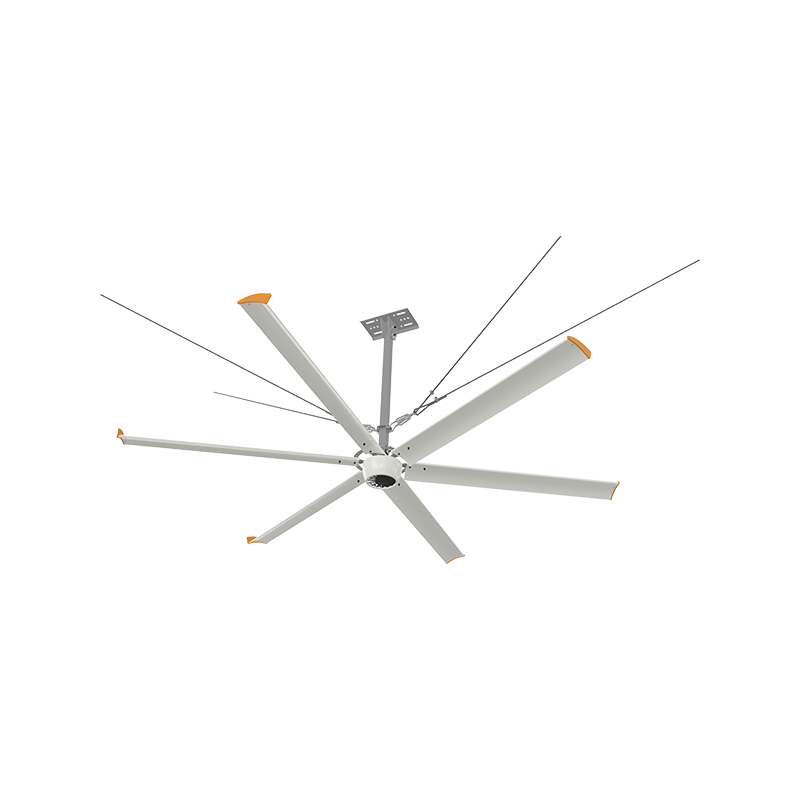
The 15-foot Even Airflow Industrial BLDC Ceiling Fan utilizes a high-efficiency BLDC motor and carefully designed blades. This ceiling fan operates with extremely low noise levels, making it suitable ...
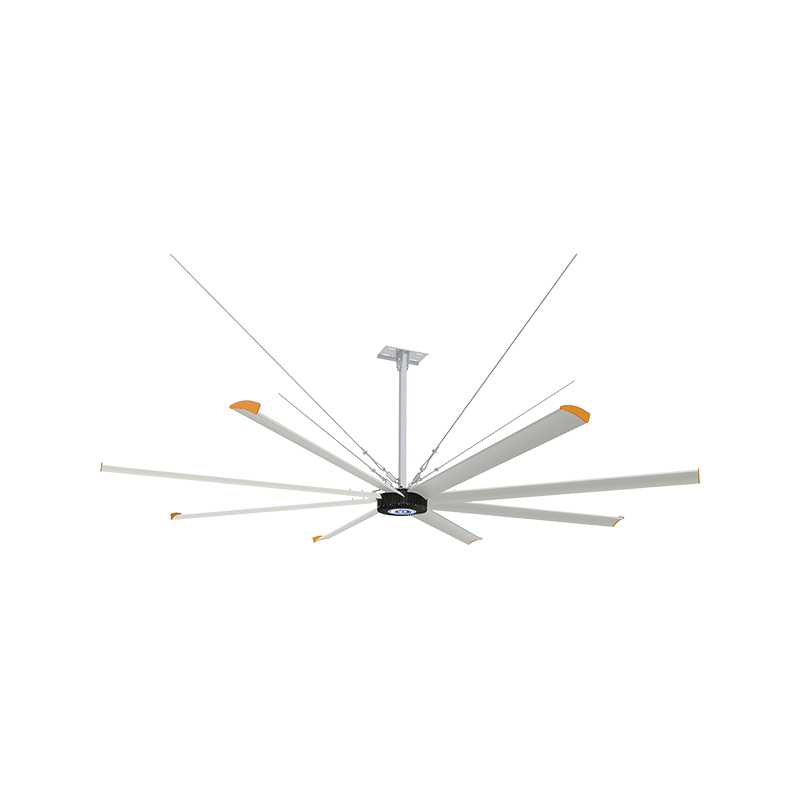
The 8-foot HVLS Large Industrial BLDC Ceiling Fan is equipped with a 0.3KW brushless DC motor, offering higher energy efficiency and lower noise levels. The lower power consumption design helps users ...
The 12-foot 360-degree rotating pole base industrial vertical fan is a high-efficiency air circulation device designed for large spaces, suitable for large-scale commercial or industrial applications ...
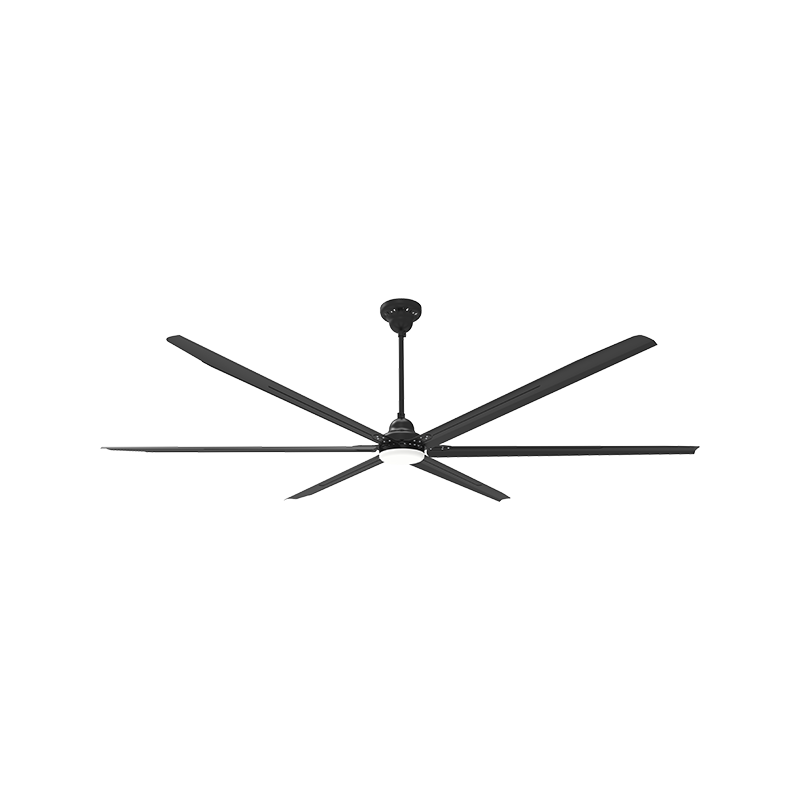
1. Core Technology: High Volume, Low SpeedNatural Breezes: Unlike the “harsh” wind from small fans, HVLS fans use massive blades rotating at low speeds to create a large-scale, three-dimensional breez...
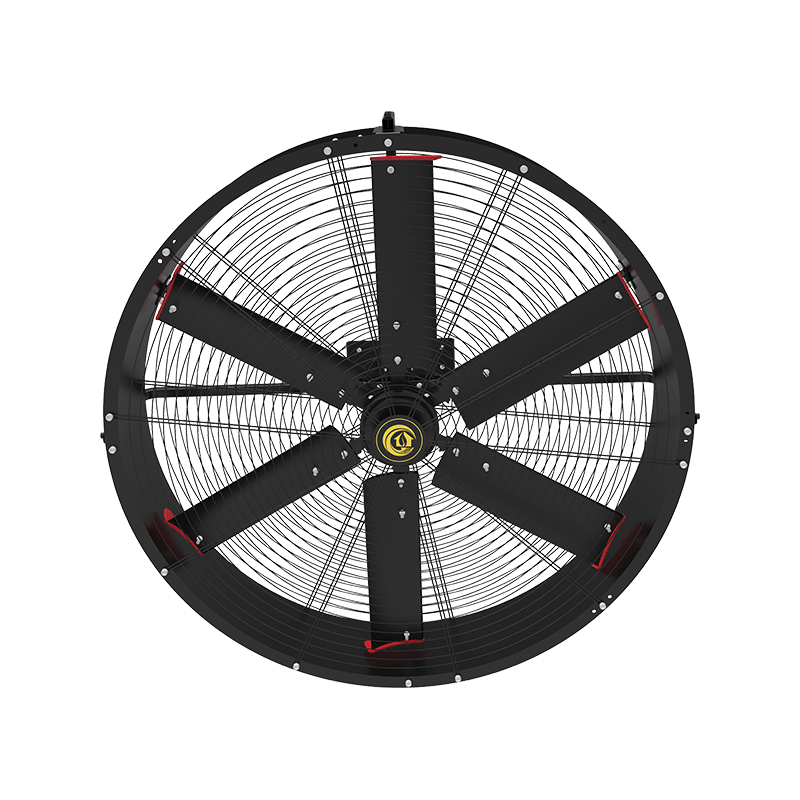
1. Extreme Airflow & Wide CoverageEquipped with massive 79-inch (2.0m) diameter aerospace-grade aluminum alloy blades. These precision-balanced blades generate a powerful, stable laminar airflow t...
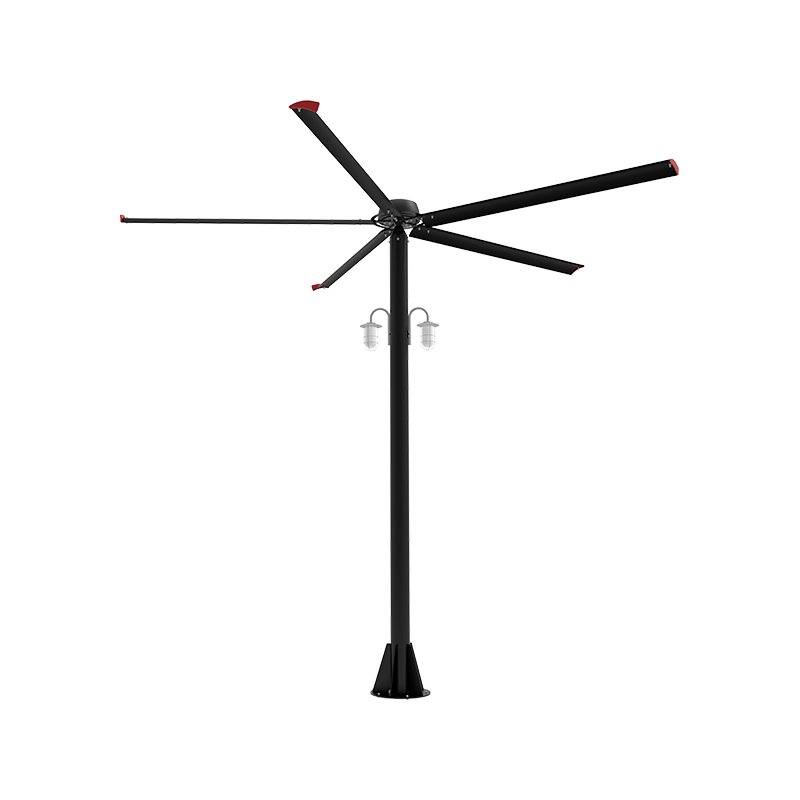
The large vertical HVLS floor-standing ventilation fan offers a variety of color options, allowing users to choose the most suitable color based on different environments and decoration needs. This c...
A 6,800 m² factory floor used to be ventilated by roughly 300 small wall and pedestal fans. Six large ceiling fans now cover the same area, and in the manufacturer's own comparison that change cuts m...
READ MORELarge-space air movement Big Commercial Fans: How to Size, Mount and Power Them One 24 ft ceiling fan can replace forty pedestal units, but only when span, mounting height and motor match the buildin...
READ MOREShanghai Aipu Fans Co., Ltd., established in Shanghai in 2006, focuses on manufacturing industrial-grade high-quality ceiling fans, relying on industry-leading motor technology and advanced manufactu...
READ MOREAt a distribution center in a hot climate, the worst heat gathers near the loading dock. The bay doors stay open through most of the shift, so any air that moves toward the dock gets pulled outside b...
READ MORE Custom Large Industrial Fans Manufacturers