

 English
 Español
 عربى

The 15-foot Even Airflow Industrial BLDC Ceiling Fan utilizes a high-efficiency BLDC motor and carefully designed blades. This ceiling fan operates with extremely low noise levels, making it suitable ...
Content
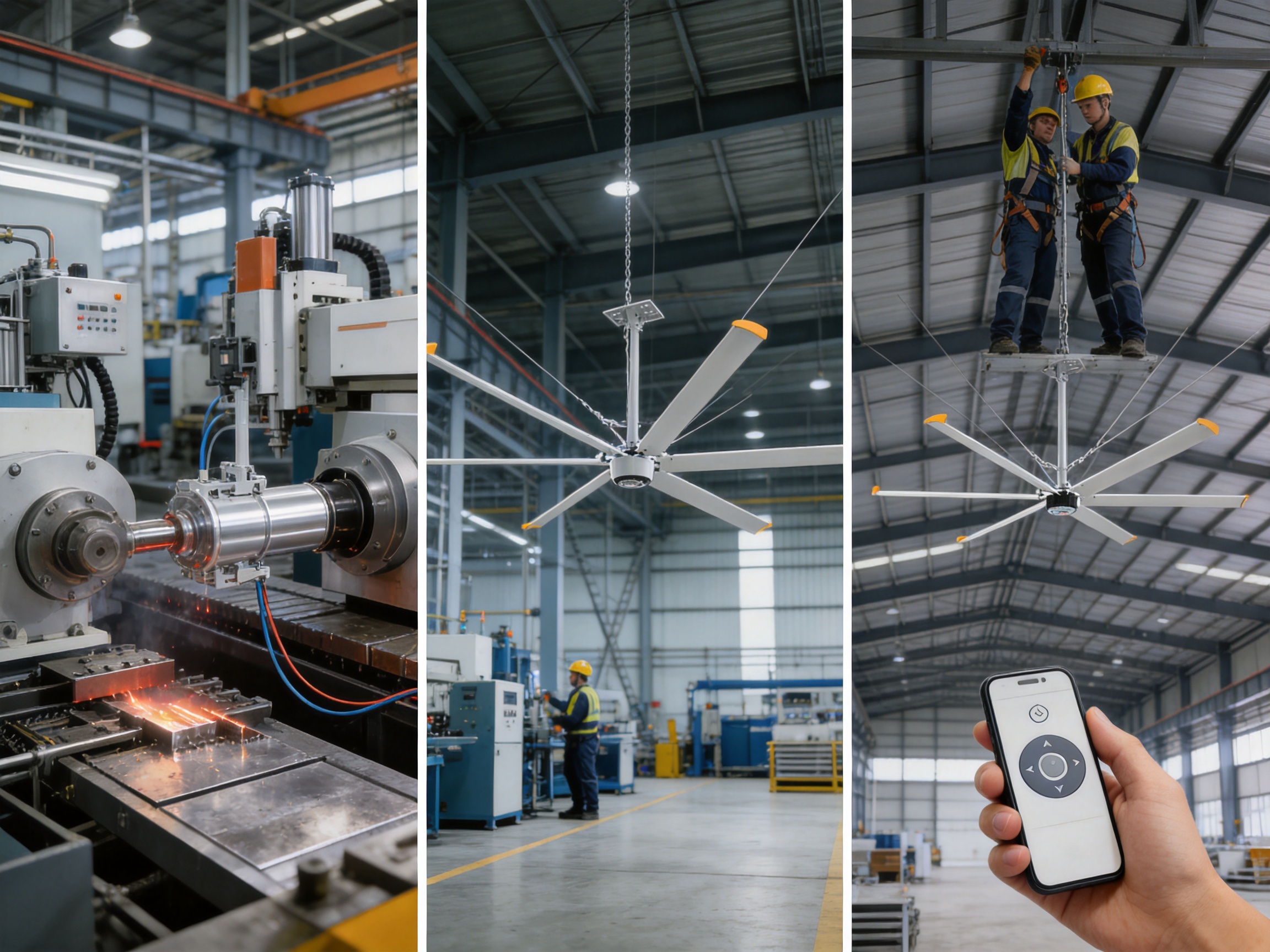
Industrial facilities require dependable air movement throughout the year. Warehouses, workshops, logistics centers, manufacturing plants, agricultural buildings, sports facilities, retail spaces, and other large interiors often have high ceilings and wide floor areas where conventional fans cannot distribute air effectively. A 7-foot low-energy HVLS industrial brushless DC ceiling fan provides a practical solution by combining broad airflow coverage, low operating energy, stable ceiling installation, and convenient speed control in one industrial ventilation system.
This type of fan is designed for locations where air must be moved across a substantial area rather than concentrated in a small zone. Its large aluminum alloy blades create a steady, high-volume airflow at relatively low rotational speed. The resulting air circulation can help reduce stagnant air, improve thermal comfort, support ventilation strategies, and create a more pleasant working environment for employees and visitors.
The product is built around a brushless permanent magnet synchronous motor, commonly referred to as a PMSM or brushless DC motor. This motor technology provides efficient power conversion, smooth operation, and accurate speed control. With a listed power configuration of approximately 0.3 kW for the 7-foot version, the fan is intended to provide a strong balance between airflow performance and energy consumption.
Manufactured by Shanghai Aipu Fans Co., Ltd., the fan benefits from the company’s experience in industrial ceiling fan production, motor technology, automated manufacturing, and customized ventilation solutions. The manufacturer operates an 8,000-square-meter production base with automated machinery, machining, cutting, welding, and testing facilities. These capabilities support consistent manufacturing quality and enable OEM and ODM customization for customers with different installation and control requirements.
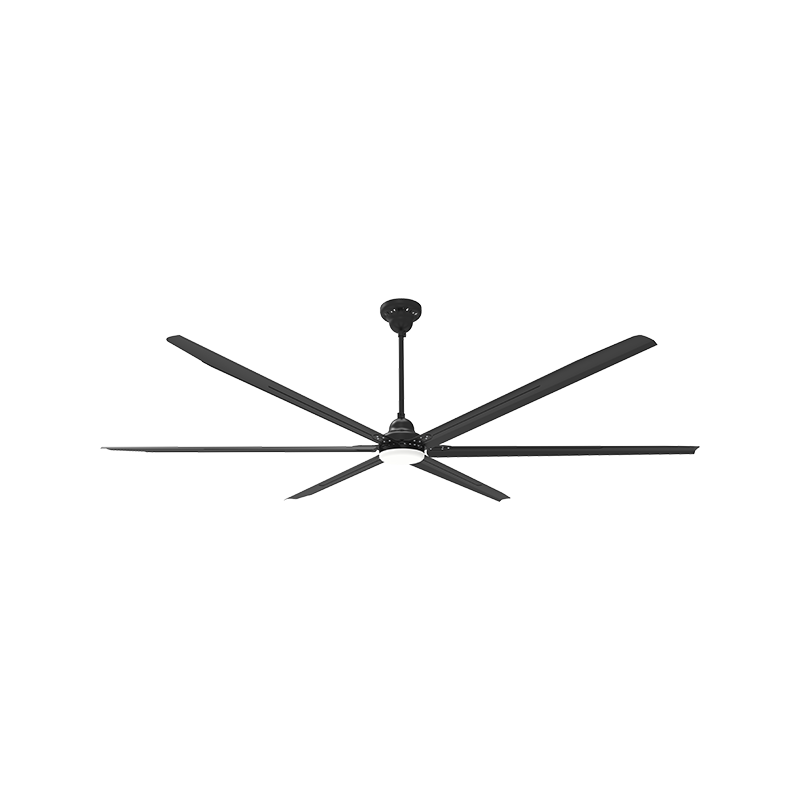
The 7-foot low-energy HVLS industrial brushless DC ceiling fan is a compact member of a broader industrial fan family. Its nominal diameter is approximately 2.1 meters, or 7 feet, and it uses six aluminum alloy blades. The fan weighs approximately 30 kilograms, allowing it to remain substantial enough for stable operation while still being comparatively manageable during installation.
As a ceiling-mounted ventilation device, the fan is secured using a sturdy mounting bracket and a standard installation interface. This arrangement makes it suitable for many industrial roof structures, including steel structures, round steel supports, and concrete structures, provided that the building support and installation method are properly assessed by qualified personnel.
The fan is intended for industrial and commercial spaces where a combination of low energy consumption and controlled air circulation is important. Typical applications may include factories, warehouses, workshops, distribution centers, showrooms, agricultural buildings, gyms, commercial halls, and other large indoor environments.
Specification |
7-Foot Configuration |
Product type |
Low-energy HVLS industrial ceiling fan |
Motor type |
Brushless DC/PMSM motor |
Fan diameter |
Approximately 2.1 m / 7 ft |
Blade quantity |
6 pieces |
Blade material |
Aluminum alloy |
Listed power |
Approximately 0.3 kW for the specified configuration |
Product weight |
Approximately 30 kg |
Speed range |
Variable speed; published product information indicates up to 160 RPM for the configured unit |
Input options |
200–240 V or 380–480 V within the product family; voltage should be confirmed before order |
Frequency |
50 Hz or 60 Hz |
Control options |
Remote control and optional Wi-Fi application control |
Warranty information |
Three years for the motor and inverter; other accessory warranty terms should be confirmed with the supplier |
HVLS stands for high volume, low speed. Unlike a small high-speed fan that creates a narrow and concentrated air stream, an HVLS fan moves a larger quantity of air over a wider area. The large blade span allows the fan to generate a broad column of air that travels downward and then spreads horizontally across the floor.
When the moving air reaches occupants, it can improve perceived comfort through increased evaporation at the skin. In warm environments, this air movement may make people feel cooler even when the room temperature has not changed significantly. The fan can also help distribute air more evenly, reducing local pockets of stagnant or excessively warm air.
In buildings with high ceilings, warm air may collect near the roof because warm air naturally rises. Controlled fan operation can assist with destratification by encouraging air exchange between upper and lower areas. The exact result depends on building height, insulation, internal heat sources, ventilation openings, fan location, and operating speed. For this reason, proper system planning is important when several fans are used in a large facility.
The 7-foot format provides a useful middle ground. It is larger than many ordinary commercial ceiling fans but smaller and easier to place than very large industrial HVLS units. This makes it suitable for facilities that need broad air movement but have limited ceiling space, multiple structural obstructions, or several separate work zones.
The brushless motor is designed to operate without the mechanical brushes used in traditional brushed motors. Eliminating brush contact reduces friction-related losses and removes a common wear point. The motor can therefore provide efficient operation with less routine replacement of brush components.
Permanent magnet synchronous motor technology uses permanent magnets to create the motor’s magnetic field. This can improve the conversion of electrical energy into rotational motion. In an industrial ceiling fan, efficient motor operation is particularly valuable because the unit may run for long periods during working hours or throughout the warm season.
Lower energy use does not automatically mean lower airflow. Motor efficiency, blade geometry, controller programming, fan diameter, and operating conditions all contribute to total performance. The product is designed to combine these elements so that a relatively low power input can produce useful circulation over a broad area.
A brushless motor with an electronic controller allows the operator to adjust speed more accurately than a simple fixed-speed motor. This helps users select a suitable airflow level for different conditions. A lower setting may be sufficient during mild weather, while a higher setting may be preferred during hot periods or when more intensive circulation is needed.
Variable-speed operation also helps avoid unnecessary energy consumption. Rather than running the fan continuously at maximum speed, building managers can match the operating level to occupancy, temperature, production activity, and ventilation requirements.
Electronic commutation supports controlled motor rotation and can contribute to smooth operation. Smooth rotation is important in ceiling-mounted equipment because vibration can affect comfort, noise levels, structural connections, and long-term reliability.
Stable operation also depends on correct balancing, secure mounting, proper blade installation, and regular inspection. The fan’s brushless motor is an important part of the system, but the complete installation must be treated as an engineered assembly.
Traditional motors with brushes may require periodic attention as the brushes wear. A brushless design avoids this specific maintenance task. This is valuable in warehouses and industrial buildings where access to ceiling-mounted equipment may require lifting equipment or temporary interruption of operations.
Although the motor requires less routine service, the fan still needs regular inspection. Fasteners, mounting brackets, wiring, controller connections, blade surfaces, and safety components should be checked according to the installation manual and the operating environment.
The fan uses six aluminum alloy blades. Aluminum alloy is widely used in industrial air movement equipment because it combines low weight with useful structural strength and corrosion resistance. A lighter blade assembly can reduce the load placed on the motor and mounting system while supporting efficient rotation.
Blade geometry is essential to the performance of any HVLS fan. The shape, pitch, width, surface finish, and balance of each blade influence the quantity and direction of air moved. Six blades provide a carefully distributed rotating surface that supports stable airflow and helps maintain smooth rotation when the fan is correctly assembled.
Aluminum alloy is also practical for facilities where cleaning and inspection are necessary. Smooth blade surfaces can be wiped or cleaned according to the facility’s maintenance procedures. In dusty environments, regular cleaning can help preserve airflow performance and prevent unnecessary accumulation on the blade surfaces.
The blade material should be selected in relation to the environment. Industrial sites with corrosive chemicals, high humidity, salt exposure, or aggressive cleaning agents may require additional material or coating considerations. Customers should discuss environmental conditions with the supplier before selecting a final configuration.
Energy cost is an important factor in industrial ventilation. A fan that operates for many hours each day can contribute significantly to a facility’s electrical consumption. The 7-foot low-energy configuration is intended to reduce the power needed for routine air circulation while maintaining useful airflow across a wide zone.
The listed power for the specified product is approximately 0.3 kW. Actual power consumption depends on selected speed, input voltage, controller efficiency, operating conditions, and electrical installation. At lower speeds, consumption may be lower than the maximum rated operating level. Facility operators should evaluate the complete duty cycle rather than relying only on the nameplate figure.
Compared with using numerous small high-speed fans, one properly positioned HVLS fan may simplify the ventilation layout and reduce the number of motors, switches, brackets, and maintenance points. The total benefit depends on the building and the alternative equipment being considered. A professional comparison should include purchase cost, installation, energy use, maintenance, expected operating hours, and replacement requirements.
HVLS fans do not replace every type of ventilation system. They primarily move and distribute air within a space. If a facility requires the removal of fumes, dust, humidity, or contaminated air, the fan should be integrated with suitable exhaust, filtration, make-up air, or mechanical ventilation equipment. Internal circulation and fresh-air ventilation serve different purposes and should be planned separately.
Published information for the wider product family identifies air volumes ranging from approximately 2,900 to 14,600 cubic meters per minute, depending on model, diameter, motor power, and blade configuration. The 7-foot unit belongs to the smaller end of the large industrial fan range, making it suitable for targeted zones or facilities where several moderate-size fans are preferable to a few very large units.
Coverage is influenced by more than fan diameter. Ceiling height, operating speed, roof shape, internal machinery, storage racks, partitions, doors, windows, and nearby fans can all affect airflow. A product description may state broad coverage potential, but the final layout should be confirmed using the actual building dimensions and operating conditions.
For a rectangular warehouse, designers may arrange fans in a grid or position them over occupied work zones. For production facilities, the layout may be aligned with workstations, assembly lines, inspection areas, or material-handling paths. In a retail or public facility, the installation may be planned to improve comfort while keeping the equipment visually coordinated with lighting and other ceiling services.
Obstructions should be considered during planning. Shelving, cranes, ductwork, lights, sprinklers, roof trusses, and suspended equipment can interfere with air movement or installation access. Adequate clearance should be maintained around the blades, and the mounting structure must be capable of supporting the fan under operating and non-operating loads.
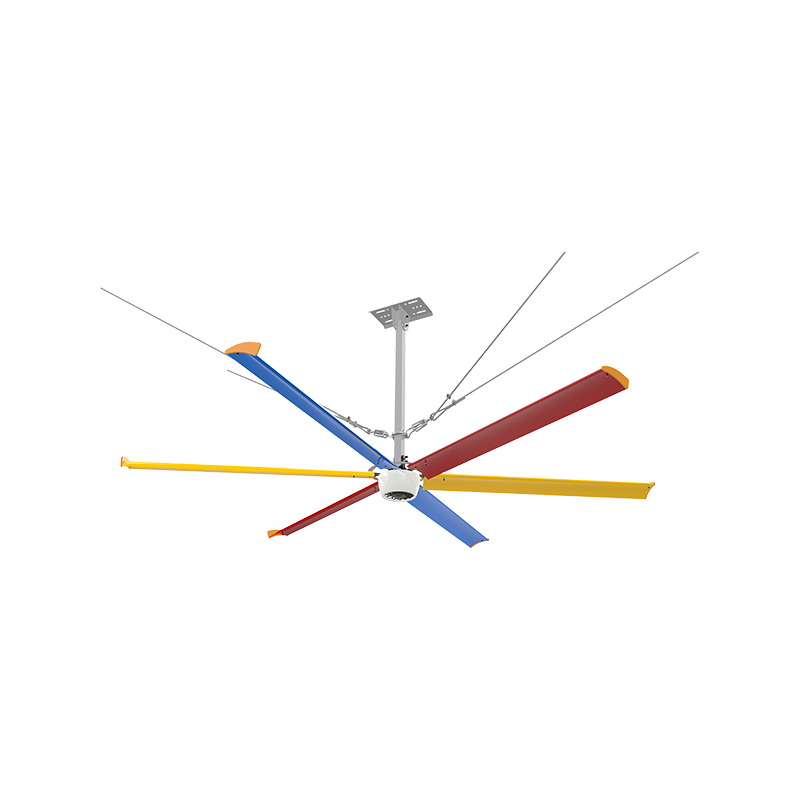
7-foot low-energy HVLS industrial brushless DC ceiling fan
The fan uses a standard mounting interface and a sturdy ceiling bracket. This supports a comparatively straightforward installation process when the building structure has been correctly evaluated. The product can be adapted to several common roof types, including steel structures, round steel supports, and concrete structures, using suitable mounting hardware and approved installation methods.
Installation should always be completed by qualified personnel. The installer must confirm the structural capacity of the support point, verify the correct anchoring method, route electrical cables safely, and install all required safety devices. The fan should not be attached to an unsuitable ceiling surface merely because the location appears convenient.
Before installation, the project team should confirm the fan diameter, weight, voltage, frequency, controller type, mounting height, operating clearance, and access requirements. If a facility uses a high roof, the team should also plan how the fan will be inspected and serviced in the future.
The standard interface can help reduce commissioning time, but installation speed must never take priority over safety. Every fastener should be tightened according to the appropriate technical requirement. Blade alignment and balance should be checked before the first full-speed operation.
After installation, the fan should be tested at low speed before gradually increasing the setting. Unusual noise, excessive vibration, unstable rotation, or controller faults should be investigated immediately. A commissioning record can help document the installation condition and provide a useful reference for later maintenance.
The fan can be operated using a remote control, and Wi-Fi application control is also available as an option. These control methods can make operation more convenient for facility managers and employees. Instead of physically reaching a wall switch or ceiling-mounted control panel, users may be able to adjust speed from a practical operating position.
Remote operation is useful when fans are installed in high-ceiling spaces or in areas where access is restricted. Wi-Fi control may be helpful for facilities that want centralized monitoring or more flexible scheduling. Depending on the selected control architecture, operators may set operating times, adjust speed levels, or manage multiple fans within the same building.
Control integration should be confirmed before purchase. Customers should specify whether they require individual fan control, grouped control, wall-mounted controls, remote controls, application-based operation, or integration with a broader building management system. The supplier can then recommend a compatible controller and communication arrangement.
Smart control can also support energy management. For example, the fan may operate at a lower level during unoccupied periods and increase circulation when workers arrive or indoor temperatures rise. However, automated control should be configured carefully so that safety, comfort, and ventilation objectives remain aligned.
The reliability of an industrial ceiling fan depends not only on its design but also on the consistency of its manufacturing process. Shanghai Aipu Fans Co., Ltd. has operated in the industrial fan field since 2006 and focuses on industrial-grade ceiling fans, motor technology, and customized ventilation solutions.
The company’s production base covers approximately 8,000 square meters. Its manufacturing resources include high-precision automated machinery, a machining center, a cutting center, a welding center, and a testing center. The combination of these facilities supports more controlled production from component preparation through final inspection.
Automated machinery can improve repeatability in manufacturing operations. Consistent dimensions are important for motor components, brackets, blade assemblies, and other parts that must fit together accurately. Repeatable production can reduce variation between units and support more predictable installation and operation.
Automation also helps manufacturers handle larger production volumes while maintaining process discipline. When supported by inspection procedures and skilled technicians, automated equipment can contribute to stable product quality and more efficient production scheduling.
A machining center allows accurate processing of selected metal components and structural parts. Precision machining can be important for motor housings, connection components, mounting parts, and other items where dimensional accuracy affects assembly or performance.
Controlled machining may also reduce dependence on inconsistent manual processing. This helps the manufacturer develop repeatable component standards for different fan sizes and customized orders.
The cutting center supports the preparation of metal materials used in fan structures and accessories. Accurate cutting can improve assembly fit and reduce material waste. The welding center provides a dedicated area for joining structural parts, brackets, frames, and related components.
Weld quality is important in ceiling-mounted equipment because mounting parts must remain secure throughout repeated operation. Welding procedures, inspection, surface treatment, and final assembly checks should all be managed carefully. A dedicated welding area helps organize this process and supports production consistency.
Testing is a critical part of industrial fan manufacturing. A finished fan should be checked for operating behavior, electrical performance, control response, vibration, noise, and general assembly quality. Testing helps identify problems before the product is shipped to the customer.
The exact tests performed may vary according to the model and customer requirements. For customized orders, testing can also verify that the selected motor, controller, voltage, communication method, and mounting components work together as intended.
A small conventional fan often produces a focused airflow that may be strong near the fan but limited farther away. The large blade span of an HVLS fan distributes air across a broader area, making it more suitable for open industrial interiors.
High-speed fans can create localized drafts and may require more frequent cleaning or maintenance because of their faster rotation. HVLS fans are designed to move air at lower rotational speeds, supporting a steadier and more comfortable airflow pattern.
In some facilities, one large-area fan may serve a zone that would otherwise require several smaller units. Fewer equipment points can simplify electrical planning, maintenance access, and control. The best solution depends on the building size and airflow objective, but the simplified layout can be a practical advantage.
The brushless PMSM motor provides an alternative to older motor designs that may have greater mechanical wear or less precise speed control. Efficient electronic control helps the operator adjust the fan to actual demand instead of relying on a fixed operating condition.
The fan is designed for ceiling installation on several common structural types. Its standard interface and mounting bracket support integration into different industrial buildings when the correct hardware and engineering checks are applied.
Lower energy consumption, brushless operation, accessible control options, and a robust aluminum alloy blade assembly may reduce the overall effort required to operate the fan over its service life. Lifecycle performance still depends on installation quality, operating environment, inspection routines, and correct use.
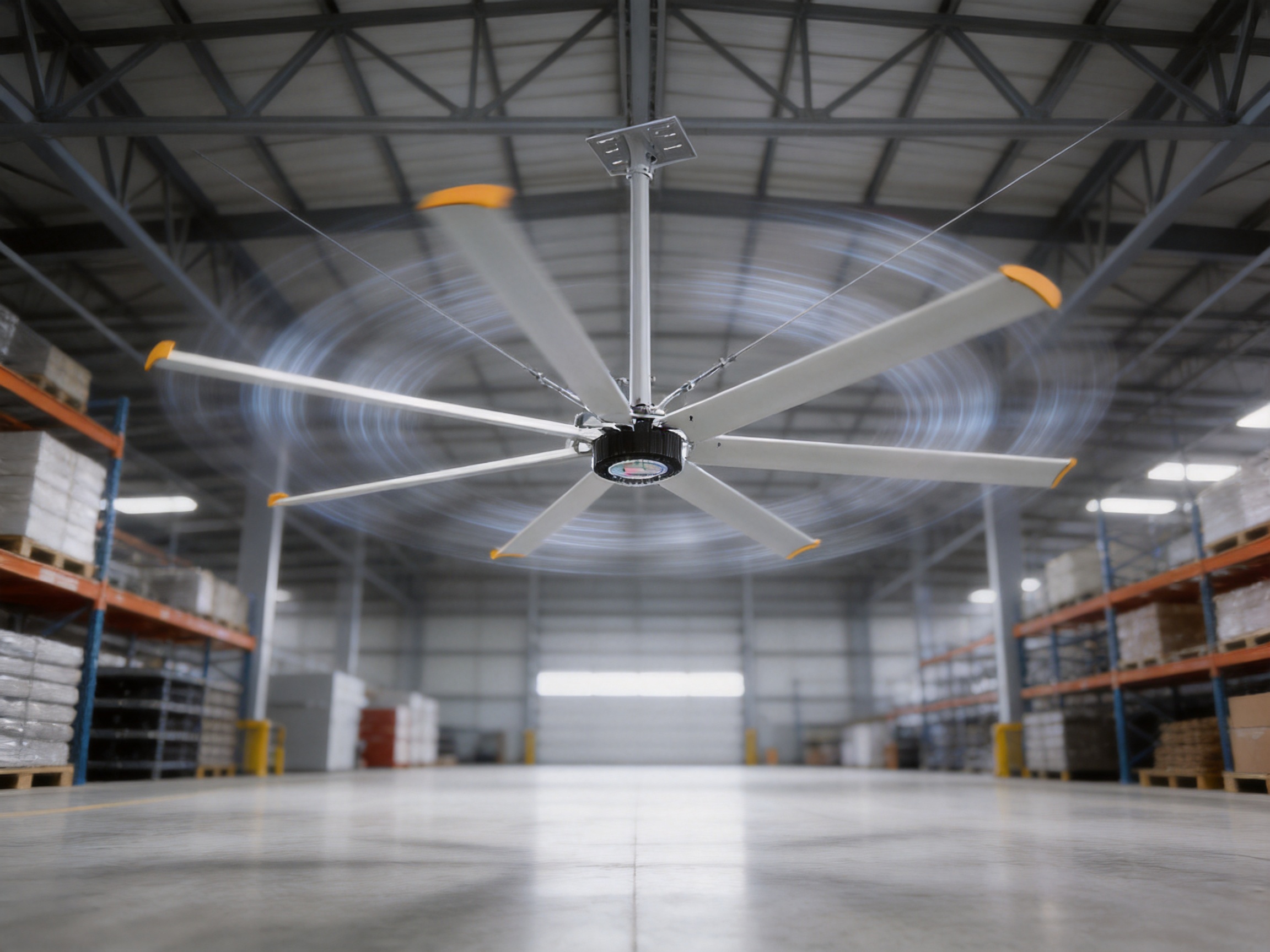
Warehouses often have high ceilings, large open areas, and changing occupancy patterns. The 7-foot fan can support air movement above packing stations, dispatch areas, storage aisles, and employee work zones. Remote or application-based control can help managers adjust operation according to shift schedules and seasonal conditions.
Manufacturing facilities may experience heat from machinery, production processes, lighting, or workers. The fan can help distribute air around suitable work areas and reduce the feeling of stagnant air. It should be used together with appropriate exhaust or process ventilation where heat, fumes, or airborne contaminants must be removed.
Workshops frequently require durable equipment that can operate reliably in dusty or active environments. The fan’s aluminum alloy blades and brushless motor are suitable for many general industrial spaces, subject to environmental assessment and routine cleaning.
Large agricultural buildings may need air circulation for livestock comfort, storage, processing, or equipment areas. Humidity, dust, chemical exposure, and cleaning practices should be reviewed before selecting the final configuration. Proper protection and maintenance are especially important in these environments.
Gyms, training halls, and sports buildings often have large open interiors where occupants generate heat during physical activity. Broad, moderate airflow can improve comfort without creating the highly concentrated draft associated with some smaller fans.
Showrooms, exhibition areas, hardware stores, and large retail spaces can use industrial ceiling fans when ceiling height and architectural design permit. Control options allow operators to manage comfort while maintaining an organized ceiling appearance.
Preventive maintenance helps preserve performance and extend service life. The inspection schedule should reflect operating hours, dust levels, humidity, temperature, and the presence of corrosive substances.
At regular intervals, maintenance personnel should inspect the mounting bracket, safety cables, fasteners, blade connections, electrical wiring, controller, and visible motor housing. Any looseness, corrosion, abnormal movement, or damaged component should be addressed before continued operation.
Blade surfaces should be cleaned when dust or residue accumulates. Deposits can affect balance and airflow performance. Cleaning methods should follow the manufacturer’s instructions and should not introduce water or chemicals into electrical components.
Operators should listen for changes in sound and observe the fan during operation. New vibration, clicking, rubbing, humming, or irregular speed can indicate a mounting, blade, motor, or controller issue. Early investigation is generally more effective than waiting for the problem to become severe.
Electrical maintenance should be carried out by qualified technicians. Power must be isolated before service, and the controller should be checked for signs of overheating, loose terminals, or moisture entry. Safety procedures are particularly important because the fan is mounted overhead.
The product is available with OEM and ODM support. Customers may discuss customized branding, control arrangements, voltage, mounting solutions, appearance, packaging, and other project requirements with the manufacturer. Customization should be defined before production so that the correct components and testing procedures can be arranged.
Before placing an order, customers should confirm the required fan diameter, motor power, blade quantity, installation height, input voltage, frequency, operating speed, expected coverage, control method, and environmental conditions. The 7-foot configuration is not automatically suitable for every building, so a project review is recommended.
Electrical supply is especially important. Published product information includes multiple voltage ranges within the product family, while the configured product information also references 110 V and 220 V options. Because available voltage depends on the selected motor and controller, the buyer should obtain a confirmed electrical specification for the exact order before installation.
Customers should also confirm the warranty scope. The product information states three years for the motor and inverter and ten years for other accessories in one feature description, while another specification lists a three-year warranty. The final warranty terms should therefore be documented in the quotation, purchase order, or technical agreement to avoid misunderstanding.
Ceiling fans must be installed with appropriate structural support and safety protection. The support system should be designed for the fan’s weight and operating forces. A secondary safety device may be required according to local regulations and the manufacturer’s installation instructions.
The fan should not be operated if blades are damaged, fasteners are missing, the mounting structure is unstable, or unusual vibration is present. Personnel should not stand directly beneath the fan during installation, inspection, or repair unless the appropriate safety controls are in place.
Clearance from lights, sprinklers, ducts, beams, cranes, storage racks, and other equipment should be maintained. Emergency systems must remain accessible and unobstructed. The installation should also comply with local electrical, building, fire, occupational safety, and machinery requirements.
HVLS air circulation should not be considered a replacement for legally required fresh-air ventilation, smoke extraction, hazardous-area controls, or industrial exhaust. A qualified engineer should determine how the fan fits into the facility’s overall environmental and safety plan.
The 7-foot size is appropriate for customers seeking more coverage than a standard room fan can provide without selecting one of the largest industrial fan models. It can be useful in facilities with medium-size zones, moderate ceiling heights, structural divisions, or multiple operating areas.
Its relatively compact footprint can simplify placement around roof trusses, lights, ducts, and other services. The approximately 30-kilogram weight may also make project logistics more manageable than larger industrial units, although professional lifting and installation procedures are still required.
The combination of six aluminum alloy blades, brushless PMSM technology, variable speed control, and a low listed power level creates a balanced product profile. It is intended for customers who value efficiency, stable airflow, low routine motor wear, and flexible control.
The manufacturer’s production capabilities add further value for industrial buyers. Automated equipment, machining, cutting, welding, and testing resources support a more organized manufacturing process. Experience since 2006 and a focus on industrial ventilation allow the company to respond to standard orders as well as customized projects.
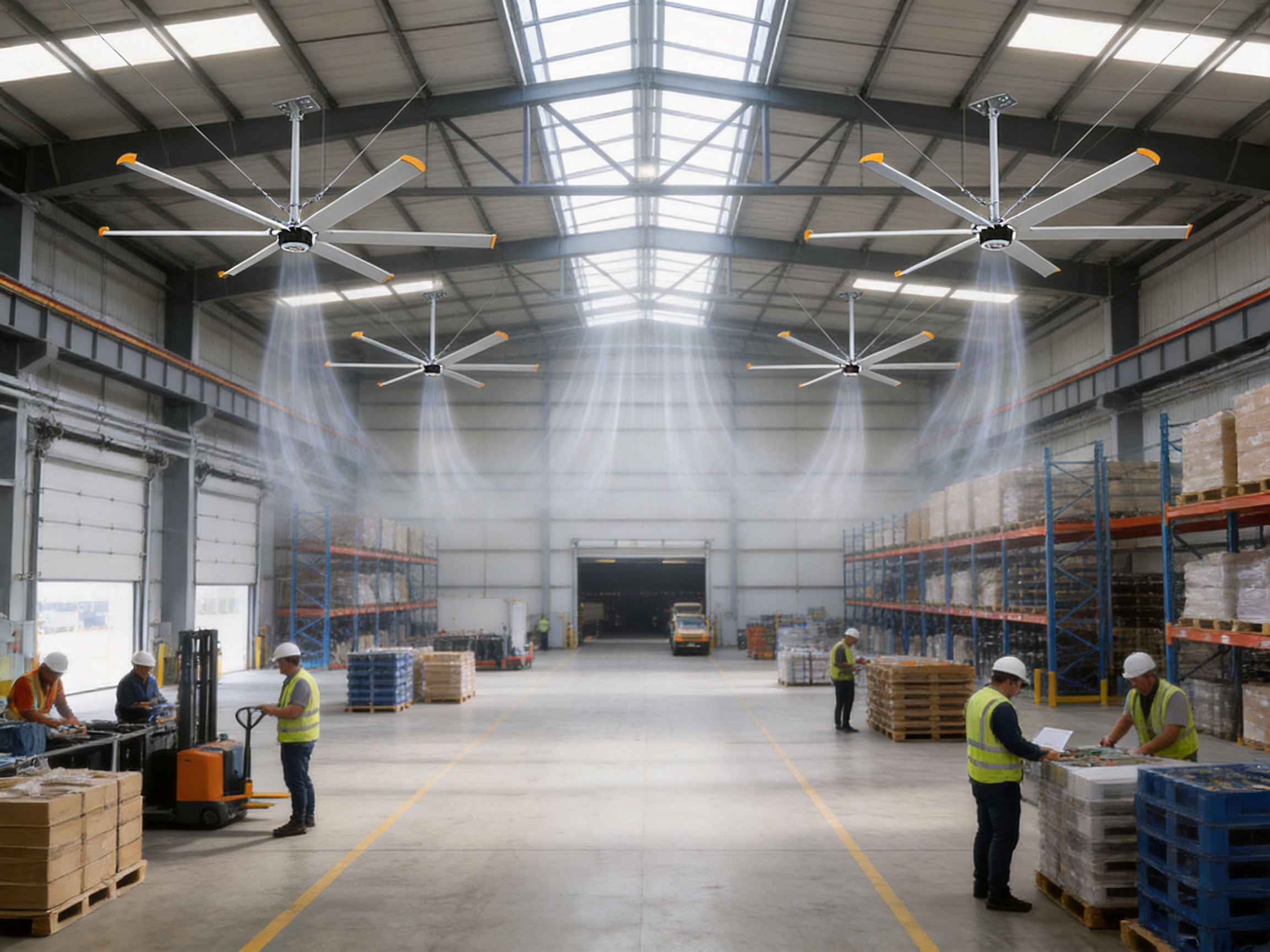
HVLS means high volume, low speed. An HVLS fan moves a large amount of air across a broad area while rotating at a relatively low speed compared with many small high-speed fans.
The nominal fan diameter is approximately 2.1 meters, or 7 feet. The exact finished dimensions should be confirmed in the technical drawing for the selected configuration.
The specified product uses six aluminum alloy blades. Other models in the product family may use different blade quantities, so the blade configuration should be confirmed when ordering.
The configured product information lists approximately 0.3 kW. Actual consumption depends on operating speed, controller performance, electrical conditions, and the selected product configuration.
Yes. Warehouses are a common application for industrial ceiling fans. The final suitability depends on ceiling height, storage layout, structural support, electrical supply, operating temperature, and required airflow coverage.
The product is designed to support installation on common structures such as steel structures, round steel, and concrete structures when suitable mounting hardware and engineering methods are used. The structure must be assessed before installation.
Remote control is available, and Wi-Fi application control is also an option. Customers should confirm whether they require individual, grouped, scheduled, or building-management-system control.
The brushless motor eliminates brush replacement, which can reduce one type of routine maintenance. The fan still requires regular inspection of blades, fasteners, mounting parts, wiring, controller connections, and safety components.
No. The fan circulates air within the space but does not automatically remove contaminated air, fumes, dust, or humidity. Exhaust, filtration, and fresh-air systems may still be required for specific industrial processes.
Customers should confirm the exact diameter, motor power, voltage, frequency, speed range, control method, mounting arrangement, warranty terms, environmental conditions, and expected coverage. A technical review is recommended for large or complex installations.
The supplied product information refers to a three-year warranty for the motor and inverter and also mentions longer coverage for other accessories in one feature section. The final warranty scope and duration should be confirmed in the formal commercial and technical documents.
The 7-foot low-energy HVLS industrial brushless DC ceiling fan is designed to provide broad, efficient air movement for industrial and commercial interiors. Its approximately 2.1-meter diameter, six aluminum alloy blades, brushless PMSM motor, variable-speed operation, and low listed power consumption make it a practical option for facilities that need reliable circulation without excessive energy use.
Compared with conventional localized fan solutions, the product offers wider air distribution, flexible speed control, fewer potential equipment points, and reduced brush-related motor maintenance. Its standard mounting interface and compatibility with several common roof structures support installation flexibility, while remote and optional Wi-Fi controls improve operating convenience.
The manufacturer’s 8,000-square-meter production base, automated machinery, machining center, cutting center, welding center, and testing center provide a strong foundation for consistent production and customized industrial ventilation projects. With experience dating back to 2006, Shanghai Aipu Fans Co., Ltd. can support standard product supply as well as OEM and ODM requirements.
For the best result, the fan should be selected as part of a complete building airflow plan. Correct sizing, structural assessment, safe installation, suitable control programming, and regular maintenance are essential. When these factors are properly managed, the 7-foot configuration can provide a dependable and energy-conscious solution for improving comfort and air circulation in modern industrial spaces.
1. Manufacturer product specification sheet for the 7-foot low-energy HVLS industrial brushless DC ceiling fan.
2. Manufacturer product family data for ADF series industrial HVLS ceiling fans.
3. Manufacturer technical information concerning PMSM and brushless DC motor applications.
4. Manufacturer facility and company profile information for Shanghai Aipu Fans Co., Ltd.
5. General engineering principles for high-volume, low-speed air circulation in large buildings.
6. General industrial guidance on ceiling-mounted fan installation, inspection, and maintenance.
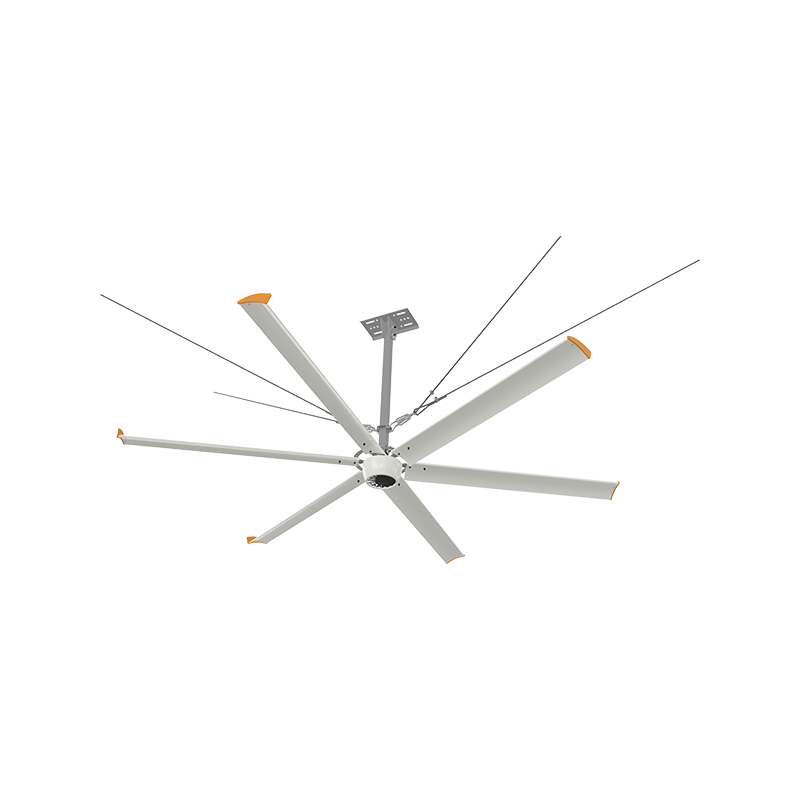
The 15-foot Even Airflow Industrial BLDC Ceiling Fan utilizes a high-efficiency BLDC motor and carefully designed blades. This ceiling fan operates with extremely low noise levels, making it suitable ...
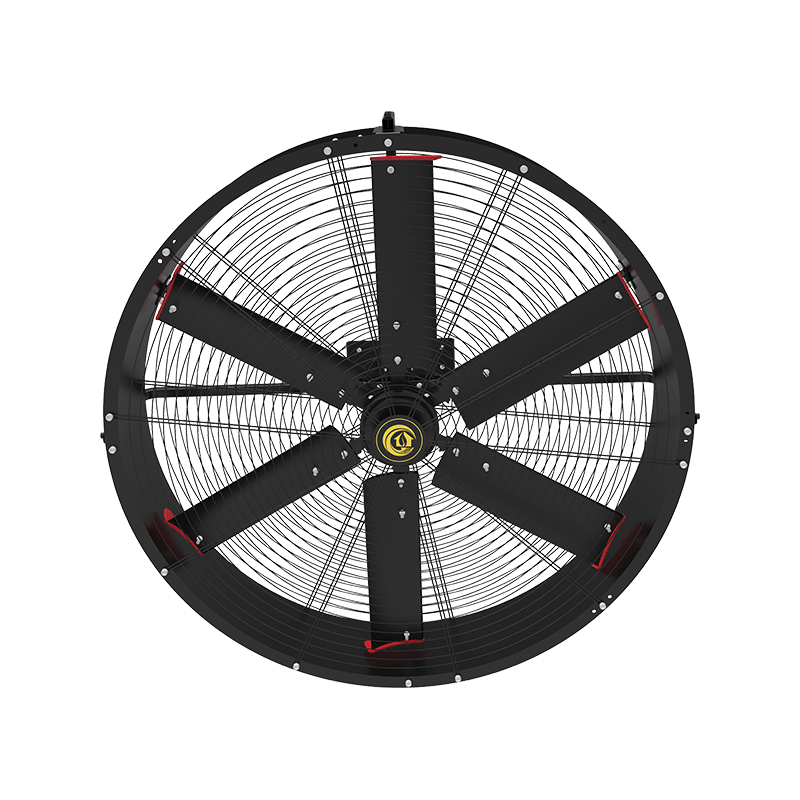
1. Extreme Airflow & Wide CoverageEquipped with massive 79-inch (2.0m) diameter aerospace-grade aluminum alloy blades. These precision-balanced blades generate a powerful, stable laminar airflow t...
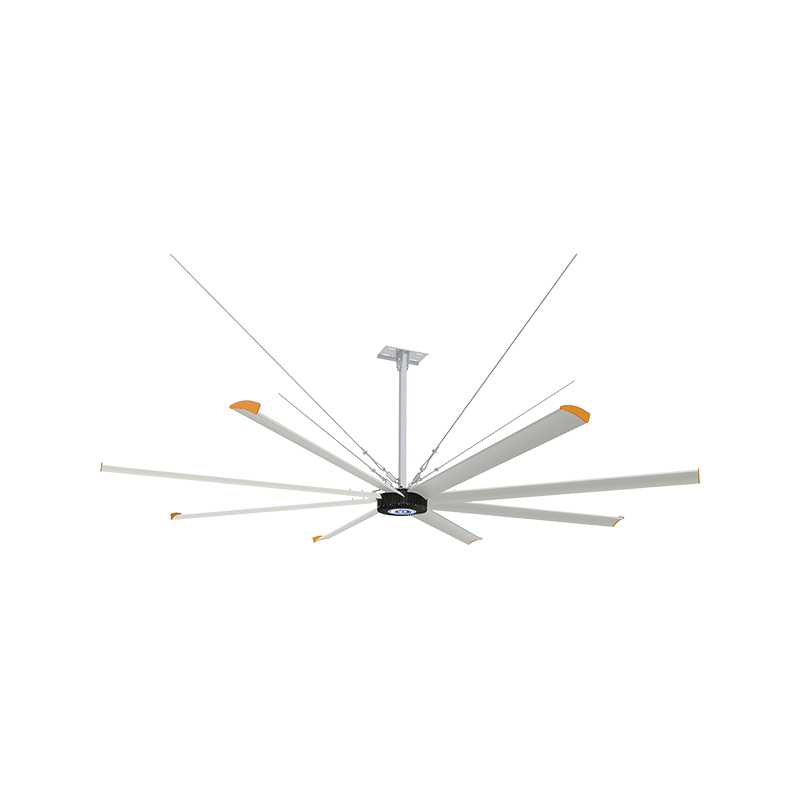
The 8-foot HVLS Large Industrial BLDC Ceiling Fan is equipped with a 0.3KW brushless DC motor, offering higher energy efficiency and lower noise levels. The lower power consumption design helps users ...
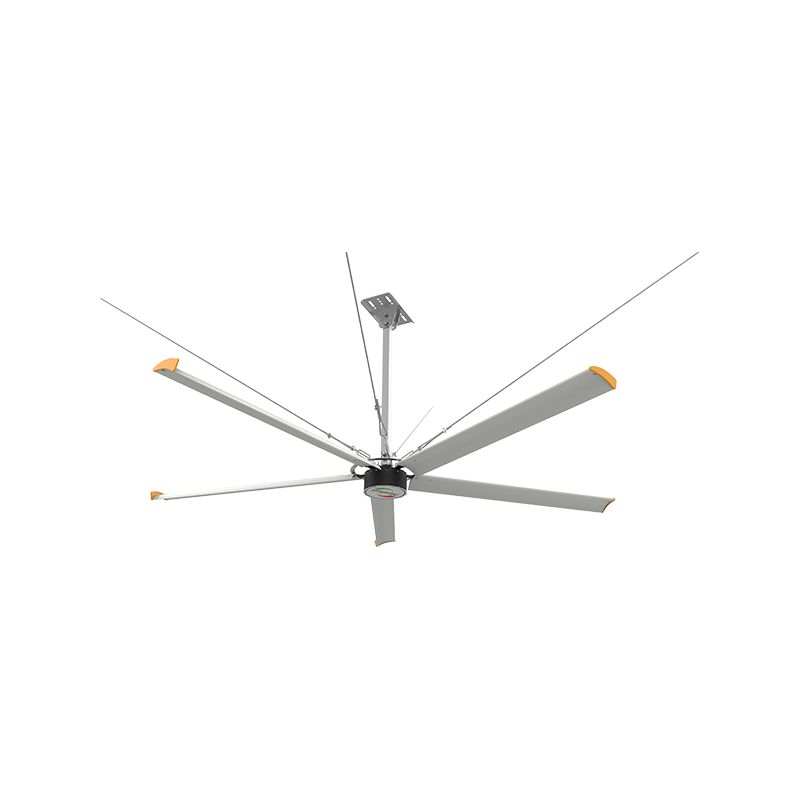
The industrial-grade aviation metal large-blade BLDC ceiling fan utilizes brushless DC motor (BLDC) technology, allowing it to provide powerful airflow with low power consumption. The ceiling fan rapi...
1. Core Technology: High Volume, Low SpeedNatural Breezes: Unlike the “harsh” wind from small fans, HVLS fans use massive blades rotating at low speeds to create a large-scale, three-dimensional breez...
The 7-foot low-energy HVLS industrial brushless DC ceiling fan weighs 30kg. Despite using lightweight materials in its design, it ensures stability and long-term reliable operation. Installation and ...
Shanghai Aipu Fans Co., Ltd., established in Shanghai in 2006, focuses on manufacturing industrial-grade high-quality ceiling fans, relying on industry-leading motor technology and advanced manufactu...
READ MOREBig Fans, Low Speed, Real Results: HVLS Industrial Fans Explained When a factory floor hits 34°C, small fans only move hot air around. Large-diameter HVLS ceiling fans do the opposite: they push a t...
READ MOREIndustrial Ventilation Planning The Right Industrial Ceiling Fan Size Starts With the Building A practical sizing guide to diameter, ceiling height, CFM, and fan layout for warehouses, plants, and di...
READ MORECommercial HVLS Fans: The Quiet Engineering Behind Large-Space Airflow A practical guide to selecting high-volume, low-speed ceiling fans for warehouses, factories, and commercial halls — with the ef...
READ MORE Custom Large Industrial Fans Manufacturers